Japan · 6 DAYS

Snowy Hot Springs & Shirakawa-go Illumination 6-Day Fairy Tale Tour

Nagoya → Gifu → Takayama → Kanazawa

A White Fairy Tale: Admire the most beautiful snowy scenery of the Snow Country in the 400-year-old hidden village of Shirakawa-go. Magnificent Illumination: Experience the enchanting lighting ceremony, held only six times a year, in the ancient 'Gassho-style' houses.

6 daysWinterItinerary idea

Request this itinerary

Leave your details, and our travel specialists will get in touch by email or your preferred contact method.

Your specialist will confirm the itinerary, pricing and availability with you.

How we use your information

Your inquiry is sent to info@jasperlimo.com so our team can respond. Please do not include passport or payment details.

JOURNEY HIGHLIGHTS

Japan, made personal.

Snowy Hot Springs & Shirakawa-go Illumination 6-Day Fairy Tale Tour: Shirakawa-go + Gassho Village + Gero Onsen + Kenrokuen Garden + Kanazawa Old Town

Day 1 starts in Nagoya → Gifu. International airfare is arranged separately.

  • 01A White Fairy Tale: Admire the most beautiful snowy scenery of the Snow Country in the 400-year-old hidden village of Shirakawa-go.
  • 02Magnificent Illumination: Experience the enchanting lighting ceremony, held only six times a year, in the ancient 'Gassho-style' houses.
  • 03Hot and Cold Relaxation: Soak in the Gero Onsen hot springs surrounded by snowy scenes to relax body and mind.

Your journey, day by day

01

Nagoya → Gifu

Day 1 starts upon arrival in Nagoya. Your local activities and hotel check-in will be arranged based on arrival time; international flights are not included. Local route after arrival: Nagoya > Gifu. Planned attractions for the day: Gero Onsen Street; adjusted by arrival time. Airport transfers can be arranged separately and their inclusion will be confirmed in your proposal.

Day 1 starts upon arrival in Nagoya. Your local activities and hotel check-in will be arranged based on arrival time; international flights are not included. Local route after arrival: Nagoya > Gifu. Planned attractions for the day: Gero Onsen Street; adjusted by arrival time. Airport transfers can be arranged separately and their inclusion will be confirmed in your proposal.

Breakfast: at your own expense. Lunch: at your own expense. Dinner: at your own expense.

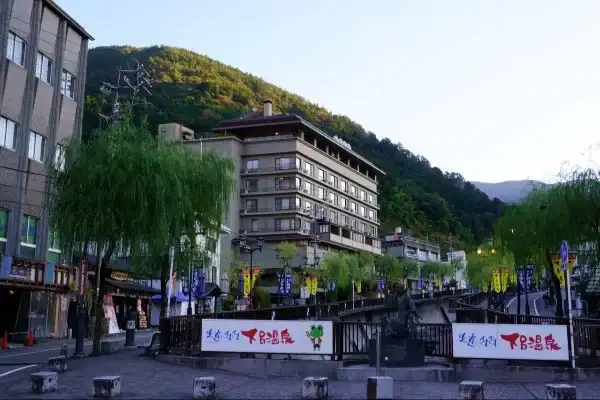
Gero Onsen Street

Gero Onsen Street

Gero’s natural hot springs reach temperatures up to 84°C, authentic natural springs. The alkaline simple hot spring water is clear, slightly fragrant, and mild. Soaking in the warm water leaves skin silky smooth. There is a publicly accessible open-air mixed bath in Gero town where people of all ages and genders can freely soak wearing swimsuits, one of Japan’s few mixed-gender hot spring spots.

02

Gifu → Takayama

Morning: Travel to Takayama. Takayama is a castle town built around Takayama Castle from the 16th century, predominantly featuring wooden architecture. Its exquisite woodworking gives the city a charming traditional atmosphere. Many streets retain an elegant historical ambiance, with temples, shrines, rivers, and bridges reminiscent of Kyoto. Afternoon: Visit Takayama Jinya, built in 1615 and the only surviving government office building of its kind in Japan. Explore Kami Sanmachi Old Town, once the commercial and merchant center during the Edo period, with quaint shops lining the streets where you can enjoy local delicacies while admiring the scenery.

Morning: Travel to Takayama. Takayama is a castle town built around Takayama Castle from the 16th century, predominantly featuring wooden architecture. Its exquisite woodworking gives the city a charming traditional atmosphere. Many streets retain an elegant historical ambiance, with temples, shrines, rivers, and bridges reminiscent of Kyoto. Afternoon: Visit Takayama Jinya, built in 1615 and the only surviving government office building of its kind in Japan. Explore Kami Sanmachi Old Town, once the commercial and merchant center during the Edo period, with quaint shops lining the streets where you can enjoy local delicacies while admiring the scenery.

Breakfast: at the hotel. Lunch: at your own expense. Dinner: at your own expense.
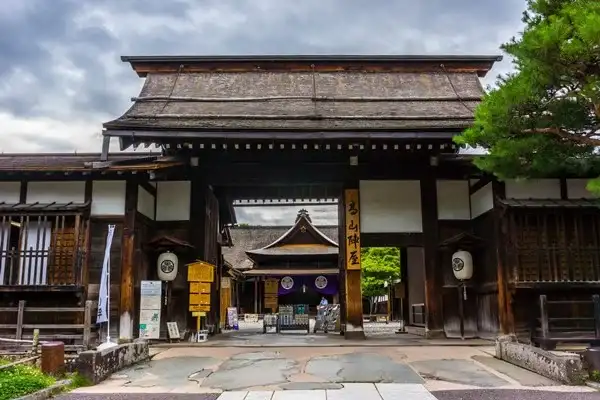
Takayama Jinya

Takayama Jinya

Walking around Takayama is the best way to capture its small-town charm. Wandering through historic streets lined with traditional buildings, the 400-year-old Takayama Jinya—an Edo period government office—immediately catches visitors’ eyes. This rustic town, with its traditional Japanese atmosphere and specialty shops, attracts around 3 million tourists yearly despite being relatively unknown to domestic travelers. Takayama’s population is about 100,000, situated in Gifu Prefecture.

Hida Furukawa

Located at the northernmost part of Gifu, Hida Furukawa is a town known for its beautifully named 400-year-old historic streets and the Setogawa River. It is a sister city to Shuhe Ancient Town in Yunnan, China. The Setogawa River running through Furukawa was constructed 400 years ago to reclaim new farmland. The buildings retain the appearance from four centuries ago, and the river flows continuously alongside them. Near the Araki River stands Enkoji Temple, which also has over 400 years of history.

Sanmachi Old Street

Sanmachi Old Street in Takayama mainly includes three merchant streets: Ichinomachi, Ninommachi, and Sannomachi. The southern part, Kami Sanmachi Old Street, is the best-preserved area and has been designated as an Important Preservation District for Groups of Traditional Buildings by the Japanese government.
03

Takayama → Kanazawa

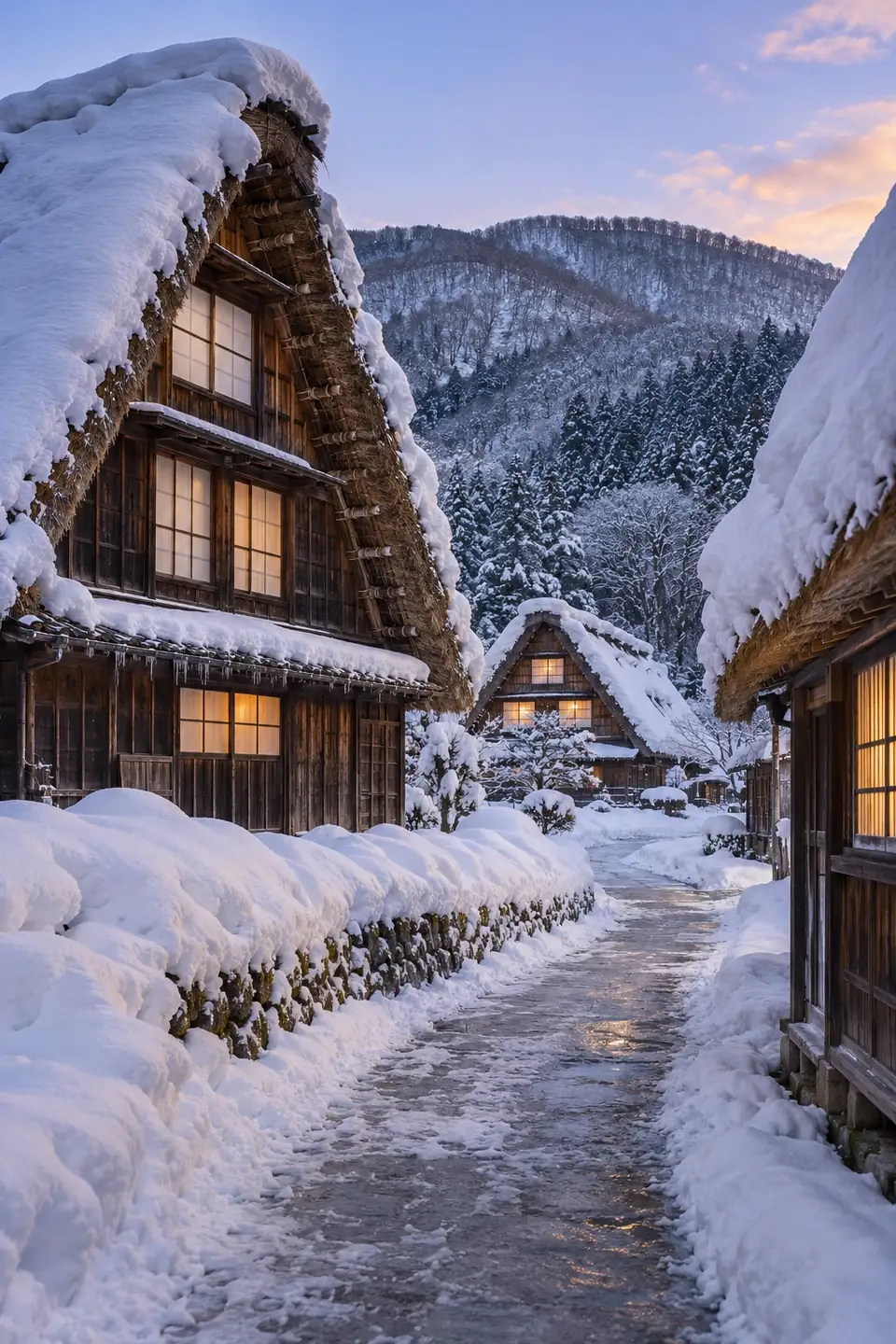
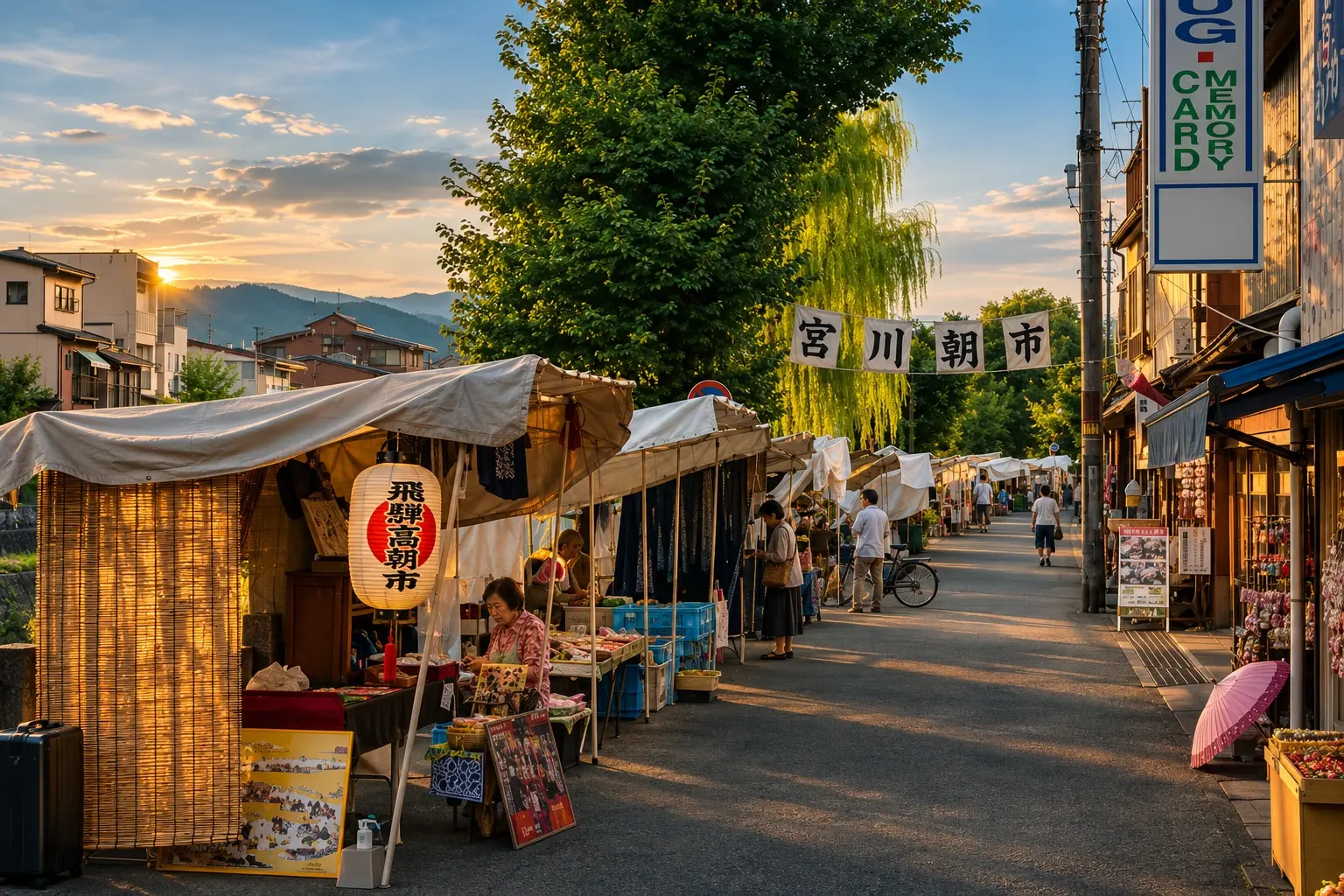
Morning: Visit the 300-year-old Miyagawa Morning Market, a fresh produce hub where you can shop like a local. Then head to Shirakawa-go, a remote mountain village about 300 years old, known as one of Japan’s three great hidden regions and called Japan’s fairy tale village. Its unique gassho-style architecture was listed as a UNESCO World Cultural Heritage site in 1995. Afternoon: Stroll through Shirakawa-go to enjoy its beautiful scenery. In the evening, witness the annual illumination event at Shirakawa-go Gassho Village. Afterwards, continue to Kanazawa for overnight stay. Note: The Shirakawa-go special illumination ceremony occurs each winter in January and February and must be reserved in advance; visitors can admire the lit village from the observation deck for a magical snowy view.

AI-rendered illustration

Morning: Visit the 300-year-old Miyagawa Morning Market, a fresh produce hub where you can shop like a local. Then head to Shirakawa-go, a remote mountain village about 300 years old, known as one of Japan’s three great hidden regions and called Japan’s fairy tale village. Its unique gassho-style architecture was listed as a UNESCO World Cultural Heritage site in 1995. Afternoon: Stroll through Shirakawa-go to enjoy its beautiful scenery. In the evening, witness the annual illumination event at Shirakawa-go Gassho Village. Afterwards, continue to Kanazawa for overnight stay. Note: The Shirakawa-go special illumination ceremony occurs each winter in January and February and must be reserved in advance; visitors can admire the lit village from the observation deck for a magical snowy view.

Breakfast: at the hotel. Lunch: at your own expense. Dinner: at your own expense.

Takayama Morning MarketAI-rendered illustration

Takayama Morning Market

Takayama’s morning market is one of Japan’s three major morning markets, held in front of Miyagawa and Takayama Jinya. The Miyagawa Market stretches approximately 350 meters from Kajibashi Bridge to Yayoi Bridge, featuring over 60 stalls. Along the riverside near the street, vendors sell vegetables, fruits, pickles, and spices outdoors. On the street interior side are shops offering snacks, sweets, and crafts. Along with Takayama specialty crafts like sarubobo dolls and hand-carved knives, chopsticks and other Japanese small goods are available.

Shirakawa-go Gassho Village (Winter)

Shirakawa-go is located on the slopes of Mount Hakusan in northwest Gifu Prefecture. It is a quiet mountain village surrounded by mountains, with rice paddies and rivers interwoven. The village is famous for its over 110 "Gassho-style" (thatched steeply sloped gabled roofs) houses clustered together, designated as a UNESCO World Cultural Heritage site in 1995.

04

Kanazawa

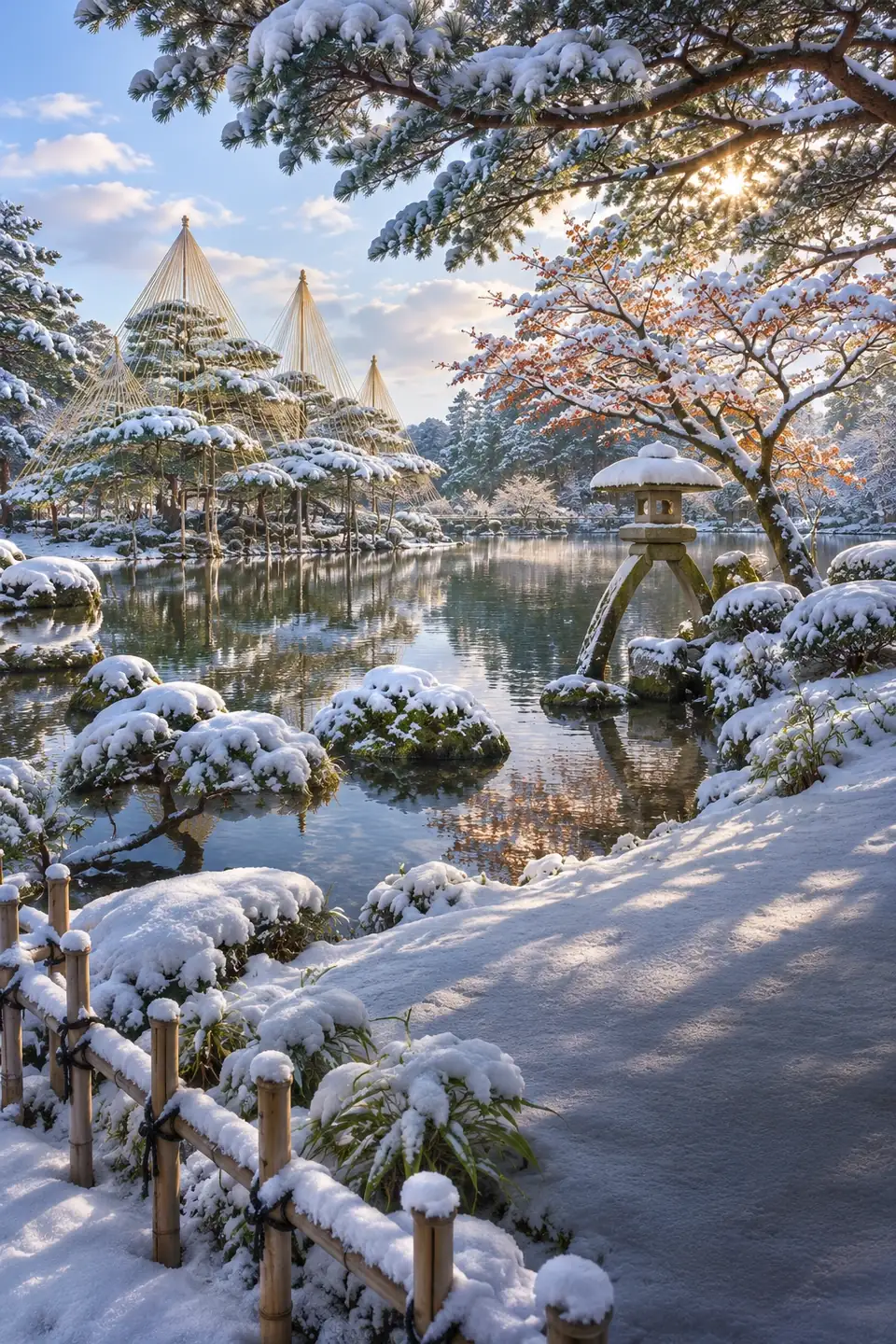
Today explore the historic architecture in Kanazawa, known as “Little Kyoto” and “Japan’s Alps,” boasting many historic sites and beautiful natural scenery. Morning: Visit Kenrokuen Garden, Japan’s top three famous gardens, developed over 170 years by four generations of feudal lords into a stunning strolling garden. Snow-covered winter scenes with Yukitsuri (ropes supporting trees) are a must-see. Lunch: Enjoy fresh seasonal seafood at Omicho Market, one of Japan’s top three fish markets. Afternoon: Tour the Nagamachi Samurai District and Nomura-ke residence.

AI-rendered illustration

Today explore the historic architecture in Kanazawa, known as “Little Kyoto” and “Japan’s Alps,” boasting many historic sites and beautiful natural scenery. Morning: Visit Kenrokuen Garden, Japan’s top three famous gardens, developed over 170 years by four generations of feudal lords into a stunning strolling garden. Snow-covered winter scenes with Yukitsuri (ropes supporting trees) are a must-see. Lunch: Enjoy fresh seasonal seafood at Omicho Market, one of Japan’s top three fish markets. Afternoon: Tour the Nagamachi Samurai District and Nomura-ke residence.

Breakfast: at the hotel. Lunch: at your own expense. Dinner: at your own expense.

Kenrokuen GardenAI-rendered illustration

Kenrokuen Garden

Kenrokuen is considered one of Japan's top three gardens. Developed over 170 years by four generations of feudal lords, it features a beautiful circular walking garden style. A large central pond runs through it, surrounded by Japanese-style artificial hills and pavilions. The garden embodies six aesthetic qualities—spaciousness, seclusion, artifice, antiquity, water features, and distant views—hence its name "Kenrokuen." It offers distinct natural beauty each season: cherry and plum blossoms in spring, azaleas and irises in summer, autumn maples, and in winter, snow suspensions protect the pines, creating a dreamlike snowy landscape.

Nagamachi Samurai District

The Nagamachi Samurai District in Kanazawa, Ishikawa Prefecture, is a tourist area featuring samurai residences for upper and middle-ranking retainers from the Kaga domain era. Well-preserved earthen walls and stone-paved streets retain the charm of the feudal period. The district’s name is derived from the Nagamura family residence, important retainers of the Maeda family.

Higashi Chaya District

Kanazawa has three historic Chaya (teahouse) districts dating back to the Edo period: Nishi Chaya, Higashi Chaya, and Kazue-machi. Stone-paved streets are lined with many Edo-era teahouse buildings. Higashi Chaya is the largest of the three. It is a good place to experience local tea culture.

Omicho Market

Omicho Market is known as the kitchen of Kanazawa city with over 300 years of history. The street is packed with nearly 200 shops offering a wide variety of items: seafood, vegetables, fruits, cooked dishes, international spices, flowers, clothing, and textiles — all high quality and reasonably priced. Bustling shoppers and lively sales calls create a vibrant market atmosphere from morning till night. In winter, local crab catches pile up, attracting many visitors.

05

Kanazawa → Nagoya

This morning, drive back to Nagoya and spend the afternoon sightseeing there. Afternoon: Visit Nagoya Castle, one of Japan’s three major castles alongside Osaka and Kumamoto castles. Originally built by Tokugawa Ieyasu, its Tenshukaku was home to three generations of the Tokugawa family. Next, visit Atsuta Shrine, with a history of 1900 years, famed for housing a replica of the Kusanagi sword, one of Japan’s three imperial regalia. It ranks second only to Ise Shrine among Japan’s three major shrines. The shrine’s treasure hall holds over 6,000 important cultural properties related to the imperial family and Tokugawa clan.

AI-rendered illustration

This morning, drive back to Nagoya and spend the afternoon sightseeing there. Afternoon: Visit Nagoya Castle, one of Japan’s three major castles alongside Osaka and Kumamoto castles. Originally built by Tokugawa Ieyasu, its Tenshukaku was home to three generations of the Tokugawa family. Next, visit Atsuta Shrine, with a history of 1900 years, famed for housing a replica of the Kusanagi sword, one of Japan’s three imperial regalia. It ranks second only to Ise Shrine among Japan’s three major shrines. The shrine’s treasure hall holds over 6,000 important cultural properties related to the imperial family and Tokugawa clan.

Breakfast: at the hotel. Lunch: at your own expense. Dinner: at your own expense.

Nagoya Castle

Nagoya Castle, also known as Meijo, is a nationally designated historic site and ranks fourth among Japan's top 100 castles. After the Battle of Sekigahara, Tokugawa Ieyasu, founder of the Tokugawa shogunate and birthplace of Oda Nobunaga, built Nagoya Castle on the ruins of Nagoya Castle to provide for his ninth son. Orders were sent to various daimyos to assist in construction. Katō Kiyomasa, Fukushima Masanori, and others contributed to show loyalty. The castle, completed in under two years, was inherited by three generations of Tokugawa family. A bronze statue of Katō Kiyomasa carrying stones stands in Meijo Park today.

Atsuta Shrine

Atsuta Shrine is one of Japan’s oldest shrines, believed to have been established by Emperor Keiko in the 2nd century AD, with a history of 1900 years. The main hall enshrines five deities including Takehiko no Mikoto, Miyatsuhime, Amaterasu Omikami, Susanoo no Mikoto, and Ukanomitama no Mikoto. The shrine has been highly revered throughout Japanese history and holds great authority among the people. Successive rulers, including Toyotomi Hideyoshi and Tokugawa Ieyasu, have extensively renovated it. Recently, the Japanese Emperor and Empress have also paid visits.

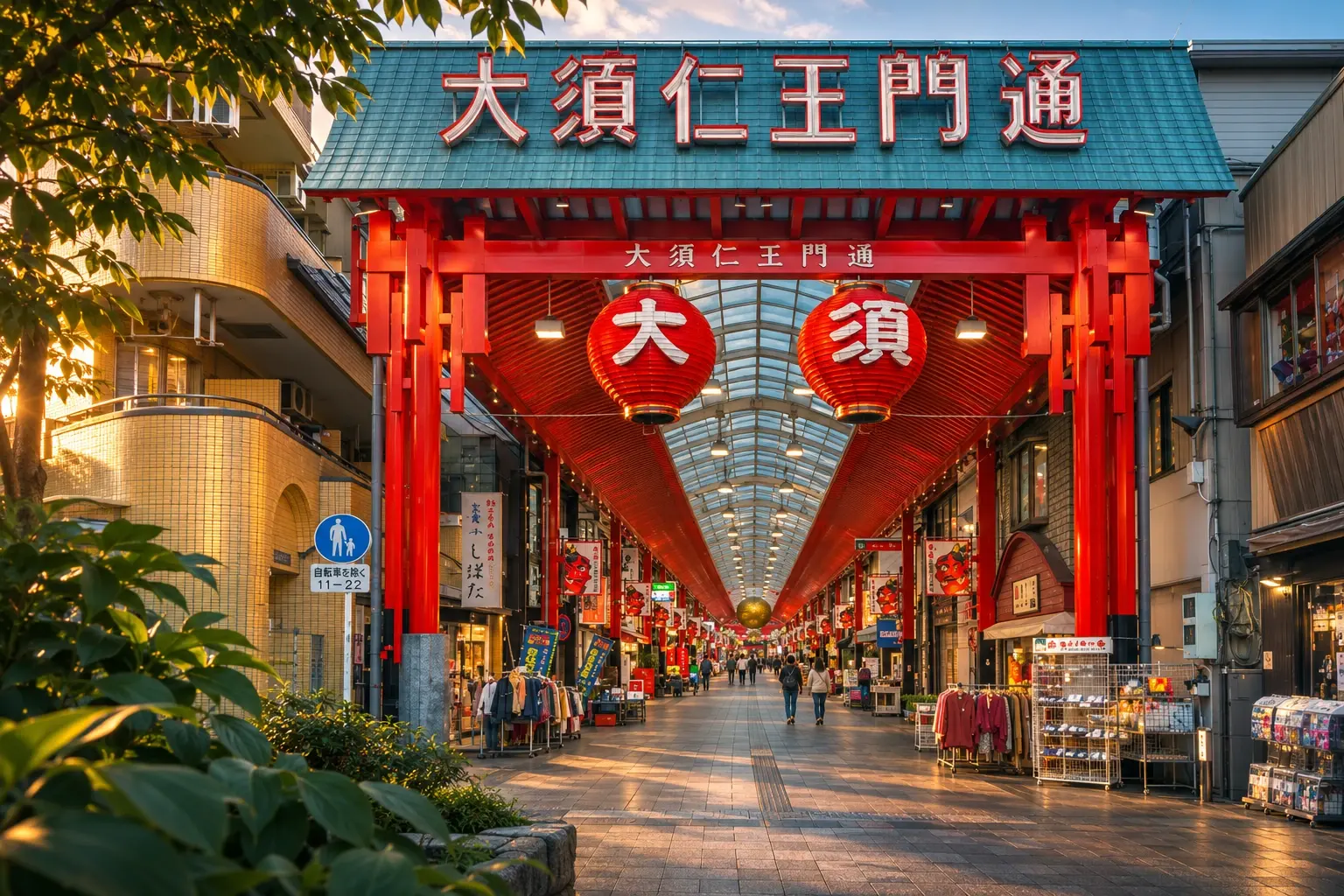
Osu Shopping StreetAI-rendered illustration

Osu Shopping Street

Osu is located in central Nagoya City. It features the historic Osu Shopping District, densely packed with about 1,200 various shops, making it a great shopping destination in Nagoya. The district spans Osu 2-chome to 3-chome and is bordered by four main streets: Wakamiya Odori, Fushimi Dori, Osu Dori, and Minami Otsu Dori. Conveniently situated between Osu Kannon and Kamimaezu stations on the Tsurumai Line for easy access.

06

Nagoya

Enjoy free time as your departure schedule allows. The itinerary ends locally in Nagoya; airport transfer can be arranged to suit your flight schedule. International return flights are arranged separately; travel days after the local itinerary ends are not included in the itinerary length.

AI-rendered illustration

Enjoy free time as your departure schedule allows. The itinerary ends locally in Nagoya; airport transfer can be arranged to suit your flight schedule. International return flights are arranged separately; travel days after the local itinerary ends are not included in the itinerary length.

Breakfast: at the hotel. Lunch: at your own expense. Dinner: at your own expense.

YOUR ROUTE

Know the shape of your journey.

Starts in
Nagoya
Ends in
Nagoya
Local itinerary
6 days

A proposal shaped around you

Use this route as a starting point. Tell us your dates, pace and accommodation preferences.

Your quote will specify accommodation, guiding, transport, activities, meals and any optional arrangements before you book. International flights and airport transfers are discussed separately.

TRAVEL IN COMFORT

The right vehicle for your group.

Toyota Alphard

Up to 6 passengers

Toyota HiAce

Up to 9 passengers

Our main touring vehicles. We recommend a vehicle based on your group size and luggage. Maximum seating capacity does not guarantee room for all bags when every seat is occupied. Vehicle availability is confirmed for your destination.

More to discover

Shirakawa-go Gassho Village

Shirakawa-go is a tranquil mountain village surrounded by mountains, with rice paddies and rivers running through. The village’s traditional gassho-style thatched houses number over 110, grouped together, and were designated a UNESCO World Cultural Heritage site in 1995. At the open-air museum, the Gassho Village Heritage Park, 25 gassho houses from across Shirakawa-go have been relocated and preserved. The park also features temple replicas, waterwheel huts, charcoal kilns, and stables built in the style of old rural villages. Traditional crafts such as dyeing and weaving are demonstrated, and visitors can experience them hands-on.

Kenrokuen Garden

Kenrokuen is considered one of Japan's top three gardens. Developed over 170 years by four generations of feudal lords, it features a beautiful circular walking garden style. A large central pond runs through it, surrounded by Japanese-style artificial hills and pavilions. The garden embodies six aesthetic qualities—spaciousness, seclusion, artifice, antiquity, water features, and distant views—hence its name "Kenrokuen." It offers distinct natural beauty each season: cherry and plum blossoms in spring, azaleas and irises in summer, autumn maples, and in winter, snow suspensions protect the pines, creating a dreamlike snowy landscape.

Nagoya Castle

Nagoya Castle, also known as Meijo, is a nationally designated historic site and ranks fourth among Japan's top 100 castles. After the Battle of Sekigahara, Tokugawa Ieyasu, founder of the Tokugawa shogunate and birthplace of Oda Nobunaga, built Nagoya Castle on the ruins of Nagoya Castle to provide for his ninth son. Orders were sent to various daimyos to assist in construction. Katō Kiyomasa, Fukushima Masanori, and others contributed to show loyalty. The castle, completed in under two years, was inherited by three generations of Tokugawa family. A bronze statue of Katō Kiyomasa carrying stones stands in Meijo Park today.

Atsuta Shrine

Atsuta Shrine is one of Japan’s oldest shrines, believed to have been established by Emperor Keiko in the 2nd century AD, with a history of 1900 years. The main hall enshrines five deities including Takehiko no Mikoto, Miyatsuhime, Amaterasu Omikami, Susanoo no Mikoto, and Ukanomitama no Mikoto. The shrine has been highly revered throughout Japanese history and holds great authority among the people. Successive rulers, including Toyotomi Hideyoshi and Tokugawa Ieyasu, have extensively renovated it. Recently, the Japanese Emperor and Empress have also paid visits.

Before you go

This journey starts at the destination. Seasonal experiences, service inclusions and availability are confirmed with your personalized proposal.

Original source & photography · 6renyou ↗

Image credits and illustrations

BEFORE YOU PLAN

Travel planning, clearly explained.

OpenEast brings together Japan and South Korea itinerary ideas for travelers from North America, with China also part of our destination plans. Start with the local route, then consider flights and airport transfers around it.

When does Day 1 begin?

Day 1 begins at the destination. International departure-only and return flight days are not counted as destination days. Plan your flights around the local itinerary dates.

Are flights and airport transfers included?

International flights and airport transfers are confirmed separately. Do not assume they are included in a suggested itinerary.

Are these confirmed departures?

These routes are itinerary ideas. Dates, hotels, admissions, seasonal activities, prices and availability need confirmation in a personalized proposal before booking.

Can I book or send an inquiry here?

Use the inquiry form to contact our team. A submission confirmation appears only when the email service accepts your request. An inquiry does not reserve a service or take payment.

Explore Japan itineraries → · Explore South Korea itineraries →

1 / 4

Let’s plan your journey.

Snowy Hot Springs & Shirakawa-go Illumination 6-Day Fairy Tale Tour: Shirakawa-go + Gassho Village + Gero Onsen + Kenrokuen Garden + Kanazawa Old Town

Leave your details, and our travel specialists will get in touch by email or your preferred contact method.

Your specialist will confirm the itinerary, pricing and availability with you.

How we use your information

Your inquiry is sent to info@jasperlimo.com so our team can respond. Please do not include passport or payment details.

Start planning