Morning: Travel to the renowned Akan National Park.
Afternoon: Tour the pristine Lake Mashu and the Swan Lake-like Lake Kussharo. Stroll through an Ainu indigenous village, relax, and visit the "Four Sisters Izakaya" from the movie.
Evening: Stay overnight at a hot spring hotel on Lake Akan's shore.
Breakfast: at the hotel. Lunch: at your own expense. Dinner: at your own expense.
Lake Mashu
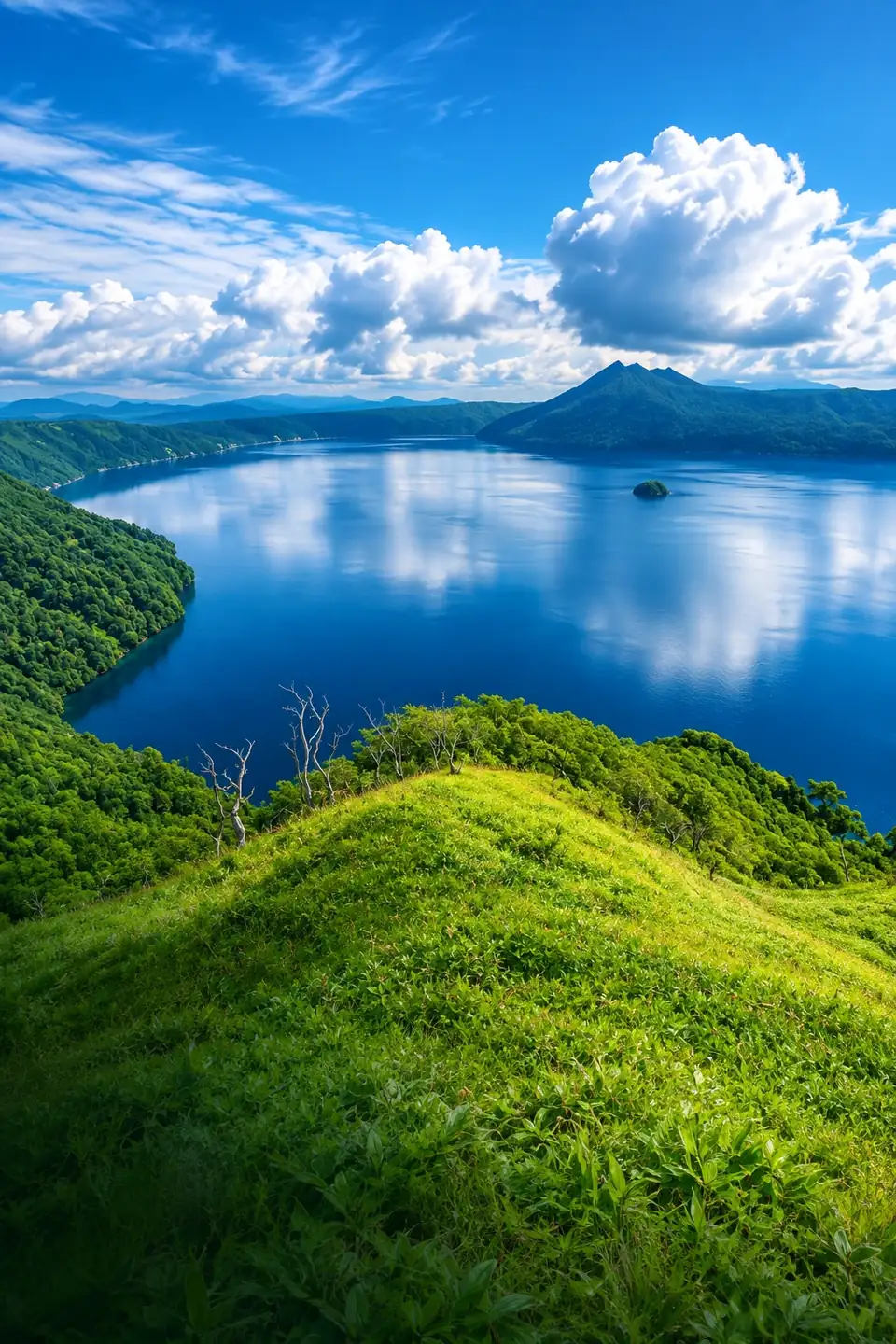
Lake Mashu is one of the world’s clearest lakes, renowned for its high water transparency (recorded maximum visibility of 41.6 meters). Formed about 7,000 years ago by a massive volcanic eruption, it is a caldera lake located at 351 meters above sea level. To the southeast rises Mount Mashu, called Kamuy by the Ainu people (altitude 858 meters). Lake Mashu has a circumference of 20 km, an area of 19.66 sq km, and a maximum depth of 212 m. With no inflowing or outflowing streams, the water surface is mirror-like and imbued with a serene atmosphere. The surrounding cliffs, 300 to 400 meters high, usually prevent direct access to the water’s edge.
Lake Kussharo
Lake Kussharo is a beautiful caldera lake in Akan National Park. With a circumference of 57 km, it is the largest lake in the park. Visitors can enjoy various outdoor activities such as fishing, hiking, kayaking, and cycling around the lake. A unique aspect is the presence of several natural outdoor hot springs (rotenburo) along the lakeshore, which are free to use and, unlike most Japanese hot springs, require wearing swimsuits. Note that some bathing areas may appear less clean. There is also a beach made of natural hot sand heated by geothermal sources.
Akan National Park
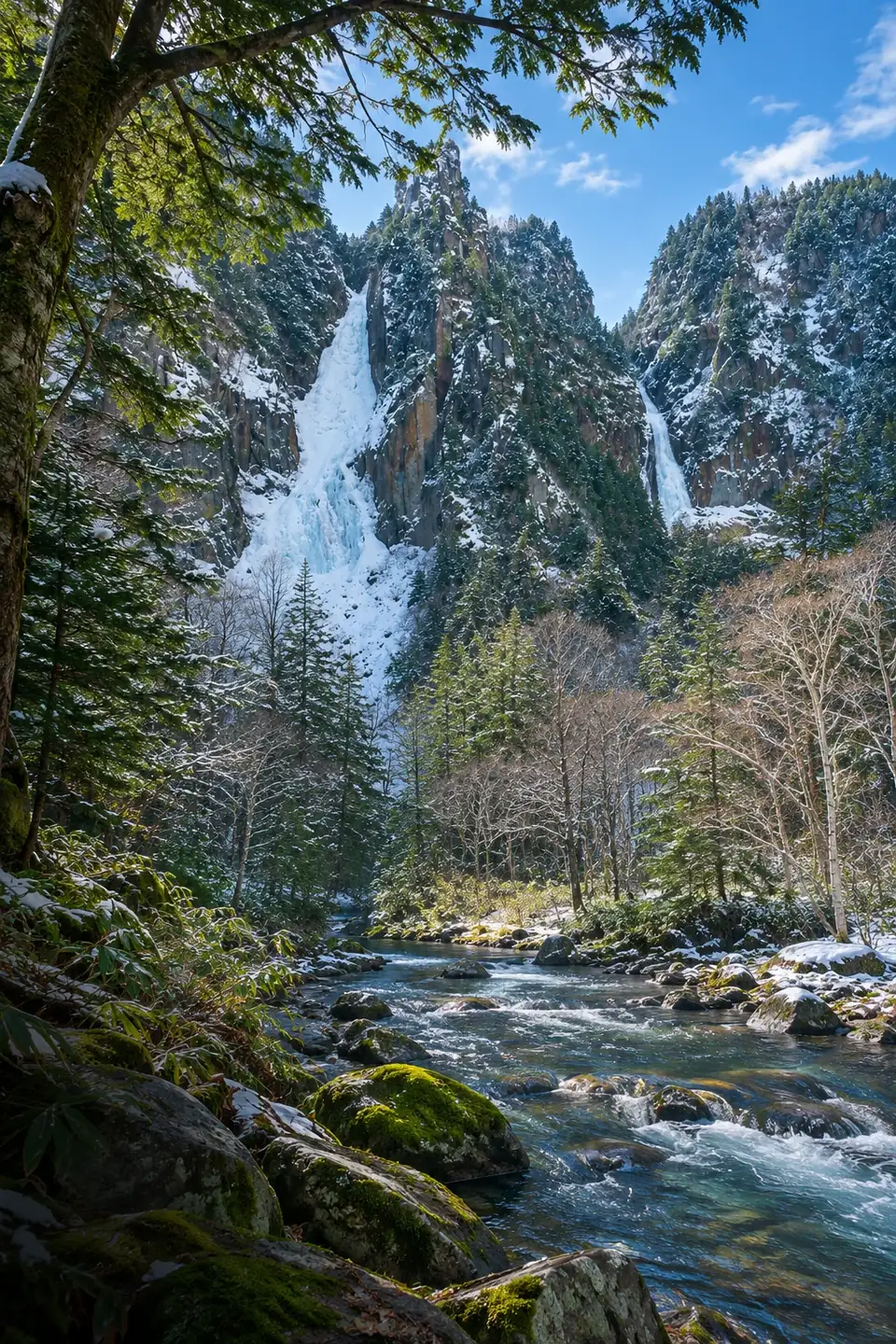
Akan National Park is a mountainous park formed by volcanoes including Mount Meakan, Mount Oakan, and Akan-Fuji. Located in eastern Hokkaido, it centers around three volcanic lakes: Lake Akan, Lake Kussharo, and Lake Mashu. The scenery is majestic with abundant hot springs and is quite popular. Because it lies inland, it experiences significant temperature variation in one day. Even when daytime temperatures reach 30°C in summer, nights can fall below 10°C with radiative cooling often creating a sea of clouds. In winter, you can see frost-covered trees and sparkling ice beads formed from air moisture.
 AI-rendered illustration
 AI-rendered illustration
 AI-rendered illustration
 AI-rendered illustration
 AI-rendered illustration