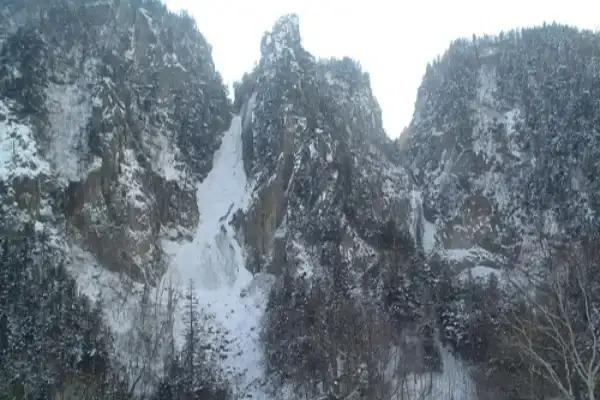
Today’s tour: Lake Akan - part of Akan National Park, the diamond-shaped lake formed by volcanic eruptions of Mount Meakan, featuring clear waters and scenic beauty. Lake Mashu - one of the world's clearest and most mysterious lakes, recognized as a Hokkaido heritage site in 2001. Its volcanic caldera creates a mirror-like, tranquil surface.
Breakfast: at the hotel. Lunch: at your own expense. Dinner: at your own expense.
Lake Akan Lakeside Observatory
The Lake Akan Lakeside Observatory is located south of the Akan Lake hot spring town, which transforms into the National Akan Lakeside Ski Area in winter. From the observatory, you can see Mount Meakan, Mount Oakan, the shimmering waters of Lake Akan, and the Akan volcanic crater. In spring to early summer, clusters of wildflowers can also be enjoyed.
Bihoro Pass
Bihoro Pass is the highest part of a 490-meter slope at the border of Bihoro Town and Teshikaga Town, located west of Lake Kussharo along National Route 243. It belongs to Akan National Park and featured as a filming location in the movie "If You Are the One." The observation deck offers views of Lake Kussharo and the Akan mountain range, making it a popular spot, though winter storms may close access.
The famous Japanese singer Hibari Misora sang "Bihoro Pass," and a monument is set at this lookout. It is also the filming site for the renowned Japanese love story "What's Your Name."
There is a roadside station called "Grutto Panorama Bihoro Pass" at the highest point, offering rest areas and souvenir shops. Local specialties include bear bamboo leaf tea, made from mountain bamboo grass, and bear bamboo leaf egg roll ice cream. A wide-angle lens is recommended to capture the stunning views.
Lake Kussharo
Lake Kussharo is a beautiful caldera lake in Akan National Park. With a circumference of 57 km, it is the largest lake in the park. Visitors can enjoy various outdoor activities such as fishing, hiking, kayaking, and cycling around the lake. A unique aspect is the presence of several natural outdoor hot springs (rotenburo) along the lakeshore, which are free to use and, unlike most Japanese hot springs, require wearing swimsuits. Note that some bathing areas may appear less clean. There is also a beach made of natural hot sand heated by geothermal sources.
Lake Mashu
Lake Mashu is one of the world’s clearest lakes, renowned for its high water transparency (recorded maximum visibility of 41.6 meters). Formed about 7,000 years ago by a massive volcanic eruption, it is a caldera lake located at 351 meters above sea level. To the southeast rises Mount Mashu, called Kamuy by the Ainu people (altitude 858 meters). Lake Mashu has a circumference of 20 km, an area of 19.66 sq km, and a maximum depth of 212 m. With no inflowing or outflowing streams, the water surface is mirror-like and imbued with a serene atmosphere. The surrounding cliffs, 300 to 400 meters high, usually prevent direct access to the water’s edge.
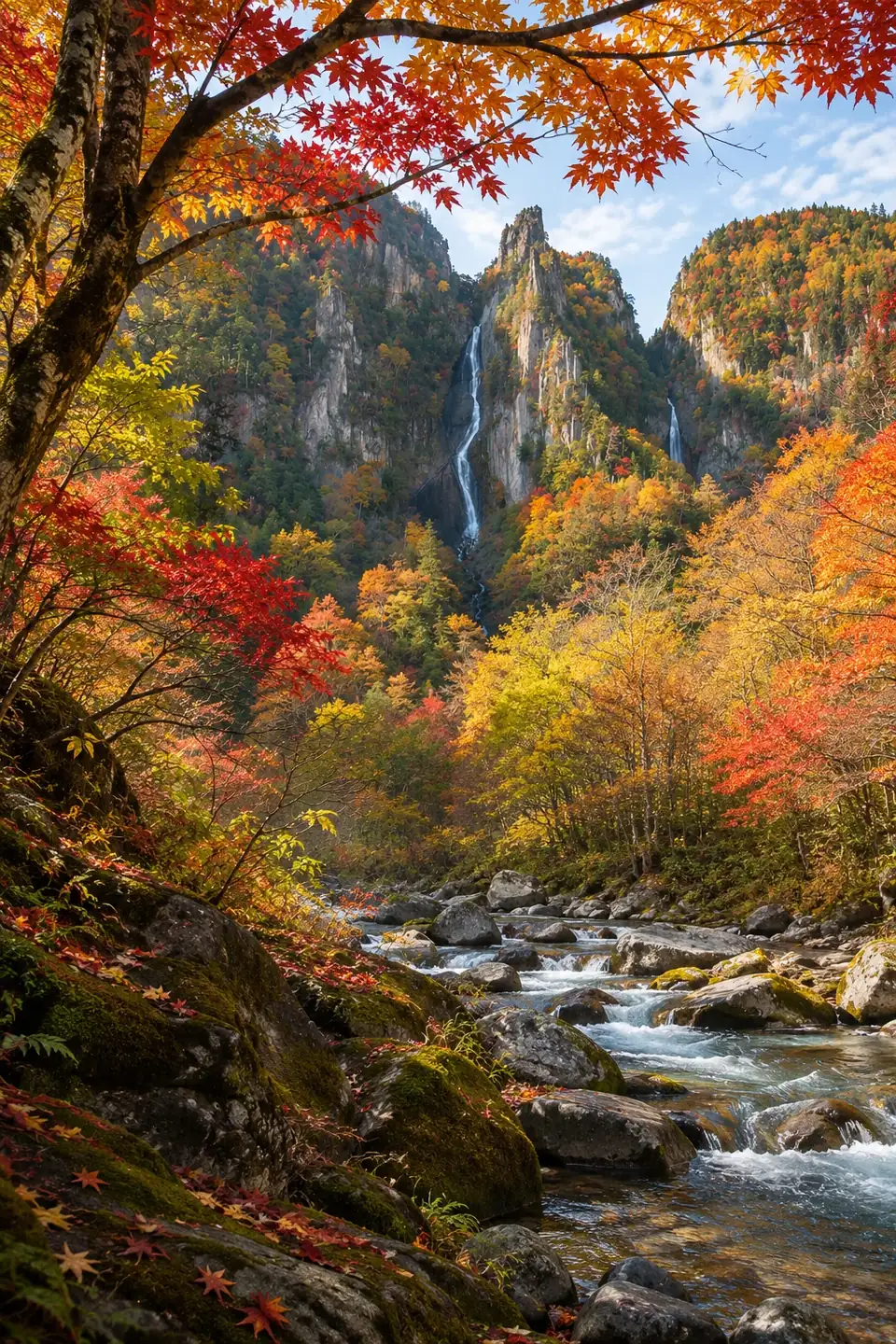 AI-rendered illustration
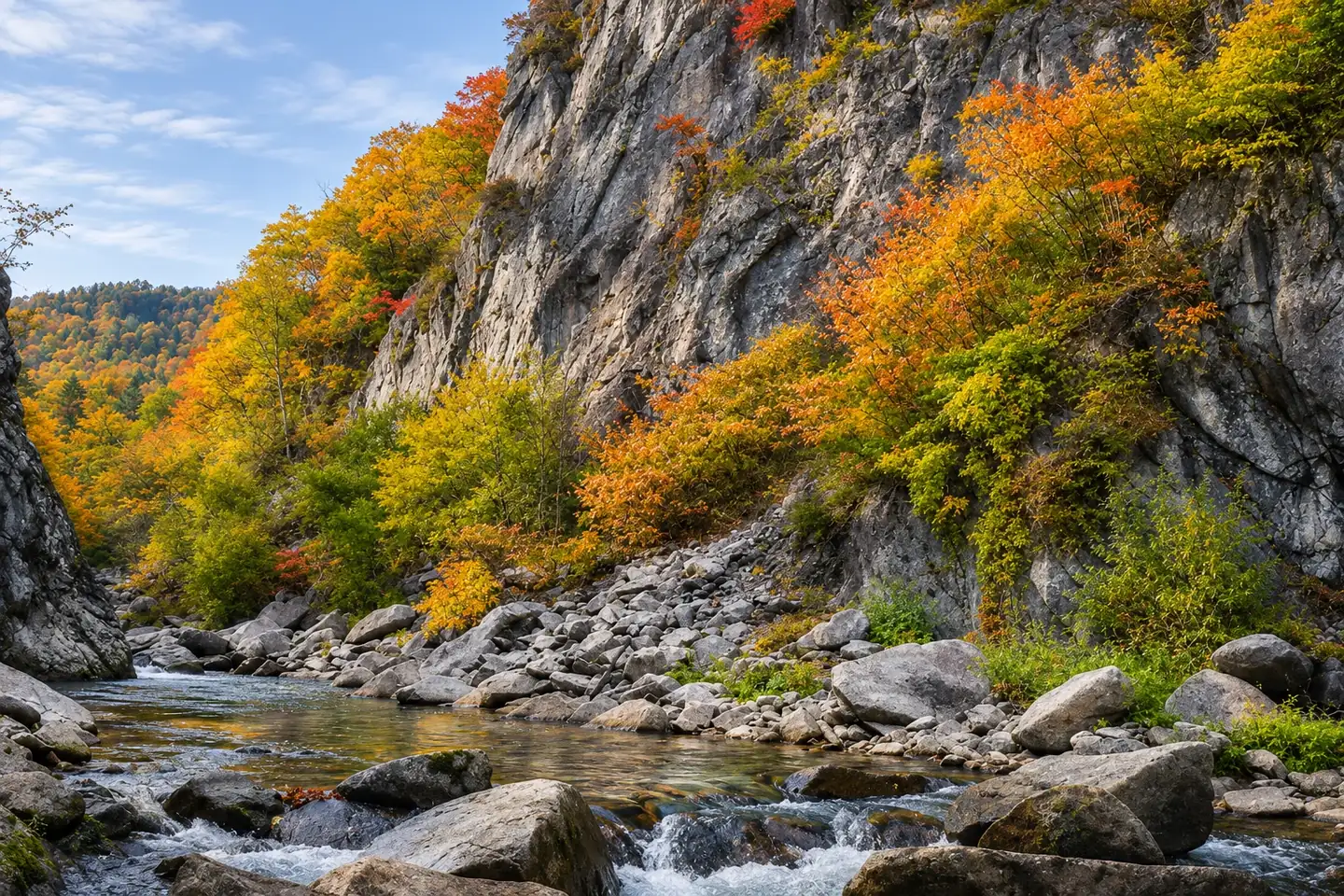 AI-rendered illustration