Travel to Arashiyama in the morning for its river and mountain scenery, particularly popular in spring and autumn. Ride the Sagano Romantic Train through the Hozu River gorge. Return to central Kyoto in the afternoon to visit UNESCO-listed Kinkaku-ji, reflected in its pond, followed by Nijo Castle, known for its historic architecture, carvings and painted interiors. The source gives inconsistent train durations; confirm the selected service when booking.
Breakfast: at the hotel. Lunch: at your own expense. Dinner: at your own expense.
Arashiyama
West of central Kyoto, Arashiyama has been a retreat for nobles and sightseers since the Heian period. Cherry trees and maples line the Katsura River, while the bamboo grove offers a memorable walk. Historic temples and shrines, scenery celebrated in Japanese literature and local hot springs add to the area's appeal.
Togetsukyo Bridge
Togetsukyo spans the Katsura River in Kyoto, linking the Sagano and Arashiyama areas. The bridge carries both pedestrians and vehicles. Cherry trees along the river provide a scenic spring setting, and nearby walking paths lead into Arashiyama Park.
Sagano Bamboo Grove
The Sagano Bamboo Grove is a well-known walking area in Arashiyama, Kyoto. Tall bamboo surrounds the paths, creating a quiet, distinctive atmosphere. Nearby riverside scenery and Togetsukyo Bridge complete a visit to the area, with colorful foliage on the surrounding hills in autumn.
Sagano Romantic Train
The Sagano sightseeing train runs slowly along the scenic Hozu River gorge between Torokko Saga and Torokko Kameoka stations. The one-way journey takes approximately 25 minutes. Cherry blossoms, summer greenery, autumn leaves and occasional winter snow offer different views with the seasons.
Tenryu-ji Temple
Tenryu-ji is the head temple of the Tenryu-ji branch of Rinzai Zen Buddhism in Arashiyama, Kyoto. Founded by Ashikaga Takauji with Muso Soseki as its first abbot, it was established to honor Emperor Go-Daigo. Its principal image is Shakyamuni Buddha.
 AI-rendered illustration
Kinkaku-ji Temple
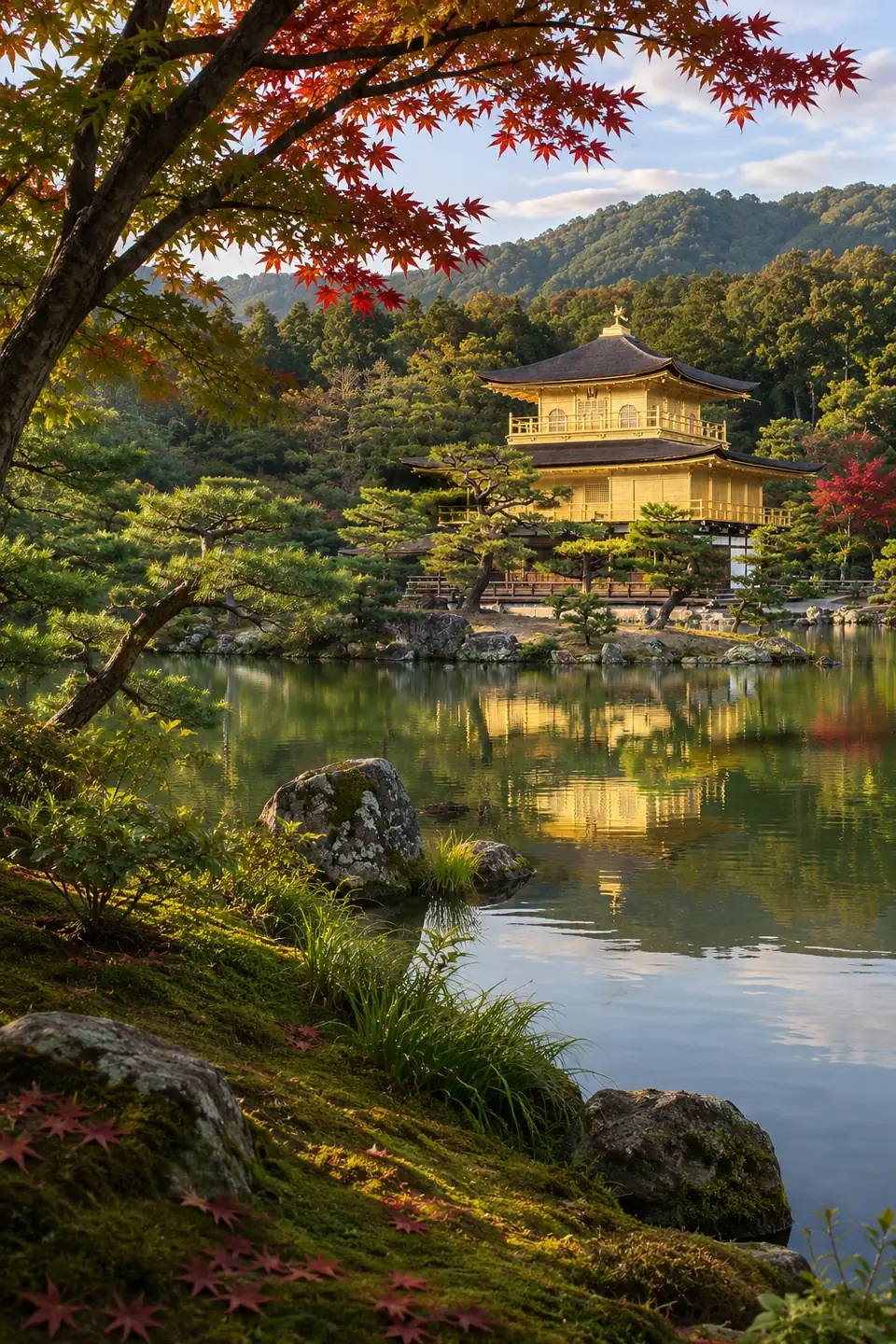
Officially named Rokuon-ji, Kinkaku-ji developed from a villa associated with shogun Ashikaga Yoshimitsu into a Zen temple. Its familiar name, the Golden Pavilion, comes from the gold leaf covering its reliquary hall. The original pavilion was destroyed by arson in 1950; the golden structure seen today is a reconstruction.
Nijo Castle
Nijo Castle was established in Kyoto in 1603 as a residence for Tokugawa Ieyasu during visits to the imperial capital and as a base for protecting the Imperial Palace. It was expanded under the third shogun, Iemitsu, in the 1620s. The Ninomaru Palace is a National Treasure, and the complex became part of Kyoto's UNESCO World Heritage listing in 1994.
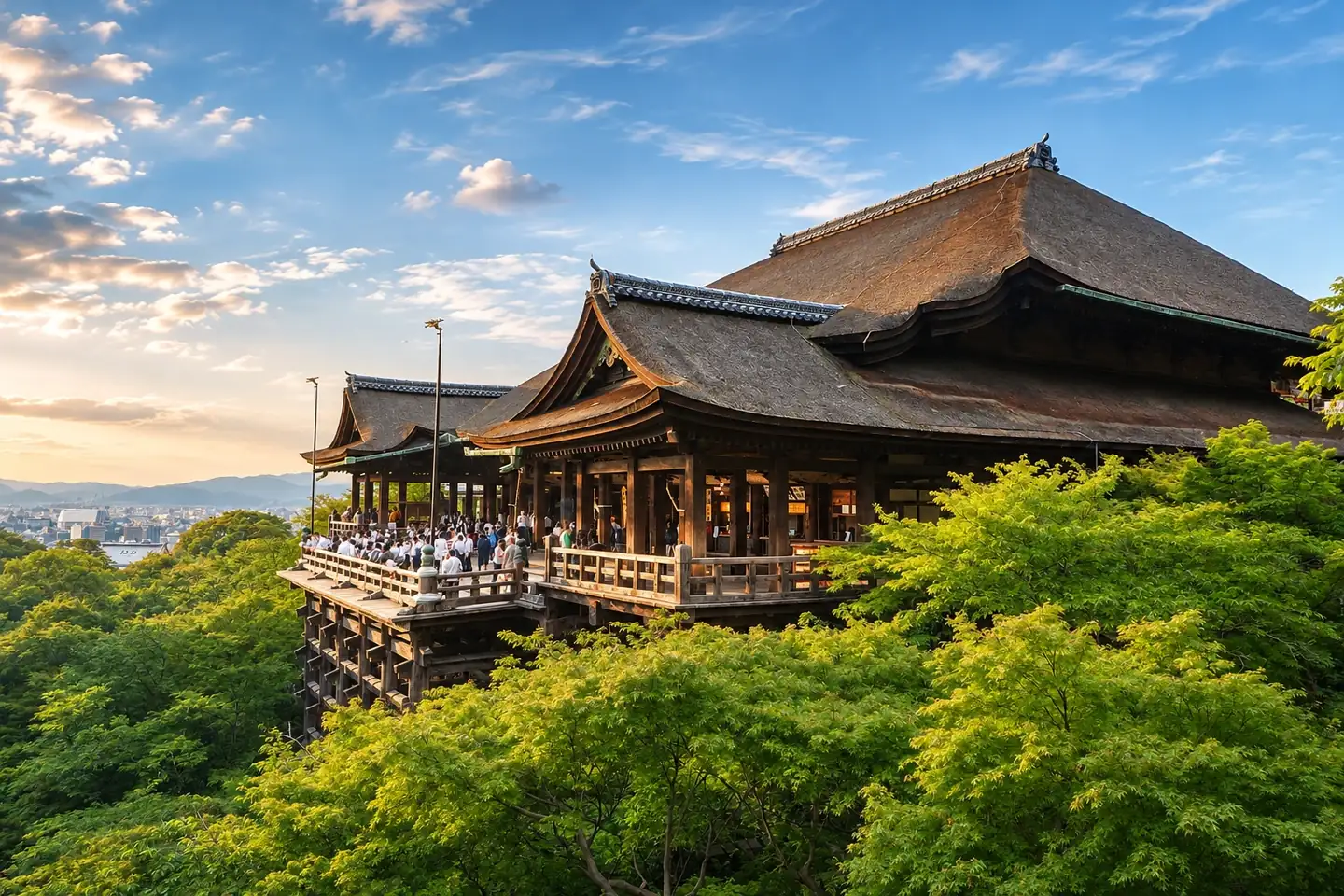 AI-rendered illustration
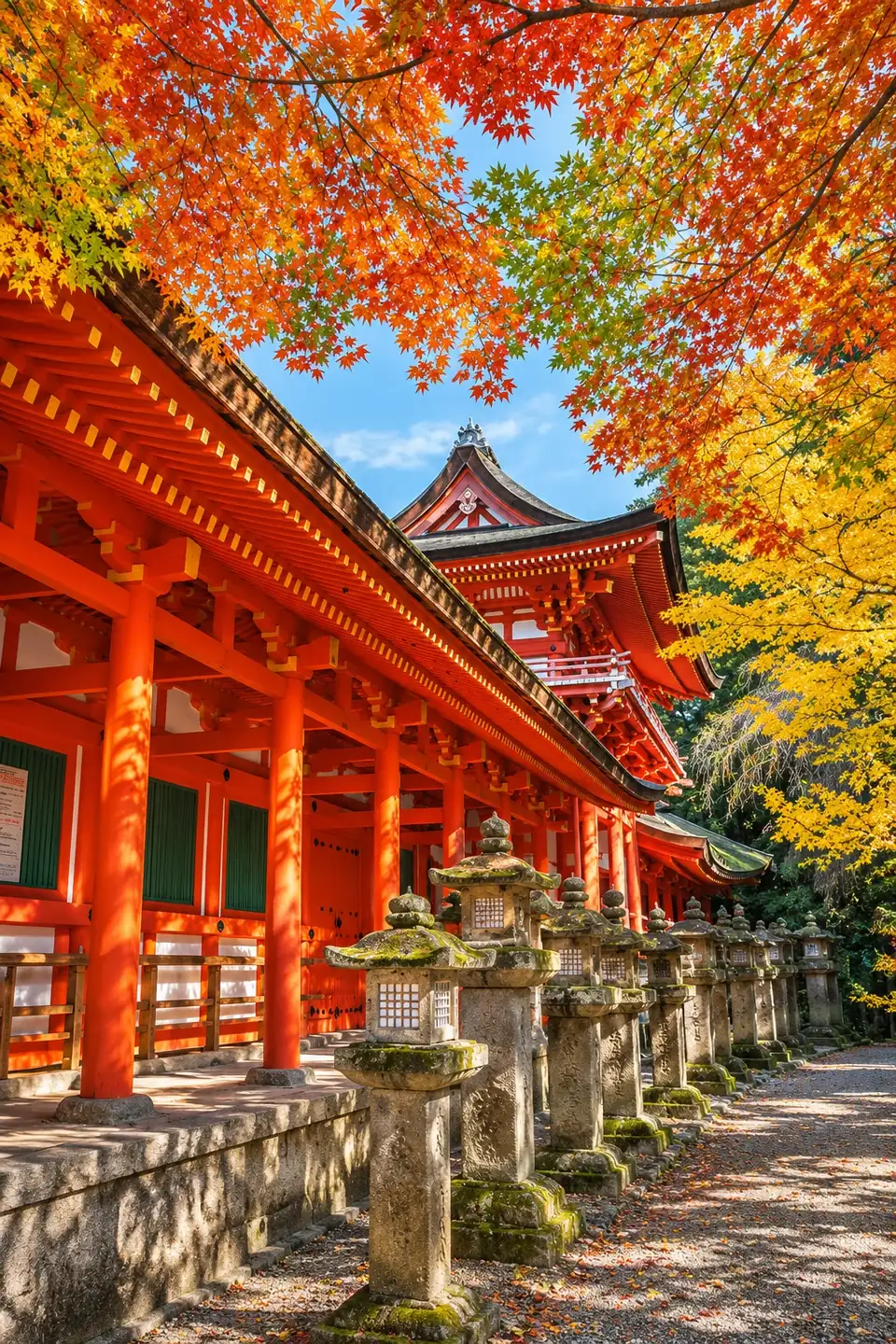 AI-rendered illustration