Japan · 7 DAYS

Nagoya & Tateyama Kurobe – Stunning Snow Corridor Opening

Nagoya → Gifu → Kanazawa → Toyama

Tateyama Kurobe: Spectacular Snow Corridor Opening Stroll Kanazawa's lively Geisha teahouse district, the premier Edo-style Higashi Chaya district

7 daysWinterItinerary idea

Request this itinerary

Leave your details, and our travel specialists will get in touch by email or your preferred contact method.

Your specialist will confirm the itinerary, pricing and availability with you.

How we use your information

Your inquiry is sent to info@jasperlimo.com so our team can respond. Please do not include passport or payment details.

JOURNEY HIGHLIGHTS

Japan, made personal.

Nagoya, Tateyama Kurobe: Stunning Snow Corridor Opening, Shirakawa-go Village (World Heritage), Kanazawa Kenrokuen Garden, Takayama Old Town 7-Day Deep Tour

Day 1 starts in Nagoya. International airfare is arranged separately.

  • 01Tateyama Kurobe: Spectacular Snow Corridor Opening
  • 02Stroll Kanazawa's lively Geisha teahouse district, the premier Edo-style Higashi Chaya district
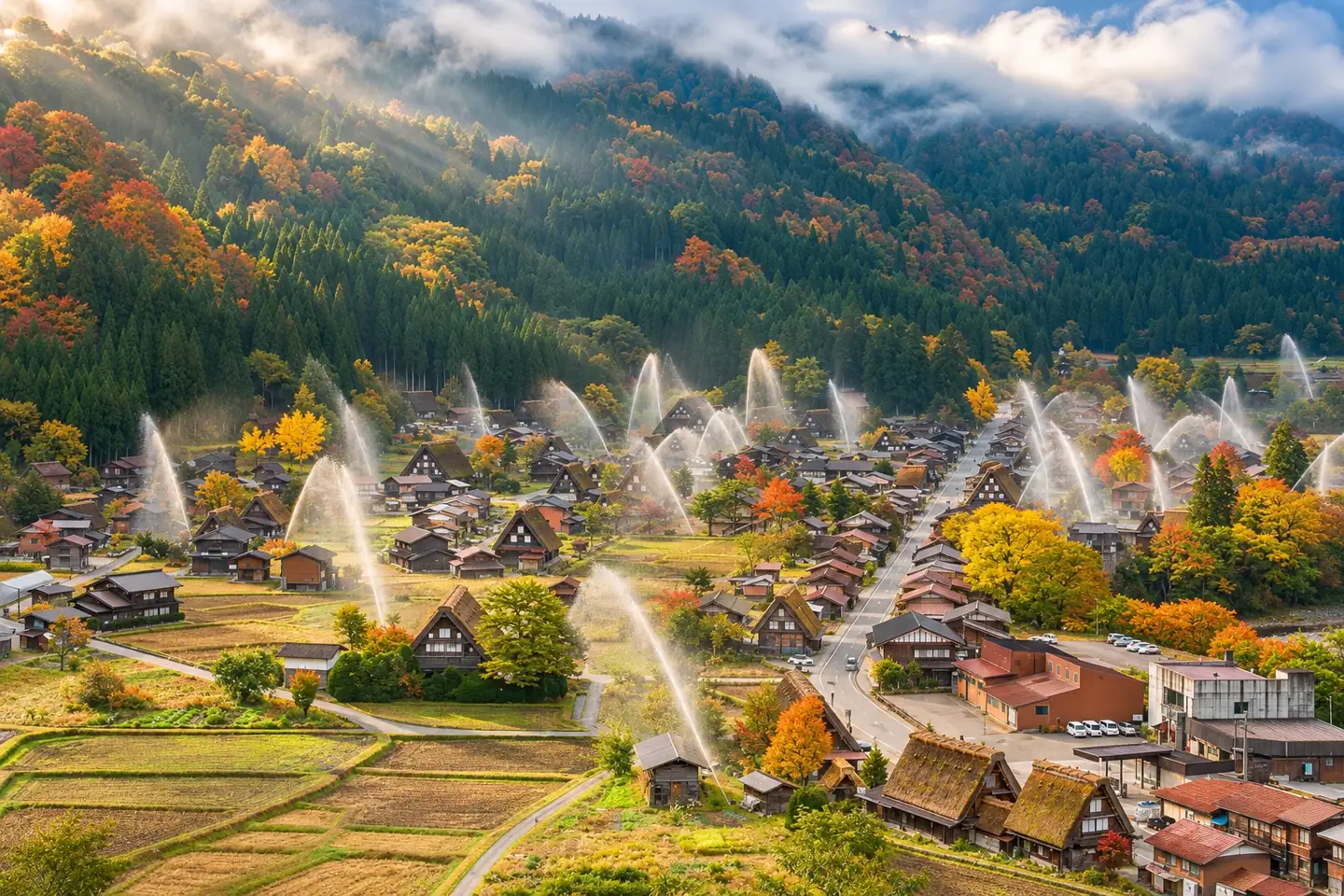
  • 03Japan's most beautiful World Heritage Site – Shirakawa-go Gassho Village

Your journey, day by day

01

Nagoya

Day 1 counts from arrival in Nagoya. Activities and accommodation will be arranged based on actual arrival times; international flights are not included. Airport transfers can be arranged separately; inclusion depends on the confirmed plan.

AI-rendered illustration

Day 1 counts from arrival in Nagoya. Activities and accommodation will be arranged based on actual arrival times; international flights are not included. Airport transfers can be arranged separately; inclusion depends on the confirmed plan.

Breakfast: at your own expense. Lunch: at your own expense. Dinner: at your own expense.

02

Nagoya → Gifu → Kanazawa

Visit Japan's most beautiful World Heritage Site: Shirakawa-go Gassho Village → Kanazawa's Kenrokuen Garden, one of Japan's top three gardens → Stroll Kanazawa's Edo-style Higashi Chaya district (includes complimentary gold leaf ice cream) → Hotel rest. Accommodation: Hyatt Centric Kanazawa or equivalent.

AI-rendered illustration

Visit Japan's most beautiful World Heritage Site: Shirakawa-go Gassho Village → Kanazawa's Kenrokuen Garden, one of Japan's top three gardens → Stroll Kanazawa's Edo-style Higashi Chaya district (includes complimentary gold leaf ice cream) → Hotel rest. Accommodation: Hyatt Centric Kanazawa or equivalent.

Breakfast: at the hotel. Lunch: at your own expense. Dinner: at your own expense.

Shirakawa-go Gassho VillageAI-rendered illustration

Shirakawa-go Gassho Village

Shirakawa-go is a tranquil mountain village surrounded by mountains, with rice paddies and rivers running through. The village’s traditional gassho-style thatched houses number over 110, grouped together, and were designated a UNESCO World Cultural Heritage site in 1995. At the open-air museum, the Gassho Village Heritage Park, 25 gassho houses from across Shirakawa-go have been relocated and preserved. The park also features temple replicas, waterwheel huts, charcoal kilns, and stables built in the style of old rural villages. Traditional crafts such as dyeing and weaving are demonstrated, and visitors can experience them hands-on.

Kenrokuen Garden

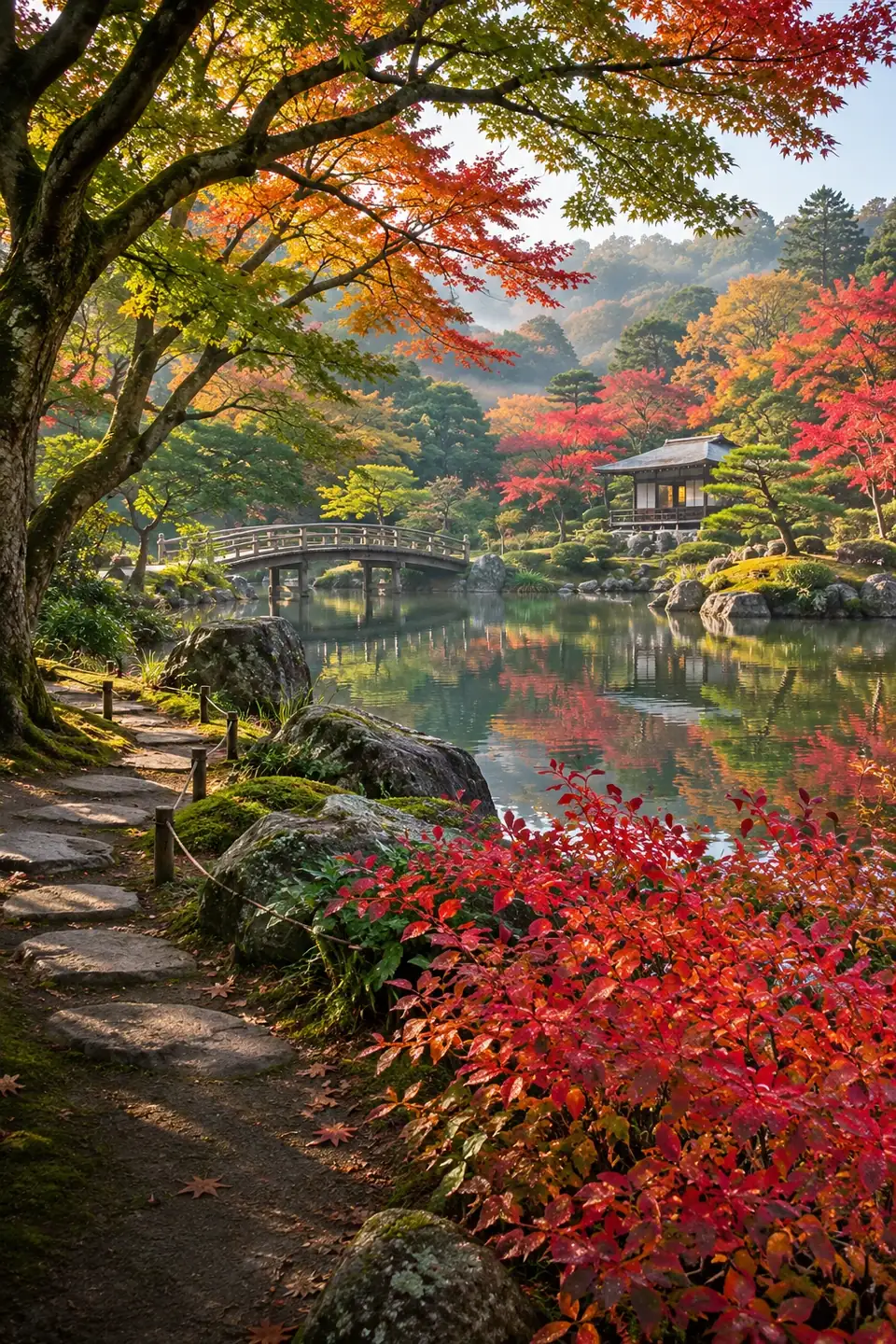
Kenrokuen is considered one of Japan's top three gardens. Developed over 170 years by four generations of feudal lords, it features a beautiful circular walking garden style. A large central pond runs through it, surrounded by Japanese-style artificial hills and pavilions. The garden embodies six aesthetic qualities—spaciousness, seclusion, artifice, antiquity, water features, and distant views—hence its name "Kenrokuen." It offers distinct natural beauty each season: cherry and plum blossoms in spring, azaleas and irises in summer, autumn maples, and in winter, snow suspensions protect the pines, creating a dreamlike snowy landscape.

Higashi Chaya District

Kanazawa has three historic Chaya (teahouse) districts dating back to the Edo period: Nishi Chaya, Higashi Chaya, and Kazue-machi. Stone-paved streets are lined with many Edo-era teahouse buildings. Higashi Chaya is the largest of the three. It is a good place to experience local tea culture.

03

Kanazawa → Toyama

Kanazawa Castle, the fief of Maeda Toshiie → Kanazawa gold leaf making experience → Kaga Traditional Crafts Village, a cultural theme park → Nagamachi Samurai District historic residence stroll → Transfer to Toyama and stay at a hot spring hotel. Accommodation: Yawaragi no Yado Umi Kirara or equivalent.

Kanazawa Castle, the fief of Maeda Toshiie → Kanazawa gold leaf making experience → Kaga Traditional Crafts Village, a cultural theme park → Nagamachi Samurai District historic residence stroll → Transfer to Toyama and stay at a hot spring hotel. Accommodation: Yawaragi no Yado Umi Kirara or equivalent.

Breakfast: at the hotel. Lunch: at your own expense. Dinner: at the hotel.

Kanazawa Castle

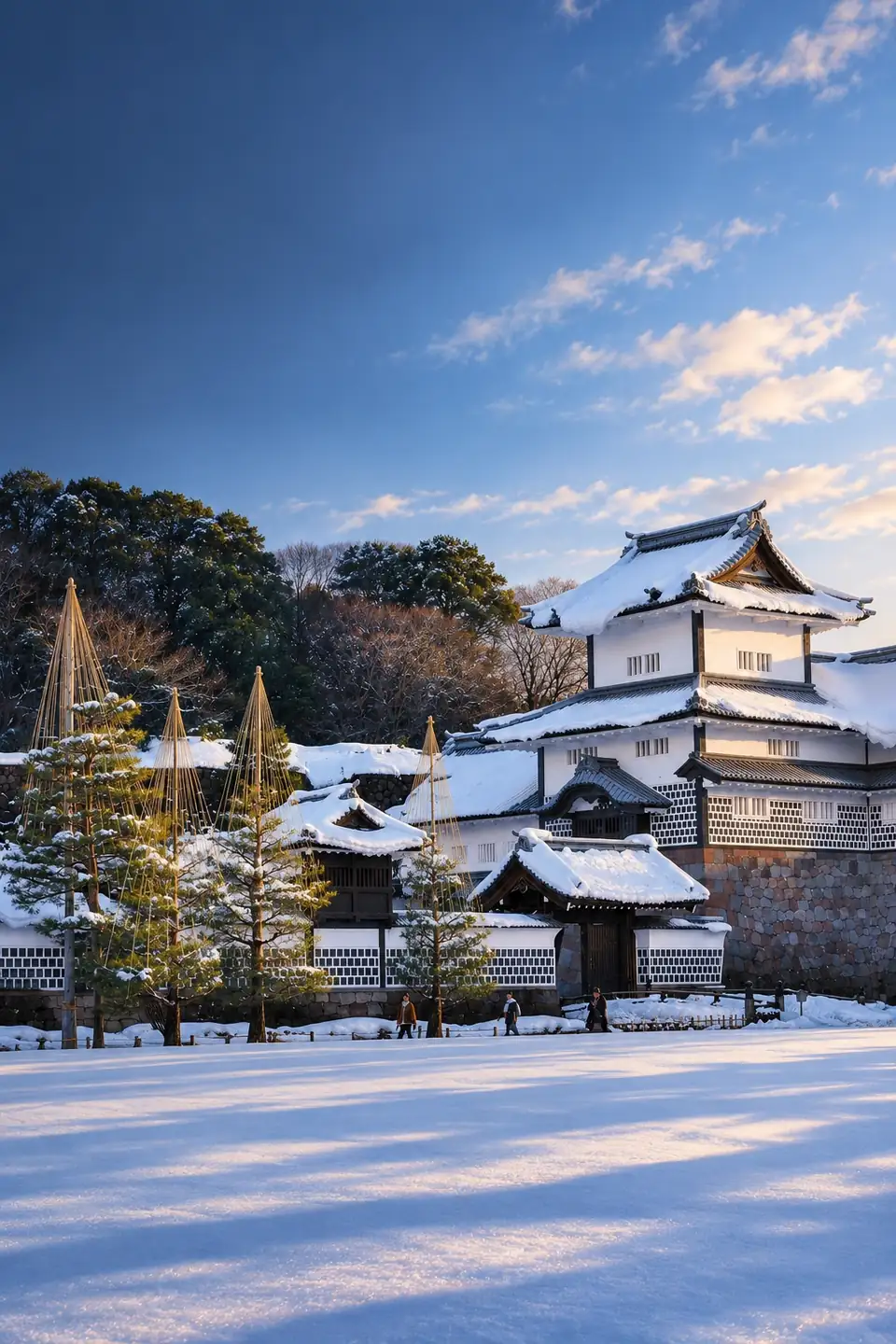
Kanazawa Castle, located in Marunouchi, Kanazawa City, is one of Japan's top 100 castles. During the Edo period, it was the stronghold of the Kaga Domain's Maeda clan. Its castle tower site is a nationally important historic asset. Adjacent to Kenrokuen Garden, the white castle peeks through green trees. Built in 1583, it was the residence of Maeda Toshiie, principal vassal of Toyotomi Hideyoshi. Though the original castle wasn’t fully preserved due to history, reconstructed diamond-shaped turrets, long barracks, and bridge gate turrets recreate the wooden castle’s design from a century ago, showcasing pure aesthetics.

Kaga Traditional Craft Village - Yunokuni Forest

Kaga Traditional Craft Village - Yunokuni Forest

Set in a vast natural forest of 130,000 tsubo, this area features clustered traditional Japanese buildings showcasing various styles. These buildings introduce visitors to traditional crafts and Kaga culture. Visitors interested can try hands-on craft creation, experiencing centuries-old skills and exquisite traditional crafts. The village includes experience centers like gold leaf, tea ceremony, Japanese sweets, Wajima lacquerware, Japanese paper making, Echizen pottery, and glass crafts. Enjoy the creative process amid a natural oxygen-rich environment.

Nagamachi Samurai District

The Nagamachi Samurai District in Kanazawa, Ishikawa Prefecture, is a tourist area featuring samurai residences for upper and middle-ranking retainers from the Kaga domain era. Well-preserved earthen walls and stone-paved streets retain the charm of the feudal period. The district’s name is derived from the Nagamura family residence, important retainers of the Maeda family.

04

Toyama → Gifu

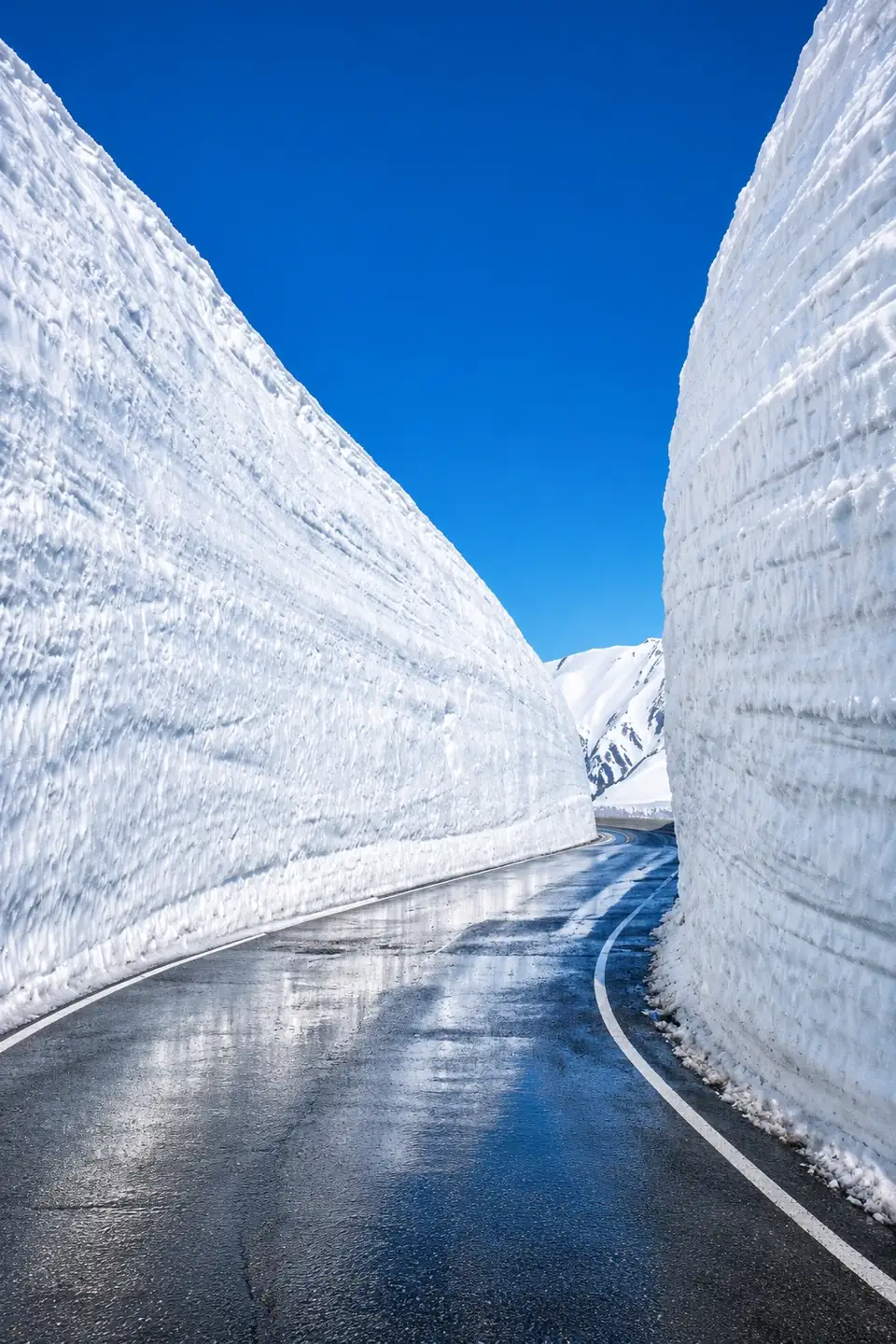
Begin the highlight of the trip at Tateyama, known as the Japanese Alps, located in Chubu Sangaku National Park in Toyama Prefecture. Sitting on the Hida Mountains, it is one of Japan's three sacred mountains and a jewel of the Hokuriku region. Called the 'roof of Japan,' it's an international mountain resort known as the 'Cloud Sanctuary,' famed for mountain sightseeing. The route is closed in winter due to deep snow and opens from late April to mid-November. Before the spring opening, snowplows carve a path through snow walls over 20 meters tall, creating a spectacular and unique natural beauty. Kurobe Gorge, nestled between the Tateyama mountain range, remains pristine with rich natural landscapes including waterfalls and streams. Seasonal highlights: towering snow walls up to 18 meters in spring; lush green in summer; vibrant autumn foliage; and the contrast of snowy peaks with colorful forests in late fall, forming a beautiful natural painting. Different transportation modes—cable cars, highland buses, tunnel buses, mountain trains—allow easy exploration of rugged terrain, breathtaking views, and the impressive Kurobe Dam, Japan's tallest and the world's fifth tallest. The journey includes: - Tateyama Station to Bijodaira by cable car (1.7 km, 7 minutes) with beautiful highland views. - Highland bus from Bijodaira to Murodo (23 km, 50 minutes) near 3000 m altitude, with snow and plateau scenery. - Trolley bus (3.6 km, 10 minutes) to Daikanbo. - Short rest and lunch at Daikanbo with commanding mountain and sea of clouds views. - Kurobe aerial cable car (1.7 km, 7 minutes) to Kurobedaira. - Kurobe underground cable car (0.8 km, 5 minutes) to Kurobe Lake. - Walk across Kurobe Dam (0.6 km, 15 minutes) to experience this major engineering feat. - Final trolley bus (6.1 km, 15 minutes) to Ogizawa Station completing the journey. Temperatures range from about -5°C to 16°C on the mountain. The scenery varies dramatically with the seasons—from snow walls and alpine flowers in spring to vibrant autumn leaves and snowy peaks in winter. Please bring warm clothing, gloves, and scarves. Accommodation: Hotaka-so Mountain Hotel or equivalent.
AI-rendered illustration

Begin the highlight of the trip at Tateyama, known as the Japanese Alps, located in Chubu Sangaku National Park in Toyama Prefecture. Sitting on the Hida Mountains, it is one of Japan's three sacred mountains and a jewel of the Hokuriku region. Called the 'roof of Japan,' it's an international mountain resort known as the 'Cloud Sanctuary,' famed for mountain sightseeing. The route is closed in winter due to deep snow and opens from late April to mid-November. Before the spring opening, snowplows carve a path through snow walls over 20 meters tall, creating a spectacular and unique natural beauty. Kurobe Gorge, nestled between the Tateyama mountain range, remains pristine with rich natural landscapes including waterfalls and streams. Seasonal highlights: towering snow walls up to 18 meters in spring; lush green in summer; vibrant autumn foliage; and the contrast of snowy peaks with colorful forests in late fall, forming a beautiful natural painting. Different transportation modes—cable cars, highland buses, tunnel buses, mountain trains—allow easy exploration of rugged terrain, breathtaking views, and the impressive Kurobe Dam, Japan's tallest and the world's fifth tallest. The journey includes: - Tateyama Station to Bijodaira by cable car (1.7 km, 7 minutes) with beautiful highland views. - Highland bus from Bijodaira to Murodo (23 km, 50 minutes) near 3000 m altitude, with snow and plateau scenery. - Trolley bus (3.6 km, 10 minutes) to Daikanbo. - Short rest and lunch at Daikanbo with commanding mountain and sea of clouds views. - Kurobe aerial cable car (1.7 km, 7 minutes) to Kurobedaira. - Kurobe underground cable car (0.8 km, 5 minutes) to Kurobe Lake. - Walk across Kurobe Dam (0.6 km, 15 minutes) to experience this major engineering feat. - Final trolley bus (6.1 km, 15 minutes) to Ogizawa Station completing the journey. Temperatures range from about -5°C to 16°C on the mountain. The scenery varies dramatically with the seasons—from snow walls and alpine flowers in spring to vibrant autumn leaves and snowy peaks in winter. Please bring warm clothing, gloves, and scarves. Accommodation: Hotaka-so Mountain Hotel or equivalent.

Breakfast: at the hotel. Lunch: at your own expense. Dinner: at the hotel.

Tateyama Kurobe Snow Wall SpectacleAI-rendered illustration

Tateyama Kurobe Snow Wall Spectacle

One of the most anticipated events at Tateyama Kurobe each year is the spring opening. After being closed all winter, from late April a pathway is carved through the snow, creating a Moses-like parting of the white sea. The snow corridor walls reach 10 to 20 meters high, creating a spectacular scene. Walking inside, you can touch icy walls akin to polar regions and feel the awe of only a strip of blue sky above you. This snowy wonderland is a once-in-a-lifetime experience. The snow corridor lasts until late June, and with luck, early July can still feature walls twice the height of a double-decker bus. Besides the snow walls, the journey from Tateyama Station to Ogizawa covers about 90 kilometers on the Alps route and involves using over six transfer points and seven types of transportation, including the longest unsupported aerial tramway in the world, an electric tunnel bus with zero emissions, and a steep underground cable car. The segment from Daikanbo to Kurobedaira offers the best views of the Tateyama range, with sweeping vistas in just seven minutes.
05

Gifu → Nagoya

Hida's Little Kyoto – Stroll Nakabashi Bridge, Miyagawa Riverbank, Old Town and Kami San-no-Machi Street (includes complimentary Hida beef skewer) → Visit Takayama Jinya government office → Ena Gorge scenic viewpoint with lake cruise (included) → Visit the bustling Atsuta Shrine → Overnight stay at hotel. Accommodation: Nagoya Marriott Hotel or equivalent.

Hida's Little Kyoto – Stroll Nakabashi Bridge, Miyagawa Riverbank, Old Town and Kami San-no-Machi Street (includes complimentary Hida beef skewer) → Visit Takayama Jinya government office → Ena Gorge scenic viewpoint with lake cruise (included) → Visit the bustling Atsuta Shrine → Overnight stay at hotel. Accommodation: Nagoya Marriott Hotel or equivalent.

Breakfast: at the hotel. Lunch: at your own expense. Dinner: at your own expense.

Takayama Jinya

Takayama Jinya

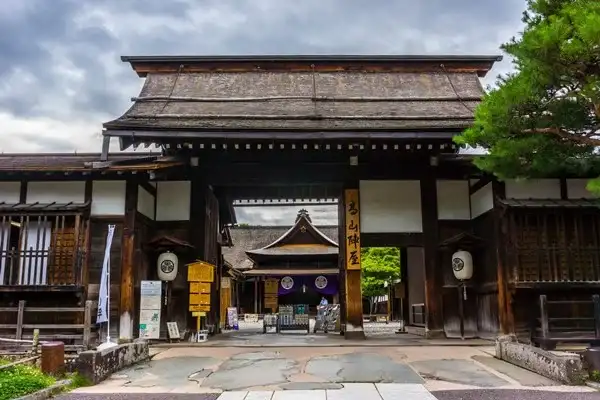
Takayama Jinya is located in Takayama, known as "Little Kyoto." It was originally one of the residences of the Kanamori lords of Takayama Castle, preserving elegant and nostalgic architecture. Built in 1615 with over 400 years of history, only the storehouse remains from the original, the rest reconstructed to match the original style. The interior retains original layouts including the interrogation room with bamboo-crafted restraints, still used as the interrogation site. From the Meiji era, it served as prefectural and district government offices, making it Japan's only preserved local government building.

Sanmachi Suji Old Town

Sanmachi Suji Old Town is the heart of Takayama city, featuring well-preserved historic buildings. You can spend a day strolling these ancient streets, browsing a wide range of handicraft shops for souvenirs, enjoying local tea, and savoring specialties like Wagyu beef sushi. Nearby, many sake breweries offer tasting sessions; Harada Brewery is open to visitors for tours.

Enakyo Gorge Observation Deck

The observation deck is located at Enakyo Gorge in eastern Gifu, featuring cliffs and bizarre rock formations shaped by natural erosion, spanning from the artificial lake formed by the Oi Dam blocking the Kiso River upstream to Nakatsugawa. The umbrella-shaped rock that seems to pierce the earth is a nationally protected natural monument, alongside reddish moss-covered rocks that are iconic gorge formations. Cherry blossoms, azaleas, and fall foliage at Enakyo Gorge are even more beautiful against these massive rocks, attracting many visitors. Visitors can enjoy boat tours on the water or take an aerial ropeway for a bird’s-eye view. On the north bank is Enakyo Amusement Park with 25 attractions, fun for adults and children alike, where the Ferris wheel offers views of Enakyo Gorge and the Southern Alps.

Atsuta Shrine

Atsuta Shrine is one of Japan’s oldest shrines, believed to have been established by Emperor Keiko in the 2nd century AD, with a history of 1900 years. The main hall enshrines five deities including Takehiko no Mikoto, Miyatsuhime, Amaterasu Omikami, Susanoo no Mikoto, and Ukanomitama no Mikoto. The shrine has been highly revered throughout Japanese history and holds great authority among the people. Successive rulers, including Toyotomi Hideyoshi and Tokugawa Ieyasu, have extensively renovated it. Recently, the Japanese Emperor and Empress have also paid visits.

06

Nagoya

Famous Chisen Kaiyu-style Japanese Garden - Tokugawa Garden → One of Japan's Top 100 Castles - Nagoya Castle → Renowned Port of Nagoya Public Aquarium → Hotel Accommodation. Accommodation: Nagoya Marriott Associa Hotel or equivalent

AI-rendered illustration

Famous Chisen Kaiyu-style Japanese Garden - Tokugawa Garden → One of Japan's Top 100 Castles - Nagoya Castle → Renowned Port of Nagoya Public Aquarium → Hotel Accommodation. Accommodation: Nagoya Marriott Associa Hotel or equivalent

Breakfast: at the hotel. Lunch: at your own expense. Dinner: at your own expense.

Tokugawa GardenAI-rendered illustration

Tokugawa Garden

Tokugawa Garden is a Japanese stroll garden built by the second Owari Tokugawa lord remodeling his residence. Known spots include Ryumon Waterfall, Meifukei Stream, Ryusen Lake, Kansenkaku Pavilion, Kosen Bridge, Shisuian Hermitage, and Zuiryutei Teahouse. Kansenkaku Pavilion offers the best views of the garden and houses a restaurant and shop. A combined ticket for Tokugawa Garden, Tokugawa Art Museum, and Hozo Bunko Library is available. The Tokugawa Art Museum is more like a small museum with more national treasures than Atsuta Shrine.

Nagoya Castle

Nagoya Castle, also known as Meijo, is a nationally designated historic site and ranks fourth among Japan's top 100 castles. After the Battle of Sekigahara, Tokugawa Ieyasu, founder of the Tokugawa shogunate and birthplace of Oda Nobunaga, built Nagoya Castle on the ruins of Nagoya Castle to provide for his ninth son. Orders were sent to various daimyos to assist in construction. Katō Kiyomasa, Fukushima Masanori, and others contributed to show loyalty. The castle, completed in under two years, was inherited by three generations of Tokugawa family. A bronze statue of Katō Kiyomasa carrying stones stands in Meijo Park today.

Port of Nagoya Public Aquarium

The Port of Nagoya Public Aquarium has North and South buildings. Its exhibits explore marine mammals and ocean habitats, including a journey from Japanese waters toward Antarctica. Consult the official daily program for performances and feeding sessions.

07

Nagoya

Enjoy free time as your departure schedule allows. The itinerary ends locally in Nagoya; airport transfer can be arranged to suit your flight schedule. International return flights are arranged separately; travel days after the local itinerary ends are not included in the itinerary length.

AI-rendered illustration

Enjoy free time as your departure schedule allows. The itinerary ends locally in Nagoya; airport transfer can be arranged to suit your flight schedule. International return flights are arranged separately; travel days after the local itinerary ends are not included in the itinerary length.

Breakfast: at the hotel. Lunch: at your own expense. Dinner: at your own expense.

YOUR ROUTE

Know the shape of your journey.

Starts in
Nagoya
Ends in
Nagoya
Local itinerary
7 days

A proposal shaped around you

Use this route as a starting point. Tell us your dates, pace and accommodation preferences.

Your quote will specify accommodation, guiding, transport, activities, meals and any optional arrangements before you book. International flights and airport transfers are discussed separately.

TRAVEL IN COMFORT

The right vehicle for your group.

Toyota Alphard

Up to 6 passengers

Toyota HiAce

Up to 9 passengers

Our main touring vehicles. We recommend a vehicle based on your group size and luggage. Maximum seating capacity does not guarantee room for all bags when every seat is occupied. Vehicle availability is confirmed for your destination.

More to discover

Shirakawa-go Gassho Village

Shirakawa-go is a tranquil mountain village surrounded by mountains, with rice paddies and rivers running through. The village’s traditional gassho-style thatched houses number over 110, grouped together, and were designated a UNESCO World Cultural Heritage site in 1995. At the open-air museum, the Gassho Village Heritage Park, 25 gassho houses from across Shirakawa-go have been relocated and preserved. The park also features temple replicas, waterwheel huts, charcoal kilns, and stables built in the style of old rural villages. Traditional crafts such as dyeing and weaving are demonstrated, and visitors can experience them hands-on.

Kenrokuen Garden

Kenrokuen is considered one of Japan's top three gardens. Developed over 170 years by four generations of feudal lords, it features a beautiful circular walking garden style. A large central pond runs through it, surrounded by Japanese-style artificial hills and pavilions. The garden embodies six aesthetic qualities—spaciousness, seclusion, artifice, antiquity, water features, and distant views—hence its name "Kenrokuen." It offers distinct natural beauty each season: cherry and plum blossoms in spring, azaleas and irises in summer, autumn maples, and in winter, snow suspensions protect the pines, creating a dreamlike snowy landscape.

Higashi Chaya District

Kanazawa has three historic Chaya (teahouse) districts dating back to the Edo period: Nishi Chaya, Higashi Chaya, and Kazue-machi. Stone-paved streets are lined with many Edo-era teahouse buildings. Higashi Chaya is the largest of the three. It is a good place to experience local tea culture.

Gold Leaf Crafting Experience

Gold leaf is an alloy made primarily of pure gold with very small amounts of silver and copper, hammered and stretched into thin sheets. A coin-sized alloy sheet can be extended to 1 jō (a traditional Japanese mat area unit of about 1.65 square meters), with a thickness of only 0.01 to 0.02 millimeters. Its thinness allows light to pass through. If touched by fingertips, it immediately disintegrates into fine powder, disappearing without a trace. Visitors can experience the crafting process hands-on and create their own utensils, embracing the artisan spirit. You can also enjoy popular gold leaf ice cream—taking a bite of "gold" for a sweet and joyful moment.

Tateyama Kurobe Snow Wall Spectacle

One of the most anticipated events at Tateyama Kurobe each year is the spring opening. After being closed all winter, from late April a pathway is carved through the snow, creating a Moses-like parting of the white sea. The snow corridor walls reach 10 to 20 meters high, creating a spectacular scene. Walking inside, you can touch icy walls akin to polar regions and feel the awe of only a strip of blue sky above you. This snowy wonderland is a once-in-a-lifetime experience. The snow corridor lasts until late June, and with luck, early July can still feature walls twice the height of a double-decker bus. Besides the snow walls, the journey from Tateyama Station to Ogizawa covers about 90 kilometers on the Alps route and involves using over six transfer points and seven types of transportation, including the longest unsupported aerial tramway in the world, an electric tunnel bus with zero emissions, and a steep underground cable car. The segment from Daikanbo to Kurobedaira offers the best views of the Tateyama range, with sweeping vistas in just seven minutes.

Tateyama Kurobe 8 Unique Transport Experiences

About 100,000 visitors worldwide annually explore the Tateyama Kurobe Alpine Route, now a renowned classic route in Japan. Starting from Tateyama Station in Toyama, travelers use cable cars, highland buses, tunnel trolley buses, aerial ropeways, Kurobe Lake cable cars, walking, and Kanden tunnel trolley buses—eight modes of transport—to reach Ogizawa Station. The route can be started from either end: Tateyama in Toyama or Ogizawa in Nagano.

Takayama Jinya

Takayama Jinya is located in Takayama, known as "Little Kyoto." It was originally one of the residences of the Kanamori lords of Takayama Castle, preserving elegant and nostalgic architecture. Built in 1615 with over 400 years of history, only the storehouse remains from the original, the rest reconstructed to match the original style. The interior retains original layouts including the interrogation room with bamboo-crafted restraints, still used as the interrogation site. From the Meiji era, it served as prefectural and district government offices, making it Japan's only preserved local government building.

Enakyo Gorge Observation Deck

The observation deck is located at Enakyo Gorge in eastern Gifu, featuring cliffs and bizarre rock formations shaped by natural erosion, spanning from the artificial lake formed by the Oi Dam blocking the Kiso River upstream to Nakatsugawa. The umbrella-shaped rock that seems to pierce the earth is a nationally protected natural monument, alongside reddish moss-covered rocks that are iconic gorge formations. Cherry blossoms, azaleas, and fall foliage at Enakyo Gorge are even more beautiful against these massive rocks, attracting many visitors. Visitors can enjoy boat tours on the water or take an aerial ropeway for a bird’s-eye view. On the north bank is Enakyo Amusement Park with 25 attractions, fun for adults and children alike, where the Ferris wheel offers views of Enakyo Gorge and the Southern Alps.

Before you go

This journey starts at the destination. Seasonal experiences, service inclusions and availability are confirmed with your personalized proposal.

Original source & photography · 6renyou ↗

Image credits and illustrations

BEFORE YOU PLAN

Travel planning, clearly explained.

OpenEast brings together Japan and South Korea itinerary ideas for travelers from North America, with China also part of our destination plans. Start with the local route, then consider flights and airport transfers around it.

When does Day 1 begin?

Day 1 begins at the destination. International departure-only and return flight days are not counted as destination days. Plan your flights around the local itinerary dates.

Are flights and airport transfers included?

International flights and airport transfers are confirmed separately. Do not assume they are included in a suggested itinerary.

Are these confirmed departures?

These routes are itinerary ideas. Dates, hotels, admissions, seasonal activities, prices and availability need confirmation in a personalized proposal before booking.

Can I book or send an inquiry here?

Use the inquiry form to contact our team. A submission confirmation appears only when the email service accepts your request. An inquiry does not reserve a service or take payment.

Explore Japan itineraries → · Explore South Korea itineraries →

1 / 4

Let’s plan your journey.

Nagoya, Tateyama Kurobe: Stunning Snow Corridor Opening, Shirakawa-go Village (World Heritage), Kanazawa Kenrokuen Garden, Takayama Old Town 7-Day Deep Tour

Leave your details, and our travel specialists will get in touch by email or your preferred contact method.

Your specialist will confirm the itinerary, pricing and availability with you.

How we use your information

Your inquiry is sent to info@jasperlimo.com so our team can respond. Please do not include passport or payment details.

Start planning