Japan · 5 DAYS

Spring in Kyushu Cherry Blossom Tour

Fukuoka → Kumamoto → Aso → Miyazaki → Beppu

Kyushu's top cherry blossom sites gathered: Maizuru Park, Yanagawa Boat Cherry Blossom Viewing, Kumamoto Suizenji Jojuen, Oka Castle Ruins, Josaien, Dazaifu Government Office Ruins, and Motoyoshiyama Kiyomizu Temple. Special experiences: Mythical setting and spiritually rich secret valley— Takachiho Gorge boat cruise and scenic Yufuin no Mori train.

5 daysCulture & natureItinerary idea

Request this itinerary

Leave your details, and our travel specialists will get in touch by email or your preferred contact method.

Your specialist will confirm the itinerary, pricing and availability with you.

How we use your information

Your inquiry is sent to info@jasperlimo.com so our team can respond. Please do not include passport or payment details.

JOURNEY HIGHLIGHTS

Japan, made personal.

Spring in Kyushu: Cherry Blossom Experience with Yanagawa Boat Ride and Yufuin Train

Day 1 starts in Fukuoka. International airfare is arranged separately.

  • 01Kyushu's top cherry blossom sites gathered: Maizuru Park, Yanagawa Boat Cherry Blossom Viewing, Kumamoto Suizenji Jojuen, Oka Castle Ruins, Josaien, Dazaifu Government Office Ruins, and Motoyoshiyama Kiyomizu Temple.
  • 02Special experiences: Mythical setting and spiritually rich secret valley— Takachiho Gorge boat cruise and scenic Yufuin no Mori train.
  • 03Escape the hustle and bustle to explore Kinrin Lake forest trail with morning mist and spring water village – Yufuin art town.

Your journey, day by day

01

Fukuoka

Day 1 starts upon arrival in Fukuoka. Schedule local sightseeing and hotel check-in according to actual arrival time; international departures and connecting flights are not included in this itinerary. Planned attractions for the day: Dazaifu Tenmangu Shrine, Dazaifu Tenmangu Starbucks—the most beautiful Starbucks; timing adjusted based on arrival. Airport transfers can be arranged separately and are subject to confirmation.

AI-rendered illustration

Day 1 starts upon arrival in Fukuoka. Schedule local sightseeing and hotel check-in according to actual arrival time; international departures and connecting flights are not included in this itinerary. Planned attractions for the day: Dazaifu Tenmangu Shrine, Dazaifu Tenmangu Starbucks—the most beautiful Starbucks; timing adjusted based on arrival. Airport transfers can be arranged separately and are subject to confirmation.

Breakfast: at your own expense. Lunch: at your own expense. Dinner: at your own expense.

Dazaifu Tenmangu ShrineAI-rendered illustration

Dazaifu Tenmangu Shrine

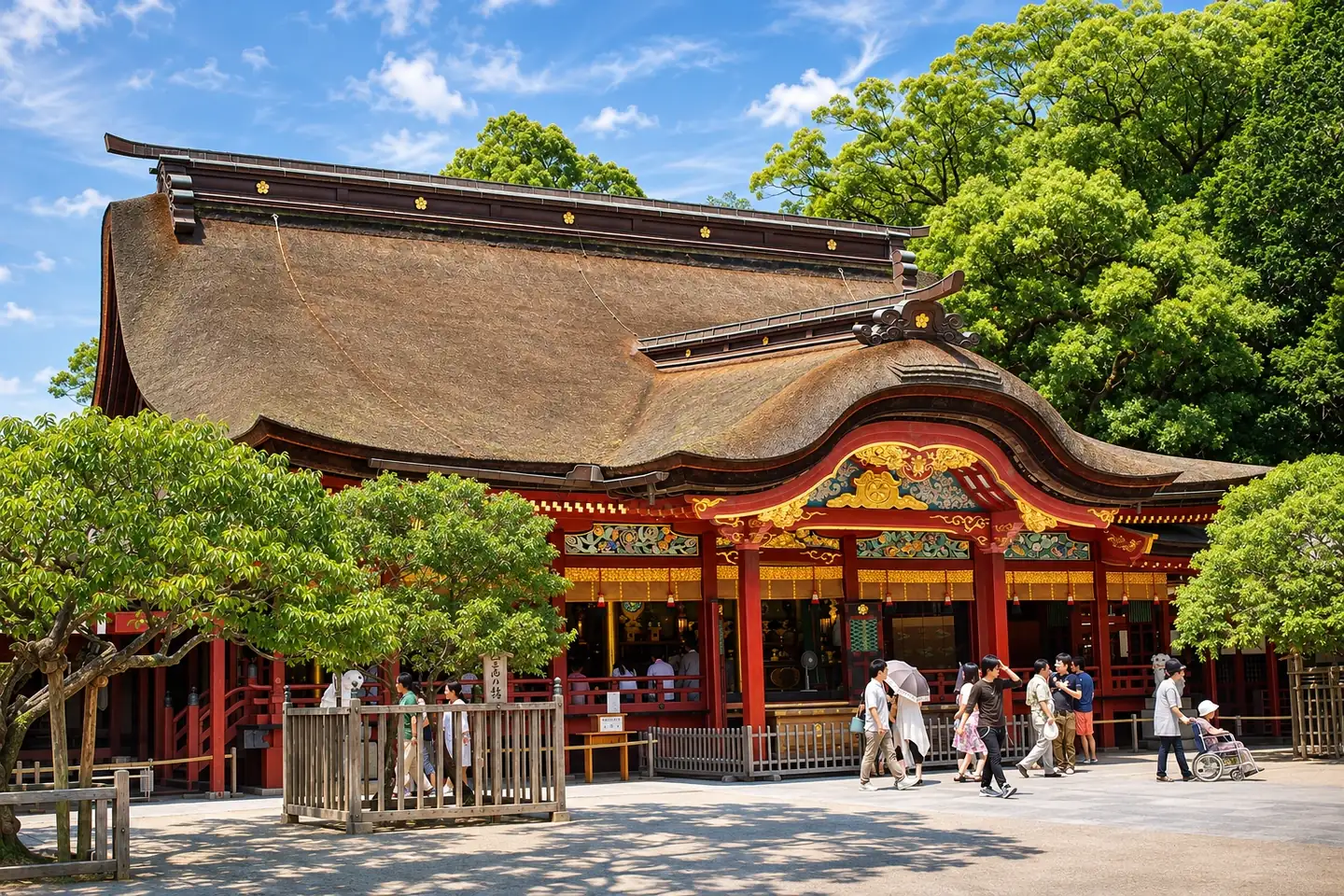
Tenmangu Shrine is dedicated to Sugawara Michizane, revered in Japan as the God of Learning and Calligraphy for over 1100 years. It is a sacred site for students praying for academic success, with up to 7 million visitors annually who write their wishes on wooden plaques.

Dazaifu Tenmangu Shrine & the Most Beautiful Starbucks

Dazaifu Tenmangu is Fukuoka’s most scenic shrine and a famous place for academic success worship. Along the shrine’s main shopping street, the path leads to Dazaifu Tenmangu. Although the avenue is short, it offers many local delicacies and features the Fukuoka Dazaifu Starbucks designed by Kengo Kuma, blending with the local landscape.

02

Fukuoka → Kumamoto

Cherry blossoms at Motoyoshiyama Kiyomizu Temple → Yanagawa boat ride and listen to boatman's traditional folk songs → Suizenji Jojuen Garden cherry blossoms → Kumamoto mascot character ‘Kumamon’ tram experience → Sakura-no-Baba-Josaien and view Kumamoto Castle → hotel check-in and rest.

Cherry blossoms at Motoyoshiyama Kiyomizu Temple → Yanagawa boat ride and listen to boatman's traditional folk songs → Suizenji Jojuen Garden cherry blossoms → Kumamoto mascot character ‘Kumamon’ tram experience → Sakura-no-Baba-Josaien and view Kumamoto Castle → hotel check-in and rest.

Breakfast: at the hotel. Lunch: at your own expense. Dinner: at your own expense.

Yanagawa Water Town

Yanagawa Water Town

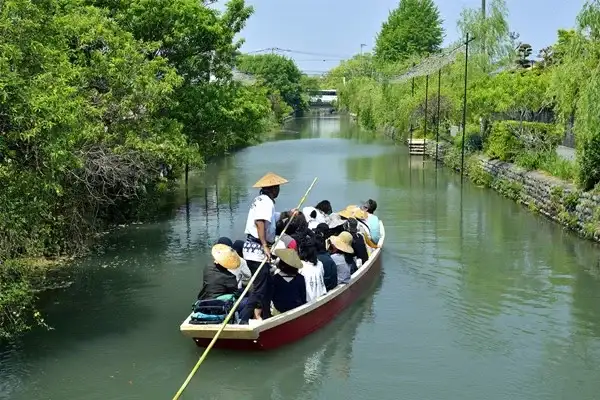
Yanagawa in Fukuoka is known as the “Water Town.” Centuries ago, moats were built to protect ancient castles here. Today, visitors can enjoy boat rides through the canals. With abundant waterways, Yanagawa is also called the “Water Capital” and is the hometown of poet Kitahara Hakushu.

Suizenji Jojuen Garden

Suizenji Jojuen Garden is a daimyo garden situated in Suizenji Park area of Chuo Ward, Kumamoto City, Kumamoto Prefecture. Covering around 73,000 square meters, it is a Momoyama-style strolling garden centered on a pond fed by spring water from Mount Aso. The garden incorporates hills, stepping stones, lawns, and pine trees to emulate the scenic views of the 53 Stations of the Tokaido Road.

Sakura-no-Baba Josaien

Located at the foot of Kumamoto Castle, one of Japan’s top 3 famous castles, Sakura-no-Baba Josaien shares local food culture, history, and traditions to enhance the charm of the castle and its castle town. This tourist facility was created with this concept in mind.

03

Kumamoto → Aso → Miyazaki → Beppu

Visit Kusasenri Plains—view majestic Mount Aso Nakadake amid swirling steam → Walk the mythical Takachiho Gorge and see famous Manai Falls → Cherry blossoms at Oka Castle Ruins → Tour Umi Jigoku (Sea Hell) hot spring → hotel check-in and rest at Beppu Onsen.

AI-rendered illustration

Visit Kusasenri Plains—view majestic Mount Aso Nakadake amid swirling steam → Walk the mythical Takachiho Gorge and see famous Manai Falls → Cherry blossoms at Oka Castle Ruins → Tour Umi Jigoku (Sea Hell) hot spring → hotel check-in and rest at Beppu Onsen.

Breakfast: at the hotel. Lunch: at your own expense. Dinner: at the hotel.

Kusasenri Plains

Facing the steaming Nakadake crater, Kusasenri is a shallow square-shaped grassland extending from the north slope of Mt. Eboshi. In the center is a large lake, with horses grazing from time to time. The scenery is poetic—lush green in summer and silvery in winter. It's a popular place for horseback riding and leisurely walks. Kusasenri is one of Aso's iconic landscapes, inspiring many poets and artists.

Takachiho Gorge (Autumn)

Takachiho Gorge, located in Miyazaki Prefecture and also known as the Gose River Gorge, was formed by volcanic activity from Mount Aso about 100,000 years ago. Volcanic debris flows cooled to create columnar jointed igneous rock along the old Gose River. Erosion by the river has shaped cliffs 80 to 100 meters high stretching over 7 kilometers. Designated a National Place of Scenic Beauty and Natural Monument in 1934 and included in Sobo-Katamuki Quasi-National Park since 1965, the gorge features the famous Manai Falls, recognized among Japan’s top 100 waterfalls. Steep rhyolite cliffs tinged with red flank the river, with changing seasonal views of mountain cherry, azalea blossoms, and autumn maples throughout the year.

Manai Waterfall

Manai Waterfall tumbles white spray from a 17-meter cliff. Though only 17 meters high, it is remarkably majestic. It is ranked among Japan’s top 100 waterfalls.

Oka Castle RuinsAI-rendered illustration

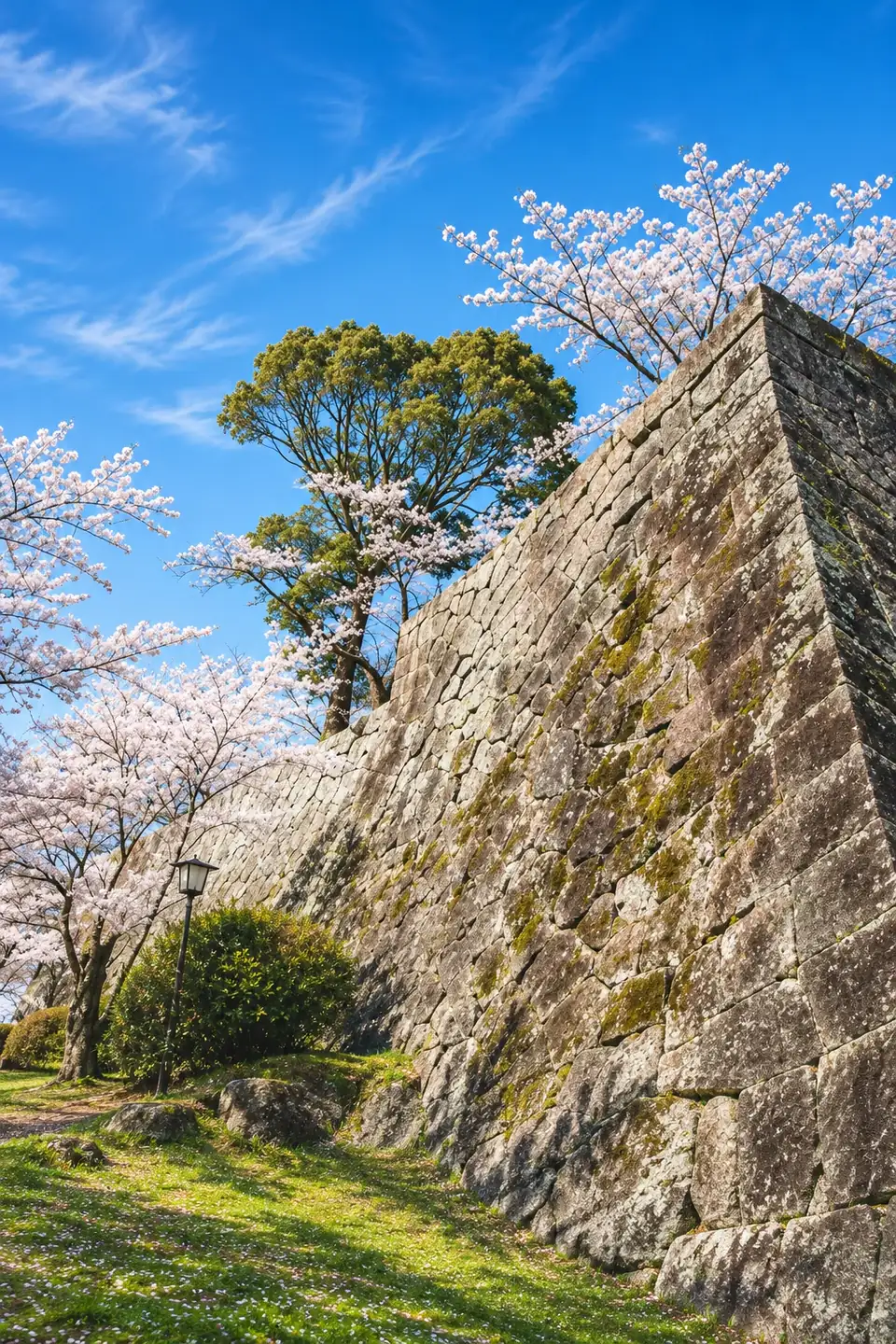
Oka Castle Ruins

Oka Castle, built in the latter half of the 12th century, is also known as "Reclining Bull Castle" due to its layout resembling a resting bull. The castle site is planted with Somei Yoshino cherry trees, as well as Yamazakura and Botan-zakura varieties. It is recognized as one of Japan’s top 100 cherry blossom viewing spots.

Umi Jigoku (Sea Hell) Hot Spring

Umi Jigoku is one of Beppu's famous 'Hells Tour' hot springs, the largest among the eight. Formed 1,200 years ago during Mt. Tsurumi's eruption, the iron sulfate-rich waters create a clear blue pool resembling the sea but reach temperatures up to 98°C. The hot spring's heat is used to steam eggs in 5-6 minutes, producing 'black eggs' with a slight sulfur scent— a local specialty. Designated a national scenic spot in 2009.

04

Beppu → Fukuoka

Kinrin Lake forest trail → Yufuin art town walk with Yuno Tsubo shopping street → JR scenic limited express Yufuin no Mori train (Yufuin Station to Hakata Station) → Cherry blossom viewing at Maizuru Park → hotel check-in and rest. *The itinerary plans to use the JR scenic limited express Yufuin no Mori No. 2 (12:01 departure from Yufuin Station, 14:19 arrival at Hakata Station). In case of full booking, schedule changes, or cancellations, a refund of 5,000 JPY per person (no refund for infants) applies, and travel will be by coach to Hakata instead.

AI-rendered illustration

Kinrin Lake forest trail → Yufuin art town walk with Yuno Tsubo shopping street → JR scenic limited express Yufuin no Mori train (Yufuin Station to Hakata Station) → Cherry blossom viewing at Maizuru Park → hotel check-in and rest. *The itinerary plans to use the JR scenic limited express Yufuin no Mori No. 2 (12:01 departure from Yufuin Station, 14:19 arrival at Hakata Station). In case of full booking, schedule changes, or cancellations, a refund of 5,000 JPY per person (no refund for infants) applies, and travel will be by coach to Hakata instead.

Breakfast: at the hotel. Lunch: at your own expense. Dinner: at your own expense.
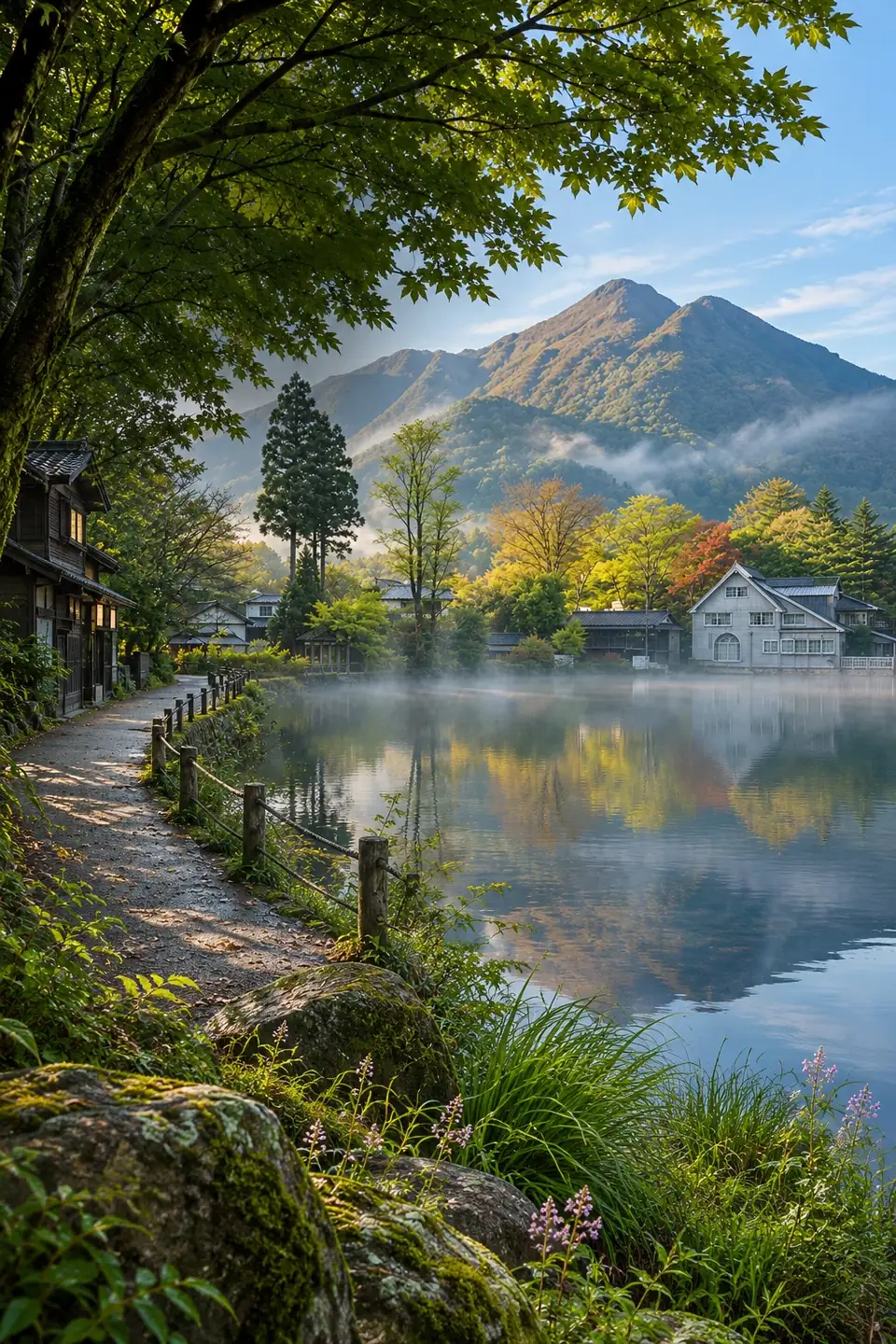
Kinrinko LakeAI-rendered illustration

Kinrinko Lake

Kinrinko Lake is located in Yufuin's busiest area, famous for its dreamy morning mist in winter. The lake has a circumference of about 400 meters; hot springs emerge on the west side, while cold water flows from the east, creating a lake with half warm and half cold water. Warm springs continue to bubble up on the lake bed. The temperature difference causes dense morning fog, especially visible between September and March.

Yufuin Art Town

Yufuin is Japan’s top onsen town, nestled near Mount Yufu (about 1,584 meters high) and only separated from Beppu by a mountain. Hot springs are spread throughout the area. Attractions include Yunotsubo Street, Oita River banks, Kinrinko Lake vicinity, and the Torigoe district. Fans of Japanese-style goods or local specialties can enjoy a day walking Yunotsubo Street. It is said that Yufuin inspired Hayao Miyazaki’s Totoro; the town has a Totoro-themed store with a bus stop sign inviting visitors to rediscover childhood dreams and feelings.

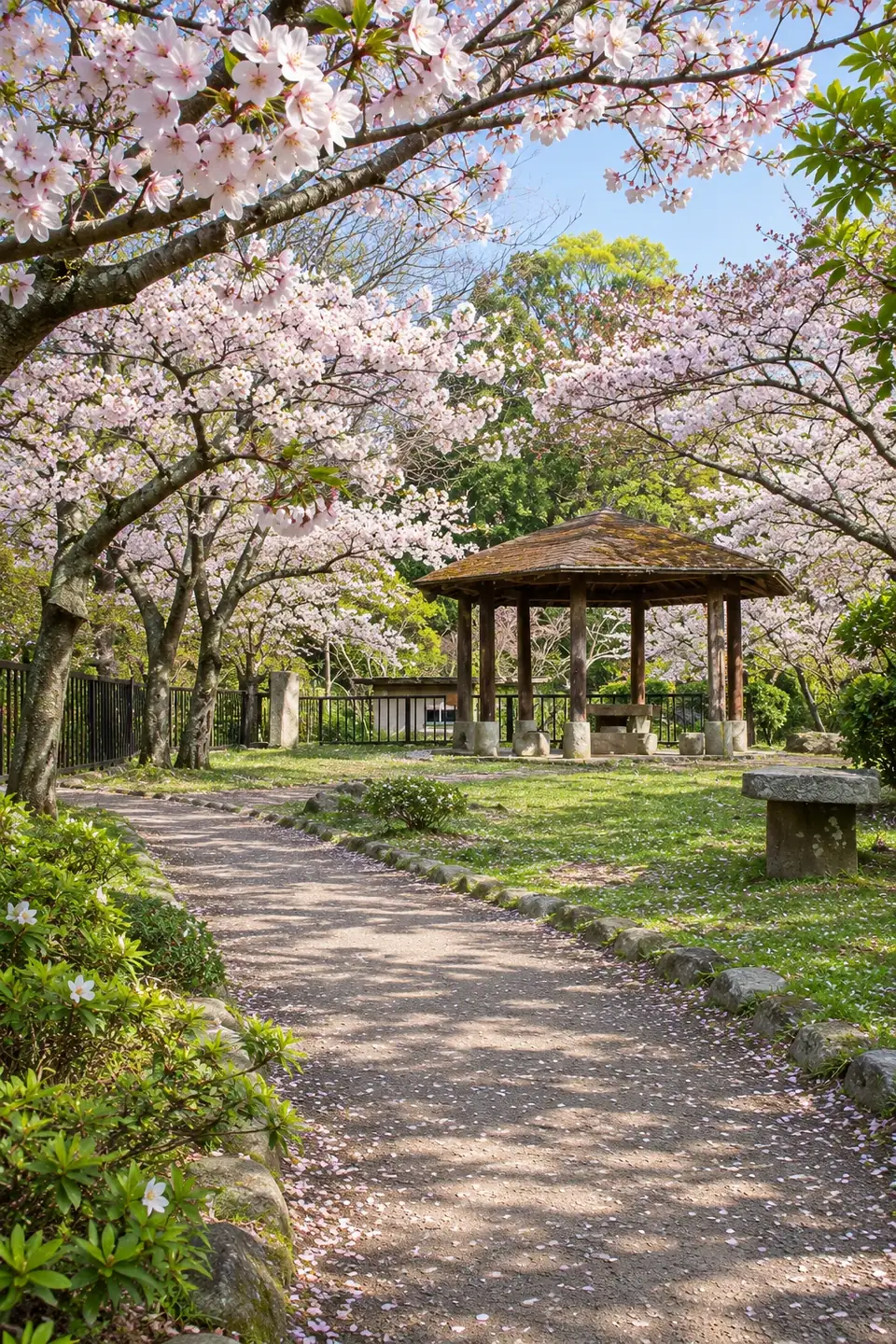
Maizuru Park

Maizuru Park is located about a 15-minute walk from central Fukuoka's Tenjin area, built on the former site of Fukuoka Castle constructed by the lord Kuroda Nagamasa, who governed a 520,000 koku domain. The park features scenic natural beauty year-round and is famed as a cherry blossom viewing spot. Starting with plum blossoms in February and hydrangea in June, over seasons the park blooms with cherry blossoms, peonies, wisteria, azaleas, peonies, lotuses, camellias, and irises. Notice boards indicate current bloom conditions for visitors.
05

Fukuoka

Free time arranged according to departure schedule. The itinerary ends locally in Fukuoka; airport transfers can be arranged according to actual flight times. International return flights and the day you arrive home are not included in this itinerary.

AI-rendered illustration

Free time arranged according to departure schedule. The itinerary ends locally in Fukuoka; airport transfers can be arranged according to actual flight times. International return flights and the day you arrive home are not included in this itinerary.

Breakfast: at the hotel. Lunch: at your own expense. Dinner: at your own expense.

YOUR ROUTE

Know the shape of your journey.

Starts in
Fukuoka
Ends in
Fukuoka
Local itinerary
5 days

A proposal shaped around you

Use this route as a starting point. Tell us your dates, pace and accommodation preferences.

Your quote will specify accommodation, guiding, transport, activities, meals and any optional arrangements before you book. International flights and airport transfers are discussed separately.

TRAVEL IN COMFORT

The right vehicle for your group.

Toyota Alphard

Up to 6 passengers

Toyota HiAce

Up to 9 passengers

Our main touring vehicles. We recommend a vehicle based on your group size and luggage. Maximum seating capacity does not guarantee room for all bags when every seat is occupied. Vehicle availability is confirmed for your destination.

More to discover

Cherry Blossoms at Dazaifu Government Office Ruins

Famous for cherry blossoms in Dazaifu are the Dazaifu Government Office Ruins (Tofurou Ruins) and Dazaifu Citizens’ Forest. The Government Office Ruins, located on the southern slope of Mount Shioji, is now a large green field with scattered black foundation stones—a site that once served as the political center of Kyushu in the Nara and Heian periods. Over 100 cherry trees mainly Somei Yoshino variety bloom here. Nearby, Dazaifu Citizens’ Forest features about 300 cherry trees, including Somei Yoshino and Yaezakura (double-flowered cherry), making it another excellent cherry blossom spot.

Yanagawa Boat Ride Cherry Blossom Viewing

Yanagawa is a narrow, winding river lined with willows, flowers, trees, and old red-tiled buildings, creating a nostalgic atmosphere. Renowned poet and fairy tale writer Hakushu Kitahara said, "Water town Yanagawa is the place I was born and the source of my poetry." To truly experience the beauty of the water town, only a boat ride piloted by a boatman can immerse you in this poetic world. In spring, cherry blossoms drift down the river, and petals floating on the water create a spectacular sea of pink.

Motoyoshiyama Kiyomizu Temple Cherry Blossom Viewing

An ancient temple built by Saicho, the founder of the Tendai sect. In 806 AD (the first year of Daido), after returning from Tang China, Saicho carved a Thousand-Armed Kannon statue with Albizia wood, worshipped as a goddess for safe childbirth, matchmaking, and children. The temple gate, a designated cultural property of Fukuoka Prefecture, was built in 1745 by order of Yanagawa's 6th lord, Sadakazu Tachibana. The second floor interior showcases the finest architectural techniques of the time and enshrines Manjusri Bodhisattva, Shakyamuni, and the Four Heavenly Kings. The vermilion three-story pagoda was built in 1836, modeled after Osaka Shitennoji's five-story pagoda. It is now a symbol of Kiyomizu Temple and a designated cultural property of Fukuoka Prefecture. The temple's earliest Kannon statue was consecrated in 848 by Jikaku Daishi, a disciple of Saicho. The temple grounds are planted with many cherry trees, making it a must-visit spot for spring cherry blossom viewing.

Suizenji Jojuen Garden

Suizenji Jojuen Garden is a daimyo garden situated in Suizenji Park area of Chuo Ward, Kumamoto City, Kumamoto Prefecture. Covering around 73,000 square meters, it is a Momoyama-style strolling garden centered on a pond fed by spring water from Mount Aso. The garden incorporates hills, stepping stones, lawns, and pine trees to emulate the scenic views of the 53 Stations of the Tokaido Road.

Kumamon Train Experience

Since Kumamon's creation in 2010, this popular mascot has gradually taken over Kumamoto City and has strong overseas recognition. The Kumamoto Electric Railway runs three cute Kumamon-themed trains with different designs rotating on its lines. We recommend boarding at Fujisakigū-mae Station near downtown. If you’re lucky, at Kita-Kumamoto Station you can see trains No. 1, 2, and 3 together. Experience route: Fujisakigū-mae Station to Kita-Kumamoto Station.

Takachiho Gorge Boat Ride

The Takachiho Gorge boat ride lets you freely navigate a boat between the cliffs. The changing light and shadows reveal the gorge’s stunning varied landscapes. Many views can only be seen from the boat! Look up to see waterfalls plunging directly down and get close to the towering cliffs up to 100 meters high. The vertically inclined basalt columns look like ancient mysterious ruins, making this an unforgettable experience at Takachiho Gorge.

Oka Castle Ruins

Oka Castle, built in the latter half of the 12th century, is also known as "Reclining Bull Castle" due to its layout resembling a resting bull. The castle site is planted with Somei Yoshino cherry trees, as well as Yamazakura and Botan-zakura varieties. It is recognized as one of Japan’s top 100 cherry blossom viewing spots.

Yufuin no Mori Train

The Yufuin no Mori train is a must-ride when visiting northern Kyushu; it's a beautiful train featuring vintage-inspired lighting, floral curtains, and golden luggage racks inside. The route passes through forests, mountains, and sea views. Passengers can enjoy on-board food and drinks and collect commemorative stamps from train staff.

Before you go

This journey starts at the destination. Seasonal experiences, service inclusions and availability are confirmed with your personalized proposal.

Original source & photography · 6renyou ↗

Image credits and illustrations

BEFORE YOU PLAN

Travel planning, clearly explained.

OpenEast brings together Japan and South Korea itinerary ideas for travelers from North America, with China also part of our destination plans. Start with the local route, then consider flights and airport transfers around it.

When does Day 1 begin?

Day 1 begins at the destination. International departure-only and return flight days are not counted as destination days. Plan your flights around the local itinerary dates.

Are flights and airport transfers included?

International flights and airport transfers are confirmed separately. Do not assume they are included in a suggested itinerary.

Are these confirmed departures?

These routes are itinerary ideas. Dates, hotels, admissions, seasonal activities, prices and availability need confirmation in a personalized proposal before booking.

Can I book or send an inquiry here?

Use the inquiry form to contact our team. A submission confirmation appears only when the email service accepts your request. An inquiry does not reserve a service or take payment.

Explore Japan itineraries → · Explore South Korea itineraries →

1 / 4

Let’s plan your journey.

Spring in Kyushu: Cherry Blossom Experience with Yanagawa Boat Ride and Yufuin Train

Leave your details, and our travel specialists will get in touch by email or your preferred contact method.

Your specialist will confirm the itinerary, pricing and availability with you.

How we use your information

Your inquiry is sent to info@jasperlimo.com so our team can respond. Please do not include passport or payment details.

Start planning