02Kyoto
Since machiya accommodations do not provide meals, please arrange your own breakfast today. Board the Fushimi Jikkoku boat, a small vessel perfect for viewing scenic shores, willows, and traditional architecture. Next, visit Fushimi Inari Taisha, famous for its seemingly endless rows of bright orange torii gates leading up Inari Mountain—one of Japan’s most iconic sights.
Lunch features a special sushi-making experience where you learn from a sushi chef to make hand-formed sushi. Participate in the learning and hands-on process and enjoy eating your creation!
Afterwards, visit Kiyomizu-dera, Kyoto’s oldest temple and a designated national treasure. The temple, located on Mount Otowa, is dedicated mainly to the Eleven-Faced Kannon. Spanning 130,000 square meters, it was founded by the monk Enchin. In the evening, visit Gion, where understated traditional townhouses, tea houses, restaurants offering Kyoto cuisine, and solemn temples and shrines abound.
After dinner, return to your machiya accommodation to rest.
 AI-rendered illustration
Since machiya accommodations do not provide meals, please arrange your own breakfast today. Board the Fushimi Jikkoku boat, a small vessel perfect for viewing scenic shores, willows, and traditional architecture. Next, visit Fushimi Inari Taisha, famous for its seemingly endless rows of bright orange torii gates leading up Inari Mountain—one of Japan’s most iconic sights.
Lunch features a special sushi-making experience where you learn from a sushi chef to make hand-formed sushi. Participate in the learning and hands-on process and enjoy eating your creation!
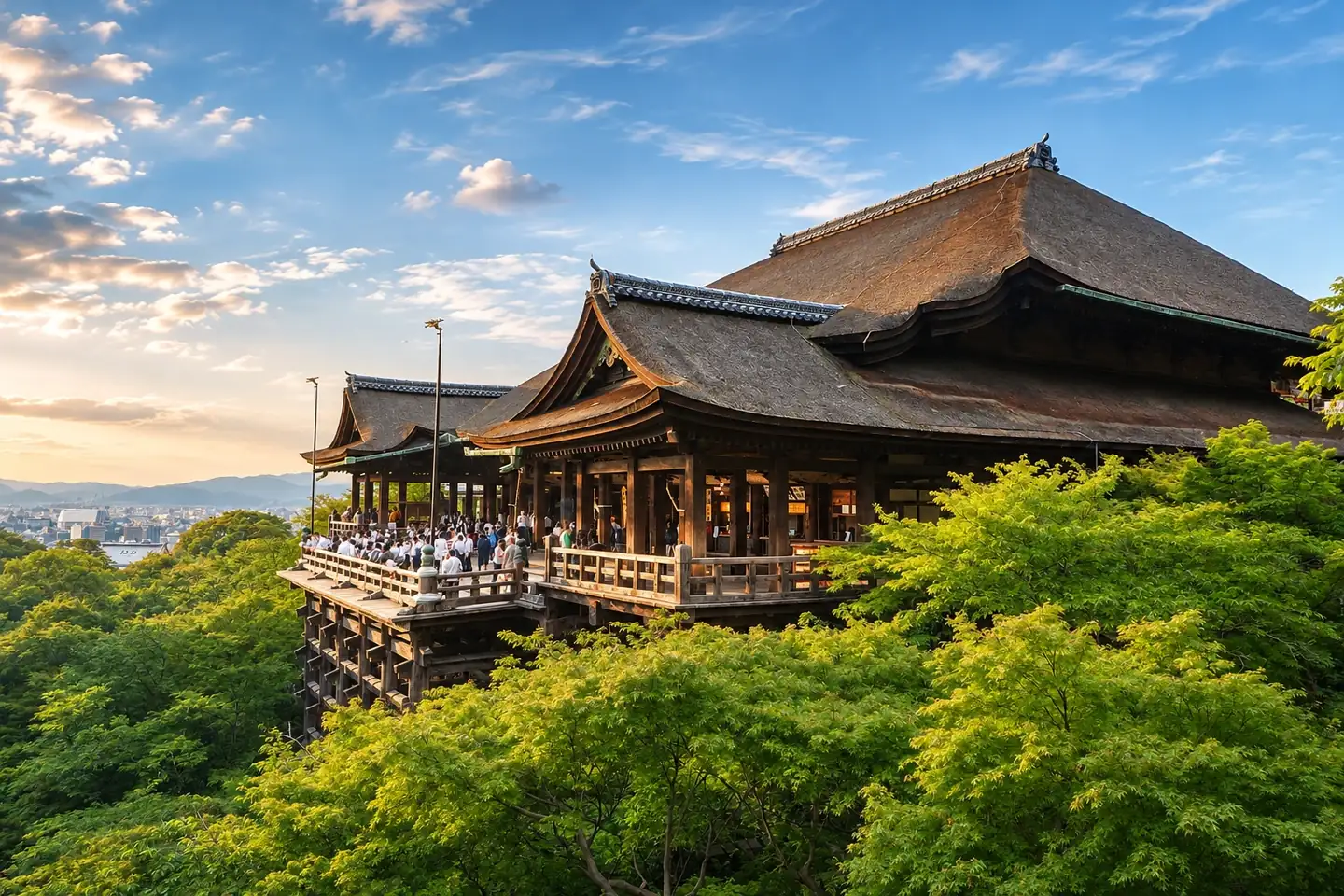
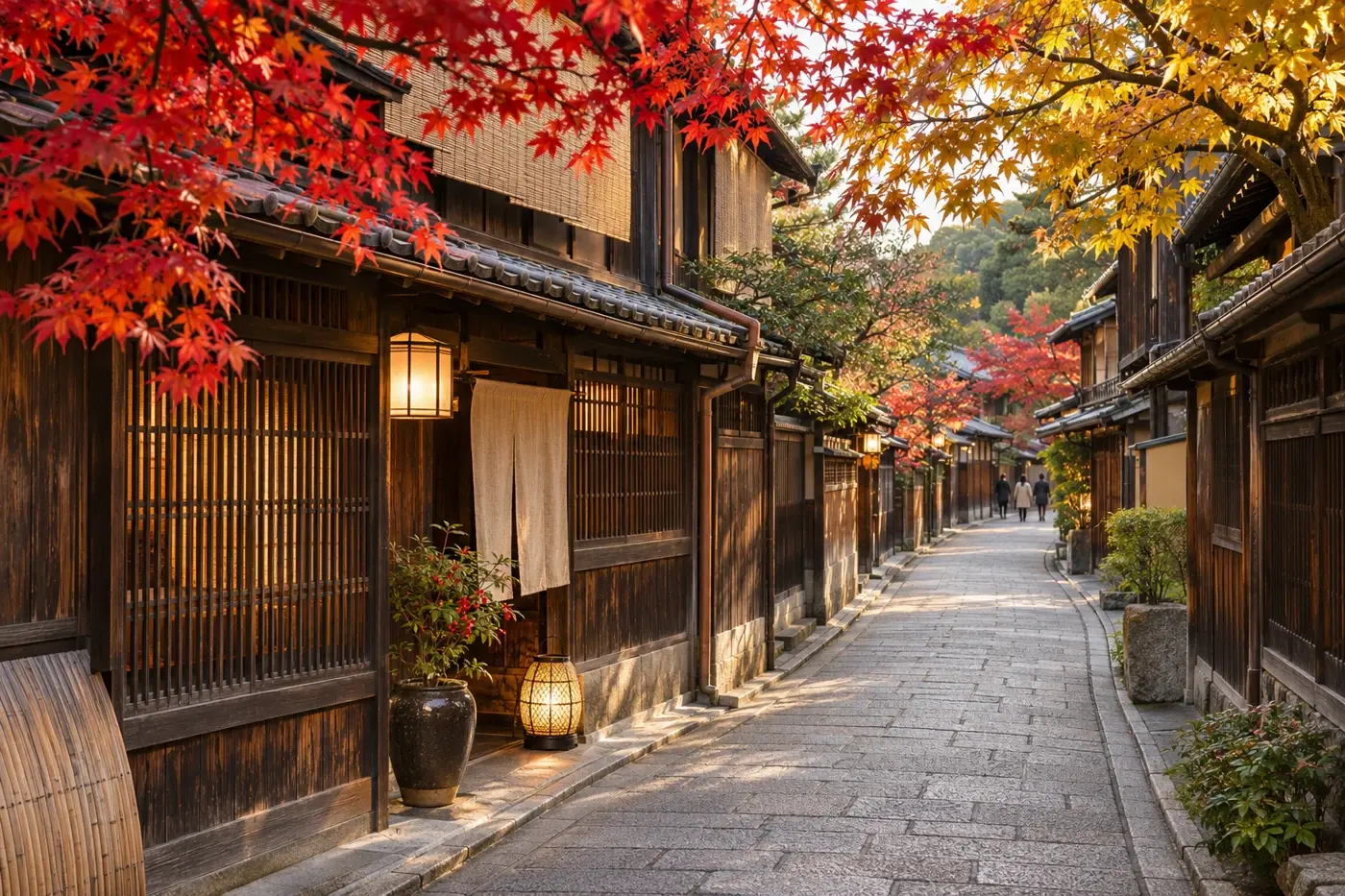
Afterwards, visit Kiyomizu-dera, Kyoto’s oldest temple and a designated national treasure. The temple, located on Mount Otowa, is dedicated mainly to the Eleven-Faced Kannon. Spanning 130,000 square meters, it was founded by the monk Enchin. In the evening, visit Gion, where understated traditional townhouses, tea houses, restaurants offering Kyoto cuisine, and solemn temples and shrines abound.
After dinner, return to your machiya accommodation to rest.
Breakfast: at your own expense. Lunch: at your own expense. Dinner: at your own expense.
Fushimi Inari Taisha
At the foot of Mount Inari in southern Kyoto, this historic shrine honors Inari, associated with harvests and prosperity in business. Beyond the main buildings, thousands of vermilion torii gates form paths up the mountain. The roughly four-kilometer circuit takes about two to three hours on foot and is one of Kyoto's best-known landscapes.
AI-rendered illustrationKiyomizu-dera Temple
Founded in 778, before Kyoto became Japan's capital, Kiyomizu-dera stands on the slopes of Mount Otowa in eastern Kyoto. Following several fires, much of the present complex was rebuilt in 1631–1633 under the third Tokugawa shogun, Iemitsu. Its main hall is a National Treasure, while the Nio Gate, West Gate, three-story pagoda and bell tower are important cultural properties. In 1994 it became part of the UNESCO-listed Historic Monuments of Ancient Kyoto.
Gion
Gion is Kyoto's traditional entertainment district around Yasaka Shrine, the Kamo River and Higashioji-dori. It is known for its geiko and maiko culture, particularly in Gion Kobu and around Hanamikoji. Teahouses, restaurants, traditional buildings and small shops reward a leisurely visit. Kimono and yukata rentals are available, and the summer Gion Matsuri is a celebrated local festival.
 AI-rendered illustration
 AI-rendered illustration