Walk Through the Sky Flower Field · Aerial Cable Car Ride · Summer Sparkling Fireworks Tonight After breakfast, start the day with a ride on the Komagatake Ropeway for a refreshing aerial experience (57 km / approx. 1 hour). In the afternoon, visit Suwa Taisha Shrine and Lake Suwa, then check into a lakeside hotel. After hotel dinner, you may watch the summer night fireworks from your room. Recommended Hotel: Suwa Kusatsu Ryokan Stay in a 45 sqm open-air hot spring Japanese-Western room ★Located in central Japan’s Shinshu Suwa, surrounded by the mysterious Lake Suwa and Suwa Taisha Shrine, with eight rooms, each featuring an outdoor bath overlooking Lake Suwa. ★Stay here to escape daily bustle, enjoy quiet leisure time with your loved one, and begin a journey of self-reflection.
Breakfast: at the hotel. Lunch: at your own expense. Dinner: at the hotel.
 AI-rendered illustration
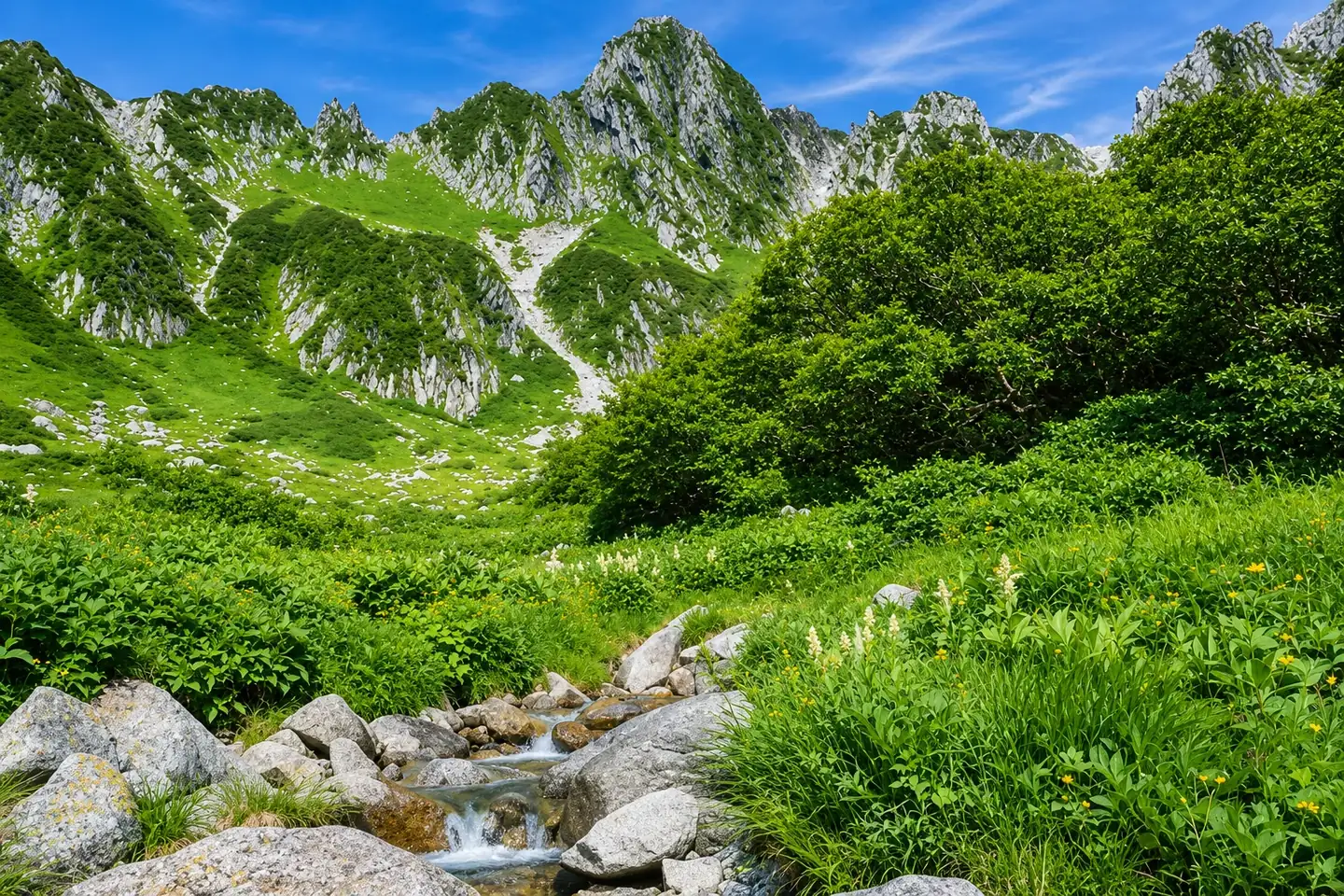
Senjojiki Cirque
A natural wonder left by glaciers 20,000 years ago, home to hundreds of alpine plants blooming in competition, known as the sky flower field. The distant mountain ranges merge with the sky, as if you could touch the horizon.
Suwa Taisha Shrine
Suwa Taisha is a shrine complex surrounding Lake Suwa, consisting of four shrines. Esteemed as a god of agriculture and hunting, it is the main shrine for over 10,000 Suwa shrines across Japan. Its origin is uncertain, but since it appears in the 712 Kojiki chronicles, it's considered one of Japan's oldest shrines. Every six years during the Monkey and Tiger years, the 'Onbashira' festival takes place, known as one of Japan's three major unique festivals. The highlight is the "Kiotoshi" event, where men ride massive wooden pillars sliding down a hill at high speed.
Lake Suwa
Lake Suwa lies at the intersection of Okaya, Suwa City, and Shimosuwa Town in Nagano Prefecture. It is the source of the Tenryu River, a Class A river under Japan’s River Law. The lake is designated under the Special Measures Law for Water Quality Protection. Located centrally in Nagano, during winter when frozen, you can see unique scenes of people fishing for wakasagi through holes drilled in the ice and ice skaters. When temperatures stay below -10°C for 10 consecutive days, the ice contracts and expands causing loud cracking, and ice blocks rise over a meter in a rare phenomenon called "Omiwatari."