Japan · 9 DAYS

Maple Glow

Nagoya → Gifu → Takayama → Kanazawa → Fukui

Discover the fairy-tale village of Shirakawa-go... Stroll Kanazawa’s old streets and experience jazz and gold leaf in the "Little Kyoto" — see the most beautiful sights...

9 daysAutumnItinerary idea

Request this itinerary

Leave your details, and our travel specialists will get in touch by email or your preferred contact method.

Your specialist will confirm the itinerary, pricing and availability with you.

How we use your information

Your inquiry is sent to info@jasperlimo.com so our team can respond. Please do not include passport or payment details.

JOURNEY HIGHLIGHTS

Japan, made personal.

[Maple Glow] 9-Day Deep Autumn Foliage Tour of Japan’s Central Countryside

Day 1 starts in Nagoya → Gifu. International airfare is arranged separately.

  • 01Discover the fairy-tale village of Shirakawa-go...
  • 02Stroll Kanazawa’s old streets and experience jazz and gold leaf in the "Little Kyoto" — see the most beautiful sights...
  • 03Alps Mountain’s stunning autumn leaves in Kamikochi...

Your journey, day by day

01

Nagoya → Gifu

Day 1 begins upon arrival in Nagoya. Local itinerary and accommodations arranged based on actual arrival time; international flights are not included in this itinerary. Local route after arrival: Nagoya > Gifu. Airport transfers can be arranged separately; inclusion to be confirmed per final plan.

AI-rendered illustration

Day 1 begins upon arrival in Nagoya. Local itinerary and accommodations arranged based on actual arrival time; international flights are not included in this itinerary. Local route after arrival: Nagoya > Gifu. Airport transfers can be arranged separately; inclusion to be confirmed per final plan.

Breakfast: at your own expense. Lunch: at your own expense. Dinner: at your own expense.

02

Gifu → Takayama

Today, travel by bus to explore Takayama city. Known as "Hida’s Little Kyoto," Takayama preserves the castle town and merchant district atmosphere from the Edo period.

Today, travel by bus to explore Takayama city. Known as "Hida’s Little Kyoto," Takayama preserves the castle town and merchant district atmosphere from the Edo period.

Breakfast: at the hotel. Lunch: at your own expense. Dinner: at your own expense.

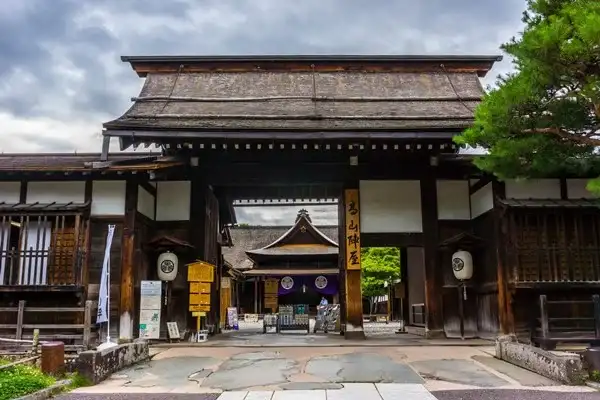
Takayama Jinya

Takayama Jinya

Takayama Jinya is located in Takayama, known as "Little Kyoto." It was originally one of the residences of the Kanamori lords of Takayama Castle, preserving elegant and nostalgic architecture. Built in 1615 with over 400 years of history, only the storehouse remains from the original, the rest reconstructed to match the original style. The interior retains original layouts including the interrogation room with bamboo-crafted restraints, still used as the interrogation site. From the Meiji era, it served as prefectural and district government offices, making it Japan's only preserved local government building.

Takayama Downtown

Takayama city, located in northern Gifu Prefecture (Hida region), was formed in 2005 by merging the old Takayama with nine surrounding towns and villages. After the merger, it became Japan’s largest city by area, surpassing Kagawa Prefecture and Osaka Prefecture, roughly equivalent to the size of all Tokyo Metropolis. The city is nicknamed "Hida’s Little Kyoto" and attracts many domestic and international tourists annually.

Hida Furukawa

Located at the northernmost part of Gifu, Hida Furukawa is a town known for its beautifully named 400-year-old historic streets and the Setogawa River. It is a sister city to Shuhe Ancient Town in Yunnan, China. The Setogawa River running through Furukawa was constructed 400 years ago to reclaim new farmland. The buildings retain the appearance from four centuries ago, and the river flows continuously alongside them. Near the Araki River stands Enkoji Temple, which also has over 400 years of history.

Higashiyama Walking Path

The Higashiyama Walking Path is about 3.5 kilometers long, stretching from Higashiyama Temple Town to Shiroyama Park. The streets are lined with temples, each with its own history and designated as prefectural or city cultural properties. At the end of Yasukawa Street lies the quiet and atmospheric Higashiyama Temple Town. It is said that the feudal lord Kanamori Nagachika favored Kyoto and thus built many temples on the gentle hills east of the castle, which gave rise to Higashiyama Temple Town.

03

Takayama

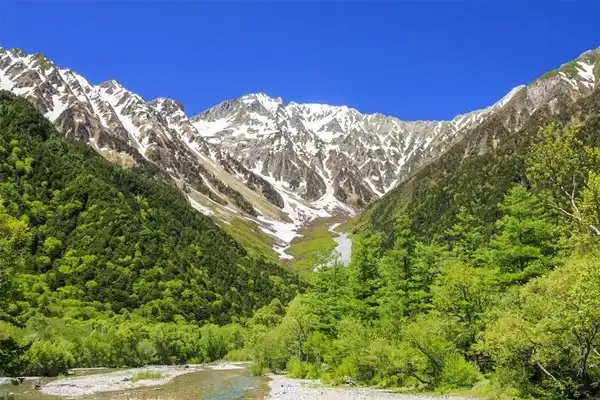
Today, visit Kamikochi, Taisho Pond, and Kappa Bridge — revered as sacred places and known as the birthplace of the gods. Walking here makes you lose track of time.

Today, visit Kamikochi, Taisho Pond, and Kappa Bridge — revered as sacred places and known as the birthplace of the gods. Walking here makes you lose track of time.

Breakfast: at the hotel. Lunch: at your own expense. Dinner: at your own expense.

Kamikochi

Kamikochi

Kamikochi is a popular tourist destination in western Nagano Prefecture along the upper Azusa River in the southern Hida Mountains. It is about 1,500 meters above sea level and governed by Matsumoto City. Part of Chubu Sangaku National Park, it is designated a special place of scenic beauty and special natural monument. There are many hot springs, and it serves as a climbing base for Hotaka and Yarigatake peaks. The name is associated with an older spelling pronounced Kamikochi.

Taisho Pond

Formed in 1915 by a volcanic landslide, Taisho Pond is now a special place of scenic beauty and a special natural monument in Japan. Connected to the Azusa River and located downstream from Kappa Bridge, it is somewhat distant from Kamikochi’s center and surrounded by only one hotel (Taisho Pond Hotel), making it quiet and elegant—a serene retreat. It is usually the turnaround point for hiking along the Azusa River downstream in Kamikochi.

Kappa Bridge

Kappa Bridge is a suspension bridge spanning the Azusa River in Kamikochi, named after the local kappa river spirit and Akutagawa Ryunosuke’s novel "Kappa." It’s famous for views of the Hotaka mountain range. Located in central Kamikochi, it is a 5-minute walk from the Kamikochi bus stop and surrounded by shops, restaurants, and inns, making it the core landmark of Kamikochi.

Sanmachi Suji Old Town

Sanmachi Suji Old Town is the heart of Takayama city, featuring well-preserved historic buildings. You can spend a day strolling these ancient streets, browsing a wide range of handicraft shops for souvenirs, enjoying local tea, and savoring specialties like Wagyu beef sushi. Nearby, many sake breweries offer tasting sessions; Harada Brewery is open to visitors for tours.

04

Takayama → Kanazawa → Gifu

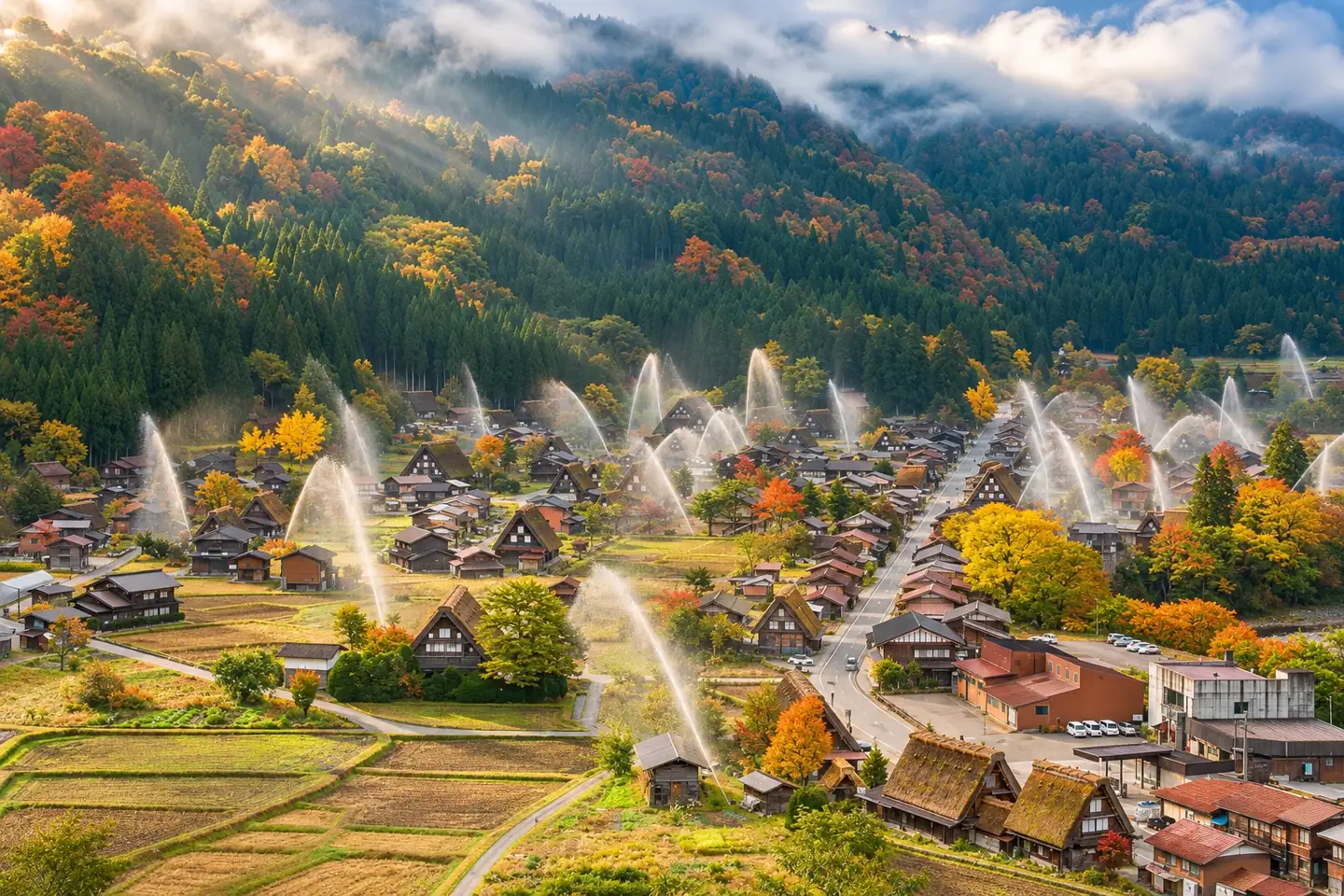
Today, visit the UNESCO World Heritage village, surrounded by mountains. Here, the houses are built with steep triangular roofs resembling hands clasped in prayer to prevent heavy snow damage.

AI-rendered illustration

Today, visit the UNESCO World Heritage village, surrounded by mountains. Here, the houses are built with steep triangular roofs resembling hands clasped in prayer to prevent heavy snow damage.

Breakfast: at the hotel. Lunch: at your own expense. Dinner: at your own expense.

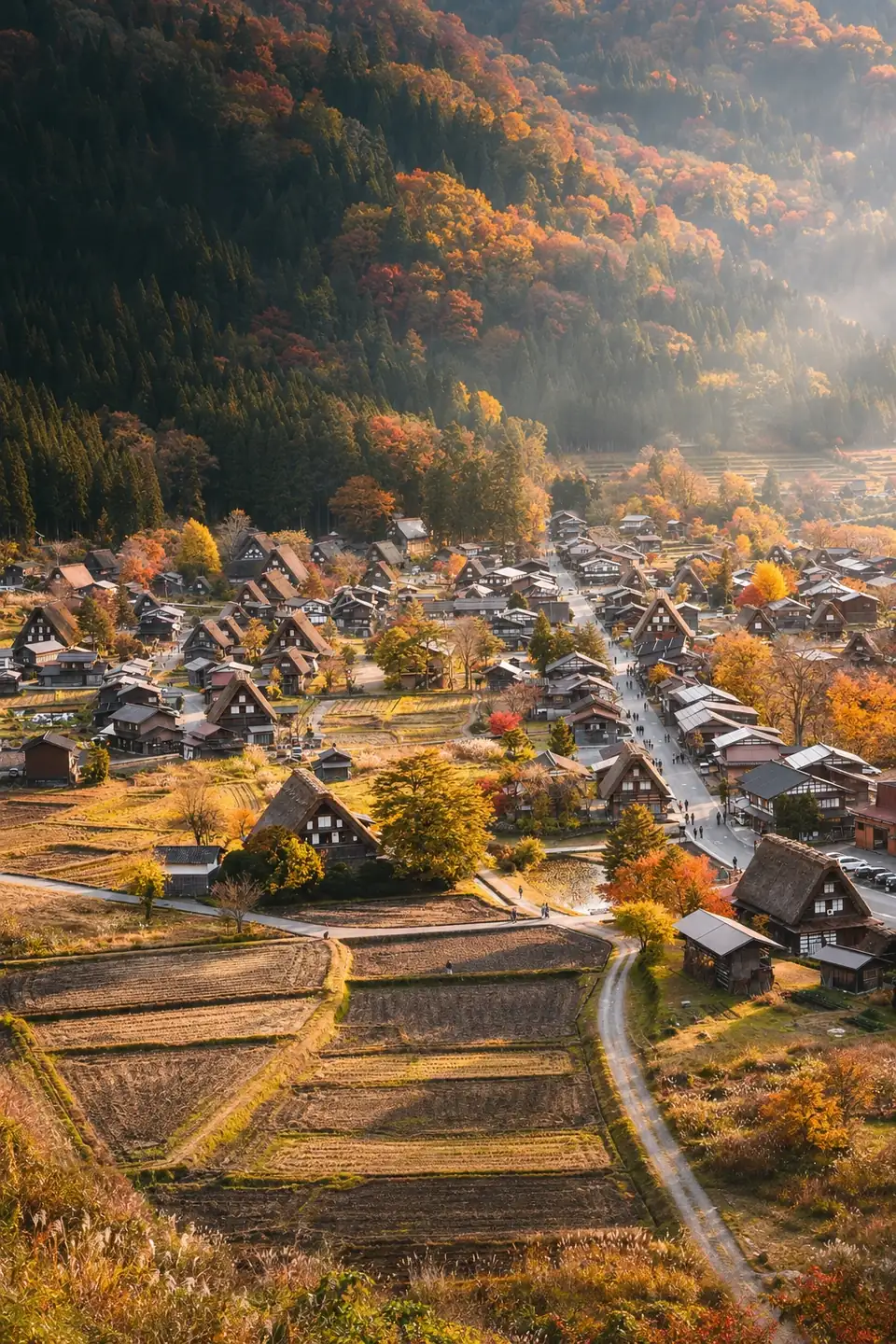
Shirakawa-go Gassho VillageAI-rendered illustration

Shirakawa-go Gassho Village

Shirakawa-go is a tranquil mountain village surrounded by mountains, with rice paddies and rivers running through. The village’s traditional gassho-style thatched houses number over 110, grouped together, and were designated a UNESCO World Cultural Heritage site in 1995. At the open-air museum, the Gassho Village Heritage Park, 25 gassho houses from across Shirakawa-go have been relocated and preserved. The park also features temple replicas, waterwheel huts, charcoal kilns, and stables built in the style of old rural villages. Traditional crafts such as dyeing and weaving are demonstrated, and visitors can experience them hands-on.

Ogimachi Castle Ruins Observatory

Ogimachi Castle Ruins Observatory. At dusk, as the sky darkens, standing at the observatory and looking toward the nearby snow-covered wooden houses, one after another they emit a gentle light, evoking a warm happiness. Under the orange glow, snowflakes fall softly along uneven paths, enhancing the snowy village’s dreamy, serene, and warm atmosphere—a scene straight out of a romantic fairy tale.

Shin-Hotaka Ropeway

The Shin-Hotaka Ropeway in Gifu Prefecture is Japan's first double-decker ropeway. The upper and lower decks hold 121 people, and a single deck car holds 45. The total length is 3,200 meters, divided into two sections. The first ride from Shin-Hotaka Onsen Station (about 1,117 meters altitude) to Nukehiro Plateau Station (1,305 meters) takes about four minutes. Then a short walk to Shirakaba-daira (1,308 meters) leads to the second ropeway segment to Nishi-Hotakaguchi (2,156 meters), about seven minutes. The ride is smooth, with a Japanese-speaking staff member describing the views. With increasing elevation, you'll see endless mountain peaks and breathtaking mountain terrain, creating a scenic panorama.

Hida Takayama

Many streets in Takayama retain the elegant atmosphere of ancient times, earning the nickname 'Little Kyoto.' The area's temples, shrines, rivers, and bridges all exude Kyoto-like charm, in some respects even surpassing Kyoto. The leisurely and serene atmosphere here captivates visitors, who can enjoy quiet rural scenery even in the city center.

05

Kanazawa

Spend the whole day in Kanazawa. Experience Kenrokuen Garden’s Japanese courtyard with a scenic teahouse, the 21st Century Museum of Contemporary Art with its walk-in pool created by light and shadow effects, and Higashi Chaya District’s historic old alley where you can try gold leaf ice cream.

Spend the whole day in Kanazawa. Experience Kenrokuen Garden’s Japanese courtyard with a scenic teahouse, the 21st Century Museum of Contemporary Art with its walk-in pool created by light and shadow effects, and Higashi Chaya District’s historic old alley where you can try gold leaf ice cream.

Breakfast: at the hotel. Lunch: at your own expense. Dinner: at your own expense.

Kenrokuen Garden

Kenrokuen is considered one of Japan's top three gardens. Developed over 170 years by four generations of feudal lords, it features a beautiful circular walking garden style. A large central pond runs through it, surrounded by Japanese-style artificial hills and pavilions. The garden embodies six aesthetic qualities—spaciousness, seclusion, artifice, antiquity, water features, and distant views—hence its name "Kenrokuen." It offers distinct natural beauty each season: cherry and plum blossoms in spring, azaleas and irises in summer, autumn maples, and in winter, snow suspensions protect the pines, creating a dreamlike snowy landscape.

Kanazawa 21st Century Museum of Contemporary Art (Pool requires same-day reservation)

Kanazawa 21st Century Museum focuses on modern art featuring numerous artworks. The museum's design won the Golden Lion Award at the Venice Architecture Biennale. The building’s low glass cylindrical structure uses extensive glass walls, giving a visual impression of transparency and flow, which is a hallmark of the designers. Inside, the most notable exhibit is Argentine installation artist Leandro Erlich’s “Swimming Pool,” where a 50 cm thick ‘water layer’ separates above and below the pool, allowing visitors to see unique perspectives from the poolside or beneath the water. Note: Pool visits require same-day reservation with limited availability subject to actual conditions.

Kanazawa Castle

Kanazawa Castle

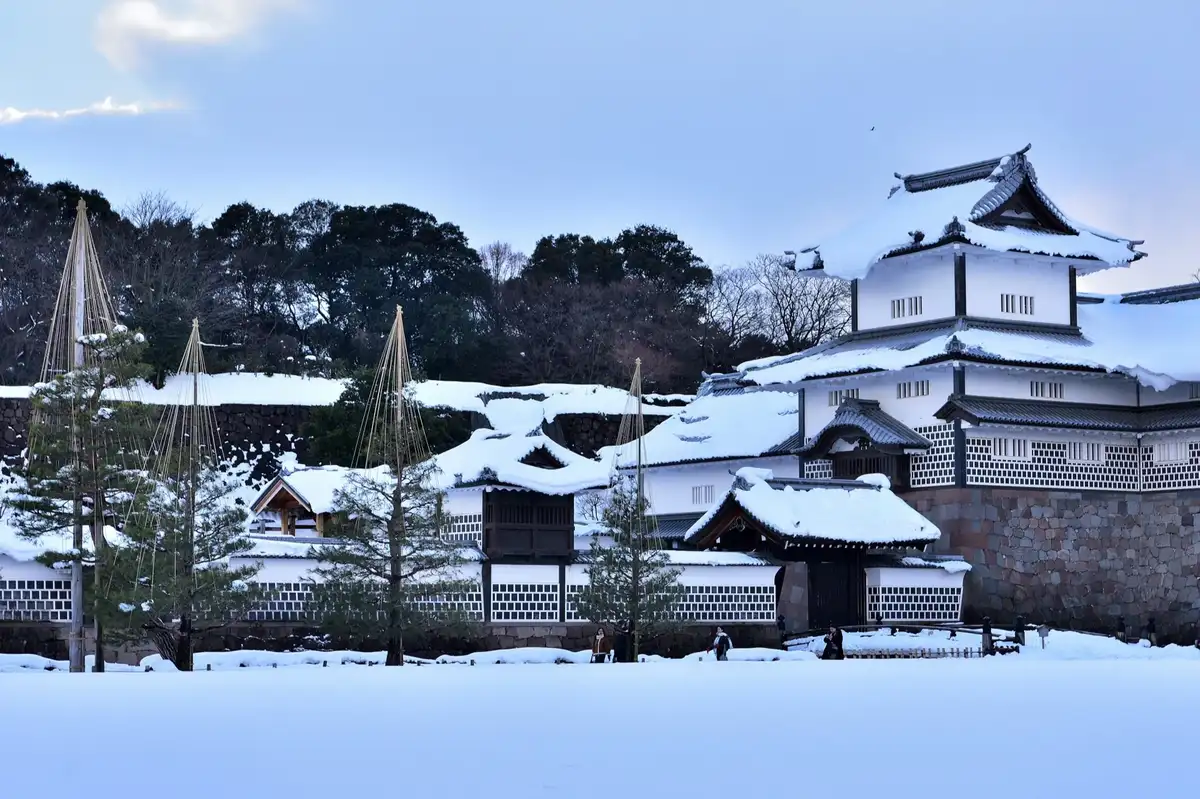
Kanazawa Castle, located in Marunouchi, Kanazawa City, is one of Japan's top 100 castles. During the Edo period, it was the stronghold of the Kaga Domain's Maeda clan. Its castle tower site is a nationally important historic asset. Adjacent to Kenrokuen Garden, the white castle peeks through green trees. Built in 1583, it was the residence of Maeda Toshiie, principal vassal of Toyotomi Hideyoshi. Though the original castle wasn’t fully preserved due to history, reconstructed diamond-shaped turrets, long barracks, and bridge gate turrets recreate the wooden castle’s design from a century ago, showcasing pure aesthetics.

Higashi Chaya District

Kanazawa has three historic Chaya (teahouse) districts dating back to the Edo period: Nishi Chaya, Higashi Chaya, and Kazue-machi. Stone-paved streets are lined with many Edo-era teahouse buildings. Higashi Chaya is the largest of the three. It is a good place to experience local tea culture.

06

Kanazawa → Fukui

Travel by bus today to explore Fukui.

Travel by bus today to explore Fukui.

Breakfast: at the hotel. Lunch: at your own expense. Dinner: at your own expense.

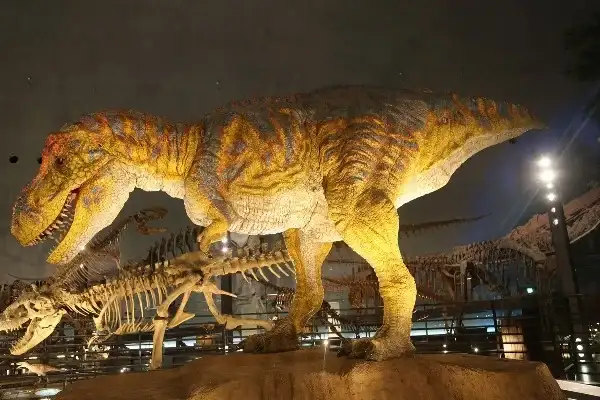
Fukui Prefectural Dinosaur Museum

Fukui Prefectural Dinosaur Museum

Located within Nagaozan Comprehensive Park, the Fukui Prefectural Dinosaur Museum is the largest dinosaur museum in Japan and ranked among the world’s top three dinosaur museums. Fukui Prefecture leads Japan in dinosaur fossil discoveries. Excavations began in 1989, unearthing many dinosaur bones including Fukuiraptor and Fukuititan. The discovery of eggshells and juvenile skeletons at excavation sites proved that dinosaurs lived in groups, making a significant academic contribution.

Echizen Ono Castle

Echizen Ono Castle is located on Kameyama Hill in the northwest part of Ono City, Fukui Prefecture, about 249 meters above sea level. Originally built as a flat-mountain castle by Oda Nobunaga’s general Kanamori Nagachika over four years, the current main keep was reconstructed in 1968. From autumn through next spring, under certain weather conditions, the town at the hill’s base is often wrapped in layers of cloud sea, with only Kameyama floating above, creating a ‘‘Castle in the Sky’’ spectacle.

Mikata Five Lakes

The five lakes: Mikata, Suigetsu, Kanmizu, Kugushi, and Hiruga. Due to differences in water quality (salt concentration), depth, and slight variations in color, they are known as the mysterious Five Colored Lakes. Rainbow Line’s mountaintop park offers a picturesque viewpoint where you can see all five lakes at once.

Tojinbo Cliffs

Located in northern Fukui Prefecture along the Sea of Japan coast near Ishikawa Prefecture, Tojinbo is a steep rocky cliff formed by basalt columns shaped through years of sea wave erosion. These columnar jointed pyroxene andesite pillars are rare globally with only three such formations. The Tojinbo Bay, known as Tojinbo Great Pool, features cliffs up to 50 meters high and waters 17 meters deep. Visitors can view this dramatic landscape from the cliffs, sightseeing boats, or atop the 54.7-meter Tojinbo Tower.

07

Fukui → Nagoya

Today, return from Fukui to Nagoya for sightseeing.

AI-rendered illustration

Today, return from Fukui to Nagoya for sightseeing.

Breakfast: at the hotel. Lunch: at your own expense. Dinner: at your own expense.

Nagoya Castle

Nagoya Castle, also known as Meijo, is a nationally designated historic site and ranks fourth among Japan's top 100 castles. After the Battle of Sekigahara, Tokugawa Ieyasu, founder of the Tokugawa shogunate and birthplace of Oda Nobunaga, built Nagoya Castle on the ruins of Nagoya Castle to provide for his ninth son. Orders were sent to various daimyos to assist in construction. Katō Kiyomasa, Fukushima Masanori, and others contributed to show loyalty. The castle, completed in under two years, was inherited by three generations of Tokugawa family. A bronze statue of Katō Kiyomasa carrying stones stands in Meijo Park today.

Atsuta Shrine

Atsuta Shrine is one of Japan’s oldest shrines, believed to have been established by Emperor Keiko in the 2nd century AD, with a history of 1900 years. The main hall enshrines five deities including Takehiko no Mikoto, Miyatsuhime, Amaterasu Omikami, Susanoo no Mikoto, and Ukanomitama no Mikoto. The shrine has been highly revered throughout Japanese history and holds great authority among the people. Successive rulers, including Toyotomi Hideyoshi and Tokugawa Ieyasu, have extensively renovated it. Recently, the Japanese Emperor and Empress have also paid visits.

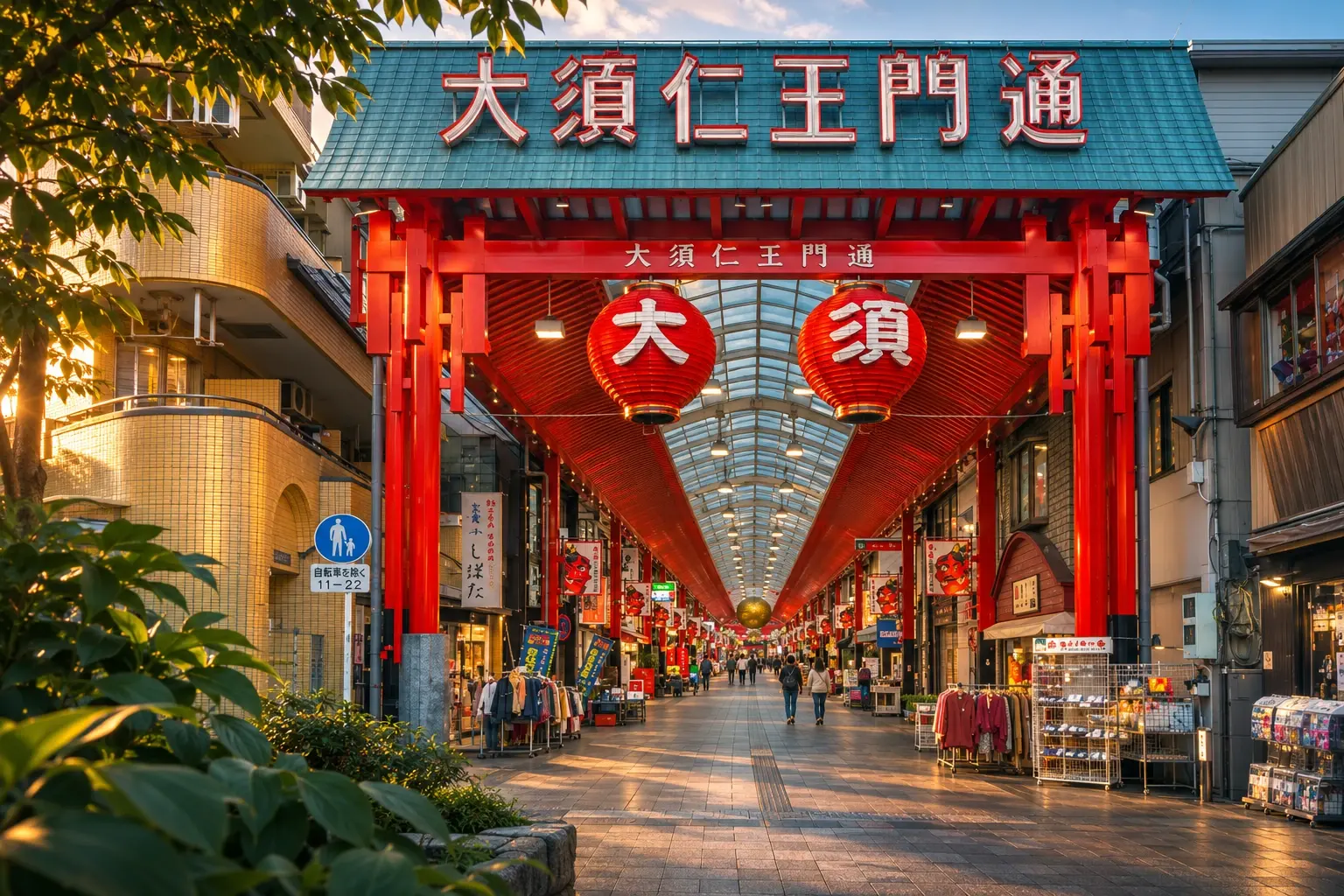
Osu Shopping StreetAI-rendered illustration

Osu Shopping Street

Osu is located in central Nagoya City. It features the historic Osu Shopping District, densely packed with about 1,200 various shops, making it a great shopping destination in Nagoya. The district spans Osu 2-chome to 3-chome and is bordered by four main streets: Wakamiya Odori, Fushimi Dori, Osu Dori, and Minami Otsu Dori. Conveniently situated between Osu Kannon and Kamimaezu stations on the Tsurumai Line for easy access.

08

Nagoya

Today, travel to the famous autumn foliage spot in Aichi Prefecture—Korankei Gorge, featuring streams, bridges, mountains, temples, and vibrant maple leaves.

AI-rendered illustration

Today, travel to the famous autumn foliage spot in Aichi Prefecture—Korankei Gorge, featuring streams, bridges, mountains, temples, and vibrant maple leaves.

Breakfast: at the hotel. Lunch: at your own expense. Dinner: at your own expense.
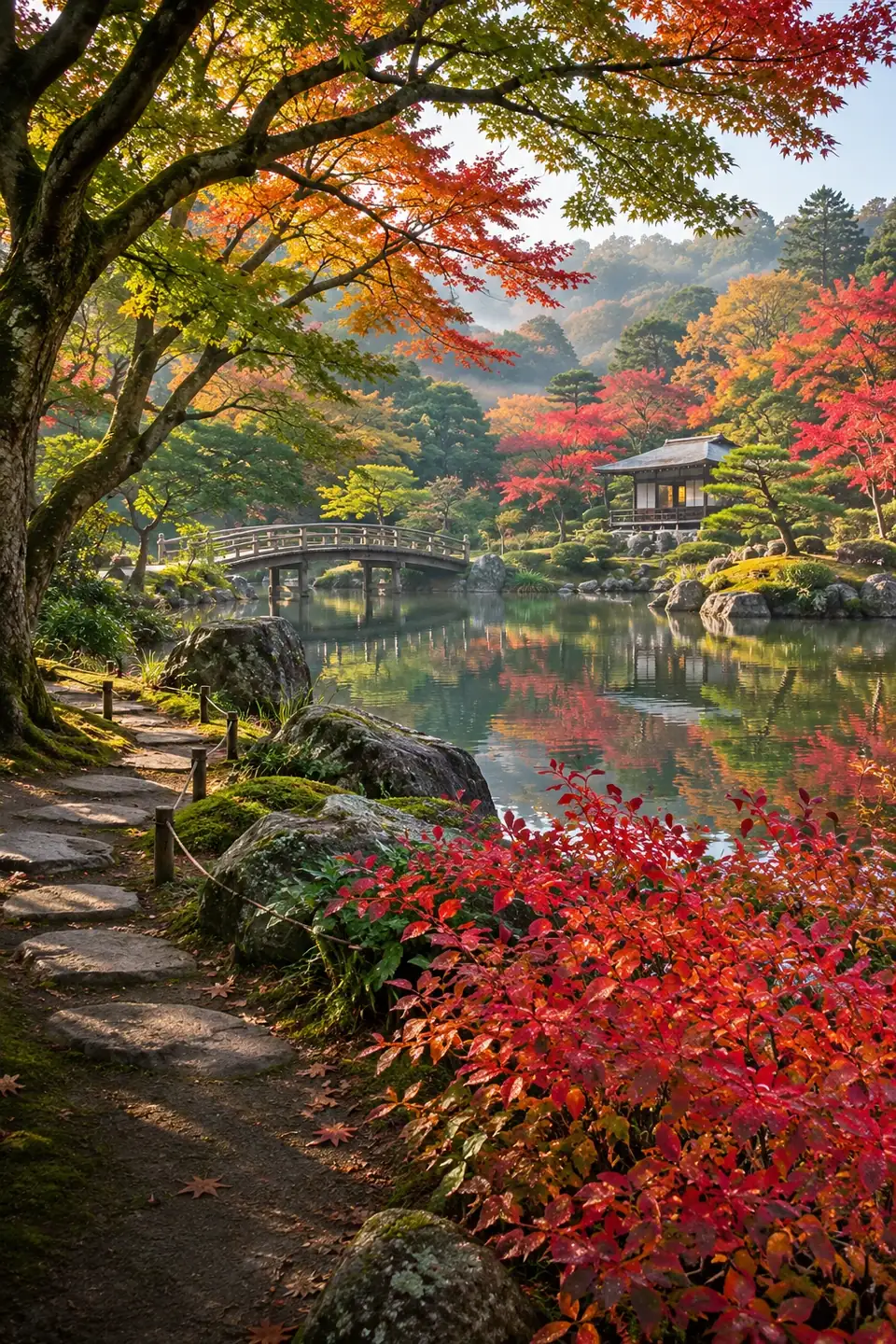
Tokugawa GardenAI-rendered illustration

Tokugawa Garden

Tokugawa Garden is a Japanese stroll garden built by the second Owari Tokugawa lord remodeling his residence. Known spots include Ryumon Waterfall, Meifukei Stream, Ryusen Lake, Kansenkaku Pavilion, Kosen Bridge, Shisuian Hermitage, and Zuiryutei Teahouse. Kansenkaku Pavilion offers the best views of the garden and houses a restaurant and shop. A combined ticket for Tokugawa Garden, Tokugawa Art Museum, and Hozo Bunko Library is available. The Tokugawa Art Museum is more like a small museum with more national treasures than Atsuta Shrine.

Shirotori Garden

A Japanese stroll garden centered on the Kiso River, which flows from Mount Ontake into Ise Bay. The garden includes the authentic sukiya-style teahouse “Seihutei.”

Kourankei Gorge

Kourankei Gorge is Tokai region’s top maple viewing spot, located in Okumikawa Asuke Town National Park. Its name combines 'Kou' from Kōjaku-ji Temple and 'Rankei' from Kyoto’s famous maple site Arashiyama. In the early 17th century, Zen Master San'ei planted a maple tree beside the gorge after reading the Heart Sutra. His followers planted more trees in the valley and ravines. Now, over 4,000 maple trees of 11 varieties grow along the gorge with the beautiful Basen River flowing through, creating a magnificent autumn painting and a must-visit maple site in Japan.
09

Nagoya

Enjoy free time as your departure schedule allows. The itinerary ends locally in Nagoya; airport transfer can be arranged to suit your flight schedule. International return flights are arranged separately; travel days after the local itinerary ends are not included in the itinerary length.

AI-rendered illustration

Enjoy free time as your departure schedule allows. The itinerary ends locally in Nagoya; airport transfer can be arranged to suit your flight schedule. International return flights are arranged separately; travel days after the local itinerary ends are not included in the itinerary length.

Breakfast: at the hotel. Lunch: at your own expense. Dinner: at your own expense.

YOUR ROUTE

Know the shape of your journey.

Starts in
Nagoya
Ends in
Nagoya
Local itinerary
9 days

A proposal shaped around you

Use this route as a starting point. Tell us your dates, pace and accommodation preferences.

Your quote will specify accommodation, guiding, transport, activities, meals and any optional arrangements before you book. International flights and airport transfers are discussed separately.

TRAVEL IN COMFORT

The right vehicle for your group.

Toyota Alphard

Up to 6 passengers

Toyota HiAce

Up to 9 passengers

Our main touring vehicles. We recommend a vehicle based on your group size and luggage. Maximum seating capacity does not guarantee room for all bags when every seat is occupied. Vehicle availability is confirmed for your destination.

More to discover

Echizen Ono Castle

Echizen Ono Castle is located on Kameyama Hill in the northwest part of Ono City, Fukui Prefecture, about 249 meters above sea level. Originally built as a flat-mountain castle by Oda Nobunaga’s general Kanamori Nagachika over four years, the current main keep was reconstructed in 1968. From autumn through next spring, under certain weather conditions, the town at the hill’s base is often wrapped in layers of cloud sea, with only Kameyama floating above, creating a ‘‘Castle in the Sky’’ spectacle.

Kamikochi

Surrounded by peaks including the Hotaka Mountain Range, Mount Yake, and Mt. Jonen, Kamikochi is a small basin at about 1,500 meters elevation. Introduced globally by 19th-century British missionary and mountaineer Walter Weston, the area is enveloped in pristine forests of birch and larch, with landmarks like Taisho Pond, Tashiro Pond, and Myojin Pond. These, along with the soaring mountains, create breathtaking scenery. Taisho Pond formed in the early 20th century due to volcanic activity from Mount Yake blocking the Azusa River. Its blue water with exposed dead trees offers a unique landscape.

Shirakawa-go Gassho Village

Shirakawa-go is a tranquil mountain village surrounded by mountains, with rice paddies and rivers running through. The village’s traditional gassho-style thatched houses number over 110, grouped together, and were designated a UNESCO World Cultural Heritage site in 1995. At the open-air museum, the Gassho Village Heritage Park, 25 gassho houses from across Shirakawa-go have been relocated and preserved. The park also features temple replicas, waterwheel huts, charcoal kilns, and stables built in the style of old rural villages. Traditional crafts such as dyeing and weaving are demonstrated, and visitors can experience them hands-on.

Tojinbo Cliffs

Located in northern Fukui Prefecture along the Sea of Japan coast near Ishikawa Prefecture, Tojinbo is a steep rocky cliff formed by basalt columns shaped through years of sea wave erosion. These columnar jointed pyroxene andesite pillars are rare globally with only three such formations. The Tojinbo Bay, known as Tojinbo Great Pool, features cliffs up to 50 meters high and waters 17 meters deep. Visitors can view this dramatic landscape from the cliffs, sightseeing boats, or atop the 54.7-meter Tojinbo Tower.

Before you go

This journey starts at the destination. Seasonal experiences, service inclusions and availability are confirmed with your personalized proposal.

Original source & photography · 6renyou ↗

Image credits and illustrations

BEFORE YOU PLAN

Travel planning, clearly explained.

OpenEast brings together Japan and South Korea itinerary ideas for travelers from North America, with China also part of our destination plans. Start with the local route, then consider flights and airport transfers around it.

When does Day 1 begin?

Day 1 begins at the destination. International departure-only and return flight days are not counted as destination days. Plan your flights around the local itinerary dates.

Are flights and airport transfers included?

International flights and airport transfers are confirmed separately. Do not assume they are included in a suggested itinerary.

Are these confirmed departures?

These routes are itinerary ideas. Dates, hotels, admissions, seasonal activities, prices and availability need confirmation in a personalized proposal before booking.

Can I book or send an inquiry here?

Use the inquiry form to contact our team. A submission confirmation appears only when the email service accepts your request. An inquiry does not reserve a service or take payment.

Explore Japan itineraries → · Explore South Korea itineraries →

1 / 5

Let’s plan your journey.

[Maple Glow] 9-Day Deep Autumn Foliage Tour of Japan’s Central Countryside

Leave your details, and our travel specialists will get in touch by email or your preferred contact method.

Your specialist will confirm the itinerary, pricing and availability with you.

How we use your information

Your inquiry is sent to info@jasperlimo.com so our team can respond. Please do not include passport or payment details.

Start planning