02Osaka → Kyoto
After breakfast, travel by vehicle to the millennia-old capital Kyoto. Upon arrival, visit the hidden maple forest sanctuary Sanzen-in, a Tendai sect temple nestled in the mountains north of Kyoto. The temple grounds feature towering ancient trees, moss-covered grounds, and flowing streams, offering tranquil and humble natural scenery year-round. The temple's ornate painted ceiling inside the Hojo building houses revered images including Amitabha Buddha and Bodhisattvas and is a designated Important Cultural Property of Japan.
In the afternoon, head to the famous maple viewing spot Arashiyama and the iconic Togetsukyo Bridge. This spot in Kyoto attracts visitors year-round for cherry blossoms in spring, lush greenery in summer, vibrant fall colors, and winter snow. The shimmering Katsura River below the bridge, dotted with waterfowl, creates a fairy-tale scene. Since the Heian era, Japan’s nobility have frequented this area for leisure and boating. The surroundings offer scenic mountains, green waters, traditional restaurants and lanterns, attracting crowds. Occasionally, finely dressed geisha can be seen strolling, adding to the charm.
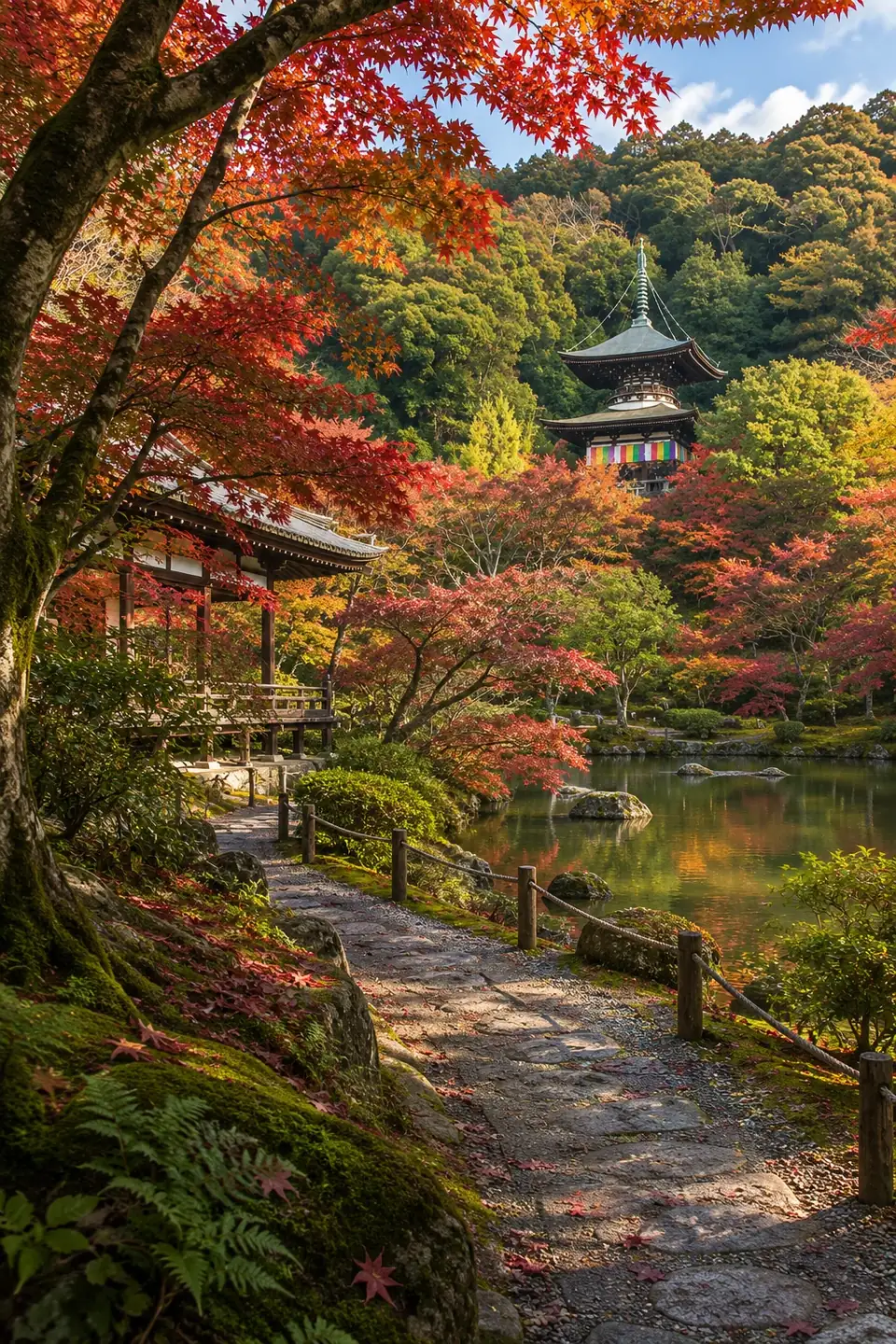
Next, visit Eikando Zenrinji Temple. Originally one of the estates of Fujiwara no Sekkei in the Heian period, it was named Zenrinji by Emperor Seiwa. After priest Yoka took over, it became Eikando. Known as a premier spot for autumn leaves in Kyoto, it has about 3,000 maple trees reflected beautifully in the pond and small bridges, earning the nickname 'Autumn Leaves Eikando.'
★Special night visit for illuminated autumn leaves reflecting in the Dragon Pool at Kodaiji Temple.
(Private vehicle with 10-hour service: for 5 or fewer passengers, accompanied by driver-guide; for groups of 6-8, includes Chinese-speaking guide.)
 AI-rendered illustration
After breakfast, travel by vehicle to the millennia-old capital Kyoto. Upon arrival, visit the hidden maple forest sanctuary Sanzen-in, a Tendai sect temple nestled in the mountains north of Kyoto. The temple grounds feature towering ancient trees, moss-covered grounds, and flowing streams, offering tranquil and humble natural scenery year-round. The temple's ornate painted ceiling inside the Hojo building houses revered images including Amitabha Buddha and Bodhisattvas and is a designated Important Cultural Property of Japan.
In the afternoon, head to the famous maple viewing spot Arashiyama and the iconic Togetsukyo Bridge. This spot in Kyoto attracts visitors year-round for cherry blossoms in spring, lush greenery in summer, vibrant fall colors, and winter snow. The shimmering Katsura River below the bridge, dotted with waterfowl, creates a fairy-tale scene. Since the Heian era, Japan’s nobility have frequented this area for leisure and boating. The surroundings offer scenic mountains, green waters, traditional restaurants and lanterns, attracting crowds. Occasionally, finely dressed geisha can be seen strolling, adding to the charm.
Next, visit Eikando Zenrinji Temple. Originally one of the estates of Fujiwara no Sekkei in the Heian period, it was named Zenrinji by Emperor Seiwa. After priest Yoka took over, it became Eikando. Known as a premier spot for autumn leaves in Kyoto, it has about 3,000 maple trees reflected beautifully in the pond and small bridges, earning the nickname 'Autumn Leaves Eikando.'
★Special night visit for illuminated autumn leaves reflecting in the Dragon Pool at Kodaiji Temple.
(Private vehicle with 10-hour service: for 5 or fewer passengers, accompanied by driver-guide; for groups of 6-8, includes Chinese-speaking guide.)
Breakfast: at the hotel. Lunch: at your own expense. Dinner: at your own expense.
Sanzen-in Temple
Sanzen-in is a Tendai Buddhist temple located in Ohara, Sakyo-ku, Kyoto. The mountain name is Gyozan. The principal image is Yakushi Nyorai; the founder is Saicho. It has produced many Tendai sect leaders and is known as one of the three temple estates alongside Shoren-in and Myoho-in.
Togetsukyo Bridge in Autumn
Togetsukyo Bridge spans approximately 155 meters across the Oi River in Arashiyama, Kyoto. Tradition traces an early bridge here to the monk Dosho in 836. Riverside trees and the surrounding hills create seasonal scenery, including cherry blossoms in spring.
AI-rendered illustrationEikan-do Zenrin-ji Temple
Eikan-do is the head temple of the Seizan Zenrin-ji branch of Pure Land Buddhism. Covered corridors connect its principal halls. Its celebrated Amida Buddha statue, an Important Cultural Property, looks back over its left shoulder and is known as the Looking-Back Amida. Autumn leaves around the halls, pagoda and pond have made the temple especially famous, typically drawing visitors during November.
 AI-rendered illustration
 AI-rendered illustration

