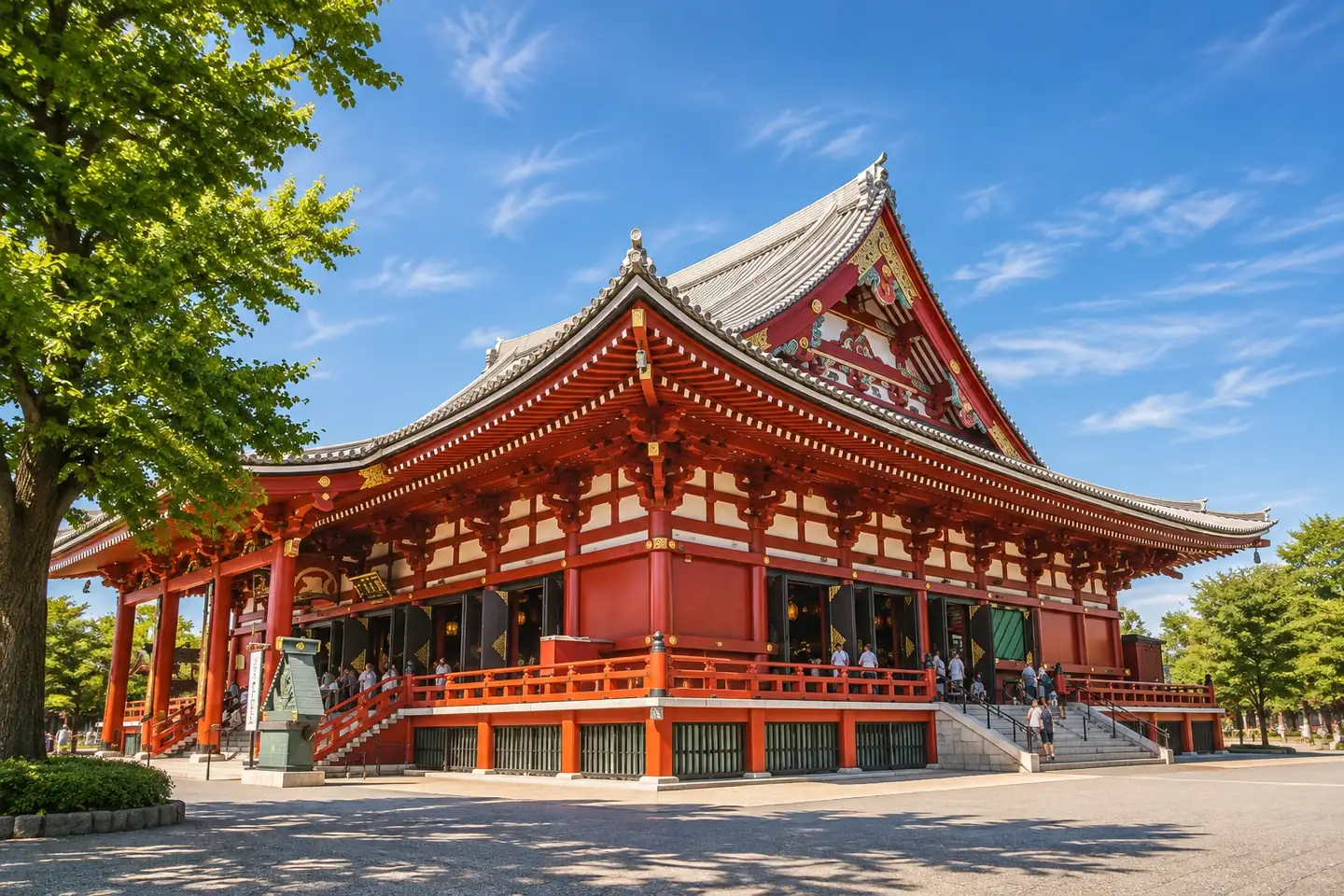
In the morning, visit Tokyo’s oldest temple, Senso-ji in Asakusa. The temple’s gate, called Kaminarimon (Thunder Gate), officially named Furaijinmon, is a symbol of both Japan and Asakusa district. Afterwards, specially arrange a ride on the Seibu Railway "Laview," known as the most beautiful limited express train, designed by famous architect Kazuyo Sejima. Then proceed to Kawagoe Little Edo, a historic town thriving as a castle town during the Edo period. The city retains many Edo-era streets and temples full of nostalgic charm. Visit "Kashiya Yokocho" (Candy Alley).
Breakfast: at your own expense. Lunch: at your own expense. Dinner: at your own expense.
 AI-rendered illustration
Senso-ji Temple
Senso-ji is Tokyo's oldest temple. The enormous lantern at Kaminarimon, the Thunder Gate, is a symbol of Asakusa. Between the gate and the main hall, Nakamise shopping street is lined with small stores selling souvenirs and snacks. Visitors also draw fortunes and tie designated fortune slips within the temple grounds.
Little Edo Kawagoe
Kawagoe City in Saitama Prefecture prospered as a castle town during the Edo period, with strong economic and cultural ties to Edo (Tokyo). Though its former prosperity has faded, Kawagoe has avoided excessive urban development, preserving many traditional warehouse-style buildings from the Edo era, earning it the nickname "Little Edo." Now, with a precious 400-year-old clock tower and nostalgic Taisho era streets blending east and west influences, Kawagoe offers a unique scenic experience, perfect for a weekend stroll.
Kashiya Yokocho (Candy Alley)
Following Kawagoe Ichibangai Street, you reach Kashiya Yokocho, which houses over 20 shops selling traditional Japanese candies. After the 1923 Great Kanto Earthquake, this area had more than 70 stores supplying Tokyo and was at its peak.
 AI-rendered illustration

