First, visit Nikko’s Shinkyo Bridge, a red arched bridge spanning the Daiya River, marking the gateway to Nikko’s sacred sites. Then tour the magnificent Nikko Toshogu Shrine, renowned for its exquisite architecture and designated a World Cultural Heritage site, allowing close appreciation of Japan’s history and culture. Afterwards, visit Futarasan Shrine, nestled in a tranquil forest offering spiritual calm and refreshment. No specific lodging or meal arrangements are made during this trip, but many local specialty shops and restaurants along the route offer varied options to enrich your journey.
Breakfast: at your own expense. Lunch: at your own expense. Dinner: at your own expense.
Shinkyo Bridge
Shinkyo Bridge is the front entrance to Nikko's sacred 'Two Shrines and One Temple' area, part of Nikko Futarasan Shrine. Formerly called 'Yamasuge Snake Bridge,' it is Japan's only historic suspension bridge in a mountain gorge. The current bridge was rebuilt in 1636 and extensively renovated in 1997.
 AI-rendered illustration
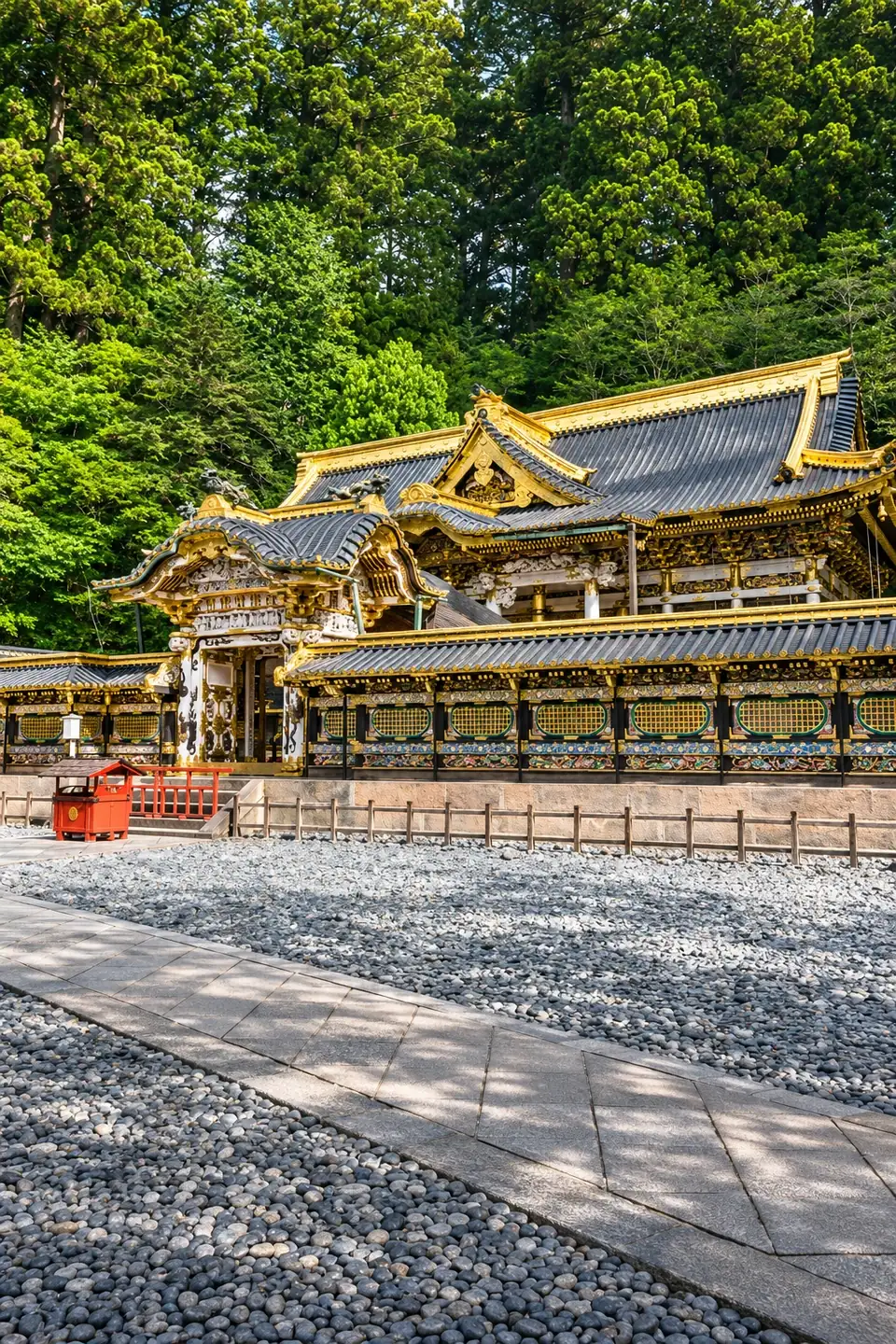
Nikko Toshogu Shrine
There are many Toshogu Shrines across Japan, but the one in Nikko City is the main shrine and the mausoleum of Tokugawa Ieyasu, founder of the Tokugawa Shogunate. At Toshogu, visitors can admire exquisite Edo-period wood carvings, including the famous “Three Wise Monkeys” carving in a stable where the monkeys cover their eyes, ears, and mouth, reflecting the Confucian teaching of 'see no evil, hear no evil, speak no evil.' Nikko’s Toshogu, along with Rinnoji Temple and Futarasan Shrine, is known as the “Two Shrines and One Temple,” collectively designated as a World Heritage Site under “Shrines and Temples of Nikko.”
Futarasan Shrine
Futarasan Shrine, founded in 767, is dedicated to the three mountain gods of Nikko: Oonamuchi-no-Mikoto, Tagorihime-no-Mikoto, and Ajisukitakahikone-no-Mikoto—collectively called Futarasan Okami. As part of Nikko's shrines and temples, it is a UNESCO World Heritage site. In front of the shrine stands the 'Married Couple Tree' and 'Parent-Child Tree,' said to bless marital harmony and parent-child relationships. To the shrine’s left rear is the 'Futarasan Sacred Spring,' whose clear water is believed by locals to bestow safety when drunk. The shrine’s largest festival is the Yayoi Festival, held April 13-17 yearly.

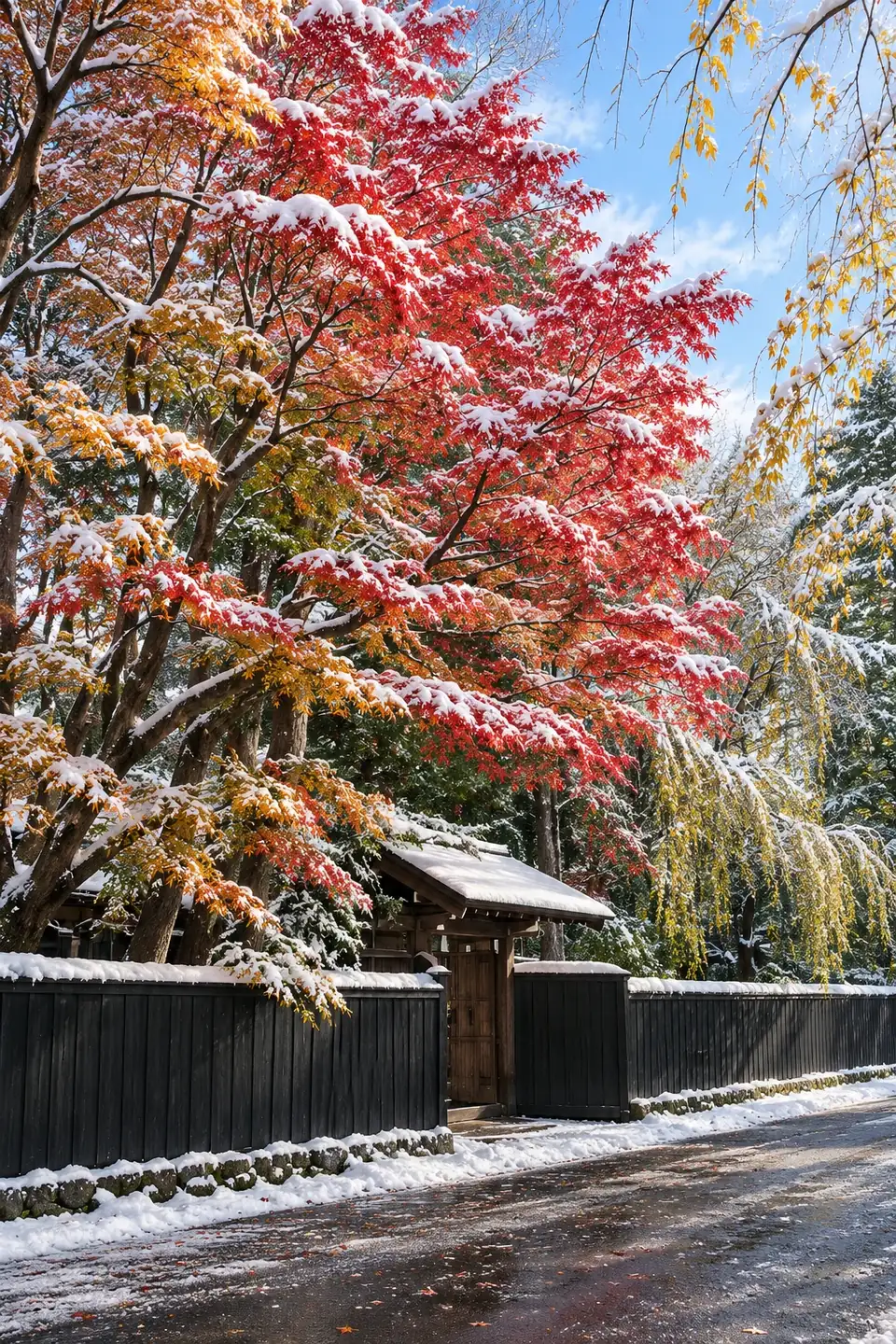 AI-rendered illustration