After breakfast, visit Arashiyama and leisurely walk across the picturesque Togetsukyo Bridge, soaking in tranquility and beauty. Then wander the Sagano Bamboo Grove paths, surrounded by lush green bamboo for a peaceful retreat. Next, visit Okazaki Shrine, officially Higashitenno Okazaki Shrine, founded during the Heian period. Known for its rabbit symbolism, the shrine features many rabbit statues and decorations, making it a unique spot distinct from typical tours. Must-see in Kyoto.
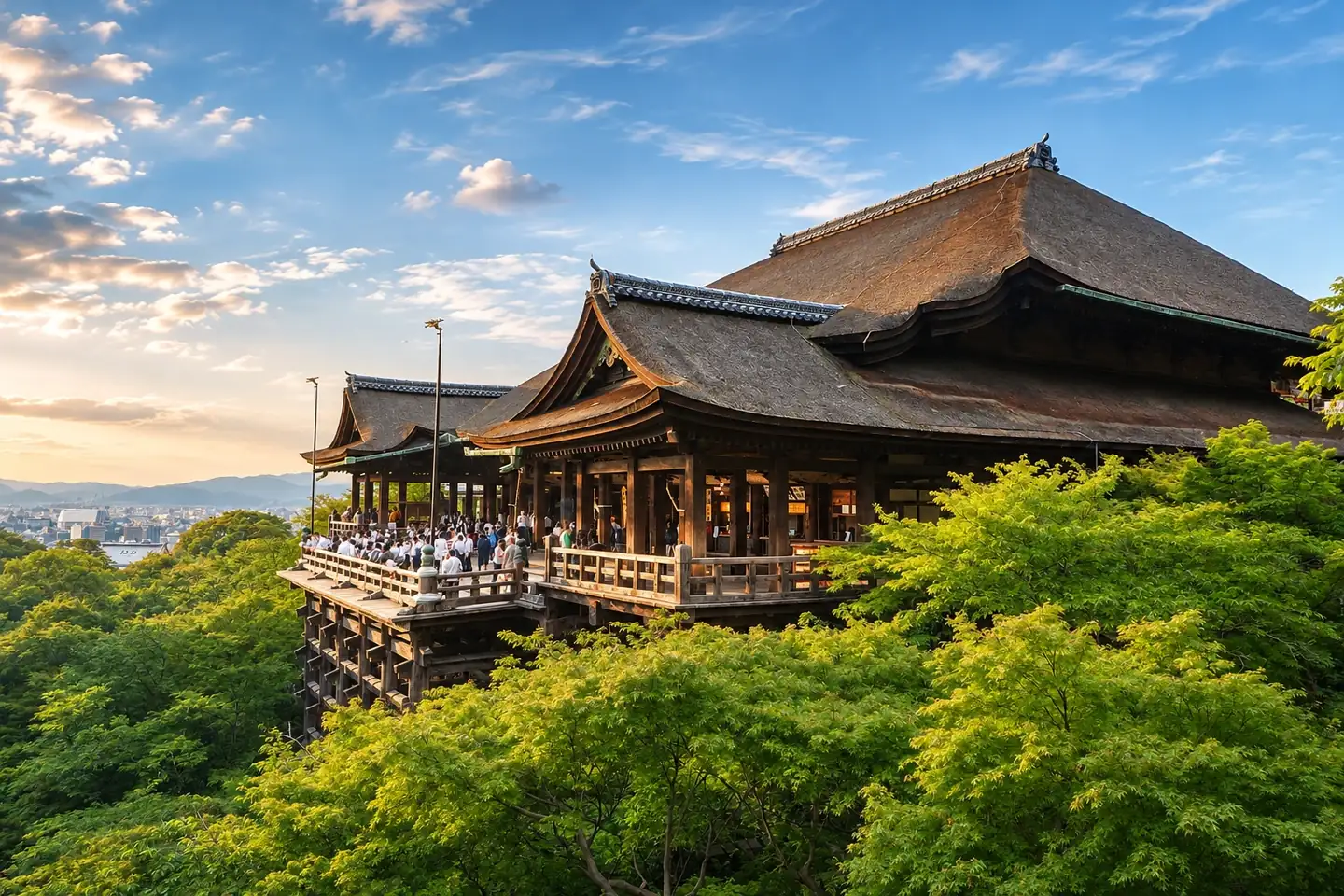
In the afternoon, visit the renowned Kiyomizu-dera Temple. From its famous stage, enjoy sweeping views of Kyoto city. End your day exploring the historic streets of Ninenzaka and Sannenzaka, browsing traditional shops and local cuisine.
Breakfast: at your own expense. Lunch: at your own expense. Dinner: at your own expense.
Togetsukyo Bridge
Togetsukyo spans the Katsura River in Kyoto, linking the Sagano and Arashiyama areas. The bridge carries both pedestrians and vehicles. Cherry trees along the river provide a scenic spring setting, and nearby walking paths lead into Arashiyama Park.
Sagano Bamboo Grove
The Sagano Bamboo Grove is a well-known walking area in Arashiyama, Kyoto. Tall bamboo surrounds the paths, creating a quiet, distinctive atmosphere. Nearby riverside scenery and Togetsukyo Bridge complete a visit to the area, with colorful foliage on the surrounding hills in autumn.
Okazaki Shrine
Okazaki Shrine, officially named Higashitenno Okazaki Shrine, dates back to the Heian period. Known for prayers for fertility, the shrine is filled with cute rabbits. From guardian statues to votive plaques and amulets, rabbit motifs are everywhere, making it a charming and unique stop for rabbit lovers or anyone with extra time after visiting Heian Shrine.
 AI-rendered illustration
Kiyomizu-dera Temple
Founded in 778, before Kyoto became Japan's capital, Kiyomizu-dera stands on the slopes of Mount Otowa in eastern Kyoto. Following several fires, much of the present complex was rebuilt in 1631–1633 under the third Tokugawa shogun, Iemitsu. Its main hall is a National Treasure, while the Nio Gate, West Gate, three-story pagoda and bell tower are important cultural properties. In 1994 it became part of the UNESCO-listed Historic Monuments of Ancient Kyoto.
Ninenzaka & Sannenzaka
Ninenzaka and Sannenzaka are historic lanes in Kyoto lined with old wooden buildings and traditional shops. Ninenzaka is said to date to 807. These streets connect the area around Kiyomizu-dera with Nene-no-Michi and Kodai-ji.

 AI-rendered illustration
 AI-rendered illustration
 AI-rendered illustration