Mount Fuji
Mount Fuji is Japan's highest mountain and a major national symbol. This active volcano straddles Shizuoka and Yamanashi prefectures, southwest of Tokyo and near Japan's Pacific coast.
Japan · 6 DAYS
Tokyo → Yamanashi Prefecture → Hakone → Yokohama
Combine Tokyo with Mount Fuji scenery around Lake Kawaguchi. Explore Hakone, cruise Lake Ashi and discover sculpture in a natural setting at the Open-Air Museum.
JOURNEY HIGHLIGHTS
[Paradise Hot Springs & Scenic Mt. Fuji 6-Day Tour] Fuji Five Lakes + Hakone Owakudani + Lake Ashi Pirate Ship + Yokohama + Tokyo Disneyland
Day 1 starts in Tokyo → Yamanashi Prefecture → Hakone. International airfare is arranged separately.
Day 1 begins on arrival in Tokyo. Local sightseeing and hotel check-in depend on your arrival time; international departure and flight days are not included. The proposed local route continues through Yamanashi to Hakone, with Mount Fuji views and the Kawaguchiko Music Forest Museum if time permits. Airport transfers can be arranged separately; inclusion depends on your confirmed proposal.
 AI-rendered illustration
Day 1 begins on arrival in Tokyo. Local sightseeing and hotel check-in depend on your arrival time; international departure and flight days are not included. The proposed local route continues through Yamanashi to Hakone, with Mount Fuji views and the Kawaguchiko Music Forest Museum if time permits. Airport transfers can be arranged separately; inclusion depends on your confirmed proposal.
Breakfast: at your own expense. Lunch: at your own expense. Dinner: at the hotel.
Mount Fuji is Japan's highest mountain and a major national symbol. This active volcano straddles Shizuoka and Yamanashi prefectures, southwest of Tokyo and near Japan's Pacific coast.
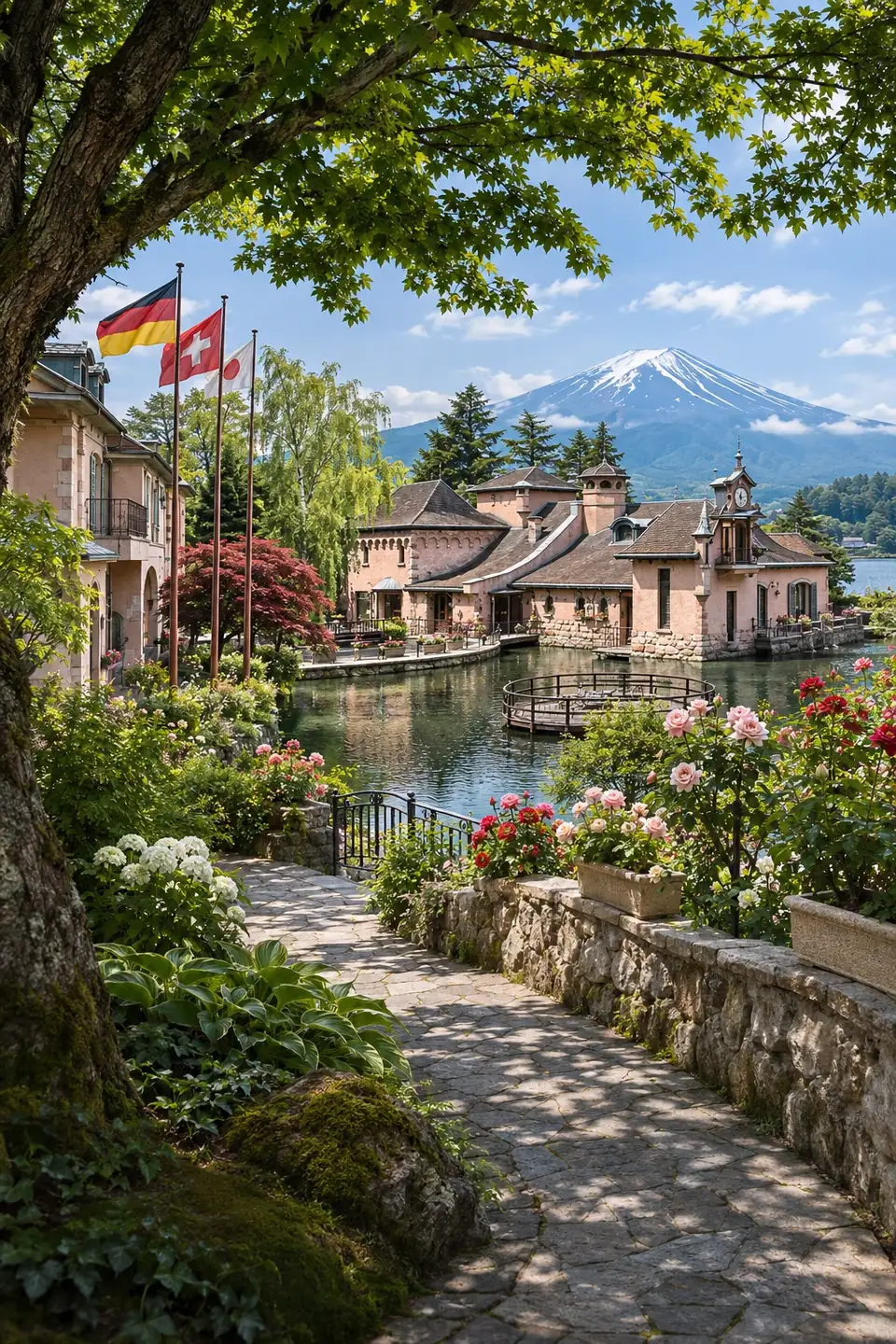
AI-rendered illustrationSet among greenery beside Lake Kawaguchi, this museum has European-style buildings inspired by a historic Alpine village. Its collection includes music boxes and mechanical musical instruments from around the world, ranging from small handheld pieces to large cabinet-sized examples.
Explore the hot-spring region of Hakone. In the morning, take a pirate-style sightseeing cruise on Lake Ashi, with Mount Fuji views if the weather allows. In the afternoon, ride the ropeway to Owakudani and visit the Hakone Open-Air Museum. Enjoy hot-spring bathing in the evening.
 AI-rendered illustration
Explore the hot-spring region of Hakone. In the morning, take a pirate-style sightseeing cruise on Lake Ashi, with Mount Fuji views if the weather allows. In the afternoon, ride the ropeway to Owakudani and visit the Hakone Open-Air Museum. Enjoy hot-spring bathing in the evening.
Breakfast: at the hotel. Lunch: at your own expense. Dinner: at your own expense.
Lake Ashi is a volcanic lake in western Hakone, formed more than 3,000 years ago. It is Kanagawa Prefecture's largest lake. Mount Fuji can be seen beyond it in clear weather, although the region's frequent rain and humidity often obscure the view. Sightseeing cruises offer views of the lake and surrounding mountains, with pirate-style ships adding a playful touch.
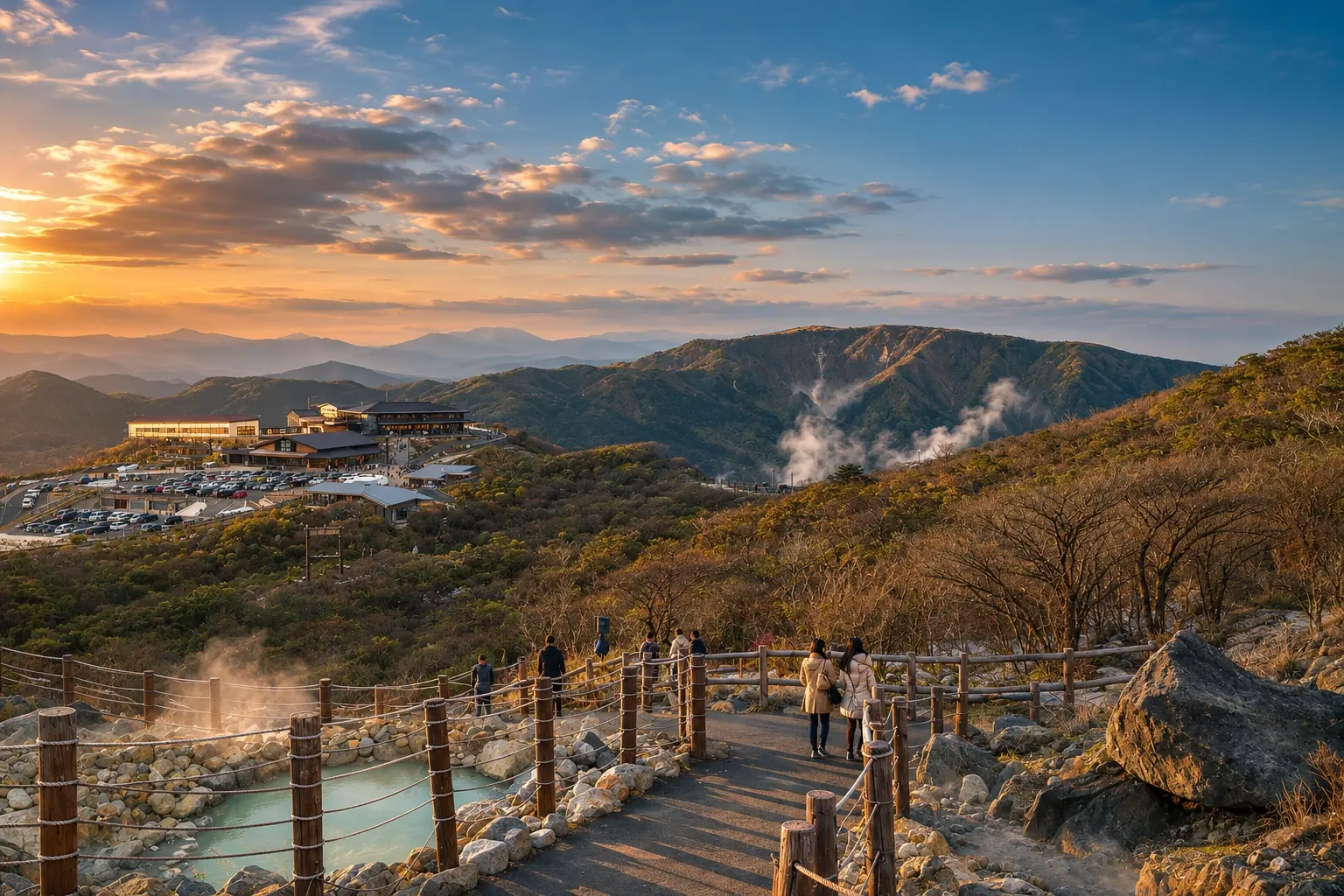
AI-rendered illustrationOwakudani is a volcanic valley in Hakone where geothermal steam rises from rocky vents and sulfurous hot springs. When conditions allow, visitors can enjoy views toward Mount Fuji and the Hakone mountains. Its black-shelled eggs, cooked using geothermal heat, are a local specialty associated with a traditional longevity legend.
Opened in 1969, the Hakone Open-Air Museum was Japan's first outdoor art museum. Approximately 70,000 square meters of landscaped grounds display more than a hundred modern and contemporary sculptures, including works by Rodin, Bourdelle and Henry Moore. Indoor galleries include a Picasso collection, while children's play areas and a hot-spring footbath add to the experience. The surrounding landscape changes with the seasons.
Travel to Yokohama in the morning to explore the Red Brick Warehouse and the noodle museum described in the source. In the afternoon, visit Chinatown and consider a Kirin brewery visit, subject to current reservations and tasting arrangements. Return to Tokyo for Ueno Park and Akihabara. The source's narrative names an instant-noodle museum while its attraction list names the Shin-Yokohama Ramen Museum; confirm the intended venue before booking.
 AI-rendered illustration
Travel to Yokohama in the morning to explore the Red Brick Warehouse and the noodle museum described in the source. In the afternoon, visit Chinatown and consider a Kirin brewery visit, subject to current reservations and tasting arrangements. Return to Tokyo for Ueno Park and Akihabara. The source's narrative names an instant-noodle museum while its attraction list names the Shin-Yokohama Ramen Museum; confirm the intended venue before booking.
Breakfast: at the hotel. Lunch: at your own expense. Dinner: at your own expense.
Yokohama Chinatown is a longstanding neighborhood around Yamashita-cho in Naka ward. Together with Kobe's Nankinmachi and Nagasaki's Shinchi Chinatown, it is one of Japan's three well-known Chinatowns. Its streets contain a large concentration of Chinese restaurants, food stalls and shops.
Two historic red-brick warehouses face Yokohama Harbor and now house shops and restaurants. Developed as part of the port's logistics infrastructure in the early 20th century, they ended their warehouse role in 1989 and reopened as commercial facilities in 2002. The surrounding waterfront park is a pleasant place for a stroll in the sea breeze.
The Shin-Yokohama Ramen Museum recreates a nostalgic Showa-era streetscape and brings together regional ramen styles from across Japan. Learn about ramen history and sample different broths and noodles. The source also mentions a customization experience; confirm current workshops and participating restaurants.
Ueno Park, formally Ueno Onshi Park, covers approximately 530,000 square meters in Tokyo's Taito district. Established as a public park in the 19th century, its name reflects its transfer from imperial ownership to the city in 1924. Originally centered on Kanei-ji's temple buildings, mausoleums, Toshogu Shrine and cherry trees, it later developed into a cultural district with museums, a zoo and art galleries.
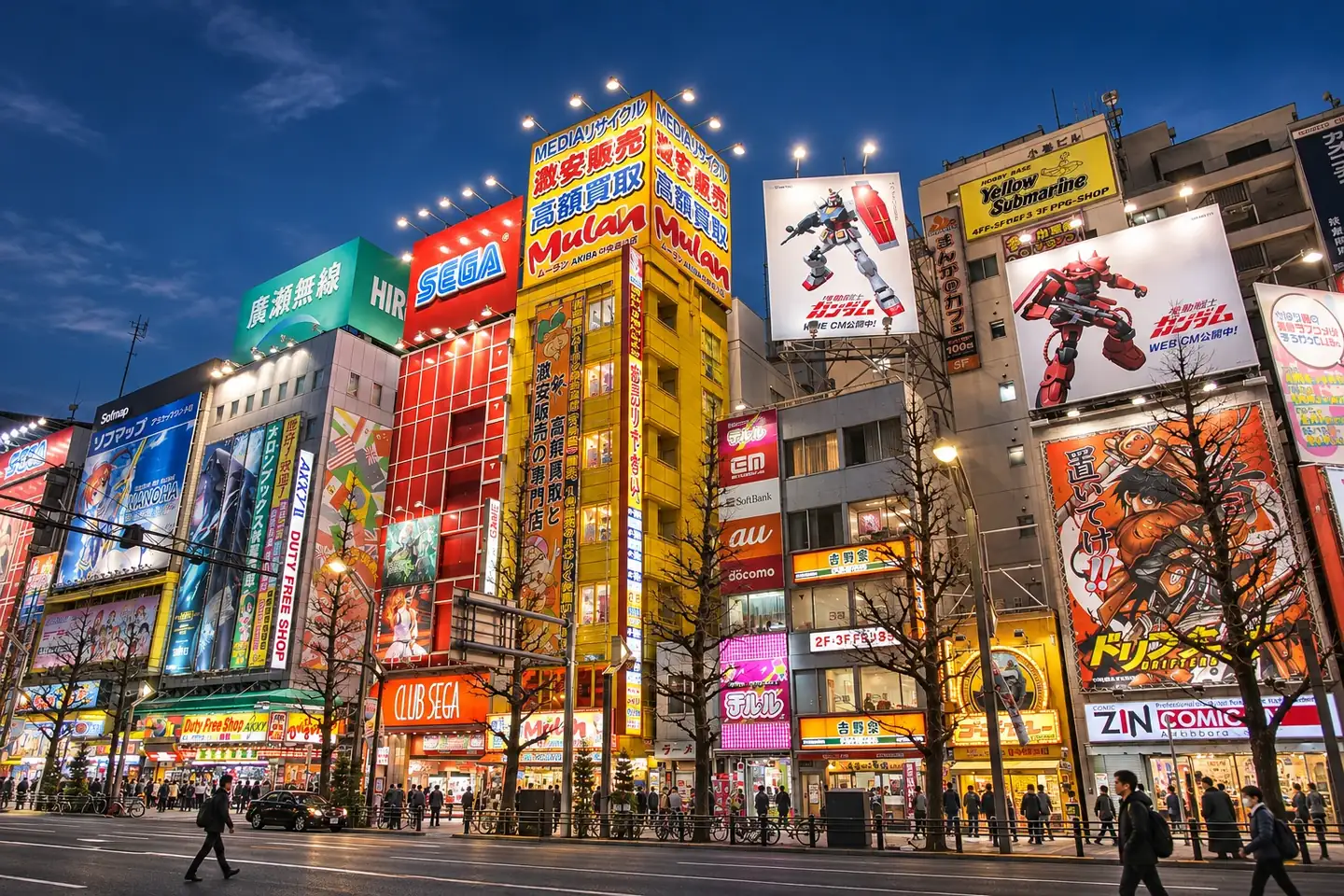
AI-rendered illustrationOften called Akiba, Akihabara is a Tokyo district historically associated with electronics and cutting-edge technology. Located in Chiyoda on the Yamanote Line, it has evolved into a busy neighborhood of specialty shops, businesses, restaurants and entertainment.
Visit Senso-ji in the morning, with an optional kimono dressing experience, and view Tokyo Skytree from a distance. Take a water bus toward Odaiba, then relax on the waterfront promenade at Odaiba Seaside Park and enjoy views of Rainbow Bridge. Finish with free time for shopping in Ginza.
 AI-rendered illustration
Visit Senso-ji in the morning, with an optional kimono dressing experience, and view Tokyo Skytree from a distance. Take a water bus toward Odaiba, then relax on the waterfront promenade at Odaiba Seaside Park and enjoy views of Rainbow Bridge. Finish with free time for shopping in Ginza.
Breakfast: at the hotel. Lunch: at your own expense. Dinner: at your own expense.
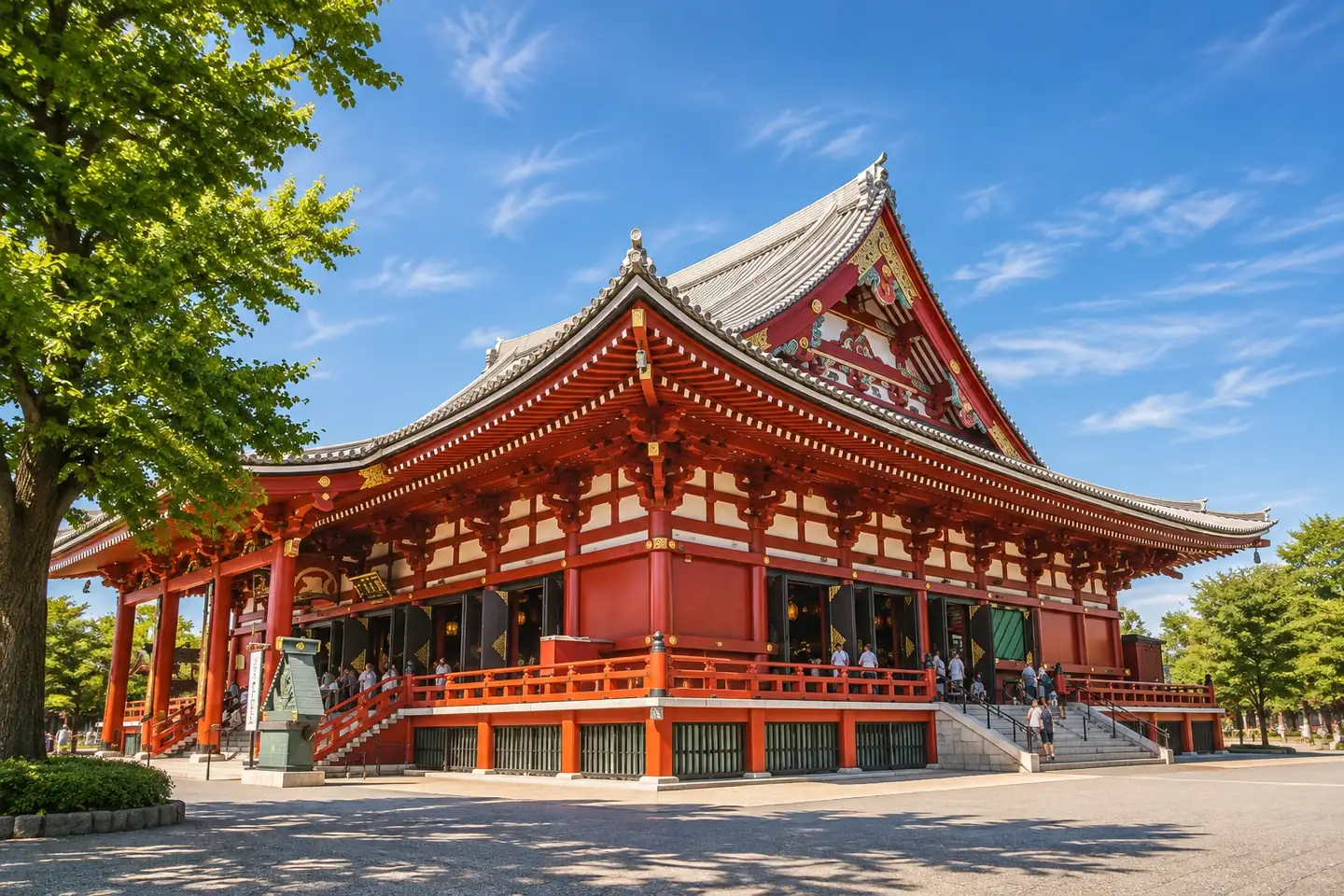
AI-rendered illustrationSenso-ji is Tokyo's oldest temple. The enormous lantern at Kaminarimon, the Thunder Gate, is a symbol of Asakusa. Between the gate and the main hall, Nakamise shopping street is lined with small stores selling souvenirs and snacks. Visitors also draw fortunes and tie designated fortune slips within the temple grounds.
Completed in February 2012 and opened to the public that May, Tokyo Skytree rises 634 meters above the city. Observation decks at approximately 350 and 450 meters offer panoramic views. Shops, restaurants and cafes complete the visitor facilities.
Odaiba Seaside Park is a waterfront setting frequently seen in Japanese television dramas. Its replica Statue of Liberty and views of Rainbow Bridge are familiar landmarks. Coastal walks, historic remains and the nearby Shiokaze Park add to a visit. Water-based activities depend on designated areas and current rules.
GINZA SIX combines luxury shopping with cultural spaces. Architect Yoshio Taniguchi drew inspiration from noren, the fabric curtains traditionally hung at Japanese shop and restaurant entrances. Individual luxury brands contributed distinctive ground-floor facades, creating variety within the overall design.
Spend the day at either Tokyo Disneyland or Tokyo DisneySea; choose one park. DisneySea draws inspiration from maritime stories and legends, while Disneyland combines classic Disney attractions with Japanese touches. Suggested Disneyland highlights include Mickey-themed entertainment, Cinderella Castle and Fantasyland. Check current attraction and show schedules before visiting.
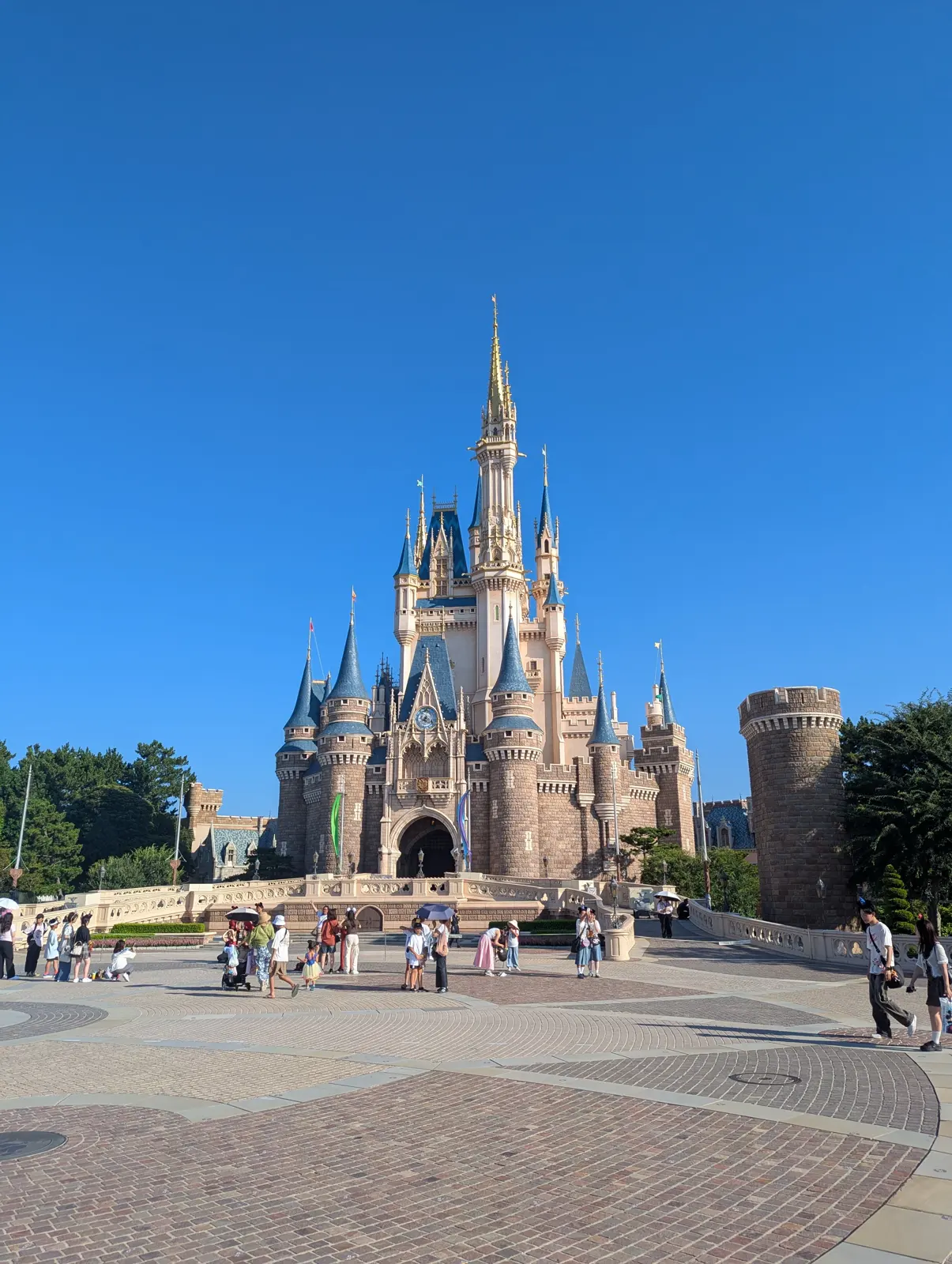
Spend the day at either Tokyo Disneyland or Tokyo DisneySea; choose one park. DisneySea draws inspiration from maritime stories and legends, while Disneyland combines classic Disney attractions with Japanese touches. Suggested Disneyland highlights include Mickey-themed entertainment, Cinderella Castle and Fantasyland. Check current attraction and show schedules before visiting.
Breakfast: at your own expense. Lunch: at your own expense. Dinner: at your own expense.
Tokyo Disneyland is a theme park in Urayasu, Chiba Prefecture, and the first Disney theme park in Asia. Its seven themed lands combine familiar Disney attractions with distinctive Japanese touches. The park is known for its immersive atmosphere and enthusiastic visitors. Check the official park rules before bringing costumes or character-themed items.
Tokyo DisneySea opened in Urayasu, Chiba Prefecture, on September 4, 2001. Its themed ports draw on stories and legends of the sea from around the world. The original source describes seven ports; the park has since evolved, so consult the current park map when planning your visit.
Enjoy free time as your departure schedule permits. Your itinerary ends locally in Tokyo. An airport transfer can be arranged around your flight if needed. International return flights and the date you arrive home are not counted as itinerary days.
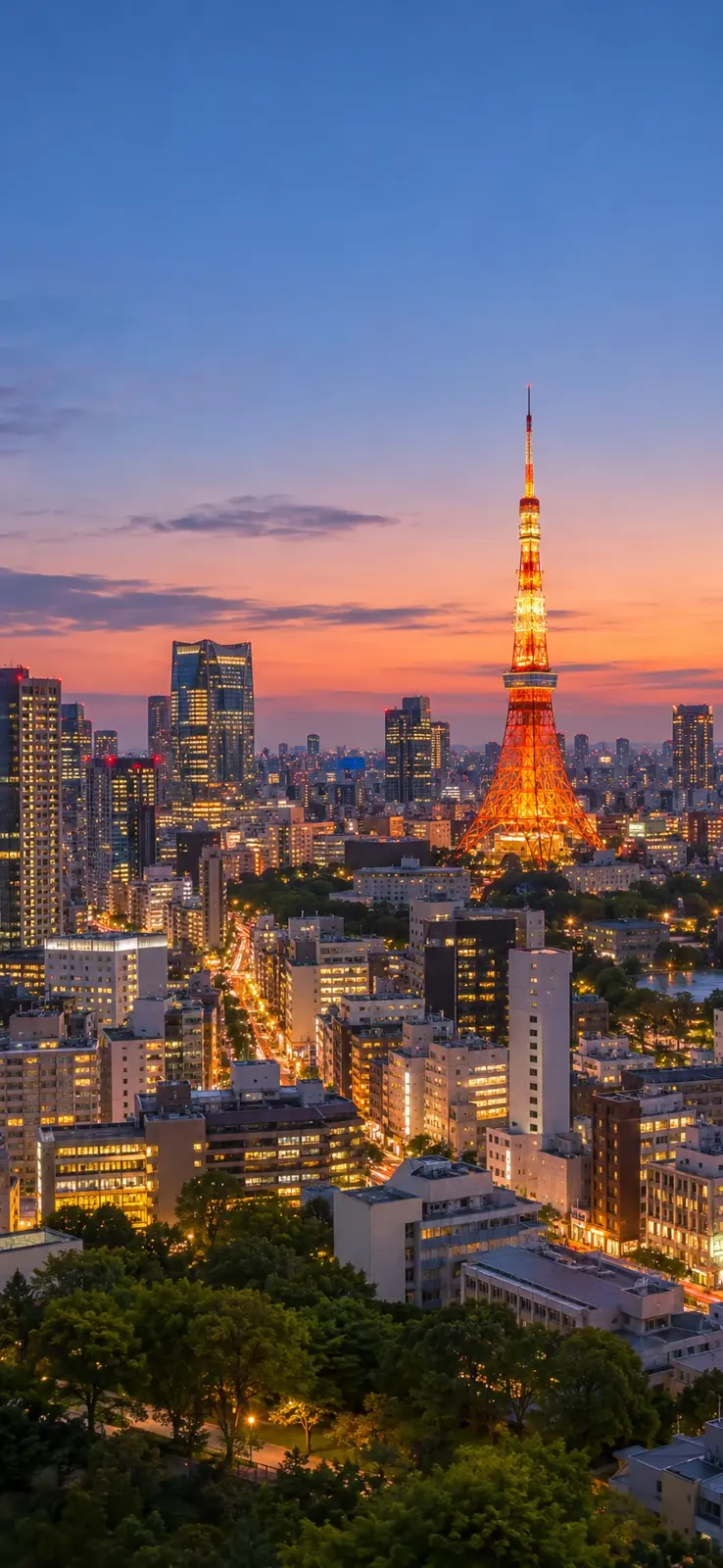
Enjoy free time as your departure schedule permits. Your itinerary ends locally in Tokyo. An airport transfer can be arranged around your flight if needed. International return flights and the date you arrive home are not counted as itinerary days.
Breakfast: at the hotel. Lunch: at your own expense. Dinner: at your own expense.
YOUR ROUTE
Use this route as a starting point. Tell us your dates, pace and accommodation preferences.
Your quote will specify accommodation, guiding, transport, activities, meals and any optional arrangements before you book. International flights and airport transfers are discussed separately.
TRAVEL IN COMFORT
Up to 6 passengers

Up to 9 passengers

Our main touring vehicles. We recommend a vehicle based on your group size and luggage. Maximum seating capacity does not guarantee room for all bags when every seat is occupied. Vehicle availability is confirmed for your destination.
Mount Fuji is Japan's highest mountain and a major national symbol. This active volcano straddles Shizuoka and Yamanashi prefectures, southwest of Tokyo and near Japan's Pacific coast.
Lake Ashi formed through volcanic activity more than 3,000 years ago. On clear days, Mount Fuji rises beyond its waters. Colorful pirate-style sightseeing ships, with tall masts and decorative figureheads, add a playful contrast to the peaceful landscape. From the deck, enjoy the breeze and changing seasonal views, from sunlit water to mist-shrouded hills.
Senso-ji is Tokyo's oldest temple. The enormous lantern at Kaminarimon, the Thunder Gate, is a symbol of Asakusa. Between the gate and the main hall, Nakamise shopping street is lined with small stores selling souvenirs and snacks. Visitors also draw fortunes and tie designated fortune slips within the temple grounds.
Completed in February 2012 and opened to the public that May, Tokyo Skytree rises 634 meters above the city. Observation decks at approximately 350 and 450 meters offer panoramic views. Shops, restaurants and cafes complete the visitor facilities.
Two historic red-brick warehouses face Yokohama Harbor and now house shops and restaurants. Developed as part of the port's logistics infrastructure in the early 20th century, they ended their warehouse role in 1989 and reopened as commercial facilities in 2002. The surrounding waterfront park is a pleasant place for a stroll in the sea breeze.
Odaiba Seaside Park is a waterfront setting frequently seen in Japanese television dramas. Its replica Statue of Liberty and views of Rainbow Bridge are familiar landmarks. Coastal walks, historic remains and the nearby Shiokaze Park add to a visit. Water-based activities depend on designated areas and current rules.
GINZA SIX combines luxury shopping with cultural spaces. Architect Yoshio Taniguchi drew inspiration from noren, the fabric curtains traditionally hung at Japanese shop and restaurant entrances. Individual luxury brands contributed distinctive ground-floor facades, creating variety within the overall design.
Tokyo Disneyland is a theme park in Urayasu, Chiba Prefecture, and the first Disney theme park in Asia. Its seven themed lands combine familiar Disney attractions with distinctive Japanese touches. The park is known for its immersive atmosphere and enthusiastic visitors. Check the official park rules before bringing costumes or character-themed items.
This journey starts at the destination. Seasonal experiences, service inclusions and availability are confirmed with your personalized proposal.
Original source & photography · 6renyou ↗BEFORE YOU PLAN
OpenEast brings together Japan and South Korea itinerary ideas for travelers from North America, with China also part of our destination plans. Start with the local route, then consider flights and airport transfers around it.
Day 1 begins at the destination. International departure-only and return flight days are not counted as destination days. Plan your flights around the local itinerary dates.
International flights and airport transfers are confirmed separately. Do not assume they are included in a suggested itinerary.
These routes are itinerary ideas. Dates, hotels, admissions, seasonal activities, prices and availability need confirmation in a personalized proposal before booking.
Use the inquiry form to contact our team. A submission confirmation appears only when the email service accepts your request. An inquiry does not reserve a service or take payment.
Explore Japan itineraries → · Explore South Korea itineraries →