Japan · 6 DAYS

6-Day Kansai & Nanki Spring Cherry Blossom

Osaka → Wakayama Prefecture → Nanki Shirahama → Shirahama → Nachikatsuura Town

6 daysCulture & natureItinerary idea

Request this itinerary

Leave your details, and our travel specialists will get in touch by email or your preferred contact method.

Your specialist will confirm the itinerary, pricing and availability with you.

How we use your information

Your inquiry is sent to info@jasperlimo.com so our team can respond. Please do not include passport or payment details.

JOURNEY HIGHLIGHTS

Japan, made personal.

6-Day Kansai & Nanki Spring Cherry Blossom: Sandanbeki Coast, Kumano Nachi Taisha, Nachi Waterfall, Kimiidera, Mount Koya Lodging

Day 1 starts in Osaka → Wakayama Prefecture. International airfare is arranged separately.

    Your journey, day by day

    01

    Osaka → Wakayama Prefecture

    Day 1 is counted from arrival in Osaka. Local schedules and hotel check-in are arranged according to actual arrival time; international departure points and cross-border flights are not included in this itinerary. Local route upon arrival: Osaka > Wakayama Prefecture. An airport transfer can be arranged separately; inclusion depends on confirmed plan.

    AI-rendered illustration

    Day 1 is counted from arrival in Osaka. Local schedules and hotel check-in are arranged according to actual arrival time; international departure points and cross-border flights are not included in this itinerary. Local route upon arrival: Osaka > Wakayama Prefecture. An airport transfer can be arranged separately; inclusion depends on confirmed plan.

    Breakfast: at your own expense. Lunch: at your own expense. Dinner: at your own expense.

    02

    Wakayama Prefecture → Nanki Shirahama

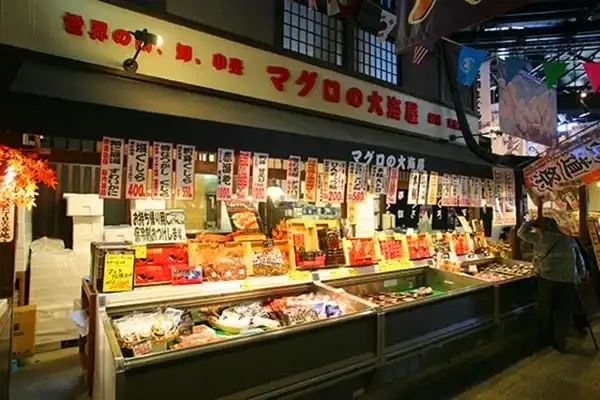
    After hotel breakfast, visit Kuroshio Market in Wakayama Prefecture, the most famous fish market loved by many tourists for fresh seafood. Then visit Kimiidera Temple (a selected site for Japan’s top 100 cherry blossoms; cherry blossoms peak from late March to mid-April), with about 500 cherry trees inside the temple grounds. The Somei Yoshino cherry in front of the main hall is regarded locally as the official bloom indicator. The temple is very lively during cherry blossom season with visitors enjoying the flowers and splendid views of Wakayama Bay. Next is Wakayama Castle (cherry blossoms peak from late March to early April), built in 1585 by Toyotomi Hideyoshi’s order and main castle of the Kishu Tokugawa family since 1619. About 600 cherry trees bloom here, and if during peak, you can smell the sweet and refreshing scent of cherry blossoms in the air.

    After hotel breakfast, visit Kuroshio Market in Wakayama Prefecture, the most famous fish market loved by many tourists for fresh seafood. Then visit Kimiidera Temple (a selected site for Japan’s top 100 cherry blossoms; cherry blossoms peak from late March to mid-April), with about 500 cherry trees inside the temple grounds. The Somei Yoshino cherry in front of the main hall is regarded locally as the official bloom indicator. The temple is very lively during cherry blossom season with visitors enjoying the flowers and splendid views of Wakayama Bay. Next is Wakayama Castle (cherry blossoms peak from late March to early April), built in 1585 by Toyotomi Hideyoshi’s order and main castle of the Kishu Tokugawa family since 1619. About 600 cherry trees bloom here, and if during peak, you can smell the sweet and refreshing scent of cherry blossoms in the air.

    Breakfast: at your own expense. Lunch: at your own expense. Dinner: at your own expense.

    Kuroshio Market

    Kuroshio Market

    This can be described as a seafood museum, where you can find seafood from all over Japan, from Kyushu to Hokkaido. The most special feature of Kuroshio Market is the tuna cutting show, where skilled chefs expertly carve a giant tuna into smaller pieces for visitors to purchase. The most prized part of the tuna is the lightly pink fatty belly, known as "toro." Here, 100 grams of toro sells for over 200 RMB, but its flavor is hundreds of times fresher than the deep red tuna found in Japanese restaurants back home.

    Kishi Station

    Located in Kinokawa City, Wakayama Prefecture, Kishi Station is famous for its cat stationmaster 'Tama.' It is the terminal station on the Wakayama Electric Railway Kishigawa Line. Since 2007, the station has been unmanned and appointed Tama, an 8-year-old calico cat housed at the station shop, as stationmaster, attracting visitors and boosting local tourism and merchandise sales.

    Kimiidera Temple

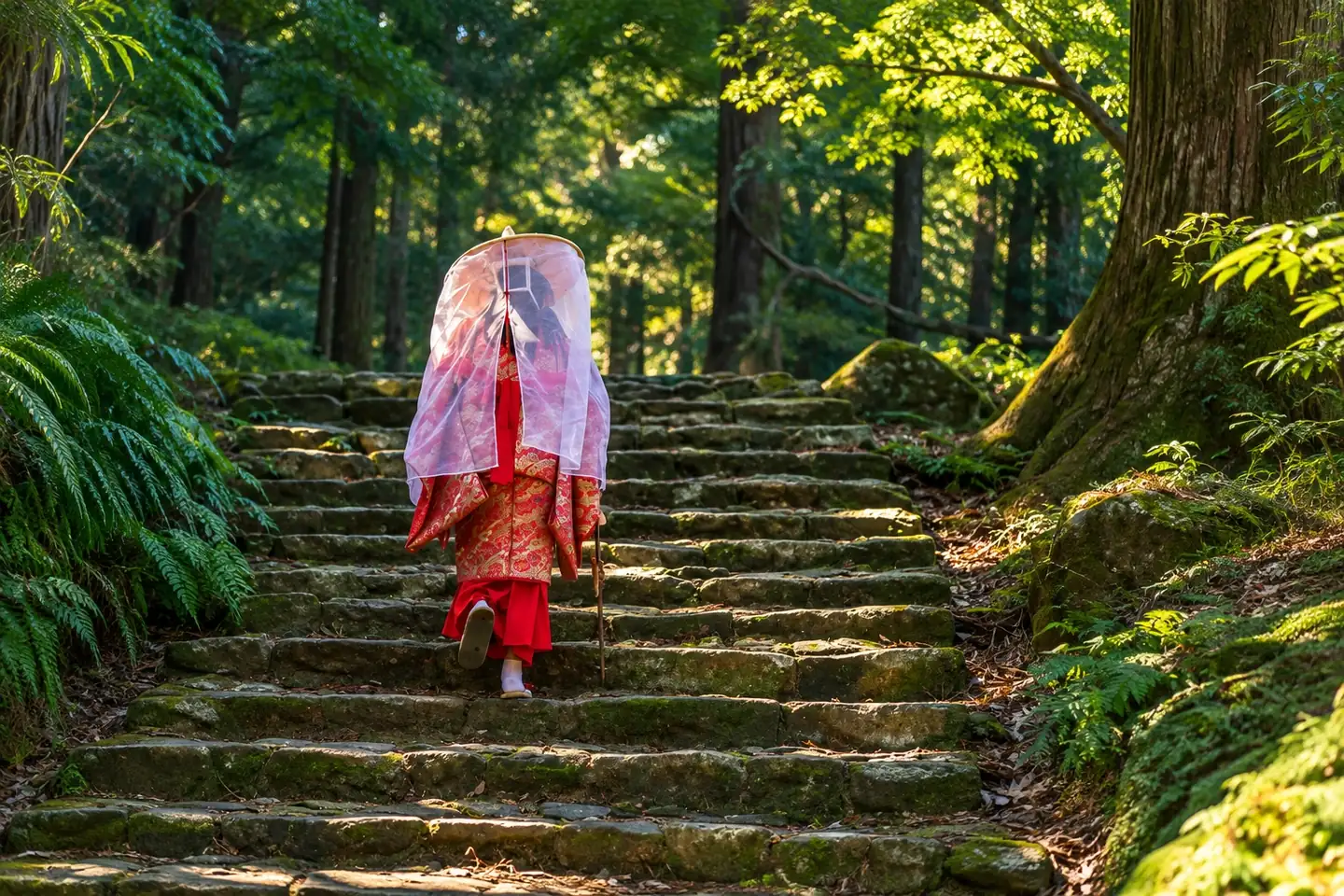
    Climb 231 stone steps to overlook Wakayama Bay, feeling like you’re on a cloud. Famous for early blooming cherry blossoms and as the 2nd sacred site on the Saigoku pilgrimage route. Pilgrims in traditional attire with staffs can be seen worshipping respectfully. The name comes from three wells: "Kisshō Water," "Willow Water," and "Pure Water."

    Wakayama Castle

    Wakayama Castle is located in Wakayama City, Wakayama Prefecture, Japan, and is recognized as one of Japan's three major flatland-mountain castles along with Matsuyama Castle and Himeji Castle. It served as the residence of the Kii Tokugawa family, part of the Tokugawa Gosanke. The 5th feudal lord Yoshimune and the 13th lord Iemochi later became the 8th and 14th Tokugawa shoguns respectively. In 1935, the castle keep, turrets, and main gate were designated national treasures but were destroyed in wartime. The castle keep was reconstructed in 1958, restoring its former grandeur.

    03

    Nanki Shirahama → Shirahama → Nachikatsuura Town

    After hotel breakfast, visit Hirugahara Park (cherry blossom peak from late March to early April) in Shirahama area. This lush green park has cherry blossom-lined paths and plum gardens where you can enjoy flowers varying by season. During spring, the cherry blossoms cover the roads, creating breathtaking scenery. The park is crowded with flower-viewing visitors. Then visit Engetsuto Island, a symbol of Shirahama located in Rinnaiura Bay, measuring 35 meters east-west, 130 meters north-south, and 25 meters high, resembling a small boat floating on the sea. A circular sea erosion cave at its center gives the island its name. From spring to autumn, you can view the sunset through the sea cave. Then visit Sandanbeki (a natural wonder sculpted by nature), a 2-kilometer, 50-meter-high eroded cliff facing the Pacific Ocean in Shirahama Town, formed by volcanic seabed shifts millions of years ago. It features a spectacular stepped cliff formation.

    AI-rendered illustration

    After hotel breakfast, visit Hirugahara Park (cherry blossom peak from late March to early April) in Shirahama area. This lush green park has cherry blossom-lined paths and plum gardens where you can enjoy flowers varying by season. During spring, the cherry blossoms cover the roads, creating breathtaking scenery. The park is crowded with flower-viewing visitors. Then visit Engetsuto Island, a symbol of Shirahama located in Rinnaiura Bay, measuring 35 meters east-west, 130 meters north-south, and 25 meters high, resembling a small boat floating on the sea. A circular sea erosion cave at its center gives the island its name. From spring to autumn, you can view the sunset through the sea cave. Then visit Sandanbeki (a natural wonder sculpted by nature), a 2-kilometer, 50-meter-high eroded cliff facing the Pacific Ocean in Shirahama Town, formed by volcanic seabed shifts millions of years ago. It features a spectacular stepped cliff formation.

    Breakfast: at your own expense. Lunch: at your own expense. Dinner: at your own expense.
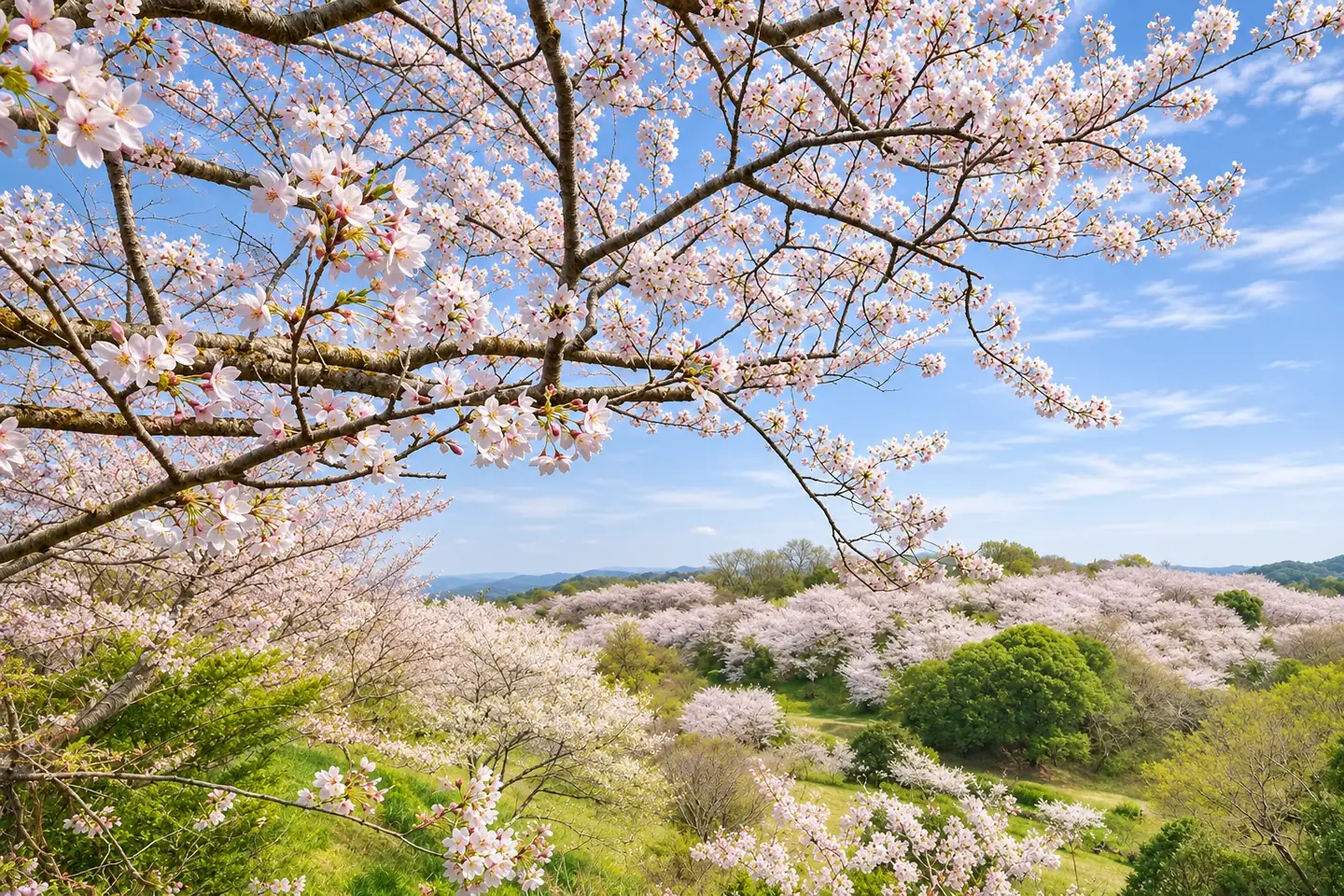
    Hirugahara Park (late March to early April)AI-rendered illustration

    Hirugahara Park (late March to early April)

    This is a panoramic park overlooking Shirahama, featuring 2,000 cherry trees. During cherry blossom season, it attracts crowds of visitors. Seasonal flowers such as daffodils and rapeseed also bloom here throughout the year.

    Motogashima Island

    Engetsu Island is located on the South Sea of Rinkai Port. It is a small island measuring 130 meters north to south, 35 meters east to west, and 25 meters high. Known as a symbol of Shirahama, its official name is actually Takashima. Why is it called Engetsu Island? From the side, there is a round moon-shaped sea cave in the center of the island that looks like a moon hanging in midair, giving it the name Engetsu Island.

    Sandanbeki Cliffs

    Sandanbeki is a famous coastal cliff and scenic spot in Shirahama Town, Nishimuro District, Wakayama Prefecture. The cliff extends about 2 kilometers along the sea and reaches 50-60 meters in height. At the most prominent point is an observation deck for viewing the Nanki coastline. There is a sea-eroded cave 36 meters below the cliff accessed by elevator. Due to its high elevation and rough seas, this spot has been known since around the 1950s as a suicide site, making rescues difficult.

    Senjojiki

    Located along the coast of Shirahama Town, Wakayama Prefecture, Senjojiki is composed of soft sandstone layers from the Neogene period. The strong Pacific waves have sculpted this distinctive erosional landscape. From a distance, the rocks resemble countless interlaced discs. Situated on the west coast, Senjojiki is a renowned spot for viewing sunsets, where spectators stand on the flat rocks watching the fiery sun sink into the vast Pacific—a celebrated local attraction.
    04

    Nachikatsuura Town → Nanki Shirahama

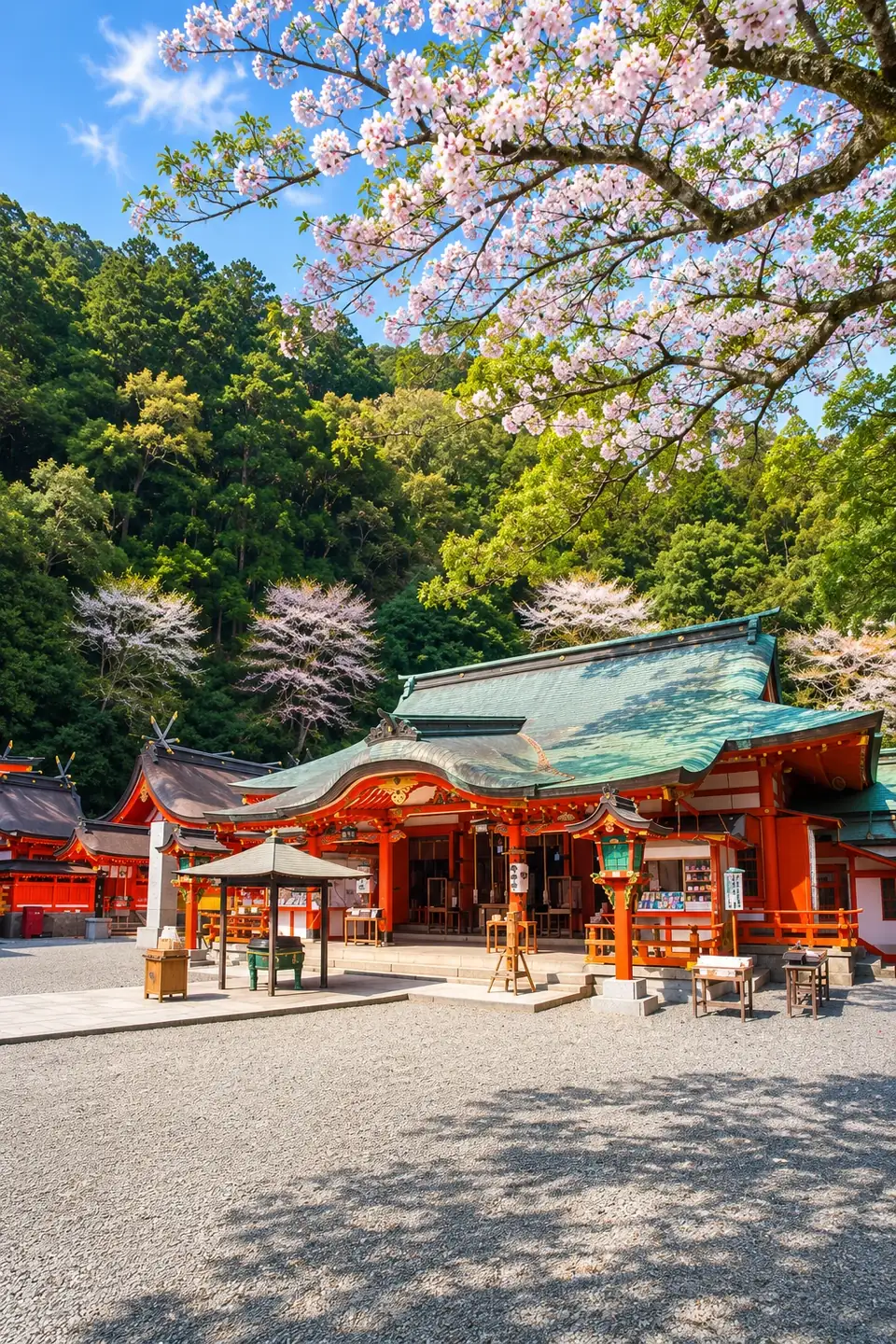
    After hotel breakfast, depart from Nachikatsuura Town to embark on a journey rich in history and natural beauty. Begin with a walk on the historic Kumano Kodo pilgrimage trail, absorbing its tranquility and mystery. Next, visit Kumano Nachi Taisha Shrine to experience traditional Japanese culture. Don’t miss the spectacular Nachi Waterfall, one of Japan's tallest single-drop waterfalls and a spiritual landmark. Finally, visit Seiganto-ji Temple. This itinerary offers profound appreciation of southern Wakayama Prefecture’s cultural essence and natural wonders.

    AI-rendered illustration

    After hotel breakfast, depart from Nachikatsuura Town to embark on a journey rich in history and natural beauty. Begin with a walk on the historic Kumano Kodo pilgrimage trail, absorbing its tranquility and mystery. Next, visit Kumano Nachi Taisha Shrine to experience traditional Japanese culture. Don’t miss the spectacular Nachi Waterfall, one of Japan's tallest single-drop waterfalls and a spiritual landmark. Finally, visit Seiganto-ji Temple. This itinerary offers profound appreciation of southern Wakayama Prefecture’s cultural essence and natural wonders.

    Breakfast: at your own expense. Lunch: at your own expense. Dinner: at your own expense.

    Kumano KodoAI-rendered illustration

    Kumano Kodo

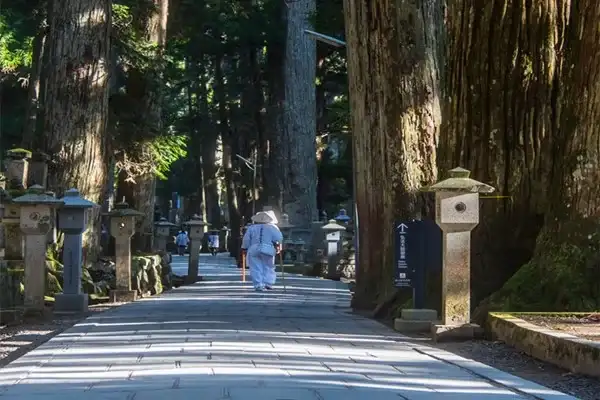
    Kumano Kodo is one of only two pilgrimage routes registered as World Heritage Sites worldwide (the other is the Camino de Santiago). For over 1,000 years, people from all social classes, including retired emperors and nobles, have made arduous pilgrimages to Kumano. The network of trails today called Kumano Kodo crosses the mountainous Kii Peninsula and leads to the revered Kumano Sanzan shrines: Kumano Hongu Taisha, Kumano Nachi Taisha, and Kumano Hayatama Taisha. It was designated a UNESCO World Heritage Site in July 2004.

    Kumano Nachi Taisha Shrine

    Kumano Nachi Taisha is one of the Kumano Sanzan and a major final pilgrimage destination on the historic Kumano Kodo trail.

    Nachi Falls

    Nachi Falls, Japan’s tallest single-drop waterfall at 133 meters, plunges from its evergreen primeval forest source. More than a natural spectacle, it is considered a sacred home of Shinto deities. The thunderous sound of countless water drops offers a spiritual experience to believers and visitors alike. As part of the sacred Kii Mountains pilgrimage and a UNESCO World Heritage site, the waterfall holds deep cultural significance.

    Seiganto-ji Temple Three-Story Pagoda

    Located in Nachi Mountain, Seiganto-ji Temple is the first temple of the Saigoku Kannon Pilgrimage. Founded over 1600 years ago by Indian monk Ragyo Shonin near the land with the deep waterfall pouring into the sea, it is part of the 'Sacred Sites and Pilgrimage Routes in the Kii Mountain Range' UNESCO World Heritage Site, blending natural and cultural heritage beautifully.

    05

    Nanki Shirahama → Wakayama Prefecture

    After hotel breakfast, start a journey rich in Zen and natural beauty in Nanki Shirahama, Wakayama Prefecture. Visit historic Mount Koya including the grand and solemn Kongobu-ji Temple to feel its tranquil atmosphere; then stroll to Okunoin Cemetery, and Danjo Garan complex known for its exquisite architecture that impresses every visitor. Overnight at a temple lodging on Mount Koya to experience unique Zen-style accommodation including participation in morning and evening prayers and sutra copying, completely relaxing body and mind.

    After hotel breakfast, start a journey rich in Zen and natural beauty in Nanki Shirahama, Wakayama Prefecture. Visit historic Mount Koya including the grand and solemn Kongobu-ji Temple to feel its tranquil atmosphere; then stroll to Okunoin Cemetery, and Danjo Garan complex known for its exquisite architecture that impresses every visitor. Overnight at a temple lodging on Mount Koya to experience unique Zen-style accommodation including participation in morning and evening prayers and sutra copying, completely relaxing body and mind.

    Breakfast: at your own expense. Lunch: at your own expense. Dinner: at your own expense.

    Mount Koya (Koyasan)

    Mount Koya (Koyasan)

    Koyasan is located in northeastern Wakayama Prefecture and comprises a mountain range around 1,000 meters in elevation, part of Koya Ryujin Quasi-National Park. In 2004, Koyasan was inscribed as a UNESCO World Heritage site within the Sacred Sites and Pilgrimage Routes in the Kii Mountain Range. The area is richly vegetated and serves as a natural oxygen park. It features numerous temples and shrines notable for their beautiful Japanese gardens. The cemetery houses graves of historical figures such as Oda Nobunaga, Toyotomi Hideyoshi, and Takeda Shingen.

    Kongobu-ji Temple

    Kongobu-ji Temple is the head temple of the Koyasan Shingon sect of Buddhism located on Mount Koya, Ito District, Wakayama Prefecture, Japan. The mountain name is "Koya-san"; along with Kyoto’s To-ji Temple, it is a sacred site of Shingon Esoteric Buddhism. Founded by Kobo Daishi Kukai, it is registered as part of the "Sacred Sites and Pilgrimage Routes in the Kii Mountain Range" UNESCO World Heritage.

    Okunoin

    Okunoin is Japan’s largest cemetery, exuding a mysterious aura. The cemetery within is like a historical register of famous Japanese figures, from feudal lords and samurai to modern business leaders such as those from Toyota and Nissan.

    Danjo Garan

    Danjo Garan is the foundational training center of Shingon Esoteric Buddhism created by Kobo Daishi and the core area of Mount Koya. It houses multiple Buddhist halls, including the impressive 49-meter-tall Konpon Daito Pagoda, which attracts many visitors.

    06

    Wakayama Prefecture → Osaka

    Enjoy free time as your departure schedule permits. Your itinerary ends locally in Osaka. An airport transfer can be arranged around your flight if needed. International return flights and the date you arrive home are not counted as itinerary days.

    AI-rendered illustration

    Enjoy free time as your departure schedule permits. Your itinerary ends locally in Osaka. An airport transfer can be arranged around your flight if needed. International return flights and the date you arrive home are not counted as itinerary days.

    Breakfast: at your own expense. Lunch: at your own expense. Dinner: at your own expense.

    YOUR ROUTE

    Know the shape of your journey.

    Starts in
    Osaka
    Ends in
    Osaka
    Local itinerary
    6 days

    A proposal shaped around you

    Use this route as a starting point. Tell us your dates, pace and accommodation preferences.

    Your quote will specify accommodation, guiding, transport, activities, meals and any optional arrangements before you book. International flights and airport transfers are discussed separately.

    TRAVEL IN COMFORT

    The right vehicle for your group.

    Toyota Alphard

    Up to 6 passengers

    Toyota HiAce

    Up to 9 passengers

    Our main touring vehicles. We recommend a vehicle based on your group size and luggage. Maximum seating capacity does not guarantee room for all bags when every seat is occupied. Vehicle availability is confirmed for your destination.

    More to discover

    Kishi Station

    Located in Kinokawa City, Wakayama Prefecture, Kishi Station is famous for its cat stationmaster 'Tama.' It is the terminal station on the Wakayama Electric Railway Kishigawa Line. Since 2007, the station has been unmanned and appointed Tama, an 8-year-old calico cat housed at the station shop, as stationmaster, attracting visitors and boosting local tourism and merchandise sales.

    Kimiidera Temple

    Climb 231 stone steps to overlook Wakayama Bay, feeling like you’re on a cloud. Famous for early blooming cherry blossoms and as the 2nd sacred site on the Saigoku pilgrimage route. Pilgrims in traditional attire with staffs can be seen worshipping respectfully. The name comes from three wells: "Kisshō Water," "Willow Water," and "Pure Water."

    Temple Lodging - Koyasan Sanadabo & Rengejo-in Zen Stay Experience

    Temple lodging (shukubo) in Japan dates back to the Heian period, originally for monks. Today, visitors can stay in ancient temples to experience traditional culture. This program includes a stay at one of Koyasan’s historic shukubo, once home to the famed samurai Sanada Masayuki and Yukimura in the late 16th century. Guests can practice Ajikan meditation, copy sutras, attend morning prayers, and enjoy vegetarian Buddhist cuisine (shojin ryori). The Rengejo-in features traditional Japanese rooms with painted art, tranquil classical gardens with rock and woodland views, and some rooms include private baths with scenic soaking experiences.

    Cat Train

    The Wakayama Prefecture Kishigawa Line faced closure due to low ridership. In 2007, a calico cat named Tama was appointed stationmaster of Kishigawa Station. This adorable feline stationmaster quickly became famous nationwide and internationally, attracting visitors eager to see Tama and revitalizing the railway as a beloved local feature. In 2015, after Tama passed away, a successor cat named Nitama took over, continuing the charming tradition of the Kishigawa Line.

    Kumano Kodo

    Kumano Kodo is one of only two pilgrimage routes registered as World Heritage Sites worldwide (the other is the Camino de Santiago). For over 1,000 years, people from all social classes, including retired emperors and nobles, have made arduous pilgrimages to Kumano. The network of trails today called Kumano Kodo crosses the mountainous Kii Peninsula and leads to the revered Kumano Sanzan shrines: Kumano Hongu Taisha, Kumano Nachi Taisha, and Kumano Hayatama Taisha. It was designated a UNESCO World Heritage Site in July 2004.

    Hirugahara Park (late March to early April)

    This is a panoramic park overlooking Shirahama, featuring 2,000 cherry trees. During cherry blossom season, it attracts crowds of visitors. Seasonal flowers such as daffodils and rapeseed also bloom here throughout the year.

    Mount Koya (Koyasan)

    Koyasan is located in northeastern Wakayama Prefecture and comprises a mountain range around 1,000 meters in elevation, part of Koya Ryujin Quasi-National Park. In 2004, Koyasan was inscribed as a UNESCO World Heritage site within the Sacred Sites and Pilgrimage Routes in the Kii Mountain Range. The area is richly vegetated and serves as a natural oxygen park. It features numerous temples and shrines notable for their beautiful Japanese gardens. The cemetery houses graves of historical figures such as Oda Nobunaga, Toyotomi Hideyoshi, and Takeda Shingen.

    Kuroshio Market

    This can be described as a seafood museum, where you can find seafood from all over Japan, from Kyushu to Hokkaido. The most special feature of Kuroshio Market is the tuna cutting show, where skilled chefs expertly carve a giant tuna into smaller pieces for visitors to purchase. The most prized part of the tuna is the lightly pink fatty belly, known as "toro." Here, 100 grams of toro sells for over 200 RMB, but its flavor is hundreds of times fresher than the deep red tuna found in Japanese restaurants back home.

    Before you go

    This journey starts at the destination. Seasonal experiences, service inclusions and availability are confirmed with your personalized proposal.

    Original source & photography · 6renyou ↗

    Image credits and illustrations

    BEFORE YOU PLAN

    Travel planning, clearly explained.

    OpenEast brings together Japan and South Korea itinerary ideas for travelers from North America, with China also part of our destination plans. Start with the local route, then consider flights and airport transfers around it.

    When does Day 1 begin?

    Day 1 begins at the destination. International departure-only and return flight days are not counted as destination days. Plan your flights around the local itinerary dates.

    Are flights and airport transfers included?

    International flights and airport transfers are confirmed separately. Do not assume they are included in a suggested itinerary.

    Are these confirmed departures?

    These routes are itinerary ideas. Dates, hotels, admissions, seasonal activities, prices and availability need confirmation in a personalized proposal before booking.

    Can I book or send an inquiry here?

    Use the inquiry form to contact our team. A submission confirmation appears only when the email service accepts your request. An inquiry does not reserve a service or take payment.

    Explore Japan itineraries → · Explore South Korea itineraries →

    1 / 3

    Let’s plan your journey.

    6-Day Kansai & Nanki Spring Cherry Blossom: Sandanbeki Coast, Kumano Nachi Taisha, Nachi Waterfall, Kimiidera, Mount Koya Lodging

    Leave your details, and our travel specialists will get in touch by email or your preferred contact method.

    Your specialist will confirm the itinerary, pricing and availability with you.

    How we use your information

    Your inquiry is sent to info@jasperlimo.com so our team can respond. Please do not include passport or payment details.

    Start planning