Japan · 6 DAYS

Hidden Gems Journey

Fukuoka → Yamaguchi Prefecture

Discover Yamaguchi: Fresh Flavors and Vibrant Culture Nagato and Yuda: Two Lesser-Known Hot Spring Gems

6 daysCulture & natureItinerary idea

Request this itinerary

Leave your details, and our travel specialists will get in touch by email or your preferred contact method.

Your specialist will confirm the itinerary, pricing and availability with you.

How we use your information

Your inquiry is sent to info@jasperlimo.com so our team can respond. Please do not include passport or payment details.

JOURNEY HIGHLIGHTS

Japan, made personal.

6-Day Off-the-Beaten-Path Journey: Savor Authentic Flavors and Rejuvenate in Japan's Yamaguchi & Fukuoka Hot Springs

Day 1 starts in Fukuoka → Yamaguchi Prefecture. International airfare is arranged separately.

  • 01Discover Yamaguchi: Fresh Flavors and Vibrant Culture
  • 02Nagato and Yuda: Two Lesser-Known Hot Spring Gems
  • 03“Once in a Lifetime” Shrine Miko Tea Ceremony Experience

Your journey, day by day

01

Fukuoka → Yamaguchi Prefecture

Day 1 counts from arrival in Fukuoka. Local activities and accommodation will be arranged according to actual arrival time. International departure locations and transborder flights are not included in this itinerary. Local route after arrival: Fukuoka > Yamaguchi Prefecture. Planned sights today: Nagato Yumoto Onsen; schedule adjusted based on arrival time. Airport transfers can be arranged separately; inclusion confirmed upon plan agreement.

Day 1 counts from arrival in Fukuoka. Local activities and accommodation will be arranged according to actual arrival time. International departure locations and transborder flights are not included in this itinerary. Local route after arrival: Fukuoka > Yamaguchi Prefecture. Planned sights today: Nagato Yumoto Onsen; schedule adjusted based on arrival time. Airport transfers can be arranged separately; inclusion confirmed upon plan agreement.

Breakfast: at your own expense. Lunch: at your own expense. Dinner: at the hotel.

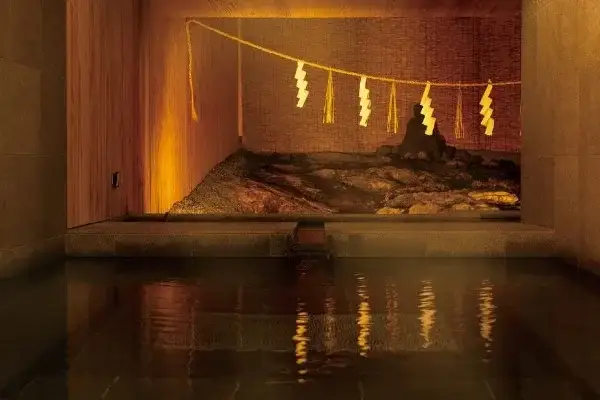
Nagato Yumoto Onsen

Nagato Yumoto Onsen

Located about a 10-minute drive south of central Nagato City, this hot spring was discovered during the Muromachi period in 1427 by the head priest of Dainei Temple. The natural spring source at the center of Yumoto still lies at Dainei Temple. During the Edo period (17th–19th centuries), the domain lord, Lord Mori, frequently visited this hot spring for recuperation. At that time, samurai and monks used the “Raiyu” baths, while commoners used “Onyu” baths; today both are open as communal baths. The hot spring town is surrounded by lush greenery, along the banks of the Otoshinagawa and Daineiji rivers, housing many inns and outdoor baths.

02

Yamaguchi Prefecture

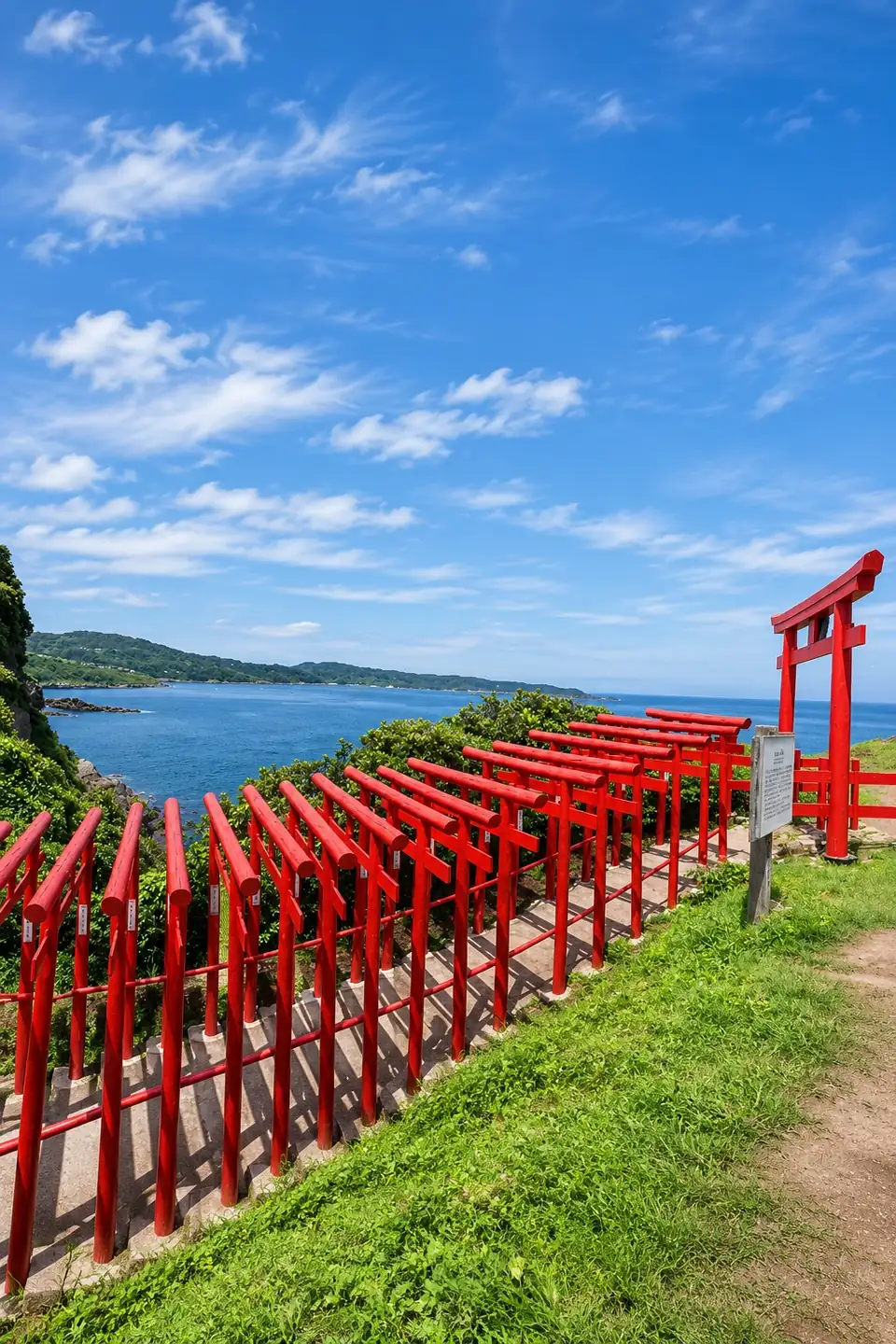
Day 2 Nagato to Iwakuni (Motonosumi Shrine visit + strolling Hagi Castle Town + Unrin ‘Cat’ Temple visit) After breakfast, travel to Motonosumi Shrine, which was listed by CNN in "Japan's 31 Most Beautiful Sites." It is famous for its impressive continuous line of bright red torii gates set against lush green mountains and the layered blue sea and sky, creating a stunning scene. Next, visit the castle town of Hagi, preserving the old castle ruins and narrow historic paths. Wander along the continuous namako-style walls where each street scene evokes a sense of the ancient town. The Kikuyacho area, famed as one of the “Top 100 Streets in Japan,” features many stately samurai residences. Hagi-yaki pottery, a traditional craft representing Yamaguchi Prefecture, is well known here. The tea ceremony values “Ichiraku, Ni-Hagi, San-Karatsu,” with Hagi ware among the top three kilns for tea utensils, celebrated for the unique maturing of tea stains called the “seven changes of Hagi.” In the afternoon, visit Unrin-ji “Cat Temple,” where it’s said that the cat of the former lord’s household stayed 49 days after its owner's death, ultimately passing away poignantly. The monks held memorial services, and now the temple is a sanctuary devoted to cats. The temple features various cat wood carvings and a “Cat Buddha” statue in the main hall. Items such as amulets and hand towels feature the sacred cat design. If lucky, you may pet the resident temple cats. Dinner recommendation: local specialty “Mountain Bandit” grilled meat.

AI-rendered illustration

Day 2 Nagato to Iwakuni (Motonosumi Shrine visit + strolling Hagi Castle Town + Unrin ‘Cat’ Temple visit) After breakfast, travel to Motonosumi Shrine, which was listed by CNN in "Japan's 31 Most Beautiful Sites." It is famous for its impressive continuous line of bright red torii gates set against lush green mountains and the layered blue sea and sky, creating a stunning scene. Next, visit the castle town of Hagi, preserving the old castle ruins and narrow historic paths. Wander along the continuous namako-style walls where each street scene evokes a sense of the ancient town. The Kikuyacho area, famed as one of the “Top 100 Streets in Japan,” features many stately samurai residences. Hagi-yaki pottery, a traditional craft representing Yamaguchi Prefecture, is well known here. The tea ceremony values “Ichiraku, Ni-Hagi, San-Karatsu,” with Hagi ware among the top three kilns for tea utensils, celebrated for the unique maturing of tea stains called the “seven changes of Hagi.” In the afternoon, visit Unrin-ji “Cat Temple,” where it’s said that the cat of the former lord’s household stayed 49 days after its owner's death, ultimately passing away poignantly. The monks held memorial services, and now the temple is a sanctuary devoted to cats. The temple features various cat wood carvings and a “Cat Buddha” statue in the main hall. Items such as amulets and hand towels feature the sacred cat design. If lucky, you may pet the resident temple cats. Dinner recommendation: local specialty “Mountain Bandit” grilled meat.

Breakfast: at the hotel. Lunch: at your own expense. Dinner: at your own expense.

Motonosumi ShrineAI-rendered illustration

Motonosumi Shrine

Set against the contrast of blue skies, blue seas, and green forests, the continuous row of red torii gates at Motonosumi Inari Shrine is striking. In 2015, it was praised by CNN as one of Japan's beautiful spots. At the top of the large torii gate at the shrine ruins is a coin box; many visitors try to toss coins into it, making it a popular photo spot.

Hagi Castle Town

Follow in the footsteps of samurai along the charming streets of Hagi Castle Town. Explore the well-preserved traditional samurai residences in Hagi City, including the large Kikuya Residence and its beautiful stone garden. In summer, the hanging natsukan oranges on the castle town walls are a signature feature. The traditional street layout has been preserved intact since the Edo period (1603–1867) and is recognized as a UNESCO World Heritage Site.

Unrin-ji Temple

Located in the eastern part of Hagi City, Yamaguchi Prefecture, nestled in a mountain village, is Unrin-ji Temple. This temple is gaining popularity as a “cat temple.” Within the shrine, cats are everywhere! With statues of Buddha, beckoning cats, colorful wooden decorations, and real cats, visitors are warmly welcomed. Known abroad as a 'Cat Sanctuary,' cats can be seen all around.

03

Yamaguchi Prefecture

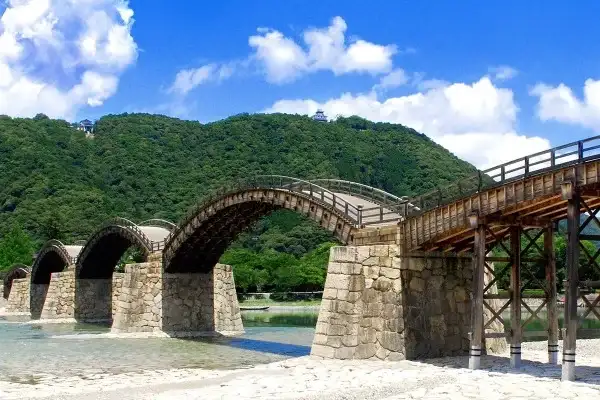
Day 3 Iwakuni to Yuda (Kintai Bridge visit + View of Iwakuni Castle + Hofu Tenmangu Shrine Tea Ceremony + Mori Family Garden + Footprints of the Fox foot bath experience) Right next to the hotel stands one of Japan's three famous bridges — Kintai Bridge. Its unique and beautiful design features five consecutive wooden arches that resemble a flying ribbon. On the hill opposite is Iwakuni Castle, a white Southern-style building reflecting the Momoyama period style. The first domain lord, Kikkawa Hiroie, built the castle as a stronghold. Notable for its “three stories and four floors” design, it now houses a museum. Visitors can reach the castle top via a ropeway, where the observatory offers the best views of Iwakuni. Next, experience Japanese tea ceremony at Hofu Tenmangu Shrine's tea house 'Hoshou-an,' Japan's oldest Tenmangu shrine. A shrine maiden serves the tea, and visitors enjoy classic matcha with views of the beautiful garden, finding a moment of tranquility. Nearby is the Mori Family Garden. The Mori clan ruled the area for generations and built the residence and garden in the early 20th century with the finest architectural techniques of the time. The residence lies northwest of Suo Kokubunji Temple, and the garden is a designated scenic spot. The Mori Museum is also located on the grounds. In the late afternoon, visit the Footprints of the Fox to enjoy a foot bath and savor the adorable white fox ice cream. Legend says a white fox lived on the mountain near Yuda; every night it soaked its injured paw in a temple pond to heal. When the temple monks discovered the warm water, the local people dug and found a hot spring with a golden Yakushi Nyorai statue appearing. The hot spring brought prosperity and revitalization, and to thank the white fox, Yuda Onsen is also called “White Fox's Bath.” Dinner: Kaiseki cuisine at the hot spring hotel.

Day 3 Iwakuni to Yuda (Kintai Bridge visit + View of Iwakuni Castle + Hofu Tenmangu Shrine Tea Ceremony + Mori Family Garden + Footprints of the Fox foot bath experience) Right next to the hotel stands one of Japan's three famous bridges — Kintai Bridge. Its unique and beautiful design features five consecutive wooden arches that resemble a flying ribbon. On the hill opposite is Iwakuni Castle, a white Southern-style building reflecting the Momoyama period style. The first domain lord, Kikkawa Hiroie, built the castle as a stronghold. Notable for its “three stories and four floors” design, it now houses a museum. Visitors can reach the castle top via a ropeway, where the observatory offers the best views of Iwakuni. Next, experience Japanese tea ceremony at Hofu Tenmangu Shrine's tea house 'Hoshou-an,' Japan's oldest Tenmangu shrine. A shrine maiden serves the tea, and visitors enjoy classic matcha with views of the beautiful garden, finding a moment of tranquility. Nearby is the Mori Family Garden. The Mori clan ruled the area for generations and built the residence and garden in the early 20th century with the finest architectural techniques of the time. The residence lies northwest of Suo Kokubunji Temple, and the garden is a designated scenic spot. The Mori Museum is also located on the grounds. In the late afternoon, visit the Footprints of the Fox to enjoy a foot bath and savor the adorable white fox ice cream. Legend says a white fox lived on the mountain near Yuda; every night it soaked its injured paw in a temple pond to heal. When the temple monks discovered the warm water, the local people dug and found a hot spring with a golden Yakushi Nyorai statue appearing. The hot spring brought prosperity and revitalization, and to thank the white fox, Yuda Onsen is also called “White Fox's Bath.” Dinner: Kaiseki cuisine at the hot spring hotel.

Breakfast: at the hotel. Lunch: at your own expense. Dinner: at the hotel.

Kintai Bridge

Kintai Bridge

Located over the Nishiki River in Iwakuni City, Yamaguchi Prefecture, Japan, Kintai Bridge is a historic wooden arch bridge with five stone piers spanning 27.5 meters each, totaling 193.3 meters in length and 5 meters in width. Built in 1673, it is one of Japan's three famous bridges. Known for its scenic beauty, it is affectionately called the "Kintai Bridge."

Mori Family Garden

The former residence of the Mori family, lords of the Choshu Domain (now Yamaguchi Prefecture), is located in this charming garden. Stroll along winding paths and learn about the centuries-long history of the Mori clan. The garden is a fine example of 19th to 20th-century Japanese garden design. Enjoy the tranquil atmosphere on the bridge spanning the Hyotan Pond. The meticulously trimmed shrubs and carefully placed rocks represent timeless beauty.

Footprints of the Fox

Yuda Onsen in Yamaguchi Prefecture has a long history and features soft water that is gentle on the skin. Legend says an injured white fox bathed its wounded foot in the hot springs repeatedly until healed, leading to the discovery of the springs. Yuda Onsen is a bustling historic hot spring town. Upon arrival, it is recommended to visit the sightseeing complex "Footprints of the Fox."

04

Yamaguchi Prefecture

Day 4 Yuda to Shimonoseki (Saikotei Kimono Experience + Ruriko-ji Temple Walk + Tile Soba Lunch + Chofu Garden Visit + Kozan-ji Temple Tour + Blowfish Cuisine) Start your morning at Saikotei, where you can dress in traditional kimono. In the 50-tsubo (approx. 1650 sq ft) grand hall hang 29 plaques inscribed by political and business celebrities, including Yamaguchi natives such as Ito Hirobumi and several prime ministers, as well as current Prime Minister Abe Shinzo's calligraphy. Then stroll to the five-story pagoda at Ruriko-ji, one of Japan's three great pagodas. Built in 1442, standing 31.2 meters tall with a beautiful hinoki cypress roof, the tower's upper floors have gradually narrower spacing, giving a sleek and slender look. Uniquely, railings appear only on the lower two floors, showcasing the delicate craftsmanship of the era. It’s a key landmark of Yamaguchi City. Lunch features Yamaguchi's specialty: tile soba, a new dish from Shimonoseki where buckwheat noodles are served on heated roof tiles. Next, visit Chofu Garden, a 30,000 sq. meter Japanese garden in Shimonoseki, originally the residence of Nishiumicho, chief retainer of the Mori Chofu clan during the Edo period. Featuring study rooms, tea houses, pavilions, and a waterfall built with pond water, it offers a peaceful landscape. Nearby, Kozan-ji Temple, founded in the late Kamakura period, serves as the Mori family’s ancestral temple in Chofu. Its Zen-style Buddhist hall is a designated National Treasure, and the beautiful garden is visible from the “Five Courtiers’ Residence.” Shimonoseki is called the fugu (blowfish) capital of Japan, supplying 80% of the country's catch. The fugu season is October to March, but thanks to aquaculture, you can enjoy delicious fugu all year round here. Dinner is arranged at the tea house visited by Prime Minister Shinzo Abe’s family, serving authentic fugu cuisine.
Day 4 Yuda to Shimonoseki (Saikotei Kimono Experience + Ruriko-ji Temple Walk + Tile Soba Lunch + Chofu Garden Visit + Kozan-ji Temple Tour + Blowfish Cuisine) Start your morning at Saikotei, where you can dress in traditional kimono. In the 50-tsubo (approx. 1650 sq ft) grand hall hang 29 plaques inscribed by political and business celebrities, including Yamaguchi natives such as Ito Hirobumi and several prime ministers, as well as current Prime Minister Abe Shinzo's calligraphy. Then stroll to the five-story pagoda at Ruriko-ji, one of Japan's three great pagodas. Built in 1442, standing 31.2 meters tall with a beautiful hinoki cypress roof, the tower's upper floors have gradually narrower spacing, giving a sleek and slender look. Uniquely, railings appear only on the lower two floors, showcasing the delicate craftsmanship of the era. It’s a key landmark of Yamaguchi City. Lunch features Yamaguchi's specialty: tile soba, a new dish from Shimonoseki where buckwheat noodles are served on heated roof tiles. Next, visit Chofu Garden, a 30,000 sq. meter Japanese garden in Shimonoseki, originally the residence of Nishiumicho, chief retainer of the Mori Chofu clan during the Edo period. Featuring study rooms, tea houses, pavilions, and a waterfall built with pond water, it offers a peaceful landscape. Nearby, Kozan-ji Temple, founded in the late Kamakura period, serves as the Mori family’s ancestral temple in Chofu. Its Zen-style Buddhist hall is a designated National Treasure, and the beautiful garden is visible from the “Five Courtiers’ Residence.” Shimonoseki is called the fugu (blowfish) capital of Japan, supplying 80% of the country's catch. The fugu season is October to March, but thanks to aquaculture, you can enjoy delicious fugu all year round here. Dinner is arranged at the tea house visited by Prime Minister Shinzo Abe’s family, serving authentic fugu cuisine.

Breakfast: at your own expense. Lunch: at your own expense. Dinner: at your own expense.

Ruriko-ji Temple

Ruriko-ji Temple

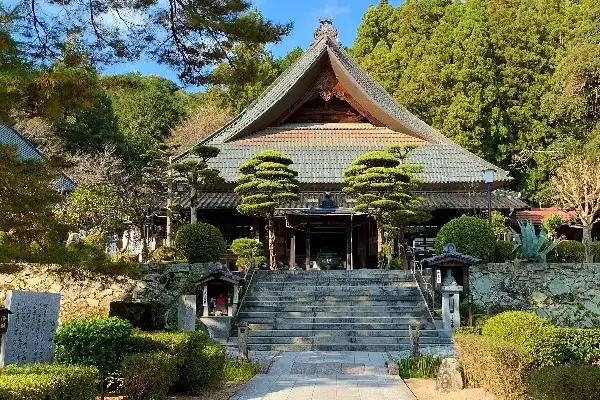
Ruriko-ji Temple, belonging to the Soto sect, is famous for its five-story pagoda standing to the north. The pagoda was built in 1442 to honor Mori Yoshihiro, who died in the Oei War of 1399. As a Muromachi period structure, its design is mainly Japanese with some Tang dynasty influence and generally has minimal decoration.

Chofu Garden

The residence site of Nishiumicho, chief retainer of the Mori Chofu clan. Backed by a hill, it covers about 30,000 square meters centered on a pond, featuring study rooms, tea houses, and a small waterfall. It is a stroll garden style (kaiyu-shiki) that changes beautifully with the seasons.

Kozan-ji Temple

Kozan-ji Temple is a Soto sect Buddhist temple located in the Chofu area of Shimonoseki City, established in the late Kamakura period. Its central Buddhist hall is designated a National Treasure. The temple gained fame from an event in the late Edo period and from a local Yamaguchi hero.
05

Yamaguchi Prefecture → Fukuoka

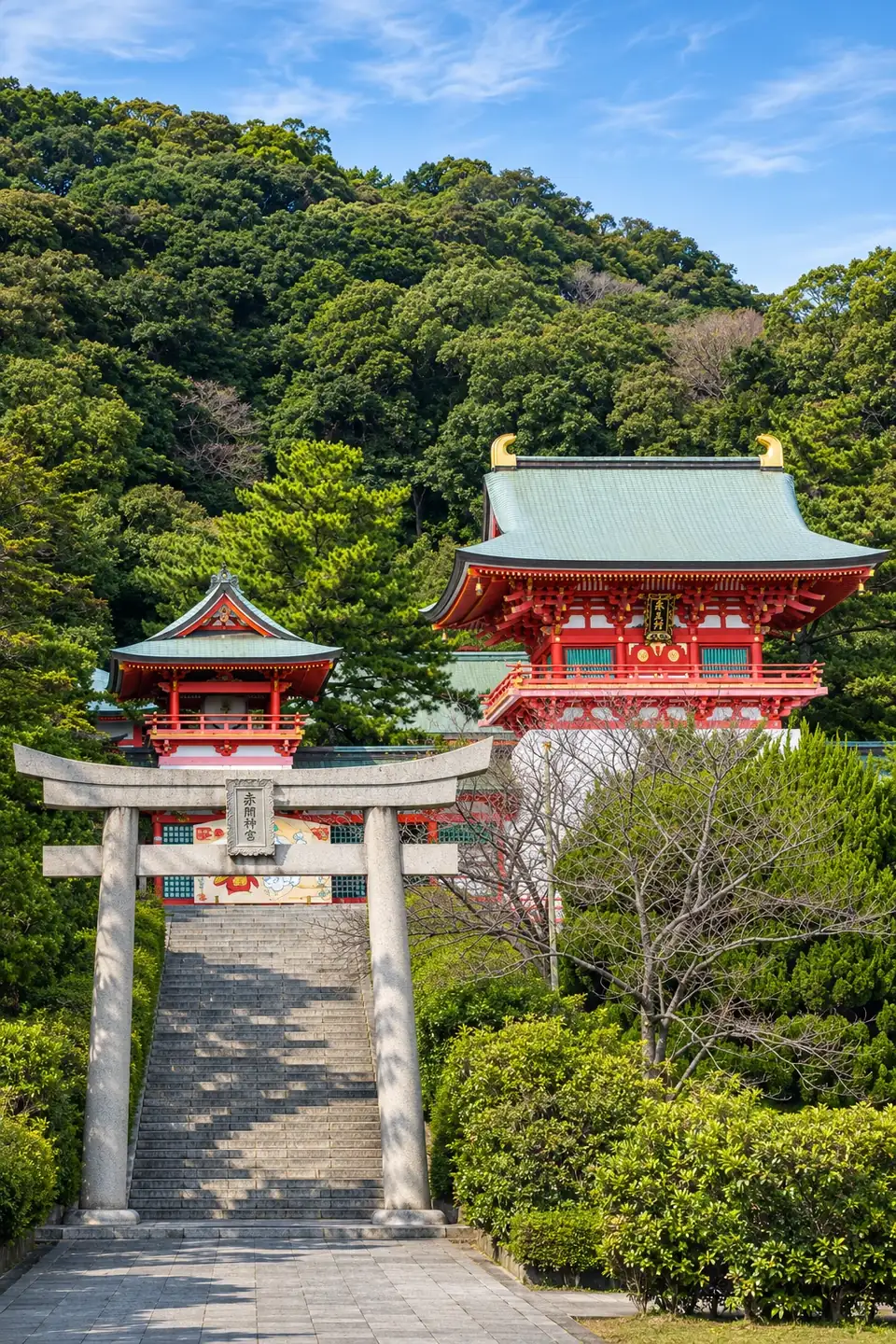
Visit Akama Shrine in Shimonoseki, followed by the historic Shunpanro area and Karato Market. Continue to Kaikyokan aquarium for marine-life exhibits. Finish with the transfer to Fukuoka and time around Canal City Hakata or Tenjin, depending on the final schedule. Market activity, aquarium programs and any restaurant visits require confirmation.

AI-rendered illustration

Visit Akama Shrine in Shimonoseki, followed by the historic Shunpanro area and Karato Market. Continue to Kaikyokan aquarium for marine-life exhibits. Finish with the transfer to Fukuoka and time around Canal City Hakata or Tenjin, depending on the final schedule. Market activity, aquarium programs and any restaurant visits require confirmation.

Breakfast: at the hotel. Lunch: at your own expense. Dinner: at your own expense.

Akama ShrineAI-rendered illustration

Akama Shrine

Akama Shrine, located in Shimonoseki City, was built in 1191 to honor Emperor Antoku, who died in the Battle of Dan-no-ura. The red and white Suiten Gate is a famous photo spot in Shimonoseki. The annual "Sentaisai" festival held May 2–4 includes performances like "Outer Hakama Parade" mimicking ancient women's walking styles and reenactments of the Genpei War. The shrine is also famous as the setting of the Japanese ghost story "Hoichi the Earless."

Shunpanro

Shunpanro is a traditional inn and dining establishment in Amitaji-cho, Shimonoseki, Yamaguchi Prefecture, situated on a high spot overlooking the Kanmon Straits. Known in Chinese-speaking regions for being the negotiation and signing place of the Treaty of Shimonoseki, the original building was destroyed by air raids in 1945. The current main building was rebuilt in 1985, adjacent to the "Nisshin Peace Memorial Museum" commemorating that history.

Karato Market

Yamaguchi has a vibrant market where local fishermen sell freshly caught seafood at fair prices. Starting as a roadside market in 1909, the market now supplies seafood across Japan. Besides seafood, many farmers from Yamaguchi and nearby areas sell seasonal produce, making it a great place to find fresh local ingredients.

Shimonoseki Aquarium

Shimonoseki City Aquarium holds 2,400 tons of water across 65 tanks housing 20,000 aquatic creatures of about 500 species. The tank replicating the Seto Inland Sea and Kanmon Strait includes an underwater tunnel offering an immersive experience as if walking beneath the sea. The aquarium uniquely features a complete blue whale skeleton, the only one in Japan. It also has a special display of over 100 species of fugu native to the region. The Strait Water Show features dolphin and sea lion performances. Visitors can enjoy Italian cuisine while watching the dolphins in the aquarium's Derufino restaurant.

06

Fukuoka

Free time arranged according to departure schedule. The itinerary ends locally in Fukuoka; airport transfers can be arranged according to actual flight times. International return flights and the day you arrive home are not included in this itinerary.

AI-rendered illustration

Free time arranged according to departure schedule. The itinerary ends locally in Fukuoka; airport transfers can be arranged according to actual flight times. International return flights and the day you arrive home are not included in this itinerary.

Breakfast: at the hotel. Lunch: at your own expense. Dinner: at your own expense.

YOUR ROUTE

Know the shape of your journey.

Starts in
Fukuoka
Ends in
Fukuoka
Local itinerary
6 days

A proposal shaped around you

Use this route as a starting point. Tell us your dates, pace and accommodation preferences.

Your quote will specify accommodation, guiding, transport, activities, meals and any optional arrangements before you book. International flights and airport transfers are discussed separately.

TRAVEL IN COMFORT

The right vehicle for your group.

Toyota Alphard

Up to 6 passengers

Toyota HiAce

Up to 9 passengers

Our main touring vehicles. We recommend a vehicle based on your group size and luggage. Maximum seating capacity does not guarantee room for all bags when every seat is occupied. Vehicle availability is confirmed for your destination.

More to discover

Yamaguchi Prefecture Yumoto Onsen Otani Sanso

Yamaguchi Prefecture Yumoto Onsen Otani Sanso

Motonosumi Shrine

Set against the contrast of blue skies, blue seas, and green forests, the continuous row of red torii gates at Motonosumi Inari Shrine is striking. In 2015, it was praised by CNN as one of Japan's beautiful spots. At the top of the large torii gate at the shrine ruins is a coin box; many visitors try to toss coins into it, making it a popular photo spot.

Hagi Castle Town

Follow in the footsteps of samurai along the charming streets of Hagi Castle Town. Explore the well-preserved traditional samurai residences in Hagi City, including the large Kikuya Residence and its beautiful stone garden. In summer, the hanging natsukan oranges on the castle town walls are a signature feature. The traditional street layout has been preserved intact since the Edo period (1603–1867) and is recognized as a UNESCO World Heritage Site.

Unrin-ji Temple

Located in the eastern part of Hagi City, Yamaguchi Prefecture, nestled in a mountain village, is Unrin-ji Temple. This temple is gaining popularity as a “cat temple.” Within the shrine, cats are everywhere! With statues of Buddha, beckoning cats, colorful wooden decorations, and real cats, visitors are warmly welcomed. Known abroad as a 'Cat Sanctuary,' cats can be seen all around.

Hofu Tenmangu Shrine Tea Ceremony Experience

Hofu Tenmangu Shrine Tea Ceremony Experience

Mori Family Garden

The former residence of the Mori family, lords of the Choshu Domain (now Yamaguchi Prefecture), is located in this charming garden. Stroll along winding paths and learn about the centuries-long history of the Mori clan. The garden is a fine example of 19th to 20th-century Japanese garden design. Enjoy the tranquil atmosphere on the bridge spanning the Hyotan Pond. The meticulously trimmed shrubs and carefully placed rocks represent timeless beauty.

Footprints of the Fox

Yuda Onsen in Yamaguchi Prefecture has a long history and features soft water that is gentle on the skin. Legend says an injured white fox bathed its wounded foot in the hot springs repeatedly until healed, leading to the discovery of the springs. Yuda Onsen is a bustling historic hot spring town. Upon arrival, it is recommended to visit the sightseeing complex "Footprints of the Fox."

Ruriko-ji Temple

Ruriko-ji Temple, belonging to the Soto sect of Buddhism, is famous for its five-story pagoda standing to the north of the temple grounds. The pagoda was built in 1442 to commemorate Mori Yoshihiro, who died in the Oei War (1399). Mori was a regional lord protecting the Yamaguchi area during the Muromachi period. Ruriko-ji Temple features Japanese architectural style with some Tang dynasty influences. As a Muromachi period building, it is relatively simple and less decorative.

Before you go

This journey starts at the destination. Seasonal experiences, service inclusions and availability are confirmed with your personalized proposal.

Original source & photography · 6renyou ↗

Image credits and illustrations

BEFORE YOU PLAN

Travel planning, clearly explained.

OpenEast brings together Japan and South Korea itinerary ideas for travelers from North America, with China also part of our destination plans. Start with the local route, then consider flights and airport transfers around it.

When does Day 1 begin?

Day 1 begins at the destination. International departure-only and return flight days are not counted as destination days. Plan your flights around the local itinerary dates.

Are flights and airport transfers included?

International flights and airport transfers are confirmed separately. Do not assume they are included in a suggested itinerary.

Are these confirmed departures?

These routes are itinerary ideas. Dates, hotels, admissions, seasonal activities, prices and availability need confirmation in a personalized proposal before booking.

Can I book or send an inquiry here?

Use the inquiry form to contact our team. A submission confirmation appears only when the email service accepts your request. An inquiry does not reserve a service or take payment.

Explore Japan itineraries → · Explore South Korea itineraries →

1 / 3

Let’s plan your journey.

6-Day Off-the-Beaten-Path Journey: Savor Authentic Flavors and Rejuvenate in Japan's Yamaguchi & Fukuoka Hot Springs

Leave your details, and our travel specialists will get in touch by email or your preferred contact method.

Your specialist will confirm the itinerary, pricing and availability with you.

How we use your information

Your inquiry is sent to info@jasperlimo.com so our team can respond. Please do not include passport or payment details.

Start planning