After hotel breakfast, enjoy private car service departing Osaka to Nara. Tour famous Nara Park and get close to freely roaming deer. Visit the grand Todai-ji Temple to feel its historic charm. In the afternoon, head to Kyoto for kimono dressing and stroll the traditional streets of Ninenzaka and Sannenzaka. Next, visit Kiyomizu-dera Temple and admire this millennia-old shrine and its scenic surroundings.
Exclusive for 6-person groups: special Wagashi (Japanese sweets) making experience at Kanzan-en, embracing Kyoto’s traditional culture. Stroll through Gion district, then dinner recommended at Gion Nikutei Shin (Japanese cuisine, reservation required). Overnight at Kyoto Tokyu Hotel.
Breakfast: at the hotel. Lunch: at your own expense. Dinner: at your own expense.
Nara Park
Nara Park stretches across the eastern side of the city, near Mount Wakakusa, Todai-ji Temple, Kasuga Taisha and the Nara National Museum. Deer roam the grounds and are protected as a national natural monument. Fresh spring greenery, autumn foliage and quieter off-season walks give the park year-round appeal.
Todai-ji Temple
Todai-ji is the head temple of the Kegon school of Japanese Buddhism and one of Nara's great historic temples, with more than 1,200 years of history. It became part of the UNESCO-listed Historic Monuments of Ancient Nara in 1998. The Great Buddha Hall is approximately 57 meters wide and 50 meters deep, housing a Vairocana Buddha more than 15 meters tall. Other notable structures include the Great South Gate, Nigatsu-do, Sangatsu-do and the Shoso-in.
Ninenzaka & Sannenzaka
Ninenzaka and Sannenzaka are historic lanes in Kyoto lined with old wooden buildings and traditional shops. Ninenzaka is said to date to 807. These streets connect the area around Kiyomizu-dera with Nene-no-Michi and Kodai-ji.
 AI-rendered illustration
Kiyomizu-dera Temple
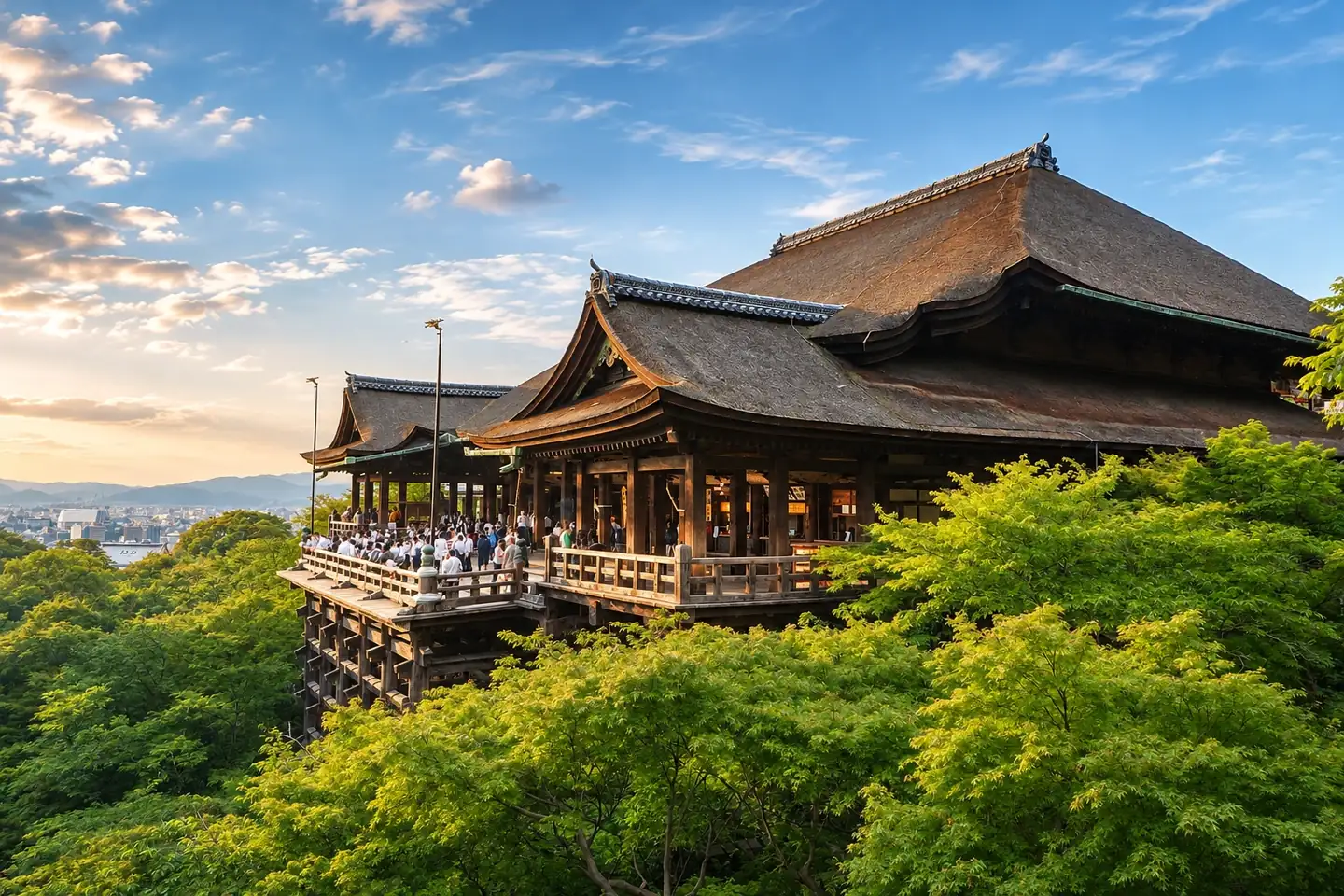
Founded in 778, before Kyoto became Japan's capital, Kiyomizu-dera stands on the slopes of Mount Otowa in eastern Kyoto. Following several fires, much of the present complex was rebuilt in 1631–1633 under the third Tokugawa shogun, Iemitsu. Its main hall is a National Treasure, while the Nio Gate, West Gate, three-story pagoda and bell tower are important cultural properties. In 1994 it became part of the UNESCO-listed Historic Monuments of Ancient Kyoto.
Gion
Gion is Kyoto's traditional entertainment district around Yasaka Shrine, the Kamo River and Higashioji-dori. It is known for its geiko and maiko culture, particularly in Gion Kobu and around Hanamikoji. Teahouses, restaurants, traditional buildings and small shops reward a leisurely visit. Kimono and yukata rentals are available, and the summer Gion Matsuri is a celebrated local festival.
 AI-rendered illustration
 AI-rendered illustration
 AI-rendered illustration