Osaka Castle Park
Osaka Castle Park is a large green space in the heart of the city, with wooded grounds surrounding the landmark castle tower. From the tower, visitors can look out across Osaka.
Japan · 6 DAYS
Osaka → Kyoto → Uji → Nara
Top Autumn Foliage Spots: Stunning Reds at Rurikoin and Eikando Temples Fewer Crowds, Lower Prices: Avoid Summer and Cherry Blossom Seasons for Half-Price Hotels and Flights
JOURNEY HIGHLIGHTS
[Autumn Foliage Tour - Kansai 6 Days] Tenryu-ji + Arashiyama + Kibune Shrine + Nara Park + Todai-ji + Kasuga Taisha
Day 1 starts in Osaka. International airfare is arranged separately.
Day 1 counts from arrival in Osaka. Your local activities and hotel check-in will be arranged based on actual arrival time; international flights not included. Planned visits: Osaka Castle Park, Osaka Castle Keep, Umeda Sky Building Floating Garden Observatory, Dotonbori, Shinsaibashi; schedule adjusts for arrival time. Airport transfers can be arranged separately; inclusion depends on confirmed plan.
 AI-rendered illustration
Day 1 counts from arrival in Osaka. Your local activities and hotel check-in will be arranged based on actual arrival time; international flights not included. Planned visits: Osaka Castle Park, Osaka Castle Keep, Umeda Sky Building Floating Garden Observatory, Dotonbori, Shinsaibashi; schedule adjusts for arrival time. Airport transfers can be arranged separately; inclusion depends on confirmed plan.
Breakfast: at your own expense. Lunch: at your own expense. Dinner: at your own expense.
Osaka Castle Park is a large green space in the heart of the city, with wooded grounds surrounding the landmark castle tower. From the tower, visitors can look out across Osaka.
Osaka Castle's main tower is the landmark of the castle grounds. The castle is associated with Toyotomi Hideyoshi and has undergone destruction and reconstruction over its history. The present concrete tower dates to 1931 and was renovated in 1997. Its exhibitions explore Hideyoshi and Osaka's past. The source lists a December 28–January 1 closure; verify current opening dates before visiting.
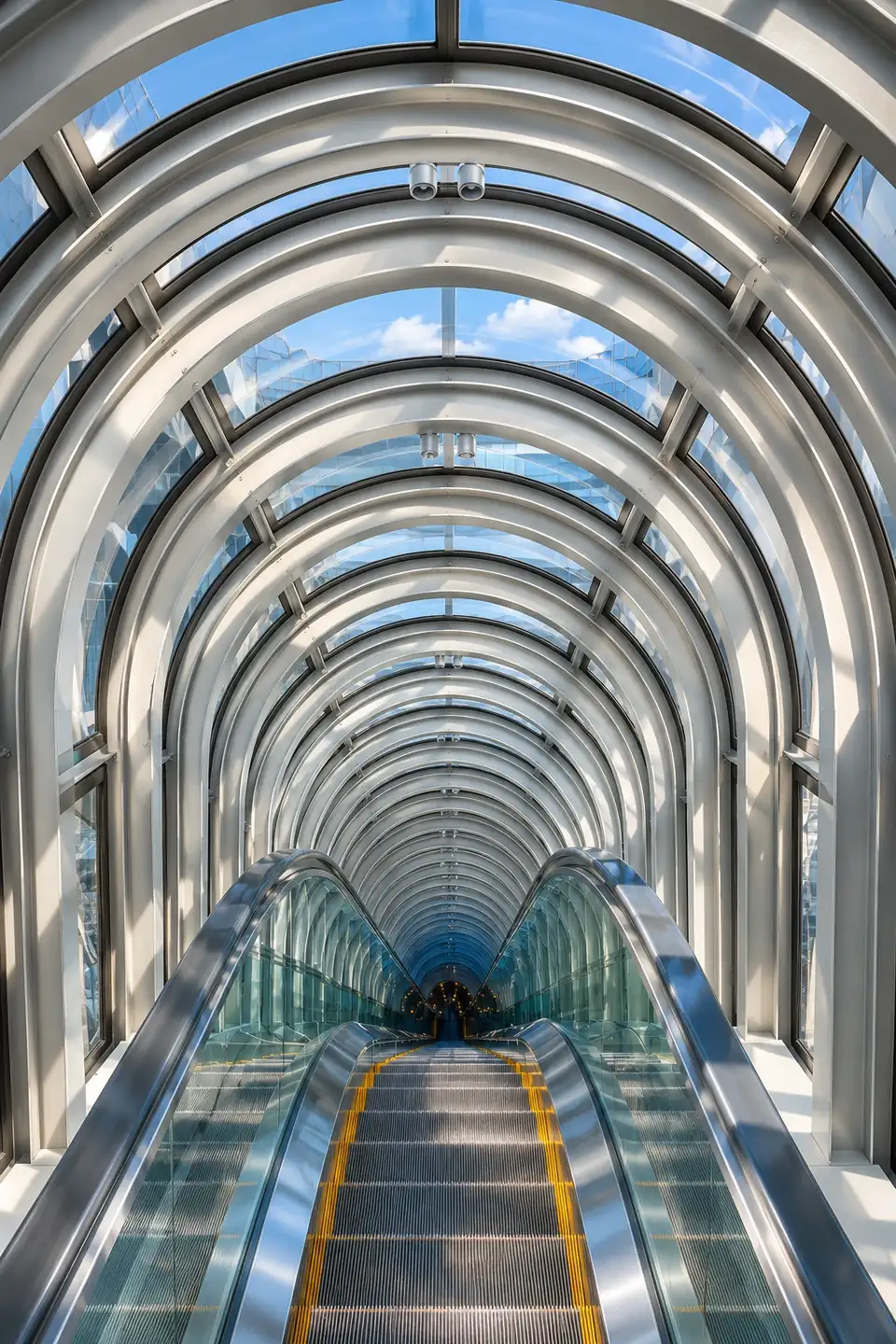
AI-rendered illustrationThe Umeda Sky Building is a 40-story structure consisting of Tower East and Tower West connected at the top by a circular rooftop Floating Garden Observatory, one of Japan's few 360-degree open-air observation decks. It's a popular spot to watch sunsets and one of Japan's top 100 sunset views. At night, it offers spectacular views of Osaka's city lights. The observatory includes special seating areas for couples and an outdoor altar for wishes related to love. The rooftop floor is paved with glowing stones, creating a romantic and mystical atmosphere.
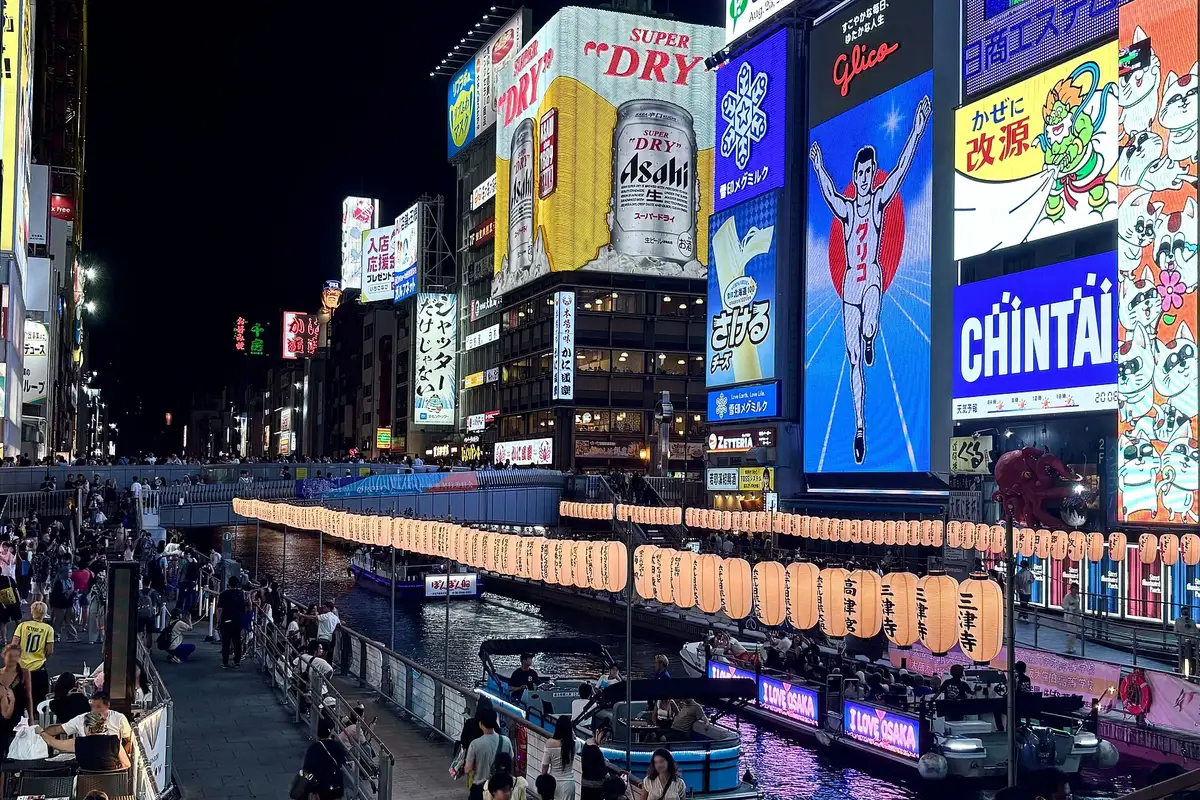
Dotonbori is one of Osaka's liveliest districts and a landmark food destination. Try local favorites such as takoyaki, teppanyaki, grilled meat, kushikatsu, conveyor-belt sushi, pufferfish dishes and sweets. Even its smaller eateries can offer memorable tastes of Osaka.
Shinsaibashi is one of Osaka's major shopping districts. Centered on the covered Shinsaibashi-suji arcade, it extends from Nagahori-dori toward Dotonbori. Boutiques, specialty stores, restaurants and department stores draw visitors throughout the day. Alongside shopping, enjoy Osaka specialties and international food, or explore nearby cinemas, theaters and nightlife.
Nanzen-ji Temple: Stroll along the three-story Suirokaku Aqueduct. Eikando Temple: Autumn night illumination of maple leaves creates an Edo-era atmosphere.
 AI-rendered illustration
Nanzen-ji Temple: Stroll along the three-story Suirokaku Aqueduct. Eikando Temple: Autumn night illumination of maple leaves creates an Edo-era atmosphere.
Breakfast: at the hotel. Lunch: at your own expense. Dinner: at the hotel.
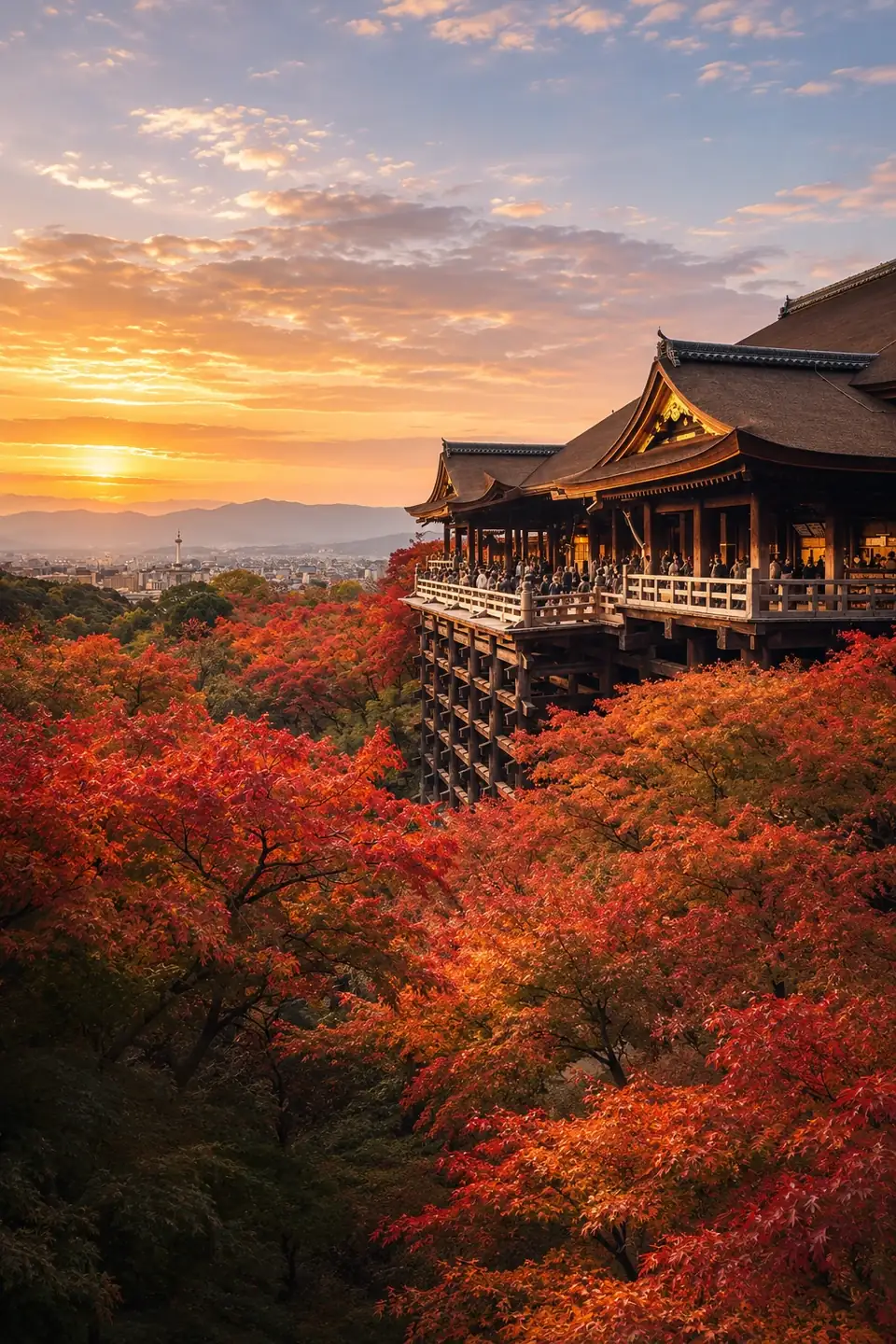
AI-rendered illustrationFounded in 778 in Kyoto's Higashiyama district, Kiyomizu-dera occupies extensive grounds and has been rebuilt several times after fires. Its projecting wooden stage is part of the National Treasure main hall. Trees surround the temple, bringing seasonal color, including spring cherry blossoms and autumn foliage.
Eikan-do is the head temple of the Seizan Zenrin-ji branch of Pure Land Buddhism. Covered corridors connect its principal halls. Its celebrated Amida Buddha statue, an Important Cultural Property, looks back over its left shoulder and is known as the Looking-Back Amida. Autumn leaves around the halls, pagoda and pond have made the temple especially famous, typically drawing visitors during November.
Nanzen-ji is a Zen Buddhist temple in Kyoto and the head temple of the Nanzen-ji branch of the Rinzai sect. Founded in 1291 by Emperor Kameyama and led by the first chief priest Daimei Kokushi Mugon Fumon, it is the first Zen temple built on imperial initiative and ranked above the Kyoto Five Mountains, making it the highest-ranked Zen temple in Japan.
Sagano Scenic Railway: Panoramic views of Hozugawa Gorge. Bamboo Grove Path: Secret spot featured in 'Crouching Tiger, Hidden Dragon.' Kibune Shrine: Water fortune-telling for matchmaking. Tenryu-ji Temple: World Heritage Site with dry landscape garden.
 AI-rendered illustration
Sagano Scenic Railway: Panoramic views of Hozugawa Gorge. Bamboo Grove Path: Secret spot featured in 'Crouching Tiger, Hidden Dragon.' Kibune Shrine: Water fortune-telling for matchmaking. Tenryu-ji Temple: World Heritage Site with dry landscape garden.
Breakfast: at the hotel. Lunch: at your own expense. Dinner: at your own expense.
The Sagano sightseeing train runs slowly along the scenic Hozu River gorge between Torokko Saga and Torokko Kameoka stations. The one-way journey takes approximately 25 minutes. Cherry blossoms, summer greenery, autumn leaves and occasional winter snow offer different views with the seasons.
Tenryu-ji is the head temple of the Tenryu-ji branch of Rinzai Zen Buddhism in Arashiyama, Kyoto. Founded by Ashikaga Takauji with Muso Soseki as its first abbot, it was established to honor Emperor Go-Daigo. Its principal image is Shakyamuni Buddha.
Located on Mount Ogura, the villa was where Fujiwara no Teika compiled the 'Hyakunin Isshu' anthology of waka poetry. The temple that remains is Jojakko-ji. Surrounded by rich nature, the approach with stone steps from the Niomon Gate is scenic. It is charming in all seasons, and autumn is among Arashiyama’s top foliage spots, displaying profound beauty.
Togetsukyo Bridge spans approximately 155 meters across the Oi River in Arashiyama, Kyoto. Tradition traces an early bridge here to the monk Dosho in 836. Riverside trees and the surrounding hills create seasonal scenery, including cherry blossoms in spring.
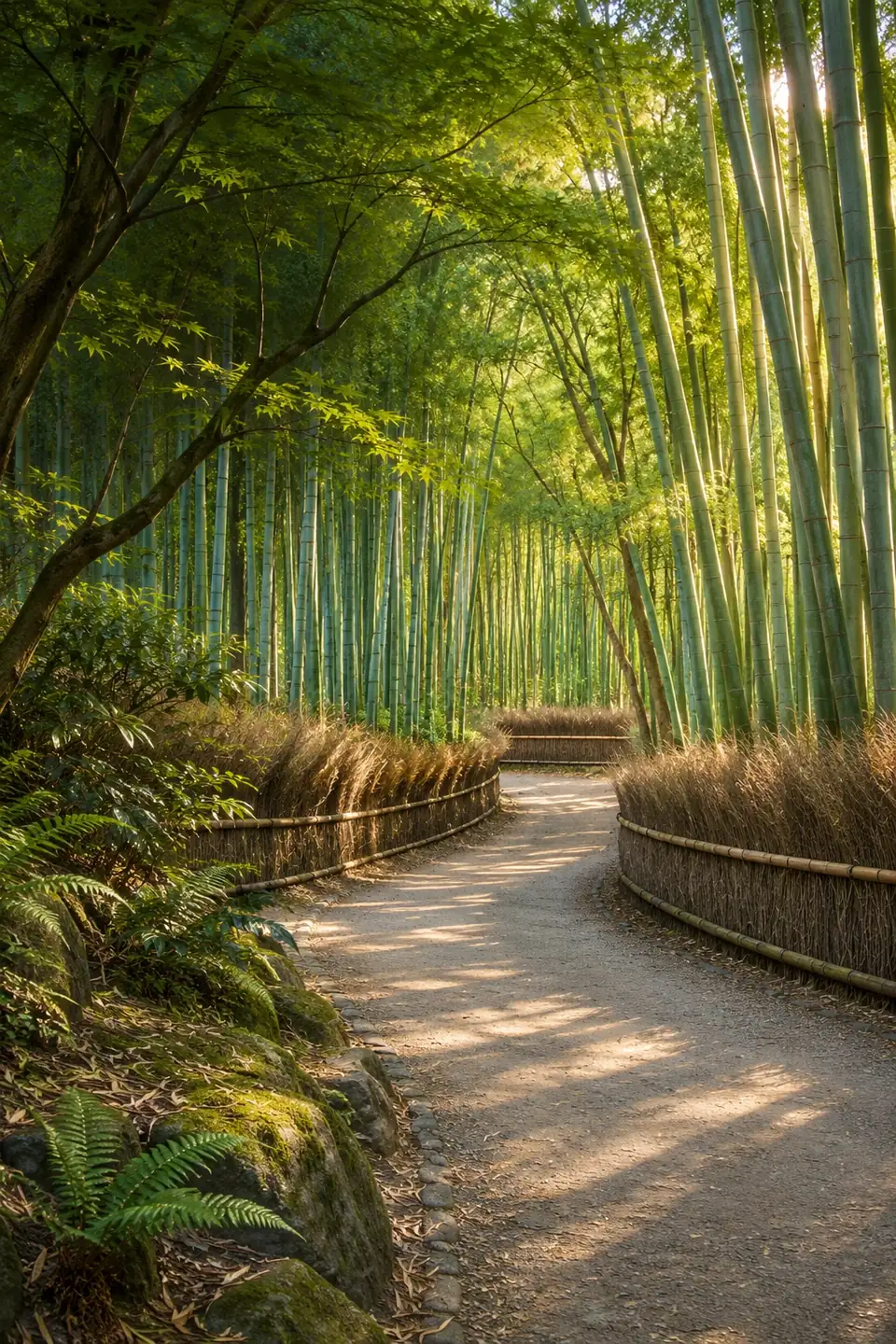
AI-rendered illustrationThe Sagano Bamboo Grove is a well-known walking area in Arashiyama, Kyoto. Tall bamboo surrounds the paths, creating a quiet, distinctive atmosphere. Nearby riverside scenery and Togetsukyo Bridge complete a visit to the area, with colorful foliage on the surrounding hills in autumn.
Kifune is an ancient shrine north of Kyoto, near the western slopes of Mount Kurama. Its exact founding date is uncertain, and it has long been associated with the protection of water and forests. The Heian-period poet Izumi Shikibu is said to have prayed here for her husband's affection to return, contributing to the shrine's reputation for relationship blessings.
Visit Nara Park and Todai-ji, including its Great Buddha Hall and bronze Buddha. Continue to Uji for a tea-related experience; matcha grinding or wagashi making depends on the selected venue and reservation availability.
 AI-rendered illustration
Visit Nara Park and Todai-ji, including its Great Buddha Hall and bronze Buddha. Continue to Uji for a tea-related experience; matcha grinding or wagashi making depends on the selected venue and reservation availability.
Breakfast: at the hotel. Lunch: at your own expense. Dinner: at your own expense.
Byodo-in is a Heian-period temple with a pond garden beside the Uji River, facing Mount Asahi. Cherry blossoms, azaleas and lotus flowers provide seasonal color. Its Phoenix Hall extends outward like a bird spreading its wings and houses a seated Amida Buddha designated a National Treasure. The temple joined Kyoto's UNESCO World Heritage listing in 1994.
Founded more than 1,300 years ago, Kasuga Taisha is Nara's guardian shrine and the principal shrine of the Kasuga tradition. Its buildings are renewed through a traditional 20-year cycle, and worship rituals take place morning and evening. Moss-covered stone lanterns line the approach, where Nara's deer can often be seen.
Nara Park stretches across the eastern side of the city, near Mount Wakakusa, Todai-ji Temple, Kasuga Taisha and the Nara National Museum. Deer roam the grounds and are protected as a national natural monument. Fresh spring greenery, autumn foliage and quieter off-season walks give the park year-round appeal.
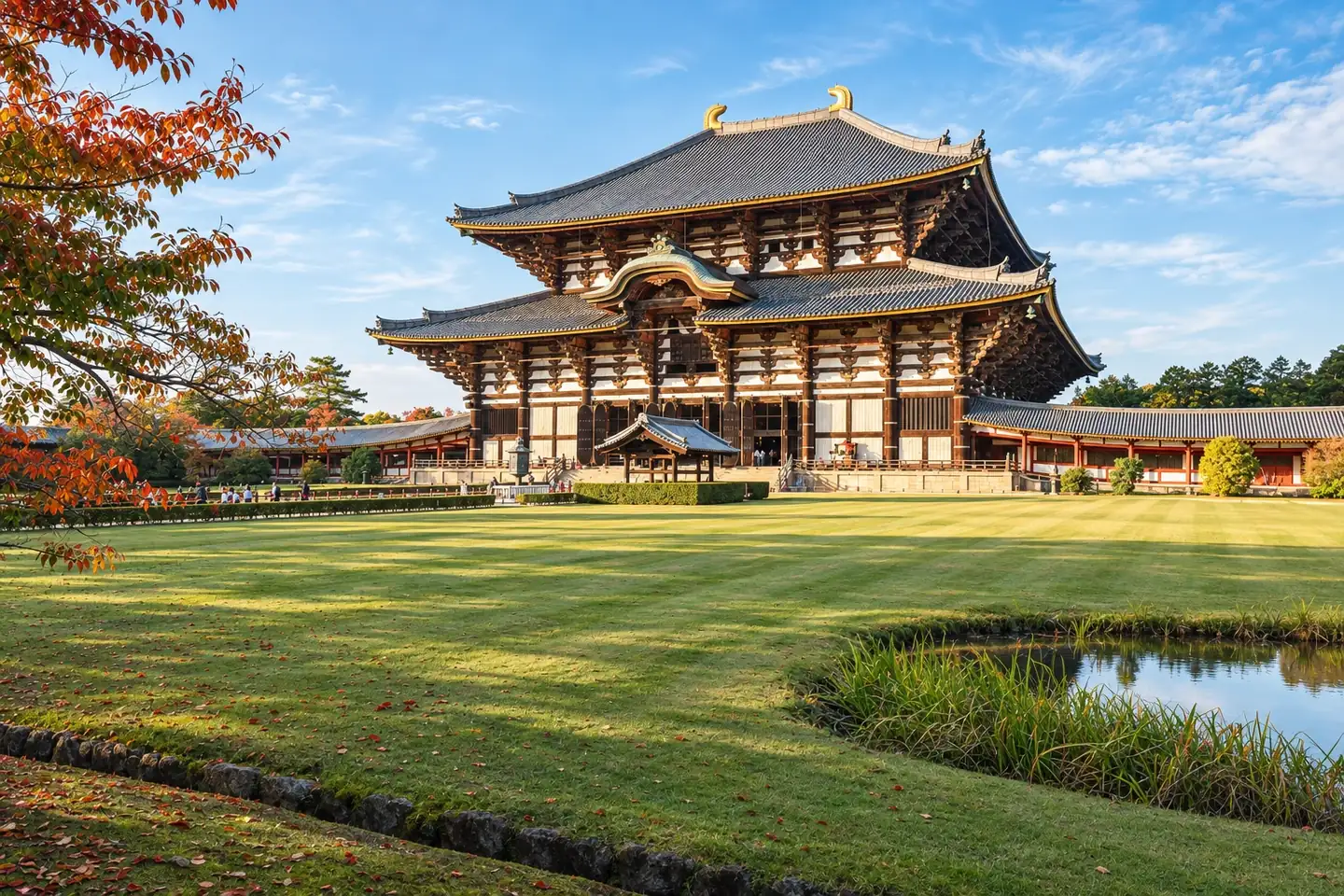
AI-rendered illustrationTodai-ji is the head temple of the Kegon school of Japanese Buddhism and one of Nara's great historic temples, with more than 1,200 years of history. It became part of the UNESCO-listed Historic Monuments of Ancient Nara in 1998. The Great Buddha Hall is approximately 57 meters wide and 50 meters deep, housing a Vairocana Buddha more than 15 meters tall. Other notable structures include the Great South Gate, Nigatsu-do, Sangatsu-do and the Shoso-in.
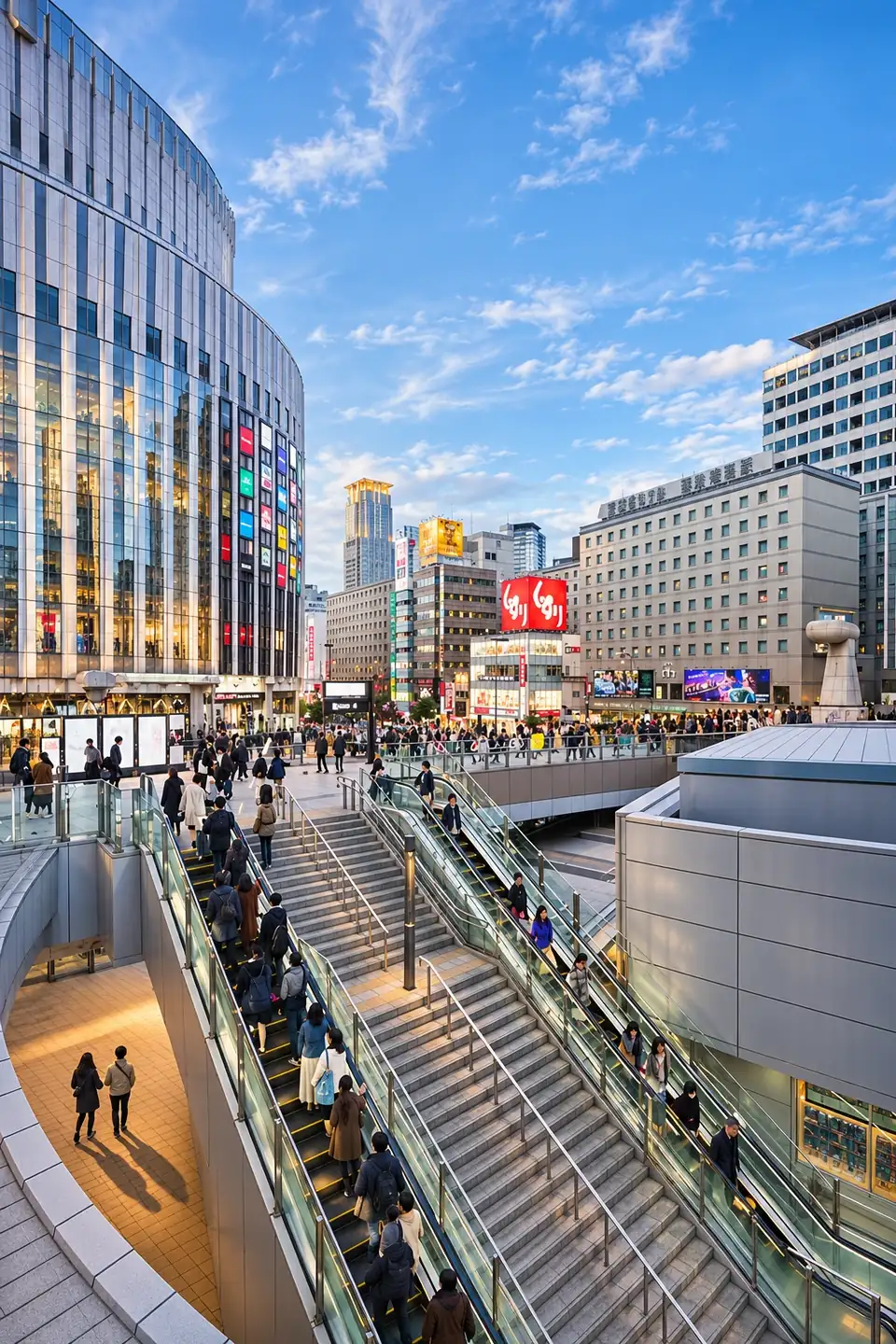
Head to Osaka's Umeda district, a great spot for shopping and exploring. Wander through Kuromon Market, where you'll find not only fresh ingredients but also many authentic local snacks waiting to be discovered. Visit Tsutenkaku Tower, an iconic landmark ideal for panoramic views of Osaka. In the evening, enjoy dinner at the original Kushikatsu restaurant near Tsutenkaku, savoring local specialty grilled skewers.
 AI-rendered illustration
Head to Osaka's Umeda district, a great spot for shopping and exploring. Wander through Kuromon Market, where you'll find not only fresh ingredients but also many authentic local snacks waiting to be discovered. Visit Tsutenkaku Tower, an iconic landmark ideal for panoramic views of Osaka. In the evening, enjoy dinner at the original Kushikatsu restaurant near Tsutenkaku, savoring local specialty grilled skewers.
Breakfast: at the hotel. Lunch: at your own expense. Dinner: at your own expense.
AI-rendered illustrationUmeda is northern Osaka’s economic center, anchored by the huge transport hub of Umeda-Osaka station where JR, Hankyu, Hanshin, and three subway lines converge. The surrounding area is filled with department stores and skyscrapers housing companies, banks, and restaurants. Compared to the more southern Namba and Shinsaibashi areas, Umeda is called “North” and is bustling all day. The expansive Umeda underground mall features a scenic fountain plaza known as Izumi Square, a popular leisure spot.
Known as Osaka’s kitchen, Kuromon Market is a traditional market that has operated since the Edo period. Stretching nearly 600 meters, it offers pickles, seafood, fruits and more with authentic flavors. You can enjoy fresh sashimi here, and late in the day, fresh products are sold at discounts.
Tsutenkaku Tower was modeled after the Arc de Triomphe and Eiffel Tower in Paris and was once Japan’s tallest building. It is a symbol of Osaka. Visitors can ride the elevator to the observation deck for beautiful city views. On the 5th floor stands a lucky deity statue; touching its feet is said to bring good luck.
Located under Tsutenkaku Tower in a prime spot, its prominent sign and the long queue are very noticeable. Expect about a one-hour wait to be seated. Specialty: The sauce is shared openly and everyone dips their food once, so for hygiene, each item can only be dipped once in the sauce.
Enjoy free time as your departure schedule permits. Your itinerary ends locally in Osaka. An airport transfer can be arranged around your flight if needed. International return flights and the date you arrive home are not counted as itinerary days.
Enjoy free time as your departure schedule permits. Your itinerary ends locally in Osaka. An airport transfer can be arranged around your flight if needed. International return flights and the date you arrive home are not counted as itinerary days.
Breakfast: at the hotel. Lunch: at your own expense. Dinner: at your own expense.
YOUR ROUTE
Use this route as a starting point. Tell us your dates, pace and accommodation preferences.
Your quote will specify accommodation, guiding, transport, activities, meals and any optional arrangements before you book. International flights and airport transfers are discussed separately.
TRAVEL IN COMFORT
Up to 6 passengers

Up to 9 passengers

Our main touring vehicles. We recommend a vehicle based on your group size and luggage. Maximum seating capacity does not guarantee room for all bags when every seat is occupied. Vehicle availability is confirmed for your destination.
Togetsukyo Bridge spans approximately 155 meters across the Oi River in Arashiyama, Kyoto. Tradition traces an early bridge here to the monk Dosho in 836. Riverside trees and the surrounding hills create seasonal scenery, including cherry blossoms in spring.
Byodo-in is a Heian-period temple with a pond garden beside the Uji River, facing Mount Asahi. Cherry blossoms, azaleas and lotus flowers provide seasonal color. Its Phoenix Hall extends outward like a bird spreading its wings and houses a seated Amida Buddha designated a National Treasure. The temple joined Kyoto's UNESCO World Heritage listing in 1994.
Nara Park stretches across the eastern side of the city, near Mount Wakakusa, Todai-ji Temple, Kasuga Taisha and the Nara National Museum. Deer roam the grounds and are protected as a national natural monument. Fresh spring greenery, autumn foliage and quieter off-season walks give the park year-round appeal.
Eikan-do is the head temple of the Seizan Zenrin-ji branch of Pure Land Buddhism. Covered corridors connect its principal halls. Its celebrated Amida Buddha statue, an Important Cultural Property, looks back over its left shoulder and is known as the Looking-Back Amida. Autumn leaves around the halls, pagoda and pond have made the temple especially famous, typically drawing visitors during November.
This journey starts at the destination. Seasonal experiences, service inclusions and availability are confirmed with your personalized proposal.
Original source & photography · 6renyou ↗BEFORE YOU PLAN
OpenEast brings together Japan and South Korea itinerary ideas for travelers from North America, with China also part of our destination plans. Start with the local route, then consider flights and airport transfers around it.
Day 1 begins at the destination. International departure-only and return flight days are not counted as destination days. Plan your flights around the local itinerary dates.
International flights and airport transfers are confirmed separately. Do not assume they are included in a suggested itinerary.
These routes are itinerary ideas. Dates, hotels, admissions, seasonal activities, prices and availability need confirmation in a personalized proposal before booking.
Use the inquiry form to contact our team. A submission confirmation appears only when the email service accepts your request. An inquiry does not reserve a service or take payment.
Explore Japan itineraries → · Explore South Korea itineraries →