Japan · 7 DAYS

Central Japan & Hokuriku Scenic 7-Day Tour

Nagoya → Nagano Prefecture → Takayama → Toyama → Takaoka → Shirakawa-go → Kanazawa

Enjoy Shirakawa-go's illuminated village and winter snow scenery, cruise the Shogawa Gorge, and ride the Shin-Hotaka Ropeway. Stroll the ancient post towns of Tsumago and Magome, visit Takayama morning markets and Kenrokuen Garden in Kanazawa to immerse in history.

7 daysWinterItinerary idea

Request this itinerary

Leave your details, and our travel specialists will get in touch by email or your preferred contact method.

Your specialist will confirm the itinerary, pricing and availability with you.

How we use your information

Your inquiry is sent to info@jasperlimo.com so our team can respond. Please do not include passport or payment details.

JOURNEY HIGHLIGHTS

Japan, made personal.

Central Japan & Hokuriku Scenic Tour - 7 Days | January 8 Departure | Shirakawa-go Illuminations & Limited Observatory Access + Historic Nakasendo Trail + Shin-Hotaka Ropeway + Ubagahama & Amaharashi Coastline + Kenrokuen Winter Garden + Gold Leaf Craft Experience

Day 1 starts in Nagoya. International airfare is arranged separately.

  • 01Enjoy Shirakawa-go's illuminated village and winter snow scenery, cruise the Shogawa Gorge, and ride the Shin-Hotaka Ropeway.
  • 02Stroll the ancient post towns of Tsumago and Magome, visit Takayama morning markets and Kenrokuen Garden in Kanazawa to immerse in history.
  • 03Explore Toyama Glass Art Museum, enjoy gold leaf crafting, and experience the urban charm of Nagoya.

Your journey, day by day

01

Nagoya

Day 1 counts from arrival in Nagoya. Activities and accommodation will be arranged based on actual arrival times; international flights are not included. Airport transfers can be arranged separately; inclusion depends on the confirmed plan.

AI-rendered illustration

Day 1 counts from arrival in Nagoya. Activities and accommodation will be arranged based on actual arrival times; international flights are not included. Airport transfers can be arranged separately; inclusion depends on the confirmed plan.

Breakfast: at your own expense. Lunch: at your own expense. Dinner: at your own expense.

02

Nagoya → Nagano Prefecture → Takayama

After hotel breakfast, depart from Nagoya to Nagano Prefecture. First, visit Ena Gorge Observation Deck in Gifu Prefecture to admire the peaceful winter canyon views. Then explore the historic Tsumago and Magome post towns, walking along well-preserved Edo-period streets to experience authentic old Japan. This relaxing itinerary blends natural wonders with cultural heritage for your enjoyment. Transportation: Toyota Hiace van with Chinese-speaking driver, 10 hours service Meals: Hotel breakfast and dinner

AI-rendered illustration

After hotel breakfast, depart from Nagoya to Nagano Prefecture. First, visit Ena Gorge Observation Deck in Gifu Prefecture to admire the peaceful winter canyon views. Then explore the historic Tsumago and Magome post towns, walking along well-preserved Edo-period streets to experience authentic old Japan. This relaxing itinerary blends natural wonders with cultural heritage for your enjoyment. Transportation: Toyota Hiace van with Chinese-speaking driver, 10 hours service Meals: Hotel breakfast and dinner

Breakfast: at the hotel. Lunch: at your own expense. Dinner: at the hotel.

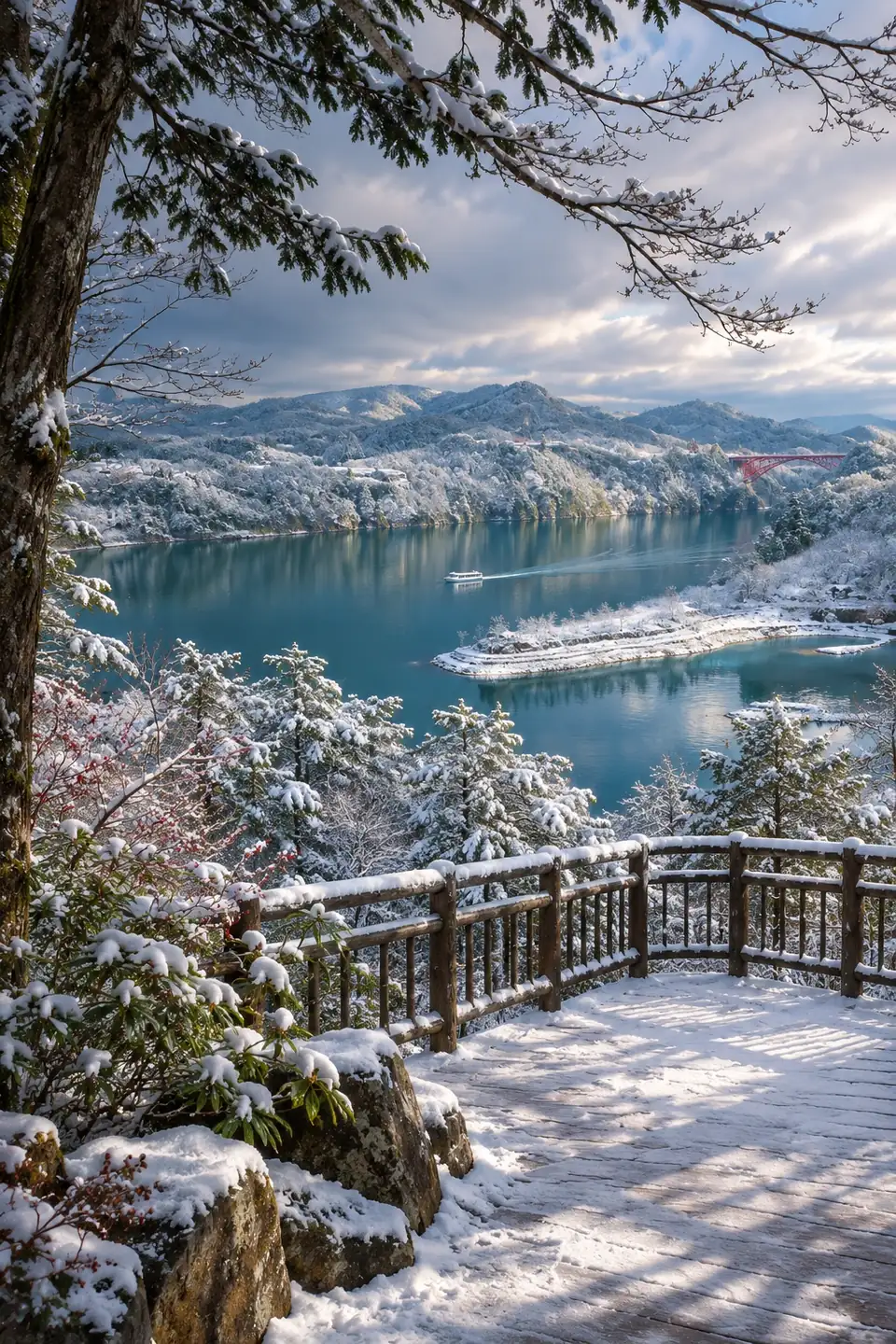
Enakyo Gorge Observation Deck (Winter)AI-rendered illustration

Enakyo Gorge Observation Deck (Winter)

The observation deck is located at Enakyo Gorge in eastern Gifu, featuring cliffs and bizarre rock formations shaped by natural erosion, spanning from the artificial lake formed by the Oi Dam blocking the Kiso River upstream to Nakatsugawa. The umbrella-shaped rock that seems to pierce the earth is a nationally protected natural monument, alongside reddish moss-covered rocks that are iconic gorge formations. Cherry blossoms, azaleas, and fall foliage at Enakyo Gorge are even more beautiful against these massive rocks, attracting many visitors. Visitors can enjoy boat tours on the water or take an aerial ropeway for a bird’s-eye view. On the north bank is Enakyo Amusement Park with 25 attractions, fun for adults and children alike, where the Ferris wheel offers views of Enakyo Gorge and the Southern Alps.

Tsumago-juku

Tsumago-juku is the 42nd post town on the Nakasendo route, located on the east bank of the Ran River in Nagiso Town, Kiso District, Nagano Prefecture, with fewer than 1,000 residents. It retains the ambiance and architecture of the Edo period, including short supporting beams and vertically latticed windows. Many historic inns and teahouses remain, along with restored post town features like signboards. It's one of Japan's first important traditional preservation districts for groups of historical buildings.

Magome-juku

Magome-juku was the 43rd of the 69 post stations on the Edo-period Nakasendo route, about 332 km from its starting point at Nihonbashi in Edo (Tokyo). Built along steep mountain paths with stone retaining walls, the town center features the honjin (principal inn), waki-honjin (secondary inn), and rows of hatago inns and eateries. After Tokugawa Ieyasu unified Japan, the Nakasendo road, spanning 540 km from Edo, became a key commercial route; Tsumago and Magome flourished as midway post towns along this historic highway.

03

Takayama → Toyama

After hotel breakfast, start a full day in Takayama. Early morning stroll at the lively Takayama Morning Market to feel the local atmosphere. Then visit the historic Hida Takayama Jinya to glimpse Edo period administration. Next, ride the Shin-Hotaka Ropeway to enjoy spectacular snow views and the Northern Japanese Alps. Later, head to Toyama and immerse in art at the Toyama Glass Art Museum, appreciating its unique architecture and exhibits—a perfect end to this cross-region journey. Transportation: Toyota Hiace van with Chinese-speaking driver accompanying for entrance, 10 hours service Meals: Hotel breakfast

AI-rendered illustration

After hotel breakfast, start a full day in Takayama. Early morning stroll at the lively Takayama Morning Market to feel the local atmosphere. Then visit the historic Hida Takayama Jinya to glimpse Edo period administration. Next, ride the Shin-Hotaka Ropeway to enjoy spectacular snow views and the Northern Japanese Alps. Later, head to Toyama and immerse in art at the Toyama Glass Art Museum, appreciating its unique architecture and exhibits—a perfect end to this cross-region journey. Transportation: Toyota Hiace van with Chinese-speaking driver accompanying for entrance, 10 hours service Meals: Hotel breakfast

Breakfast: at the hotel. Lunch: at your own expense. Dinner: at your own expense.

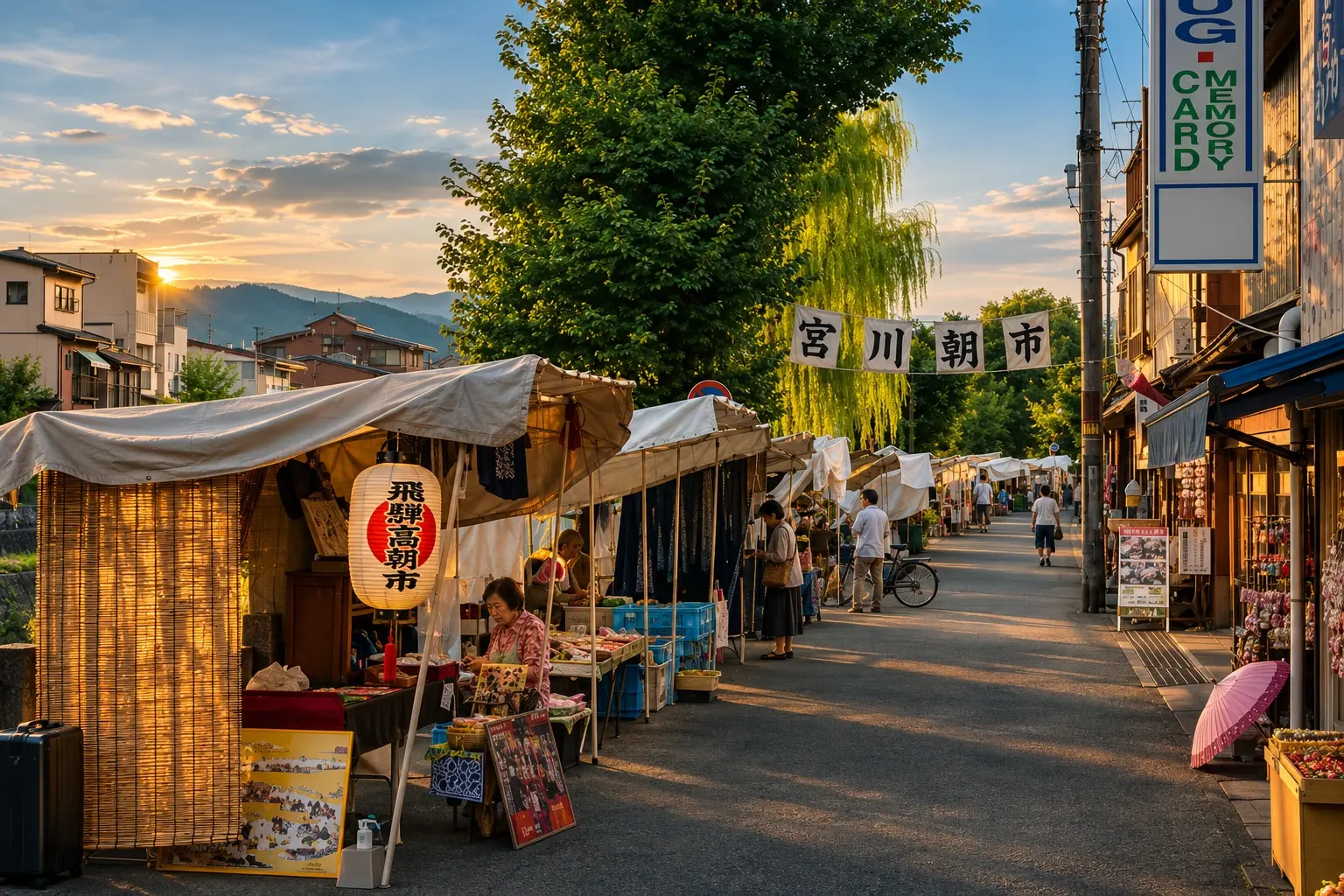
Takayama Morning MarketAI-rendered illustration

Takayama Morning Market

Takayama’s morning market is one of Japan’s three major morning markets, held in front of Miyagawa and Takayama Jinya. The Miyagawa Market stretches approximately 350 meters from Kajibashi Bridge to Yayoi Bridge, featuring over 60 stalls. Along the riverside near the street, vendors sell vegetables, fruits, pickles, and spices outdoors. On the street interior side are shops offering snacks, sweets, and crafts. Along with Takayama specialty crafts like sarubobo dolls and hand-carved knives, chopsticks and other Japanese small goods are available.

Takayama Jinya

Walking around Takayama is the best way to capture its small-town charm. Wandering through historic streets lined with traditional buildings, the 400-year-old Takayama Jinya—an Edo period government office—immediately catches visitors’ eyes. This rustic town, with its traditional Japanese atmosphere and specialty shops, attracts around 3 million tourists yearly despite being relatively unknown to domestic travelers. Takayama’s population is about 100,000, situated in Gifu Prefecture.

Shinhotaka Ropeway (Winter)

The Shin-Hotaka Ropeway in Gifu Prefecture is Japan's first double-decker ropeway. The upper and lower decks hold 121 people, and a single deck car holds 45. The total length is 3,200 meters, divided into two sections. The first ride from Shin-Hotaka Onsen Station (about 1,117 meters altitude) to Nukehiro Plateau Station (1,305 meters) takes about four minutes. Then a short walk to Shirakaba-daira (1,308 meters) leads to the second ropeway segment to Nishi-Hotakaguchi (2,156 meters), about seven minutes. The ride is smooth, with a Japanese-speaking staff member describing the views. With increasing elevation, you'll see endless mountain peaks and breathtaking mountain terrain, creating a scenic panorama.

Toyama Glass Art Museum

The Toyama Glass Art Museum is the centerpiece of Toyama City's plan to brand itself as the 'City of Glass.' Located alongside the main branch of Toyama City Library in the multipurpose 'TOYAMA KIRARI' building in downtown Toyama, it not only professionally showcases culture and art but also plays an important role in creating new urban attractions. The 'TOYAMA KIRARI' building was designed by renowned architect Kengo Kuma, cleverly combining materials such as granite from the Mikage region, glass, and aluminum, resulting in an innovative exterior resembling the diverse peaks of the Tateyama mountain range.

04

Toyama → Takaoka → Shirakawa-go → Takaoka → Toyama

After hotel breakfast, depart from Toyama to visit Amaharashi Coast within the national park to admire magnificent seascapes. Next, arrive in Takaoka to see the impressive Takaoka Great Buddha. Then take the official Shirakawa-go Illuminations bus round trip from Takaoka to the fairy-tale-like Shirakawa-go village. At Ogimachi Castle Ruins Observatory, overlook the brilliantly lit gassho-style houses and soak in the romantic winter atmosphere. After the tour, return to the hotel. Transportation: Toyota Hiace van (Chinese driver) + Shirakawa-go official illumination bus (round trip) Meals: Hotel breakfast --- Shirakawa-go Illuminations Official Bus Schedule: 14:00 Depart Takaoka Bus Terminal (meet here) 14:15 Stops at Takaoka Station Front, Boarding Point 7 14:30 Stops at Shin-Takaoka Station South Exit, Boarding Point 4 15:40–19:50 Enjoy Shirakawa-go illumination event, then gather for return 21:00 Stops at Shin-Takaoka Station South Exit, Boarding Point 4 21:15 Stops at Takaoka Station Front, Boarding Point 7 21:30 Arrive at Takaoka Bus Terminal - End of itinerary Illumination time: 17:30–19:30 This itinerary includes admission to Ogimachi Castle Ruins Observatory; a round-trip walk from the village to the observatory is required. Included: - Round-trip bus transportation - Ogimachi Castle Ruins Observatory admission Not included: - Meals throughout the day Important Notes: 1. Shirakawa-go Ogimachi gassho village is a UNESCO World Heritage site and inhabited residential area; the use of drones for aerial filming is strictly prohibited to protect privacy and heritage. 2. Snow coverage on gassho roofs depends on weather and snowfall; actual conditions apply, no guarantees. 3. This day involves significant walking and a late return (approx. 10:30 PM); guests should be prepared for a demanding day.

AI-rendered illustration

After hotel breakfast, depart from Toyama to visit Amaharashi Coast within the national park to admire magnificent seascapes. Next, arrive in Takaoka to see the impressive Takaoka Great Buddha. Then take the official Shirakawa-go Illuminations bus round trip from Takaoka to the fairy-tale-like Shirakawa-go village. At Ogimachi Castle Ruins Observatory, overlook the brilliantly lit gassho-style houses and soak in the romantic winter atmosphere. After the tour, return to the hotel. Transportation: Toyota Hiace van (Chinese driver) + Shirakawa-go official illumination bus (round trip) Meals: Hotel breakfast --- Shirakawa-go Illuminations Official Bus Schedule: 14:00 Depart Takaoka Bus Terminal (meet here) 14:15 Stops at Takaoka Station Front, Boarding Point 7 14:30 Stops at Shin-Takaoka Station South Exit, Boarding Point 4 15:40–19:50 Enjoy Shirakawa-go illumination event, then gather for return 21:00 Stops at Shin-Takaoka Station South Exit, Boarding Point 4 21:15 Stops at Takaoka Station Front, Boarding Point 7 21:30 Arrive at Takaoka Bus Terminal - End of itinerary Illumination time: 17:30–19:30 This itinerary includes admission to Ogimachi Castle Ruins Observatory; a round-trip walk from the village to the observatory is required. Included: - Round-trip bus transportation - Ogimachi Castle Ruins Observatory admission Not included: - Meals throughout the day Important Notes: 1. Shirakawa-go Ogimachi gassho village is a UNESCO World Heritage site and inhabited residential area; the use of drones for aerial filming is strictly prohibited to protect privacy and heritage. 2. Snow coverage on gassho roofs depends on weather and snowfall; actual conditions apply, no guarantees. 3. This day involves significant walking and a late return (approx. 10:30 PM); guests should be prepared for a demanding day.

Breakfast: at the hotel. Lunch: at your own expense. Dinner: at your own expense.
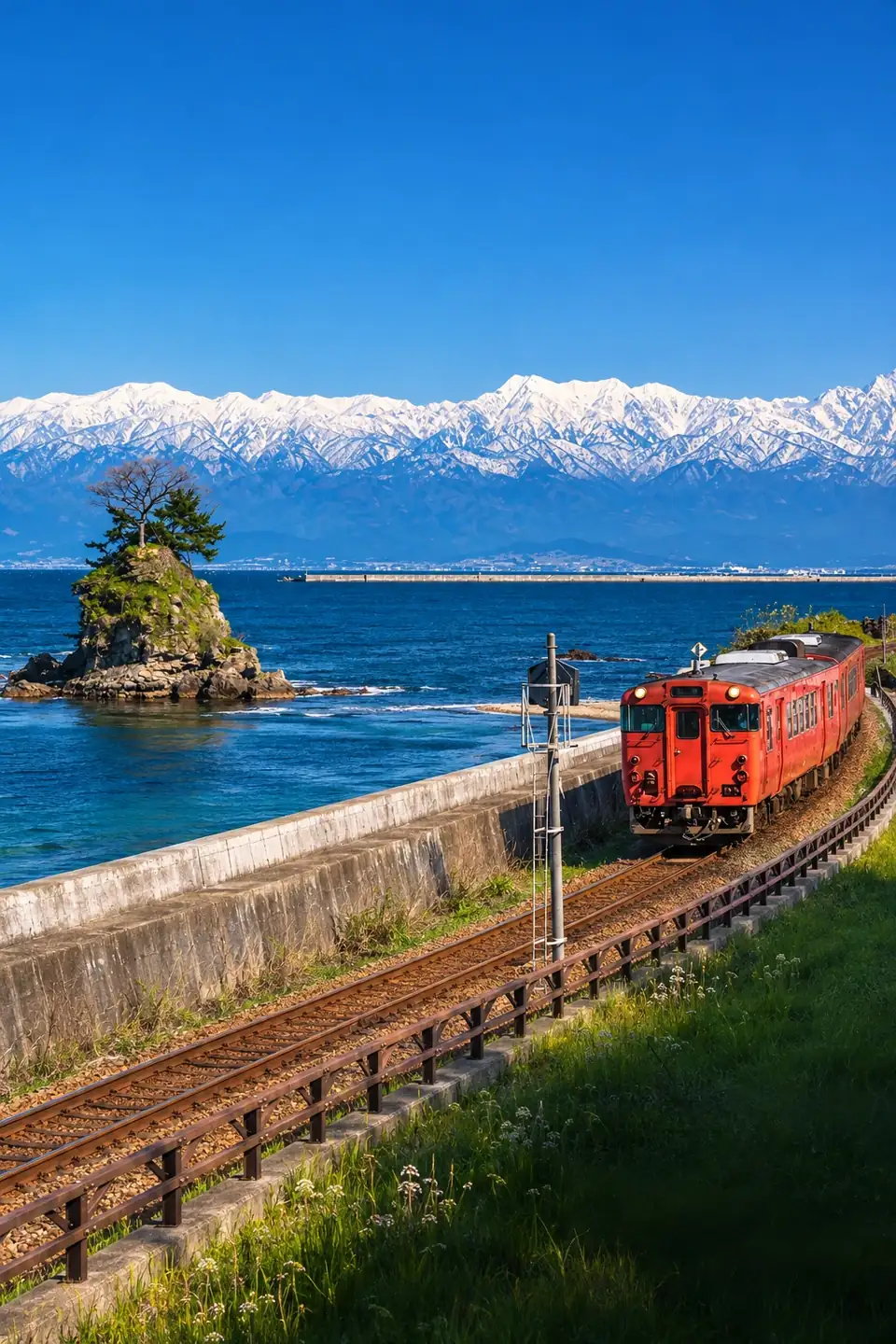
Amaharing Coast National ParkAI-rendered illustration

Amaharing Coast National Park

Amaharing Coast is located in Takaoka City, Toyama Prefecture, and is part of the Noto Peninsula Quasi-National Park. It’s accessible by the local commuter train, the Himi Line. From late October to early June, on clear days, visitors may witness the spectacular snow-capped Tateyama Mountain Range visible across the coast.

Takaoka Great Buddha

The Takaoka Great Buddha, located at Daibutsu-ji Temple in Takaoka City, is a 16-meter tall bronze Amida Buddha statue seated in meditation. The Buddha’s hands form the meditation mudra. It was polished over 26 years and completed in the early 20th century. Historically, several Buddhas have stood on the temple grounds, with the current bronze statue being the newest. Previous Buddhas were wooden sculptures, with the first believed constructed about 800 years ago. Visitors can enter the pedestal to view Buddhist paintings and a wooden Buddha head from an earlier statue. Takaoka Great Buddha showcases the city’s esteemed metalworking craftsmanship and is acclaimed as one of Japan’s most beautiful bronze Buddhas.
05

Toyama → Kanazawa → Toyama

Departing from Toyama, start a winter Hokuriku journey. Experience a winter boat cruise in Shogawa Gorge, enjoying the unique seasonal charm amidst serene landscapes. Then proceed to Kanazawa to stroll the historic Higashi Chaya District and savor traditional machiya townhouses. Next, visit Kenrokuen Garden, one of Japan’s top three gardens, to admire snow-covered harmony. Finally, enjoy a hands-on gold leaf crafting experience to create a personal Kanazawa souvenir before returning to Toyama. Transportation: Toyota Hiace van with Chinese-speaking driver, 10 hours service Meals: Hotel breakfast

Departing from Toyama, start a winter Hokuriku journey. Experience a winter boat cruise in Shogawa Gorge, enjoying the unique seasonal charm amidst serene landscapes. Then proceed to Kanazawa to stroll the historic Higashi Chaya District and savor traditional machiya townhouses. Next, visit Kenrokuen Garden, one of Japan’s top three gardens, to admire snow-covered harmony. Finally, enjoy a hands-on gold leaf crafting experience to create a personal Kanazawa souvenir before returning to Toyama. Transportation: Toyota Hiace van with Chinese-speaking driver, 10 hours service Meals: Hotel breakfast

Breakfast: at the hotel. Lunch: at your own expense. Dinner: at your own expense.

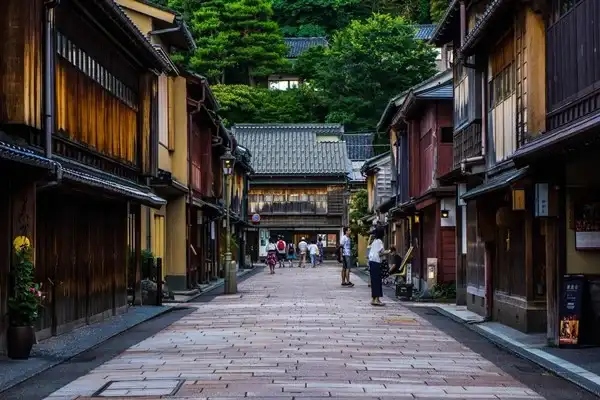
Higashi Chaya District

Higashi Chaya District

Kanazawa has three historic Chaya (teahouse) districts dating back to the Edo period: Nishi Chaya, Higashi Chaya, and Kazue-machi. Stone-paved streets are lined with many Edo-era teahouse buildings. Higashi Chaya is the largest of the three. It is a good place to experience local tea culture.

Kenrokuen Garden (Winter)

In heavy snowfall regions like Tohoku and Hokuriku, trees are tied with ropes in winter to prevent damage from frost and snow — this is called “Yukitsuri.” Kenrokuen Garden’s famous winter scenery is its Yukitsuri display. Starting November 1 with the Karasaki Pine, snow suspension work progresses throughout the garden, completing by mid-December. The ropes are removed after the snow season in mid-March, taking about a week. The removal of the Karasaki Pine Yukitsuri is the last step, symbolizing the arrival of spring in Hokuriku.

06

Toyama → Nagoya

After hotel breakfast, depart from Toyama to Nagoya for a journey blending history and modern style. First, visit majestic Nagoya Castle, experiencing Sengoku-era grandeur and commanding views from the main keep. Then stroll lively Osu Shopping Street to enjoy local street life and shop for unique souvenirs. Finally, explore the bustling Sakae district, immersing in contemporary urban energy with shopping and dining. This day offers a perfect mix of traditional charm and modern flair. Transportation: Toyota Hiace van with Chinese-speaking driver, 10 hours service Meals: Hotel breakfast and Hida beef yakiniku dinner

AI-rendered illustration

After hotel breakfast, depart from Toyama to Nagoya for a journey blending history and modern style. First, visit majestic Nagoya Castle, experiencing Sengoku-era grandeur and commanding views from the main keep. Then stroll lively Osu Shopping Street to enjoy local street life and shop for unique souvenirs. Finally, explore the bustling Sakae district, immersing in contemporary urban energy with shopping and dining. This day offers a perfect mix of traditional charm and modern flair. Transportation: Toyota Hiace van with Chinese-speaking driver, 10 hours service Meals: Hotel breakfast and Hida beef yakiniku dinner

Breakfast: at the hotel. Lunch: at your own expense. Dinner: local specialty meal.

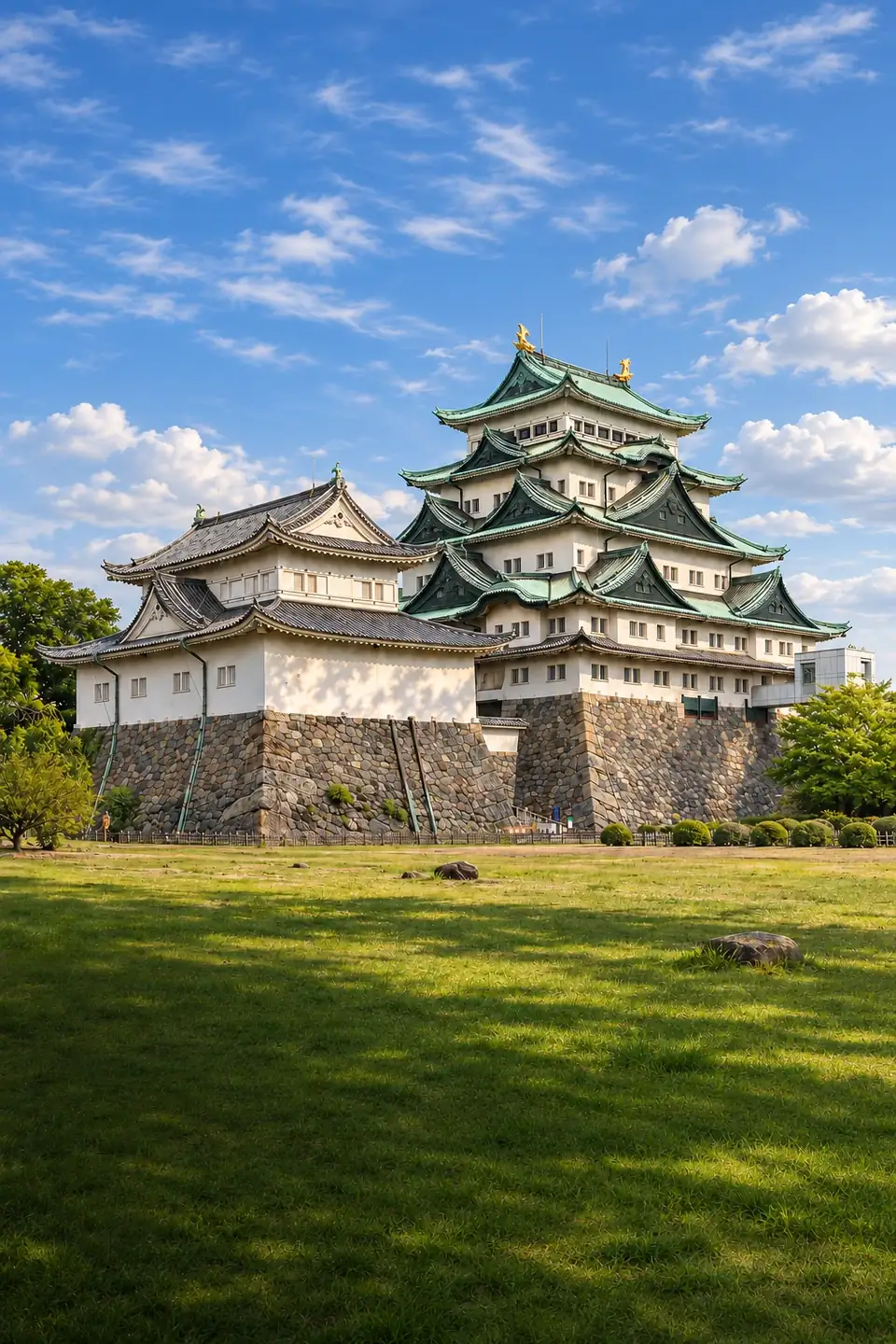
Nagoya CastleAI-rendered illustration

Nagoya Castle

Nagoya Castle, also known as Meijo, is a nationally designated historic site and ranks fourth among Japan's top 100 castles. After the Battle of Sekigahara, Tokugawa Ieyasu, founder of the Tokugawa shogunate and birthplace of Oda Nobunaga, built Nagoya Castle on the ruins of Nagoya Castle to provide for his ninth son. Orders were sent to various daimyos to assist in construction. Katō Kiyomasa, Fukushima Masanori, and others contributed to show loyalty. The castle, completed in under two years, was inherited by three generations of Tokugawa family. A bronze statue of Katō Kiyomasa carrying stones stands in Meijo Park today.

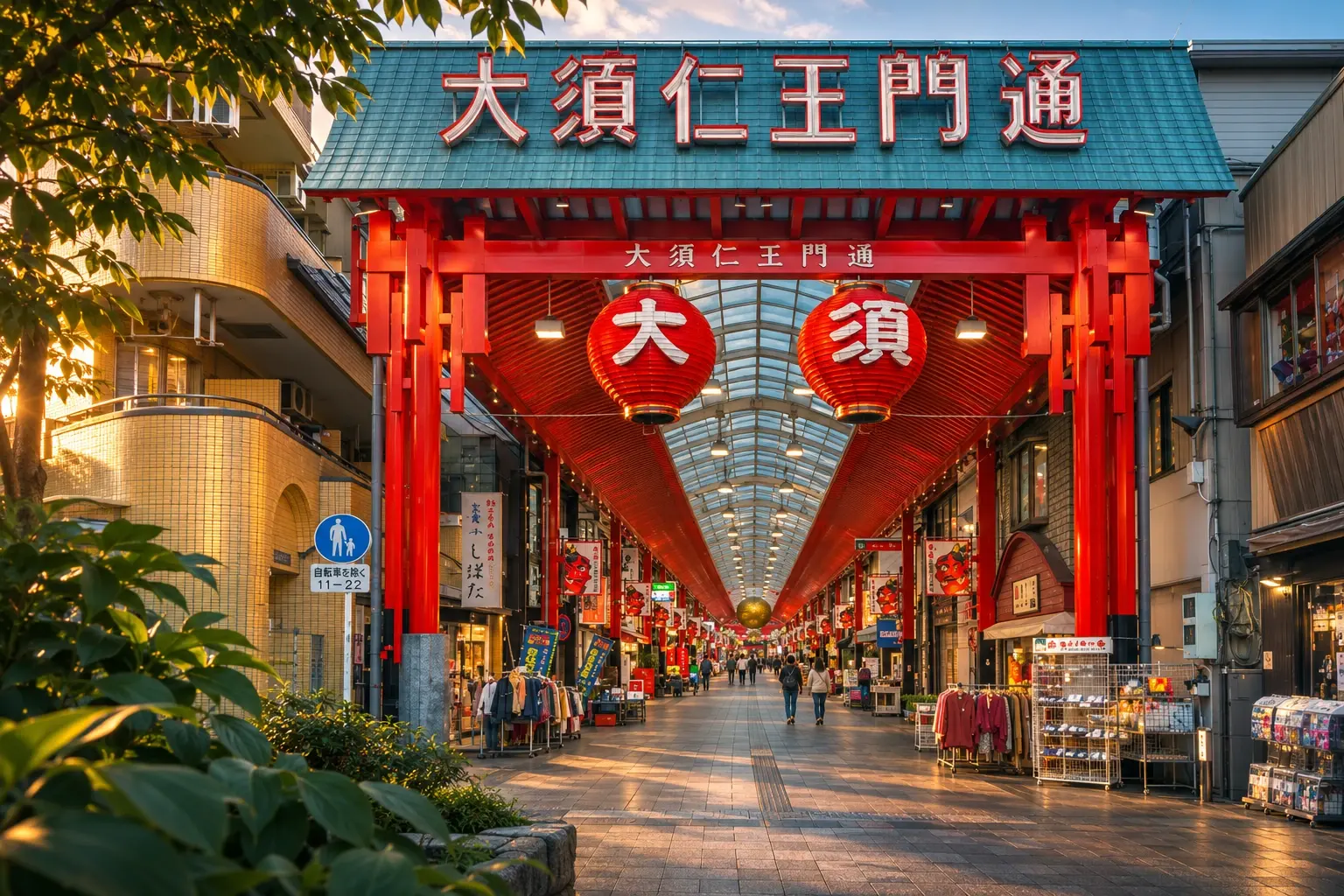
Osu Shopping Street

Osu is located in central Nagoya City. It features the historic Osu Shopping District, densely packed with about 1,200 various shops, making it a great shopping destination in Nagoya. The district spans Osu 2-chome to 3-chome and is bordered by four main streets: Wakamiya Odori, Fushimi Dori, Osu Dori, and Minami Otsu Dori. Conveniently situated between Osu Kannon and Kamimaezu stations on the Tsurumai Line for easy access.

Sakae

Sakae Shopping District is Nagoya’s most famous shopping area, featuring a vast underground mall integrating dining, shopping, and entertainment. Malls like Sunshine Sakae, Lachic, and Matsuzakaya Main Store line the streets offering a wide variety of goods for an enjoyable shopping experience. About two kilometers away at Nagoya Station, the JR Central Twin Towers also offer shopping and leisure opportunities.

07

Nagoya

Enjoy free time as your departure schedule allows. The itinerary ends locally in Nagoya; airport transfer can be arranged to suit your flight schedule. International return flights are arranged separately; travel days after the local itinerary ends are not included in the itinerary length.

AI-rendered illustration

Enjoy free time as your departure schedule allows. The itinerary ends locally in Nagoya; airport transfer can be arranged to suit your flight schedule. International return flights are arranged separately; travel days after the local itinerary ends are not included in the itinerary length.

Breakfast: at the hotel. Lunch: at your own expense. Dinner: at your own expense.

YOUR ROUTE

Know the shape of your journey.

Starts in
Nagoya
Ends in
Nagoya
Local itinerary
7 days

A proposal shaped around you

Use this route as a starting point. Tell us your dates, pace and accommodation preferences.

Your quote will specify accommodation, guiding, transport, activities, meals and any optional arrangements before you book. International flights and airport transfers are discussed separately.

TRAVEL IN COMFORT

The right vehicle for your group.

Toyota Alphard

Up to 6 passengers

Toyota HiAce

Up to 9 passengers

Our main touring vehicles. We recommend a vehicle based on your group size and luggage. Maximum seating capacity does not guarantee room for all bags when every seat is occupied. Vehicle availability is confirmed for your destination.

More to discover

Enakyo Gorge Observation Deck (Winter)

The observation deck is located at Enakyo Gorge in eastern Gifu, featuring cliffs and bizarre rock formations shaped by natural erosion, spanning from the artificial lake formed by the Oi Dam blocking the Kiso River upstream to Nakatsugawa. The umbrella-shaped rock that seems to pierce the earth is a nationally protected natural monument, alongside reddish moss-covered rocks that are iconic gorge formations. Cherry blossoms, azaleas, and fall foliage at Enakyo Gorge are even more beautiful against these massive rocks, attracting many visitors. Visitors can enjoy boat tours on the water or take an aerial ropeway for a bird’s-eye view. On the north bank is Enakyo Amusement Park with 25 attractions, fun for adults and children alike, where the Ferris wheel offers views of Enakyo Gorge and the Southern Alps.

Shinhotaka Ropeway (Winter)

The Shin-Hotaka Ropeway in Gifu Prefecture is Japan's first double-decker ropeway. The upper and lower decks hold 121 people, and a single deck car holds 45. The total length is 3,200 meters, divided into two sections. The first ride from Shin-Hotaka Onsen Station (about 1,117 meters altitude) to Nukehiro Plateau Station (1,305 meters) takes about four minutes. Then a short walk to Shirakaba-daira (1,308 meters) leads to the second ropeway segment to Nishi-Hotakaguchi (2,156 meters), about seven minutes. The ride is smooth, with a Japanese-speaking staff member describing the views. With increasing elevation, you'll see endless mountain peaks and breathtaking mountain terrain, creating a scenic panorama.

Shirakawa-go Illuminations & Ogimachi Castle Ruins Observatory

This observatory offers panoramic views of the UNESCO World Heritage site. On clear days with wide visibility, you can see the Hakusan mountain range in the distance and enjoy both the historic village and magnificent natural scenery. The village has preserved Japan’s original rural charm thanks to local community cooperation. Known as one of Japan’s hidden gems, it’s also a heavy snowfall area. The gassho-zukuri style roofs were ingeniously designed by ancestors to withstand harsh weather. The nostalgic scenery changes with the seasons, each showcasing unique beauty.

Shogawa Gorge Boat Cruise (Winter)

The boat gently cruises between Komaki Dam and Omaki Onsen in Shogawa Gorge, taking about 1 hour round trip. The scenery changes with the seasons as the boat moves along. The fresh greenery and autumn leaves are stunning, while the snow-covered views resemble beautiful ink paintings, enchanting visitors.

Gold Leaf Crafting Experience

Gold leaf is an alloy made primarily of pure gold with very small amounts of silver and copper, hammered and stretched into thin sheets. A coin-sized alloy sheet can be extended to 1 jō (a traditional Japanese mat area unit of about 1.65 square meters), with a thickness of only 0.01 to 0.02 millimeters. Its thinness allows light to pass through. If touched by fingertips, it immediately disintegrates into fine powder, disappearing without a trace. Visitors can experience the crafting process hands-on and create their own utensils, embracing the artisan spirit. You can also enjoy popular gold leaf ice cream—taking a bite of "gold" for a sweet and joyful moment.

Kenrokuen Garden (Winter)

In heavy snowfall regions like Tohoku and Hokuriku, trees are tied with ropes in winter to prevent damage from frost and snow — this is called “Yukitsuri.” Kenrokuen Garden’s famous winter scenery is its Yukitsuri display. Starting November 1 with the Karasaki Pine, snow suspension work progresses throughout the garden, completing by mid-December. The ropes are removed after the snow season in mid-March, taking about a week. The removal of the Karasaki Pine Yukitsuri is the last step, symbolizing the arrival of spring in Hokuriku.

Magome-juku

Magome-juku was the 43rd of the 69 post stations on the Edo-period Nakasendo route, about 332 km from its starting point at Nihonbashi in Edo (Tokyo). Built along steep mountain paths with stone retaining walls, the town center features the honjin (principal inn), waki-honjin (secondary inn), and rows of hatago inns and eateries. After Tokugawa Ieyasu unified Japan, the Nakasendo road, spanning 540 km from Edo, became a key commercial route; Tsumago and Magome flourished as midway post towns along this historic highway.

Sakae

Sakae Shopping District is Nagoya’s most famous shopping area, featuring a vast underground mall integrating dining, shopping, and entertainment. Malls like Sunshine Sakae, Lachic, and Matsuzakaya Main Store line the streets offering a wide variety of goods for an enjoyable shopping experience. About two kilometers away at Nagoya Station, the JR Central Twin Towers also offer shopping and leisure opportunities.

Before you go

This journey starts at the destination. Seasonal experiences, service inclusions and availability are confirmed with your personalized proposal.

Original source & photography · 6renyou ↗

Image credits and illustrations

BEFORE YOU PLAN

Travel planning, clearly explained.

OpenEast brings together Japan and South Korea itinerary ideas for travelers from North America, with China also part of our destination plans. Start with the local route, then consider flights and airport transfers around it.

When does Day 1 begin?

Day 1 begins at the destination. International departure-only and return flight days are not counted as destination days. Plan your flights around the local itinerary dates.

Are flights and airport transfers included?

International flights and airport transfers are confirmed separately. Do not assume they are included in a suggested itinerary.

Are these confirmed departures?

These routes are itinerary ideas. Dates, hotels, admissions, seasonal activities, prices and availability need confirmation in a personalized proposal before booking.

Can I book or send an inquiry here?

Use the inquiry form to contact our team. A submission confirmation appears only when the email service accepts your request. An inquiry does not reserve a service or take payment.

Explore Japan itineraries → · Explore South Korea itineraries →

1 / 5

Let’s plan your journey.

Central Japan & Hokuriku Scenic Tour - 7 Days | January 8 Departure | Shirakawa-go Illuminations & Limited Observatory Access + Historic Nakasendo Trail + Shin-Hotaka Ropeway + Ubagahama & Amaharashi Coastline + Kenrokuen Winter Garden + Gold Leaf Craft Experience

Leave your details, and our travel specialists will get in touch by email or your preferred contact method.

Your specialist will confirm the itinerary, pricing and availability with you.

How we use your information

Your inquiry is sent to info@jasperlimo.com so our team can respond. Please do not include passport or payment details.

Start planning