Today, embark on a pilgrimage tour to heritage sites that have lasted for a millennium.
Visit Kumano Hayatama Taisha (Shingu City), Kumano Nachi Taisha (Nachikatsuura Town), and Kumano Hongu Taisha (Tanabe City). These three great shrines are collectively known as the Kumano Sanzan.
Since the 10th century, people from all social classes have visited this tranquil Kii Mountain area by various mountain trails to worship at the revered Kumano Sanzan. These trails are collectively called the Kumano Kodo. The seven routes include the Nakahechi Route (main route), Ohechi Route, Kohechi Route, Iseji Route, Choishi Michi (connecting the sacred site of Koyasan Shingon Sect to Kumano shrines), and the Yoshino & Omine Routes (reserved for experienced mountain climbers within the Shugendo tradition due to their remoteness and unpredictability).
In 2004, these trails (except the shorter Kii Route) were registered as UNESCO World Heritage Sites.
Breakfast: at the hotel. Lunch: at your own expense. Dinner: at your own expense.
 AI-rendered illustration
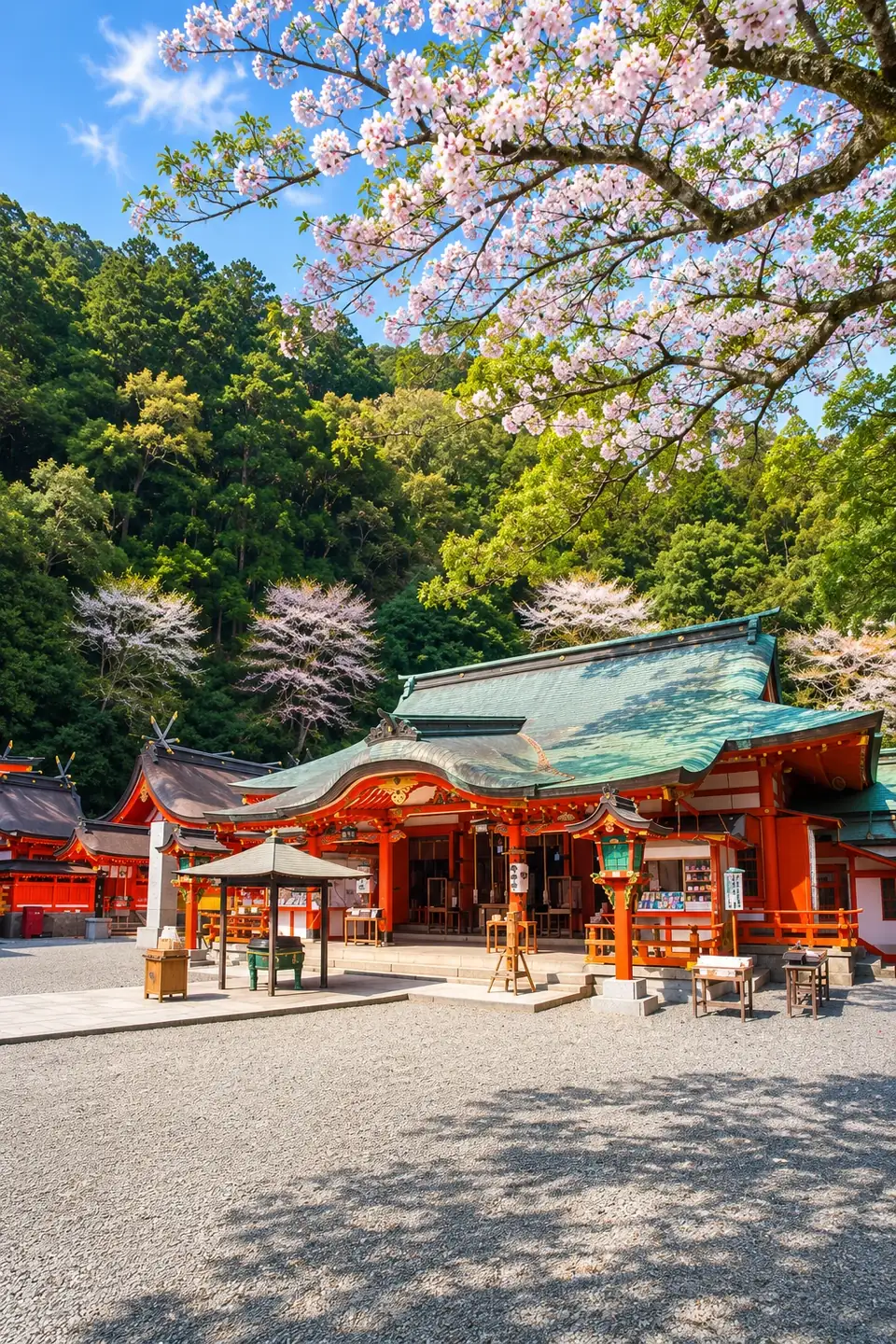
Kumano Nachi Taisha Shrine
One of the Kumano Sanzan shrines alongside Kumano Hayatama Taisha and Kumano Hongu Taisha. The main hall, built in the unique Kumano style, houses nationally important cultural treasures including the Kumano Gongen Mandala and various historic documents. The primary deity worshiped is Kumano Fusumi no Okami. On the 15th of each month, a purification ritual takes place where priests bathe Buddha statues with mountain spring water mixed with sacred salt—a tradition continuing for centuries. Kumano Nachi Taisha is renowned in Japan for prayers against "kukai moles," moles or marks appearing on the ear and behind the neck, believed to bring confusion despite a bright future.
Kumano Kodo Daimonzaka
The Kumano Kodo was an ancient pilgrimage route from Kyoto to the three Kumano shrines (Kumano Hongu Taisha, Hayatama Taisha, and Nachi Taisha), preserving an old-world atmosphere still visited by worshippers today.
Daimonzaka, the path to Kumano Hongu Taisha, lies amid lush cedar trees and is the most popular section of the Kumano Kodo. Towering trees line the road, evoking solemnity and sacredness. Moss-covered stone steps, originally laid centuries ago, allow visitors to leisurely experience this authentic mossy path walk.
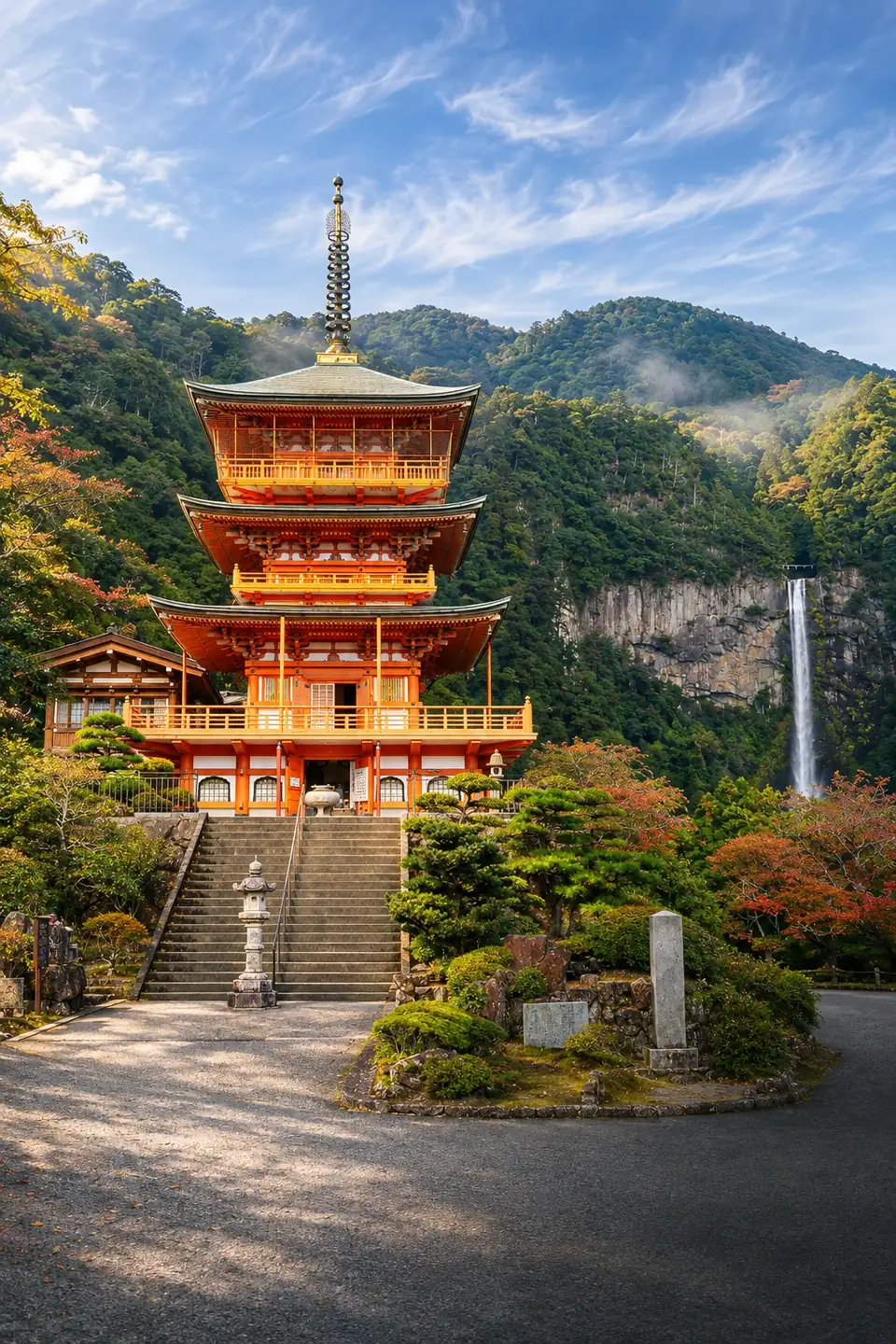
Nachi Falls
Nachi Falls, Japan’s tallest single-drop waterfall at 133 meters, plunges from its evergreen primeval forest source. More than a natural spectacle, it is considered a sacred home of Shinto deities. The thunderous sound of countless water drops offers a spiritual experience to believers and visitors alike. As part of the sacred Kii Mountains pilgrimage and a UNESCO World Heritage site, the waterfall holds deep cultural significance.
 AI-rendered illustration


 AI-rendered illustration