South Korea · 8 DAYS

8-Day Classic Korean Heritage Tour

Busan → South Gyeongsang Province → North Gyeongsang Province → North Chungcheong Province → Gyeonggi Province → Seoul

Explore world heritage sites and experience the charm of traditional Korean culture. Tour renowned cherry blossom spots and enjoy the beauty of nature and romantic atmosphere during cherry blossom season.

8 daysCulture & natureItinerary idea

Request this itinerary

Leave your details, and our travel specialists will get in touch by email or your preferred contact method.

Your specialist will confirm the itinerary, pricing and availability with you.

How we use your information

Your inquiry is sent to info@jasperlimo.com so our team can respond. Please do not include passport or payment details.

JOURNEY HIGHLIGHTS

South Korea, made personal.

8-Day Classic Korean Heritage Tour: Jinhae Cherry Blossoms + Gyeongju Cheomseongdae & Daereungwon + Andong Hahoe Village + Guryongsa Temple + Hwaseong Fortress + Bukchon Hanok Village + Seongsu-dong + Myeongdong Night Market

Day 1 starts in Busan. International airfare is arranged separately.

  • 01Explore world heritage sites and experience the charm of traditional Korean culture.
  • 02Tour renowned cherry blossom spots and enjoy the beauty of nature and romantic atmosphere during cherry blossom season.
  • 03Experience diverse activities such as rail bikes and graffiti shows.

Your journey, day by day

01

Busan

Day 1 starts on arrival in Busan. Your local activities and hotel check-in will be arranged according to actual arrival time; international flights not included. Planned destinations: Gamcheon Culture Village, Songdo Marine Cable Car; timing adjustments depending on arrival. Airport transfers may be arranged separately; inclusion depends on confirmed plan.

AI-rendered illustration

Day 1 starts on arrival in Busan. Your local activities and hotel check-in will be arranged according to actual arrival time; international flights not included. Planned destinations: Gamcheon Culture Village, Songdo Marine Cable Car; timing adjustments depending on arrival. Airport transfers may be arranged separately; inclusion depends on confirmed plan.

Breakfast: at your own expense. Lunch: at your own expense. Dinner: at your own expense.

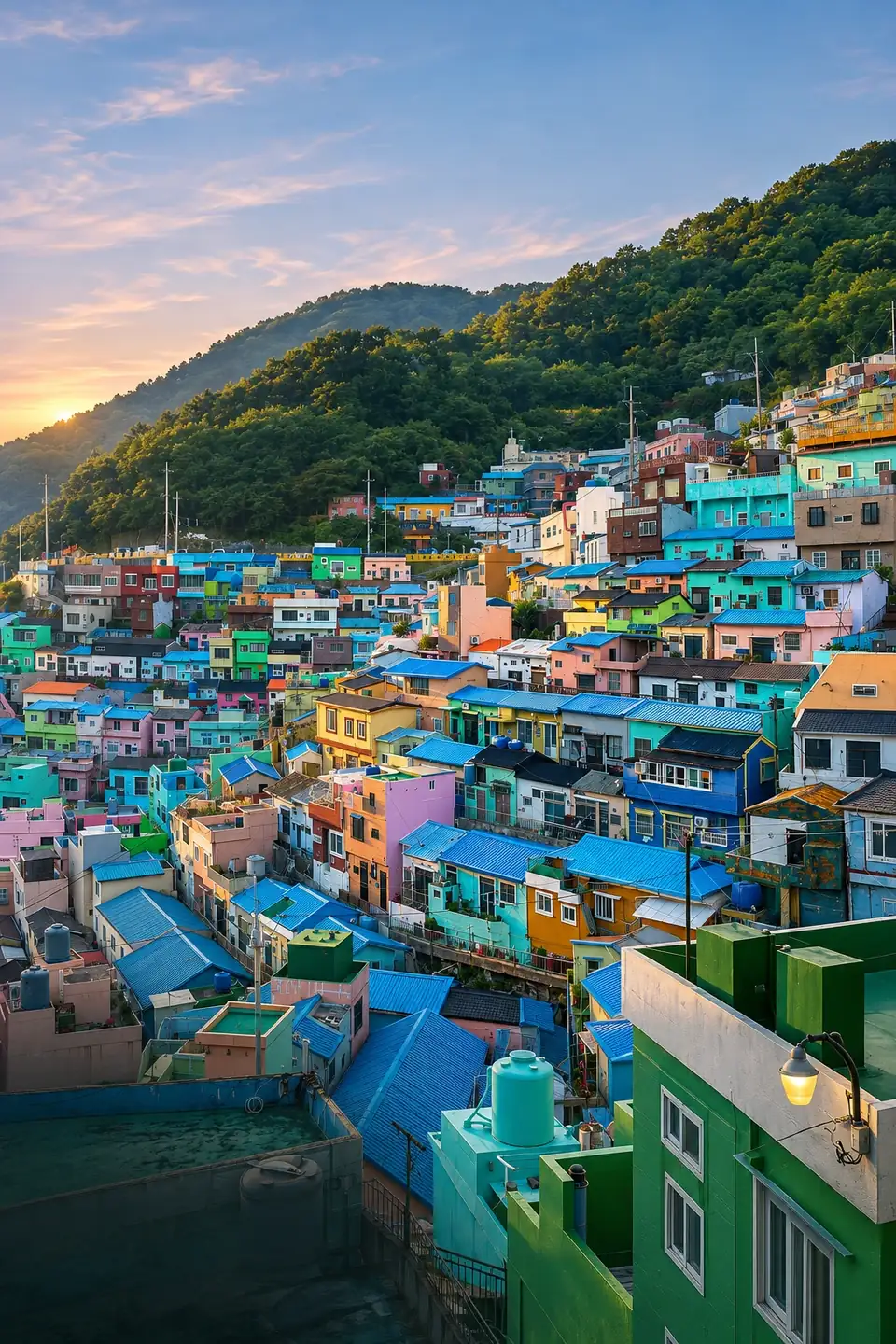
Gamcheon Culture VillageAI-rendered illustration

Gamcheon Culture Village

Known as the "Santorini of Busan," Gamcheon Culture Village was once a rundown slum but transformed through Busan's 'alley art project' into a famous cultural attraction. The village’s tiered layout, reminiscent of exotic hillside settlements, is well preserved with houses unblocked by others. Colorful murals and watercolor paintings created by volunteers worldwide adorn the walls, making it a beloved, artsy spot popular for photos.

Songdo Marine Cable Car

The Songdo Marine Cable Car in Busan spans 1.62 kilometers, connecting Songnim Park on the east side of the beach to Amnam Park on the west. Featuring 39 state-of-the-art crystal cabins with transparent floors, the ride offers breathtaking views of Songdo's scenery. The area also houses Korea's first cable car museum “Songdo Doppelmayr World,” Asia’s first aerial swing “Sky Swing,” theme park photo zones, and other attractions for visitors.

02

Busan → South Gyeongsang Province → Busan

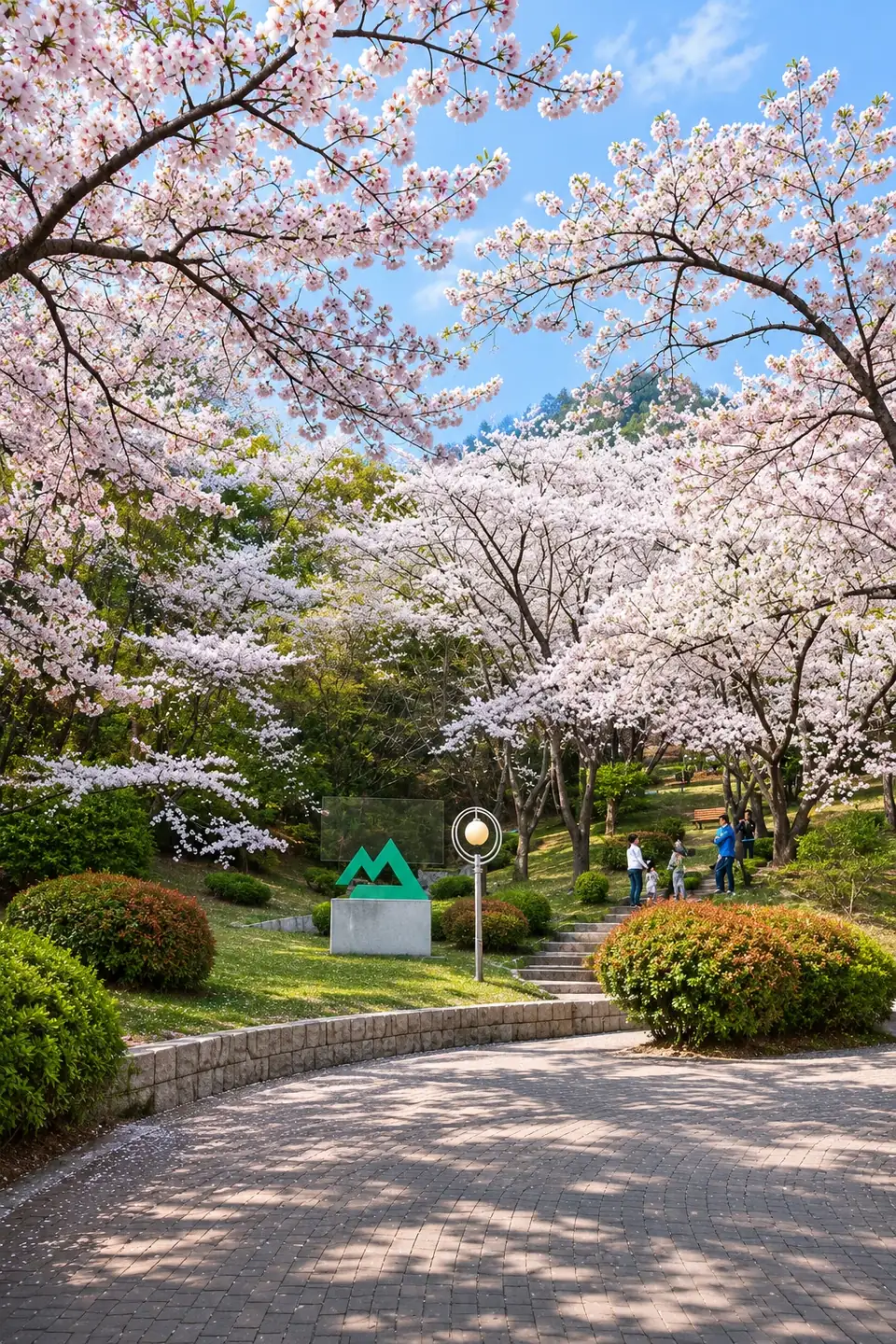
After breakfast at the hotel, depart Busan to South Gyeongsang Province for the Jinhae Cherry Blossom Festival, where you can fully enjoy spring and beautiful cherry blossoms. Next, visit Yeoja Stream, famed for cherry blossoms, offering a dreamy pink landscape walk. Return to Busan to explore the cherry blossom tunnel in Jangboksan Park with vibrant blooms and tranquil nature. Return to the hotel for overnight rest.

AI-rendered illustration

After breakfast at the hotel, depart Busan to South Gyeongsang Province for the Jinhae Cherry Blossom Festival, where you can fully enjoy spring and beautiful cherry blossoms. Next, visit Yeoja Stream, famed for cherry blossoms, offering a dreamy pink landscape walk. Return to Busan to explore the cherry blossom tunnel in Jangboksan Park with vibrant blooms and tranquil nature. Return to the hotel for overnight rest.

Breakfast: at the hotel. Lunch: at your own expense. Dinner: at your own expense.

Yeoja Stream (Famous Cherry Blossom Spot)

Yeoja Stream, known as a tourist attraction in Jinhae, became famous as the “Romance Bridge” after the two leads of the MBC drama "Romance" (Kwon Yoo and Chae Won) met for the first time there following the naval festival. When the show aired, the area quickly became a popular tourist spot. In April, cherry blossoms cover the city center, making it the best spot to admire blossoms in Jinhae. The location often attracts crowds of visitors, creating a vibrant urban spectacle.

Changfushan Park [Cherry Blossom Tunnel]AI-rendered illustration

Changfushan Park [Cherry Blossom Tunnel]

Located at the end of Changfu Road between Masan and Jinhae, this park serves as the gateway to Jinhae. Established in 1979 to restore the natural landscape, the park offers unobstructed views of Jinhae's peaceful sea. Inside the park, there is a 1.5 km trail from the entrance of Jinhae Girls’ High School to the park itself, along with a 1 km trail from the Changfushan rest area to the Kumajin Tunnel. Surrounding the park are temples such as Daeguangsa and Jinheungsa. In spring, the dense pine forests harmonize with the cherry blossoms, creating an otherworldly atmosphere.

03

Busan

After breakfast at the hotel, begin your day with a leisurely stroll along Busan's Cinema Street to soak in the city's rich cultural atmosphere. Next, experience the capsule mini train, traveling through picturesque routes for a unique journey. In the afternoon, head to Cheongsapo, where tranquil sea views and traditional fishing village scenery will refresh your spirit. Then, take a walk along the cherry blossom path on Dongbaek Island, breathing in the scent of spring blossoms. At dusk, ascend the Busan X the Sky observation deck to enjoy panoramic city views and end your wonderful day. Return to the hotel for an evening of rest.

AI-rendered illustration

After breakfast at the hotel, begin your day with a leisurely stroll along Busan's Cinema Street to soak in the city's rich cultural atmosphere. Next, experience the capsule mini train, traveling through picturesque routes for a unique journey. In the afternoon, head to Cheongsapo, where tranquil sea views and traditional fishing village scenery will refresh your spirit. Then, take a walk along the cherry blossom path on Dongbaek Island, breathing in the scent of spring blossoms. At dusk, ascend the Busan X the Sky observation deck to enjoy panoramic city views and end your wonderful day. Return to the hotel for an evening of rest.

Breakfast: at the hotel. Lunch: at your own expense. Dinner: at your own expense.
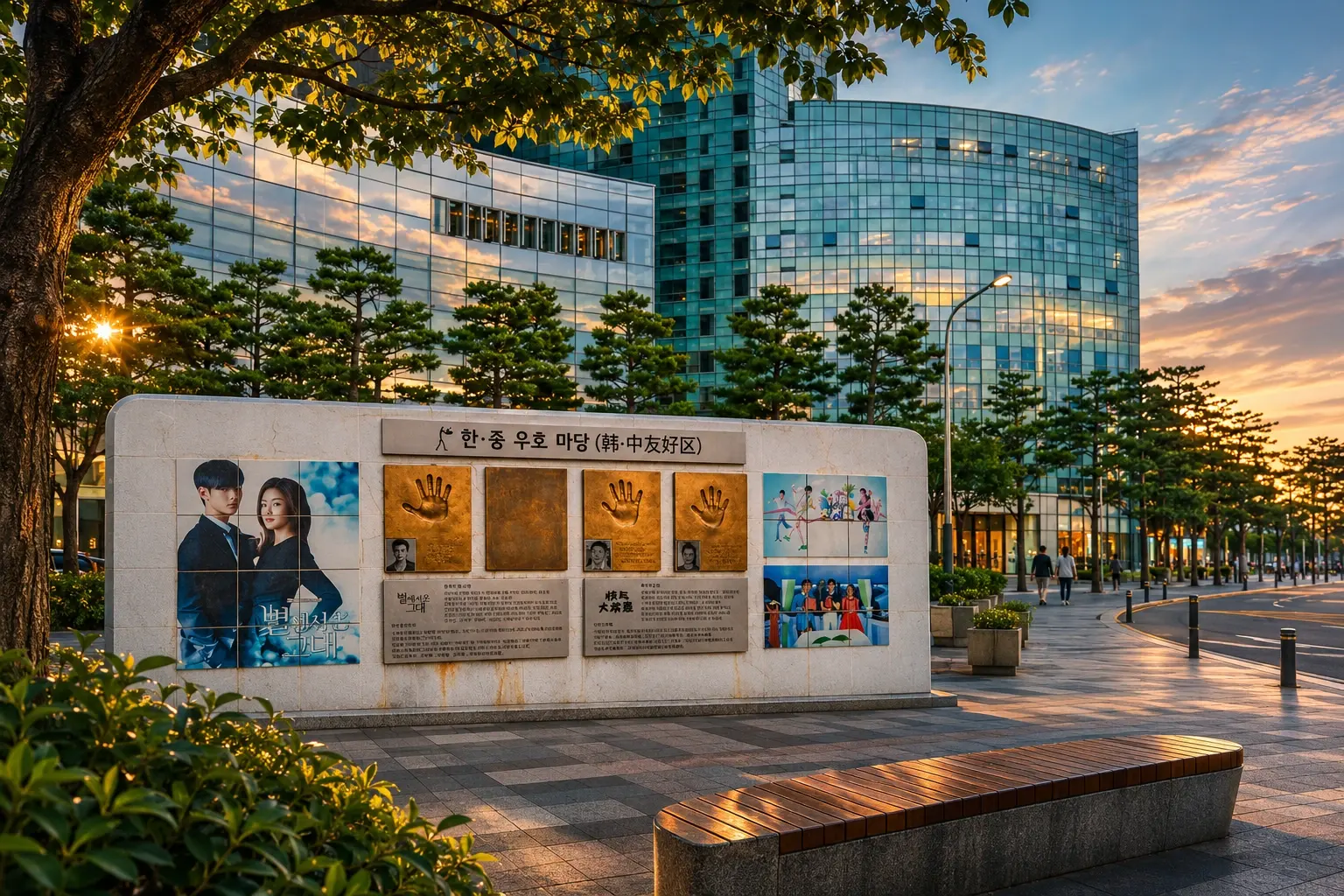
Busan Cinema StreetAI-rendered illustration

Busan Cinema Street

A must-visit for fans of Korean films and culture. Located beside Haeundae Beach with view of Gwangan Bridge, the street displays major Korean movie posters and statues, allowing visitors to take a nostalgic walk. The Haeundae Film Festival area highlights include zones for popular films, animation, and Busan Haeundae filming locations. On clear days, you can enjoy both the blue sea and, by night, Gwangan Bridge’s sparkling lights.

Busan Cheongsapo

Cheongsapo is known for kelp and sunrise views. The coastline is popular for sea fishing, attracting many anglers, especially during autumn when mackerel season peaks. Restaurants and sashimi shops along the port serve freshly caught seafood, a special highlight of the area.

Dongbaek Island Cherry Blossom Path

Thirty miles of cherry blossoms — pause to look up as the wind scatters petals like rain. At that moment, your heart fills with the romantic atmosphere swirling in the air; even your breath tastes sweet...

Busan X the Sky

Busan X the SKY is the country’s second tallest landmark building and Korea’s largest observation deck, offering panoramic views of Busan’s coastal and city skyline. Each floor provides outlooks of famous sights such as Haeundae city nightscape, Gwangan Bridge, Busan Port Bridge, Igidae, Yeongwolsan, and Dongbaek Island. The facility also includes 'X the Lounge' for visitors to rest, 'X the Photo' for photo opportunities with sea views, and 'X the Gift' souvenir shops.
04

Busan → North Gyeongsang Province

After breakfast, depart for North Gyeongsang Province to embark on a journey full of history and cultural charm. First, visit the majestic Bulguksa Temple in Gyeongju, a UNESCO World Heritage site known for its exquisite architecture and tranquil ambiance that will leave you captivated. Next, explore the nearby Seokguram Grotto, a must-see location preserving precious cultural heritage and showcasing ancient craftsmanship. In the afternoon, stroll through the Gyeongju Daereungwon Tomb Complex to absorb the unique allure of this ancient royal burial site. Finish the day at Cheomseongdae Observatory at sunset; this ancient astronomical observatory symbolizes the wisdom of the past while observing the passage of time. Overnight at a comfortable local hotel.

After breakfast, depart for North Gyeongsang Province to embark on a journey full of history and cultural charm. First, visit the majestic Bulguksa Temple in Gyeongju, a UNESCO World Heritage site known for its exquisite architecture and tranquil ambiance that will leave you captivated. Next, explore the nearby Seokguram Grotto, a must-see location preserving precious cultural heritage and showcasing ancient craftsmanship. In the afternoon, stroll through the Gyeongju Daereungwon Tomb Complex to absorb the unique allure of this ancient royal burial site. Finish the day at Cheomseongdae Observatory at sunset; this ancient astronomical observatory symbolizes the wisdom of the past while observing the passage of time. Overnight at a comfortable local hotel.

Breakfast: at the hotel. Lunch: at your own expense. Dinner: at your own expense.

Gyeongju Bulguksa Temple (UNESCO World Heritage Site)

Bulguksa Temple and Seokguram Grotto are nestled on the slopes of Mount Tohamsan, core centers of Silla Buddhism's flourishing culture. Bulguksa was built 1440 years ago by King Beopheung of Silla to ensure national stability and peace for the people. The temple was renovated under Prime Minister Kim Dae-seong during King Gyeongdeok’s reign. Most buildings were destroyed during the Imjin War; only parts remained until restoration efforts returned it to its current grandeur. Following a 3 km ridge walk from Bulguksa, visitors reach the famous Seokguram Grotto housing the largest East-facing Buddha statue. Bulguksa and Seokguram, along with Haeinsa Temple’s Tripitaka Koreana and Jongmyo Shrine, were inscribed as World Cultural Heritage sites on December 6, 1995, gaining great global renown.

Gyeongju Seokguram Grotto (UNESCO World Heritage Site)

Gyeongju Seokguram Grotto (UNESCO World Heritage Site)

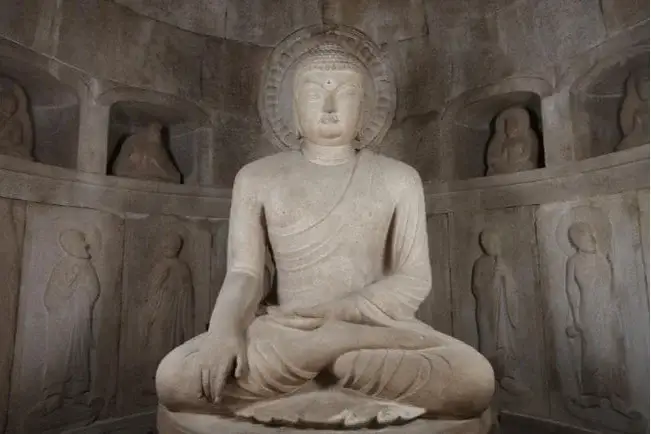
Seokguram Grotto, designated as Korea's National Treasure No. 24, was built in the 10th year of King Gyeongdeok of the Silla Dynasty under the supervision of Prime Minister Kim Daeseong. It lies 3 km along a mountain path from Bulguksa Temple and then 9 km along a road. The grotto consists of 34 sculpted Buddha statues carved into rocks of various shapes including square, round, straight, curved, flat, and spherical surfaces. Each statue is considered a masterpiece blending philosophy and science. At the center, the main Buddha statue carved from white granite faces the East Sea. Seokguram was designated a UNESCO World Cultural Heritage site in 1995. The main chamber is circular housing the principal Buddha along with bodhisattvas and disciples. The grotto’s roof is semi-crescent or bow-shaped, topped with a lotus-patterned disc. The site is famous for beautiful sunrises, attracting many visitors who come early in the morning.

Gyeongju Daereungwon Tomb Complex

Daereungwon area mainly consists of ancient burial mounds from the Silla era located in Gyeongju, North Gyeongsang Province, designated as a historic site on July 28, 2011. The Silla-era tomb clusters in Gyeongju were previously designated separately as Route-Dong-ri, Route-Seo-ri, Hwangnam-ri, Hwangwo-ri, and Inwang-ri tomb groups. On July 28, 2011, the Cultural Heritage Administration consolidated these adjacent tomb clusters located in the central Gyeongju plain into a single historic site for their historical significance.

Gyeongju Cheomseongdae Observatory

Cheomseongdae Observatory is believed to have been built during the reign of Queen Seondeok, the 27th ruler of Silla. It is one of Gyeongju’s iconic landmarks. The base features a bottle-shaped cylindrical body topped with a 'well'-shaped structure, standing about 9 meters tall. The cylinder is built with 27 layers of fan-shaped stones. Centered on a southeast-facing window, the lower half is filled with rubble while the upper part up to the top is hollow. The top 'well' shaped stone structure interlocks, with ends of long stones extending outside. Similar structures at levels 19–20 and 25–26 likely supported an internal ladder. According to ancient records, visitors could enter from the middle, presumably climbing an external ladder through the window and ascending inside for astronomical observations. Each stone block carries symbolic meaning: the round upper and square lower shape represents heaven and earth; approximately 365 stones symbolize the days of the year; the 27 layers represent Queen Seondeok, the 27th king; and the 'well'-shaped top brings the total to 29–30 layers, representing lunar month days. The upper and lower 12 layers on either side of the window represent 12 months and 24 solar terms of the year, respectively. Cheomseongdae was used for astronomical calculations, agricultural scheduling, and national divination.

05

North Gyeongsang Province → North Chungcheong Province

After breakfast, drive to Andong Hahoe Village in North Gyeongsang Province, a UNESCO World Cultural Heritage site known for its well-preserved traditional hanok houses and unique folk culture. Next, travel to Chungcheongbuk-do Province to visit Dotam Sampung, where you can enjoy stunning natural scenery and peaceful lakes. Then, visit Guryongsa Temple, an ancient Buddhist temple surrounded by lush mountains—perfect for relaxation and meditation. Overnight stay at a comfortable local hotel.

AI-rendered illustration

After breakfast, drive to Andong Hahoe Village in North Gyeongsang Province, a UNESCO World Cultural Heritage site known for its well-preserved traditional hanok houses and unique folk culture. Next, travel to Chungcheongbuk-do Province to visit Dotam Sampung, where you can enjoy stunning natural scenery and peaceful lakes. Then, visit Guryongsa Temple, an ancient Buddhist temple surrounded by lush mountains—perfect for relaxation and meditation. Overnight stay at a comfortable local hotel.

Breakfast: at the hotel. Lunch: at your own expense. Dinner: at your own expense.

Andong Hahoe Village (UNESCO World Cultural Heritage Site)

Hahoe Village was the residence of the Pungsan Ryu clan and offers a deep experience of traditional Korean culture. It was the birthplace of famous Joseon-era scholars Ryu Un-ryong and Ryu Seong-ryong. On April 21, 1999, Queen Elizabeth II of the United Kingdom visited, enhancing its international fame. The village's name 'Hahoe' refers to the S-shaped loop formed by the flowing Nakdong River that surrounds the village. To the east lies the Baeksan mountain ridge extending to the village, creating low hills. Houses are built facing downhill with various orientations according to terrain, so no two houses face the same direction—a unique feature of Hahoe Village. At the village center stands a well-preserved large stone-tiled house of the Ryu clan surrounded by thatched houses. In front of the village flows the gentle Nakdong River, with elegant Burungdae, wide white sandy beaches, and dense ancient pine forests offering scenic beauty. Boats can be crossed at the waterway in front. Representative foods include Andong soju, ceremonial meals, and Andong-style soup rice. Notable sites include Bongjeongsa Temple from the Silla period, Guraejeong Pavilion, Gosan Seowon Academy, Natural Recreation Forest on Gyeongmyeongsan, Crane Pavilion, and Wolong Mountain. In July 2010, Hahoe Village and Gyeongju Yangdong were designated as Korean historic villages and UNESCO World Heritage sites, attracting many visitors annually. The Andong International Mask Dance Festival is held every autumn.

Dotam Sampung

These are three stone peaks rising over the Namhan River, named General Peak, Wife Peak, and Concubine Peak. The largest, General Peak, hosts Samdojeong Pavilion, a favorite spot of ancestors for leisure. Nearby, the Dotam Sampung tourist area offers a story museum, yellow sailboats, passenger boat terminals, and rest areas—a great place to enjoy nature and recreation.

Guryongsa TempleAI-rendered illustration

Guryongsa Temple

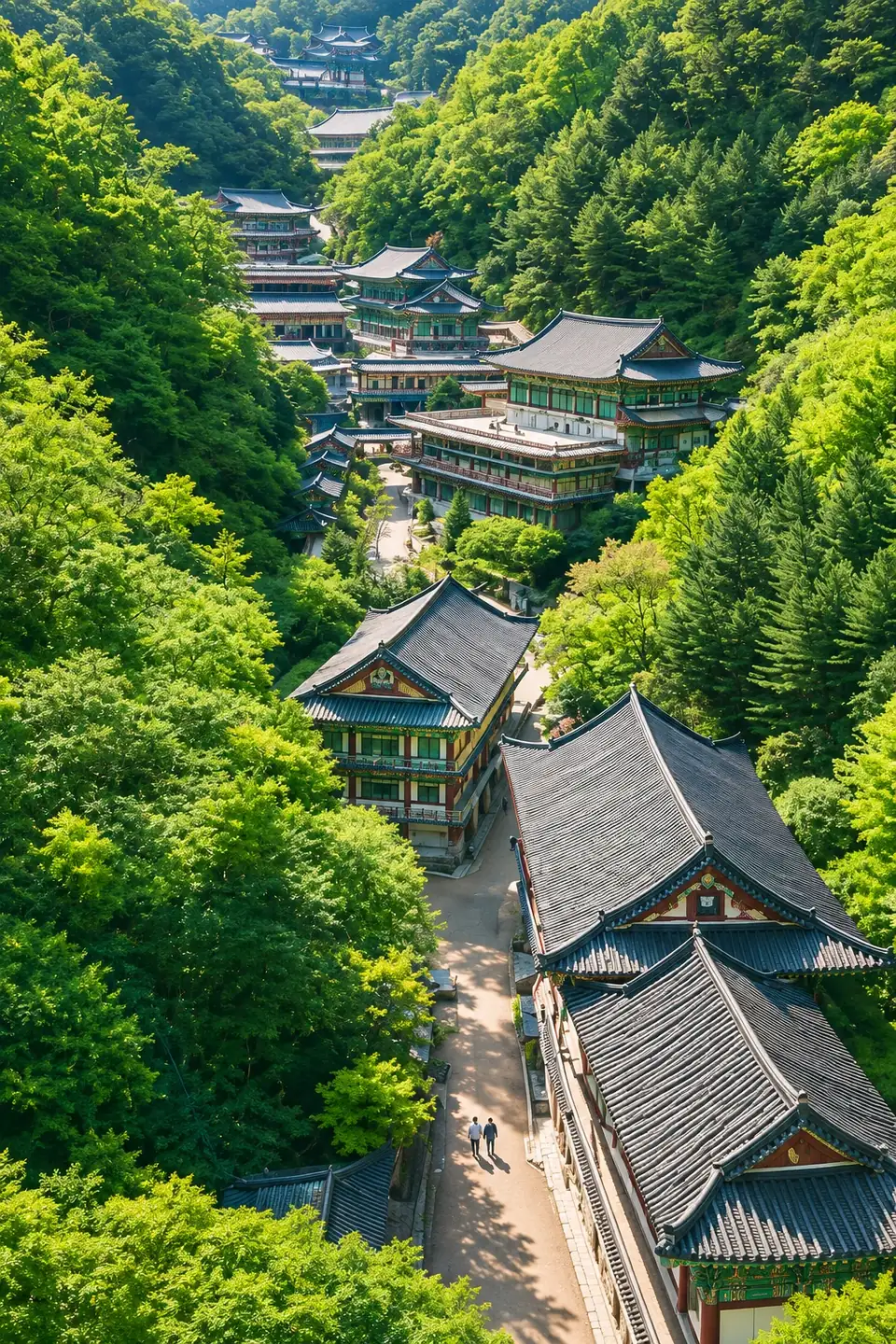
Founded in 1945, Guryongsa sits on Mt. Sobaek and serves as the head temple of the Korean Buddhist Cheontae Order overseeing over 140 temples nationwide. Highlights include the Great Dharma Hall and the stone monument engraved with the teachings of the monk Seongwol Eungyeok. The temple offers overnight temple stay programs for one or two days where visitors can experience Korean Buddhist history and culture, immersing themselves in the natural surroundings of Mt. Sobaek for spiritual growth.

06

North Chungcheong Province → Gyeonggi Province → Seoul

After breakfast, visit the historic Suwon Hwaseong Fortress in Gyeonggi Province to appreciate the charm of Korea’s ancient city walls. Then, stop by the Starry Sky Library (Suwon branch) for a tranquil reading experience. Next, enjoy a rail bike ride on the Uiwang track, taking in scenic views while relaxing. Finally, arrive in bustling Seoul for a vibrant graffiti show performance to cap off your trip. Overnight at a comfortable hotel.

AI-rendered illustration

After breakfast, visit the historic Suwon Hwaseong Fortress in Gyeonggi Province to appreciate the charm of Korea’s ancient city walls. Then, stop by the Starry Sky Library (Suwon branch) for a tranquil reading experience. Next, enjoy a rail bike ride on the Uiwang track, taking in scenic views while relaxing. Finally, arrive in bustling Seoul for a vibrant graffiti show performance to cap off your trip. Overnight at a comfortable hotel.

Breakfast: at the hotel. Lunch: at your own expense. Dinner: at your own expense.

Hwaseong Fortress, Suwon

Hwaseong Fortress in Gyeonggi Province’s Suwon is a Joseon-era fortress built by King Jeongjo of Joseon to honor his father by relocating his tomb and defending the new city. The fortress walls extend 5.74 km in length and stand 4 to 6 meters high. The fortress incorporates advanced equipment and materials, showcasing East-West technological exchange. Hwaseong Fortress is a World Cultural Heritage site with stunning traditional scenery. Each spring, various cherry blossoms bloom harmoniously with the ancient architecture, creating an enchanting time-travel atmosphere.

Starry Sky Library (Suwon Branch)AI-rendered illustration

Starry Sky Library (Suwon Branch)

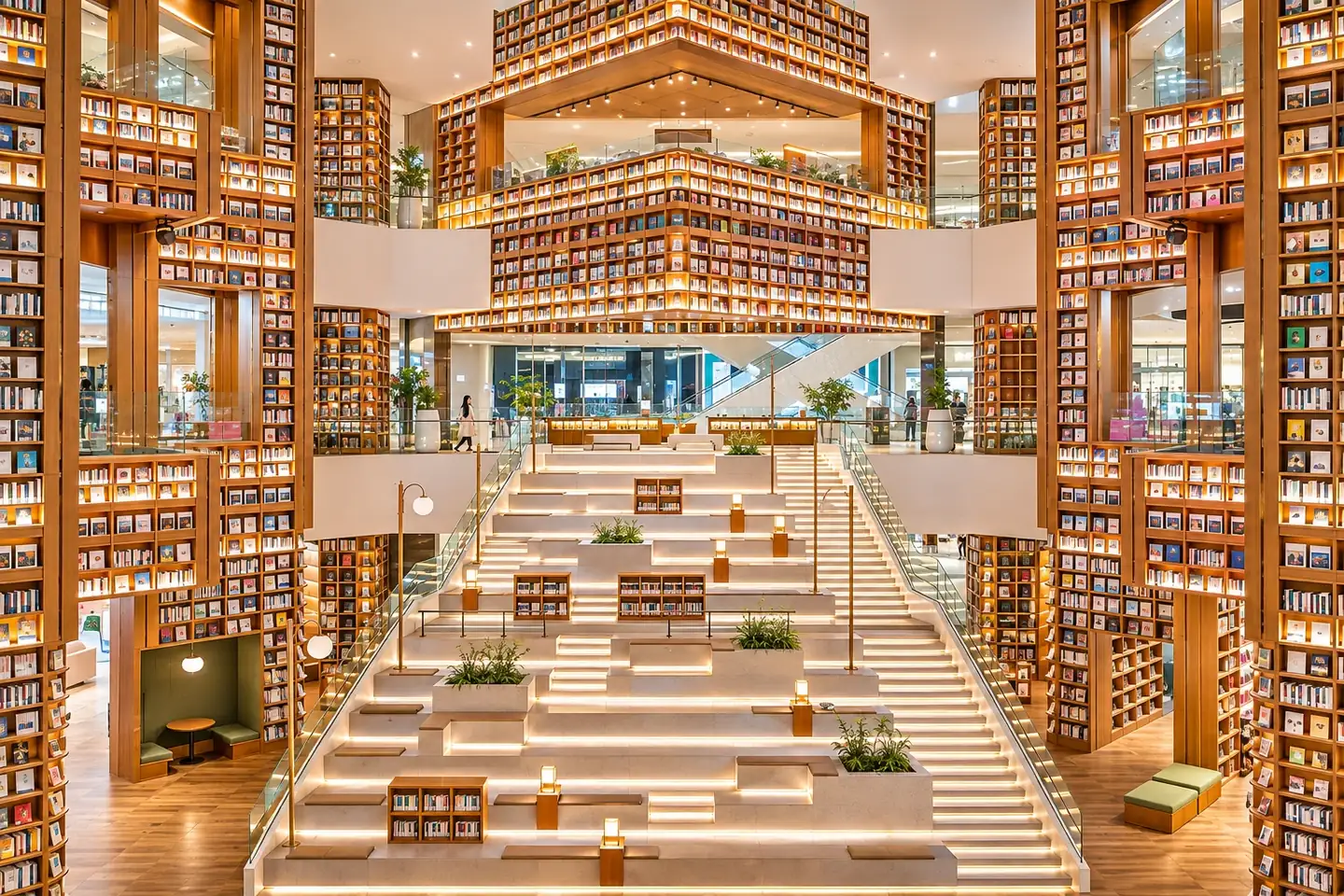
The Suwon Starry Sky Library spans floors 4 to 7 with a design that wraps around the building. If time permits, exploring the library from different angles and floors is recommended to capture every corner of this unique space.

07

Seoul

After breakfast, explore the artistic atmosphere and creative spaces of Seongsu-dong. Then, walk through Seoul Forest during cherry blossom season to feel the breath of spring. In the afternoon, ascend Namsan Park, enjoying beautiful nature along the way, and visit N Seoul Tower to overlook the city—don’t forget to capture lasting memories. As night falls, Myeongdong Night Market offers a lively spot to savor authentic Korean snacks and experience vibrant nightlife. Return to the hotel for rest.

AI-rendered illustration

After breakfast, explore the artistic atmosphere and creative spaces of Seongsu-dong. Then, walk through Seoul Forest during cherry blossom season to feel the breath of spring. In the afternoon, ascend Namsan Park, enjoying beautiful nature along the way, and visit N Seoul Tower to overlook the city—don’t forget to capture lasting memories. As night falls, Myeongdong Night Market offers a lively spot to savor authentic Korean snacks and experience vibrant nightlife. Return to the hotel for rest.

Breakfast: at the hotel. Lunch: at your own expense. Dinner: at your own expense.

Seongsu-dong

In the 1990s, Seongsu-dong was an area full of shoemaking factories and small workshops. As mechanical manufacturing replaced manual labor and handicrafts declined, many factories became abandoned. In recent years, young artists and designers converted these old buildings into cafés and cultural spaces with a unique nostalgic atmosphere. Popular Korean brands, designer fashion, accessories, fragrances, cosmetics, and large multi-brand stores such as Olive Young, Human Made, ADER ERROR, and The Museum Visitor have shops in Seongsu-dong.

Seoul Forest (Cherry Blossom Season)

Before opening on June 18, 2005, Ttukseom Island was used as an imperial hunting and inspection ground, earliest water source in Korea, golf course, horse racing track, and sports park. The current Seoul Forest covers 180,000 pyeong with five themed parks, serving as a major leisure space for northeast residents and 11 million Seoul citizens. It compares with London's Hyde Park and New York's Central Park as a harmonious space blending humans and nature. * Seoul Forest Plaza: Located at the center, it includes the plaza, Ttukseom Family Yard, flower beds, visitor center, ice rink, outdoor stage, waterside lounge (restaurant), forest clearing, forest playground, and water play area.

Namsan Park

Namsan stands 265 meters high in central Seoul and is a city symbol. Though not tall, it offers beautiful panoramic views from the summit and is a favored resting place for residents. At the top are an octagonal pavilion, Seoul Tower, an ocean aquarium, and a fountain; halfway up is Namsan Library. A cable car makes access easy, but stairs are also available for walking to the summit. Trails connect Namsan with Namdaemun, Hoehyeon-dong, Toegye-ro 3-ga, Jangchung Park, Itaewon, and Huam-dong neighborhoods, making walking an option. Driving routes to the summit are popular for scenic rides.

N Seoul Tower

N Seoul Tower is located on Namsan Mountain in Yongsan-gu, Seoul, South Korea. Formerly known as Seoul Tower or Hanyang Tower, it stands 236.7 meters tall and was built in 1975. It is a famous sightseeing spot in Korea. Every night from 7 pm to midnight, six spotlights create a floral pattern in the sky known as "Flower of Seoul."

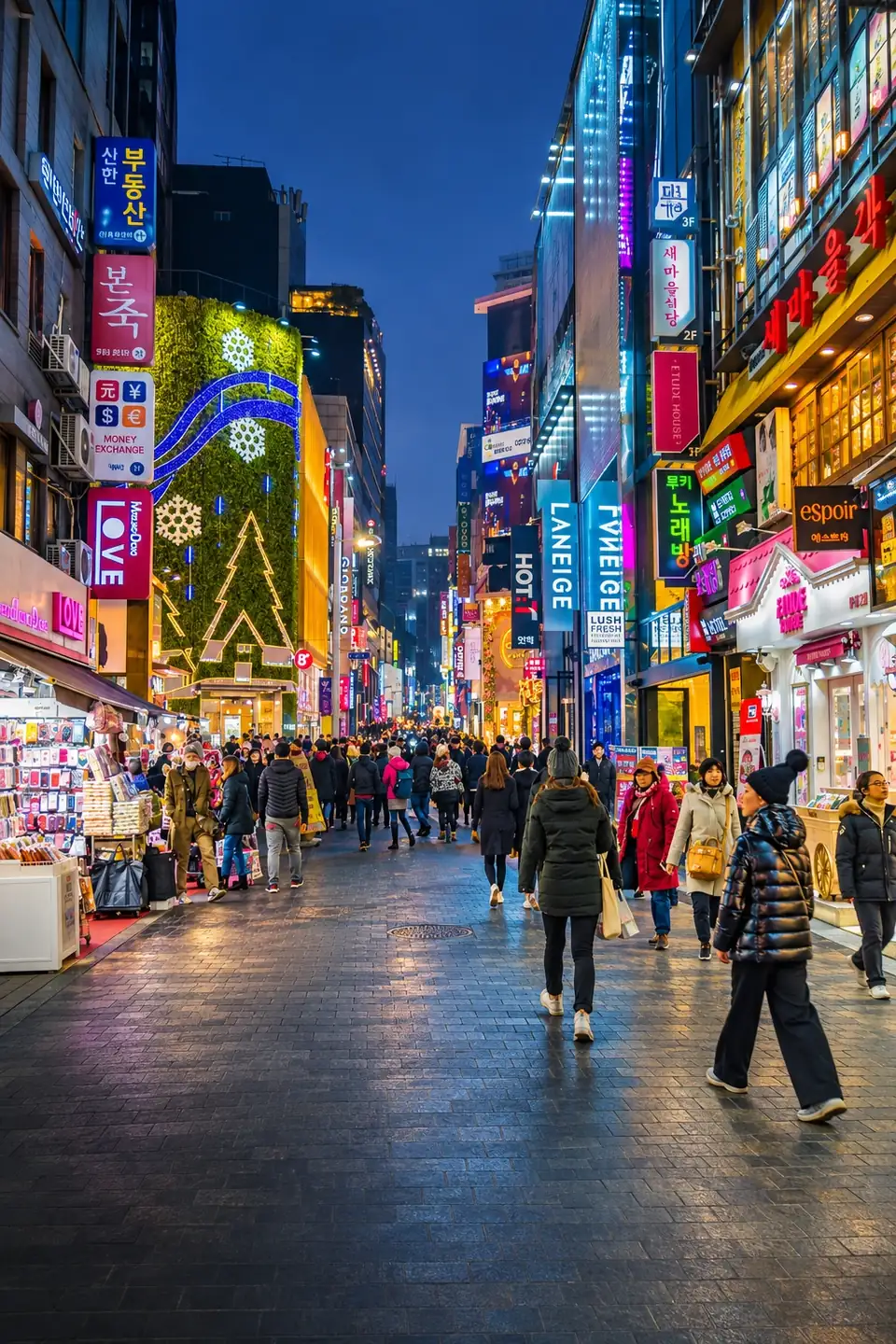
Myeongdong Night MarketAI-rendered illustration

Myeongdong Night Market

Every nightfall, the neon lights dazzle brightly, the air is filled with enticing aromas of delicious food, and laughter and chatter echo around. This lively scene is just as vibrant as in days past. Whether you once missed out or want to relive fond memories, be sure to visit and fully experience the unique charm of the revived Myeongdong street food stalls.

08

Seoul

Today’s planned sites: Gyeongbokgung Palace, Bukchon Hanok Village. The itinerary ends locally in Seoul. Airport transfers can be arranged according to actual flight schedules. International return flights and departure dates are not included in this itinerary.

AI-rendered illustration

Today’s planned sites: Gyeongbokgung Palace, Bukchon Hanok Village. The itinerary ends locally in Seoul. Airport transfers can be arranged according to actual flight schedules. International return flights and departure dates are not included in this itinerary.

Breakfast: at the hotel. Lunch: at your own expense. Dinner: at your own expense.

Gyeongbokgung Palace

Gyeongbokgung Palace was the first palace built in the early Joseon Dynasty, with a history of over 600 years. It is the largest among the Five Grand Palaces, featuring unique architectural styles in buildings such as Geunjeongjeon Hall and Gyeonghoeru Pavilion. Additionally, it houses the National Palace Museum of Korea and the National Folk Museum, providing a rich visiting experience. Every day on the hour from 10 AM to 4 PM at the main gate, Gwanghwamun, there's a guard changing ceremony reenacting the palace gatekeepers' duties during the Joseon era, allowing visitors to witness the orderly traditional royal guard rituals.

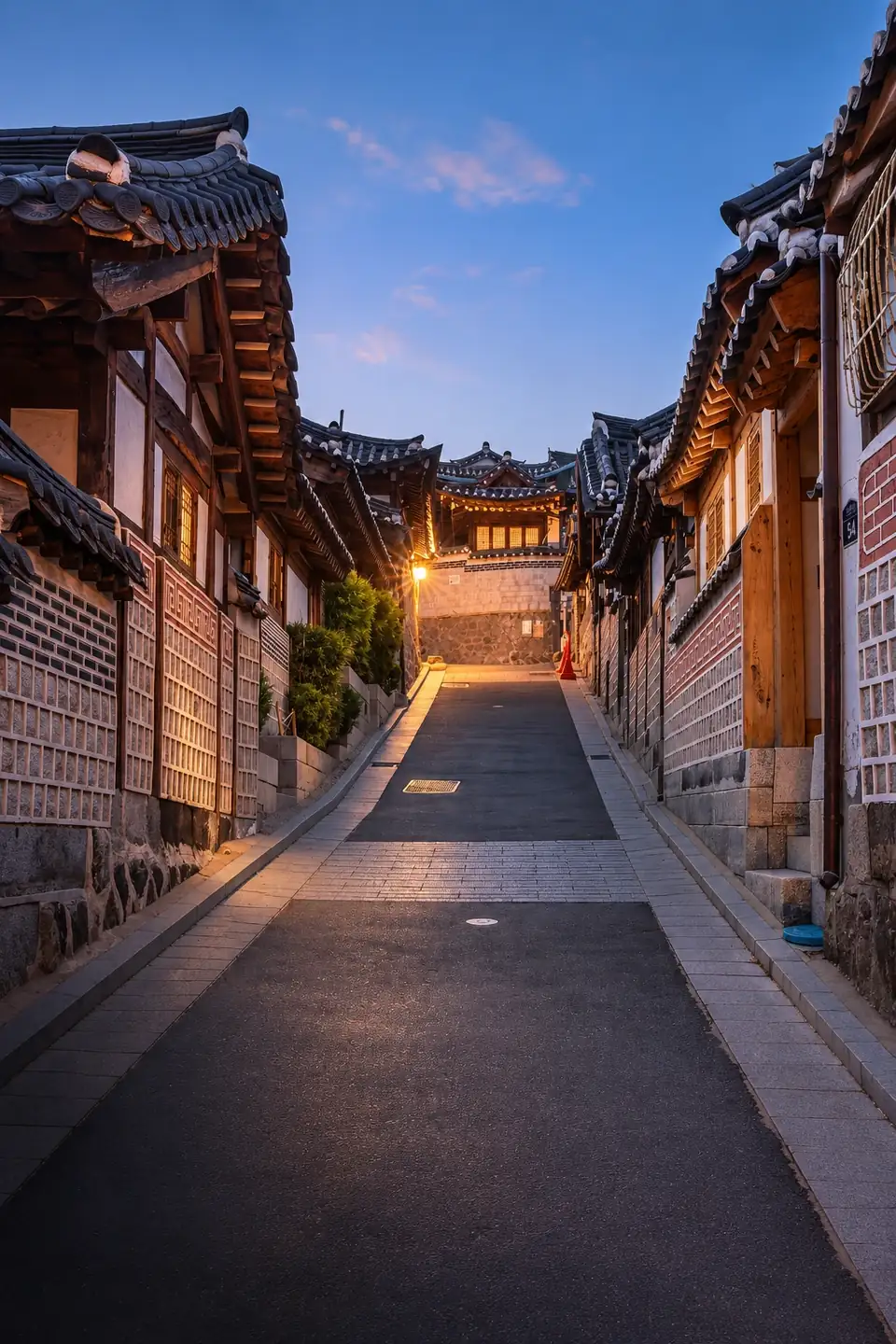
Bukchon Hanok VillageAI-rendered illustration

Bukchon Hanok Village

Bukchon Hanok Village is the best place in Seoul to experience traditional Korean houses with an authentic feel, as residents still live here. Visitors should keep noise to a minimum out of respect. It’s an excellent spot for photography and remembrance. Don’t forget your camera and look for the "Bukchon Eight Views"; helpful photo point signs on the ground guide visitors thoughtfully.

YOUR ROUTE

Know the shape of your journey.

Starts in
Busan
Ends in
Seoul
Local itinerary
8 days

A proposal shaped around you

Use this route as a starting point. Tell us your dates, pace and accommodation preferences.

Your quote will specify accommodation, guiding, transport, activities, meals and any optional arrangements before you book. International flights and airport transfers are discussed separately.

TRAVEL IN COMFORT

The right vehicle for your group.

Toyota Alphard

Up to 6 passengers

Toyota HiAce

Up to 9 passengers

Our main touring vehicles. We recommend a vehicle based on your group size and luggage. Maximum seating capacity does not guarantee room for all bags when every seat is occupied. Vehicle availability is confirmed for your destination.

More to discover

Jinhae Cherry Blossom Festival

The large-scale Jinhae Gunhang Festival is held annually from late March to early April during cherry blossom season in the naval city of Jinhae. The entire city, especially around Jungwon Rotary, is covered by blooming cherry blossoms. The festival features a variety of performances, cultural and music activities, and interactive experiences, delivering lively celebration and joy to visitors. Highlights include well-coordinated military art performances.

Capsule Mini Train

Ride the sky capsule train running on tracks 7 to 10 meters above ground, offering scenic coastal views and a colorful mini train experience. The sunset views at dusk are especially unmissable.

Gyeongju Bulguksa Temple (UNESCO World Heritage Site)

Bulguksa Temple and Seokguram Grotto are nestled on the slopes of Mount Tohamsan, core centers of Silla Buddhism's flourishing culture. Bulguksa was built 1440 years ago by King Beopheung of Silla to ensure national stability and peace for the people. The temple was renovated under Prime Minister Kim Dae-seong during King Gyeongdeok’s reign. Most buildings were destroyed during the Imjin War; only parts remained until restoration efforts returned it to its current grandeur. Following a 3 km ridge walk from Bulguksa, visitors reach the famous Seokguram Grotto housing the largest East-facing Buddha statue. Bulguksa and Seokguram, along with Haeinsa Temple’s Tripitaka Koreana and Jongmyo Shrine, were inscribed as World Cultural Heritage sites on December 6, 1995, gaining great global renown.

Gyeongju Seokguram Grotto (UNESCO World Heritage Site)

Seokguram Grotto, Korea’s National Treasure No. 24, was built under Prime Minister Kim Dae-seong during King Gyeongdeok’s 10th year. It is located 3 km from Bulguksa by mountain path, followed by 9 km by road. The grotto features 34 rock-carved Buddhist statues in diverse shapes—square, round, linear, curved, flat, and spherical—each a masterpiece blending philosophy and science. At the center, a white granite seated Buddha statue looks towards the East Sea. Recognized as a UNESCO World Heritage site in 1995, the grotto’s main chamber is circular and houses the principal Buddha with surrounding bodhisattvas and disciples. The seated Buddha on a lotus throne has gentle posture and kind expression. The roof is crescent or bow-shaped with lotus patterns on the disc. The grotto is renowned for beautiful sunrises with many visitors coming early to witness it.

Andong Hahoe Village (UNESCO World Cultural Heritage Site)

Hahoe Village was the residence of the Pungsan Ryu clan and embodies traditional Korean beauty. It is the birthplace of famous Joseon Confucian scholars Ryu Un-ryong and Ryu Seong-ryong. Visited by Queen Elizabeth II in 1999, it gained further prominence. Named after the S-shaped Lo-dong River that flows around the village, Hahoe is surrounded on the east by the Baekunsan Mountains’ foothills. Houses are built facing the lowlands, resulting in no uniform orientation, with each dwelling facing different cardinal directions—a distinctive feature. The village center houses well-preserved large stone-tiled Hanok of the Ryu family surrounded by thatched houses. Scenic views include the flowing Lo-dong River, the elegant Furyangdae Pavilion, wide white sandbanks, and ancient pine forests. A ferry crosses a water channel in front. Local specialties include Andong Soju, ritual rice, and Andong Tangbap (soup with rice). Notable sites include Bongjeongsa Temple, Gworaejeong Pavilion, Gosan Seowon Academy, and natural reserves. Designated a World Cultural Heritage site along with Gyeongju Yangdong Village in July 2010, it draws many tourists. The annual Andong International Mask Dance Festival is held here each autumn.

Guryongsa Temple

Founded in 1945, Guryongsa sits on Mt. Sobaek and serves as the head temple of the Korean Buddhist Cheontae Order overseeing over 140 temples nationwide. Highlights include the Great Dharma Hall and the stone monument engraved with the teachings of the monk Seongwol Eungyeok. The temple offers overnight temple stay programs for one or two days where visitors can experience Korean Buddhist history and culture, immersing themselves in the natural surroundings of Mt. Sobaek for spiritual growth.

Hwaseong Fortress, Suwon

Hwaseong Fortress in Suwon, Gyeonggi Province, is a Joseon-era fortress built by King Jeongjo of Joseon to honor his father by moving his tomb while constructing a new city and to guard against enemies. The fortress walls span 5.74 km, standing 4 to 6 meters tall. Its construction utilized new advanced technologies and materials, showcasing East-West technological exchange. Hwaseong Fortress is a UNESCO World Cultural Heritage site with an impressively preserved ancient atmosphere. In spring, cherry blossoms bloom extensively within the fortress, perfectly blending with the historical architecture and creating a captivating time-travel sensation.

Uiwang Rail Bike

The Uiwang Rail Bike is a 4.3 km circuit around Wangsong Lake, passing through wetlands and a cherry blossom tunnel. Along the route, passengers can bird-watch and photograph ecological scenery. It is a popular choice near Seoul for family outings and light hiking.

Before you go

This journey starts at the destination. Seasonal experiences, service inclusions and availability are confirmed with your personalized proposal.

Original source & photography · 6renyou ↗

Image credits and illustrations

BEFORE YOU PLAN

Travel planning, clearly explained.

OpenEast brings together Japan and South Korea itinerary ideas for travelers from North America, with China also part of our destination plans. Start with the local route, then consider flights and airport transfers around it.

When does Day 1 begin?

Day 1 begins at the destination. International departure-only and return flight days are not counted as destination days. Plan your flights around the local itinerary dates.

Are flights and airport transfers included?

International flights and airport transfers are confirmed separately. Do not assume they are included in a suggested itinerary.

Are these confirmed departures?

These routes are itinerary ideas. Dates, hotels, admissions, seasonal activities, prices and availability need confirmation in a personalized proposal before booking.

Can I book or send an inquiry here?

Use the inquiry form to contact our team. A submission confirmation appears only when the email service accepts your request. An inquiry does not reserve a service or take payment.

Explore Japan itineraries → · Explore South Korea itineraries →

1 / 8

Let’s plan your journey.

8-Day Classic Korean Heritage Tour: Jinhae Cherry Blossoms + Gyeongju Cheomseongdae & Daereungwon + Andong Hahoe Village + Guryongsa Temple + Hwaseong Fortress + Bukchon Hanok Village + Seongsu-dong + Myeongdong Night Market

Leave your details, and our travel specialists will get in touch by email or your preferred contact method.

Your specialist will confirm the itinerary, pricing and availability with you.

How we use your information

Your inquiry is sent to info@jasperlimo.com so our team can respond. Please do not include passport or payment details.

Start planning