Begin a memorable journey on Jeju Island. First, stroll along the cherry blossom-lined road at Jeju University, embracing spring and campus life. Then head to Deonnong Road to experience local living. Next, visit Samseonghyeol, a unique natural and historic site on Jeju Island. In the afternoon, explore the Jeju Folk and Natural History Museum to delve into island culture. At sunset, relax with a coffee at Aewol Coffee Street. End a beautiful day on the Changdanri Cherry Blossom Festival Road.
Breakfast: at the hotel. Lunch: at your own expense. Dinner: at your own expense.
Jeju University Cherry Blossom Road
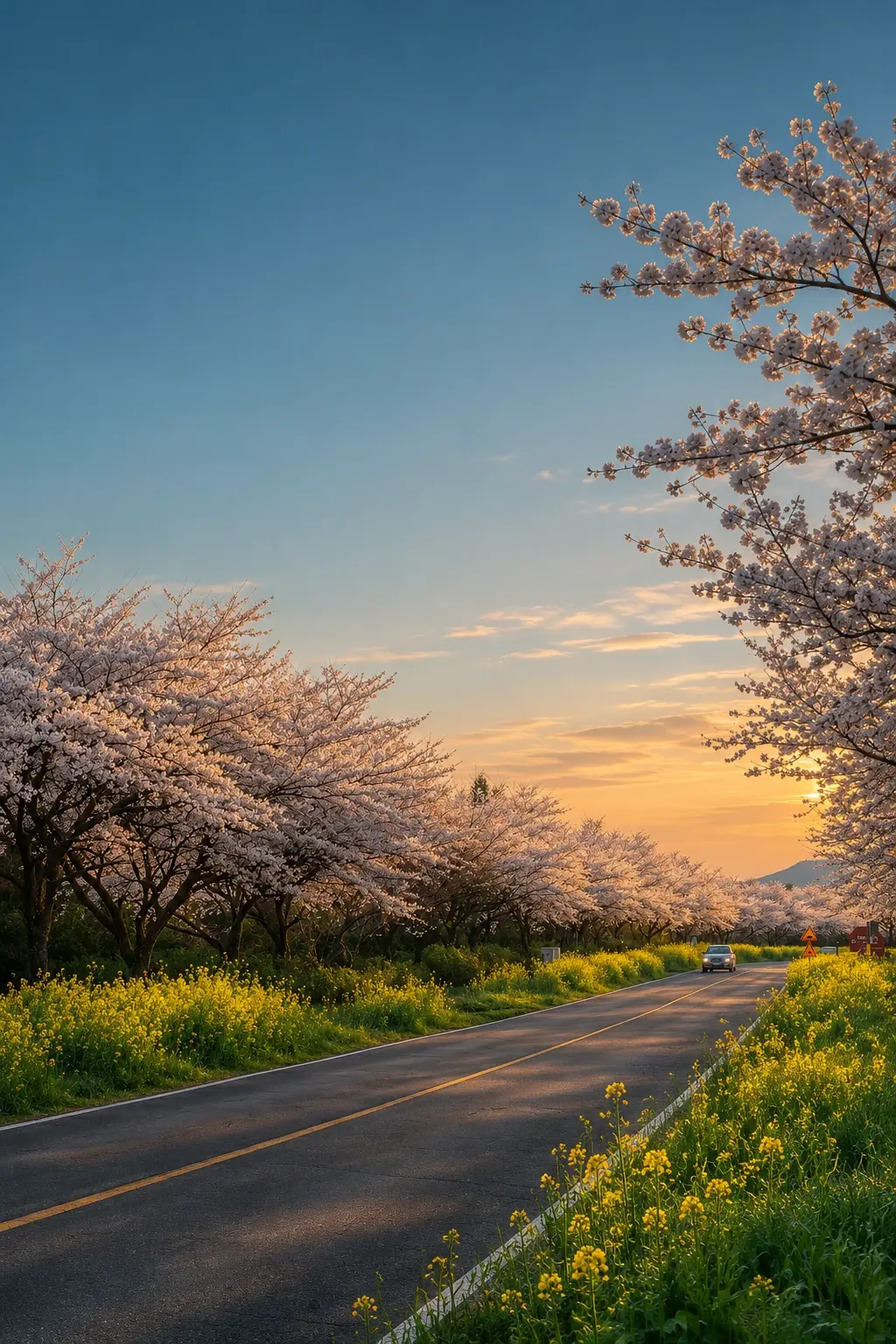
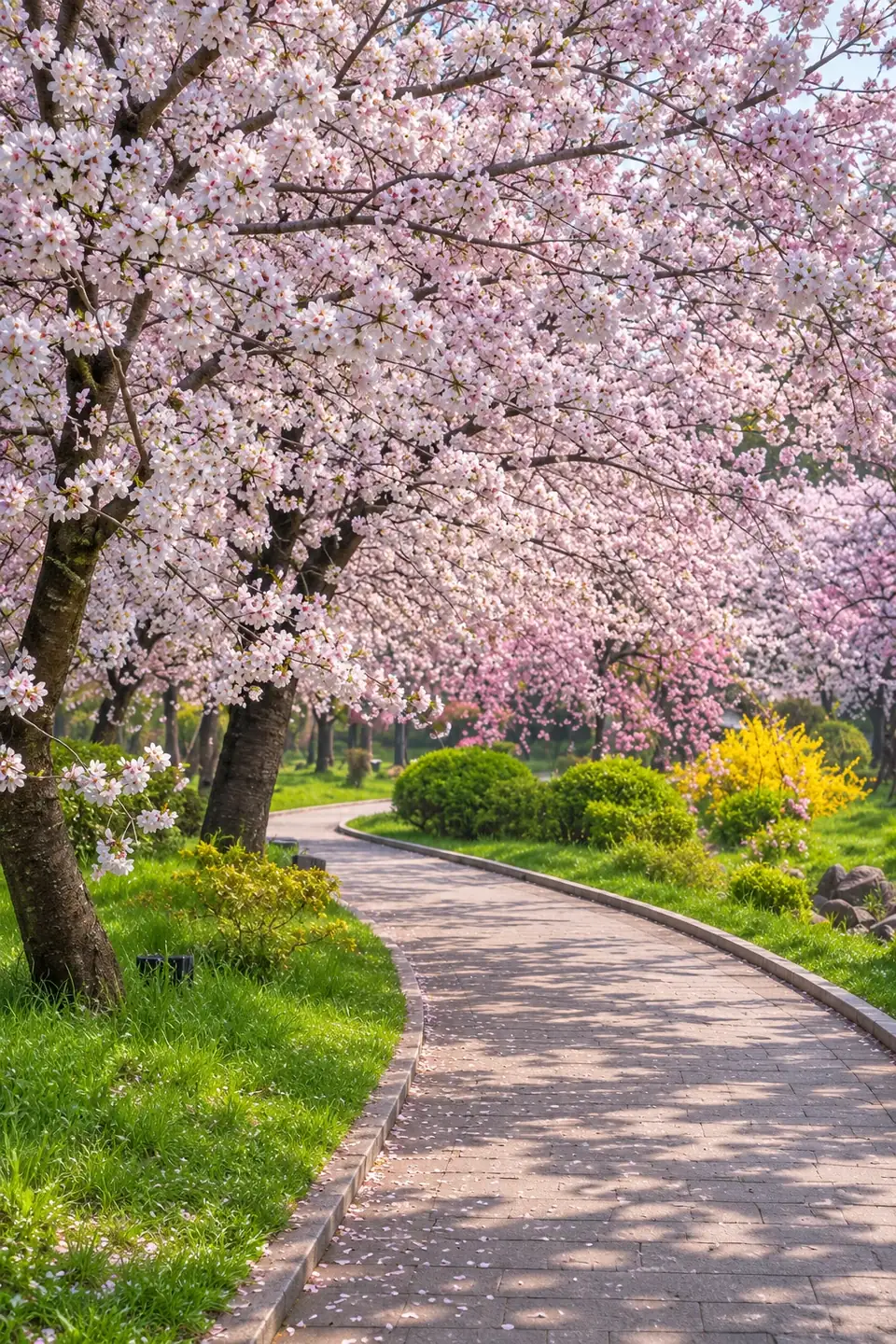
Near the main gate of Jeju University at the foot of the mountain in Jeju City is a famous cherry blossom avenue. This area is at a higher elevation than other places, so even after other spots' cherry blossoms have fallen, blooms can still be seen here. Many cherry trees are also visible within the campus.
Samseonghyeol on Jeju Island
Legend holds that about 4,300 years ago, the three founding ancestors of Jeju Island—the 'Three Gods': Go Eulna, Yang Eulna, and Bu Eulna—were born here and lived by hunting. Later, upon welcoming three princesses from Bilang Kingdom who brought cattle, horses, and seeds, they began farming, leading to the development of Tamna Kingdom. Uniquely, centuries-old trees surrounding three blood-filled pools gesture as if worshipping the pools. Remarkably, despite heavy rain or snow, the area never accumulates water or snow year-round. Since Lee Su-dong erected the first altar and red gates there in 1526, spring and autumn rites have been held continuously. Today, annual major ancestral rites continue this tradition.
Jeju Folk and Natural History Museum
The museum is divided into four exhibition areas: Natural History Hall, Folklore Hall I, Folklore Hall II, and Outdoor Exhibition Area. The Natural History Museum mainly showcases natural history artifacts such as marine life, fossils, rocks, and Jeju's ancient animals and plants through 3D displays. It helps visitors better understand Jeju's unique natural and cultural characteristics. In Folklore Hall I, through 2,381 items, you can see the changes in the lifestyle of Jeju people. Additionally, traditional Jeju architecture, regional specialty foods, and major celebratory ceremonies are reconstructed, giving visitors a more detailed and profound understanding of ancient Jeju life. Folklore Hall II exhibits 100 items including traditional tools of ancient Jeju daily life, materials for ceremonial rituals, and various volcanic rocks.
 AI-rendered illustration
Yae-wol Café Street
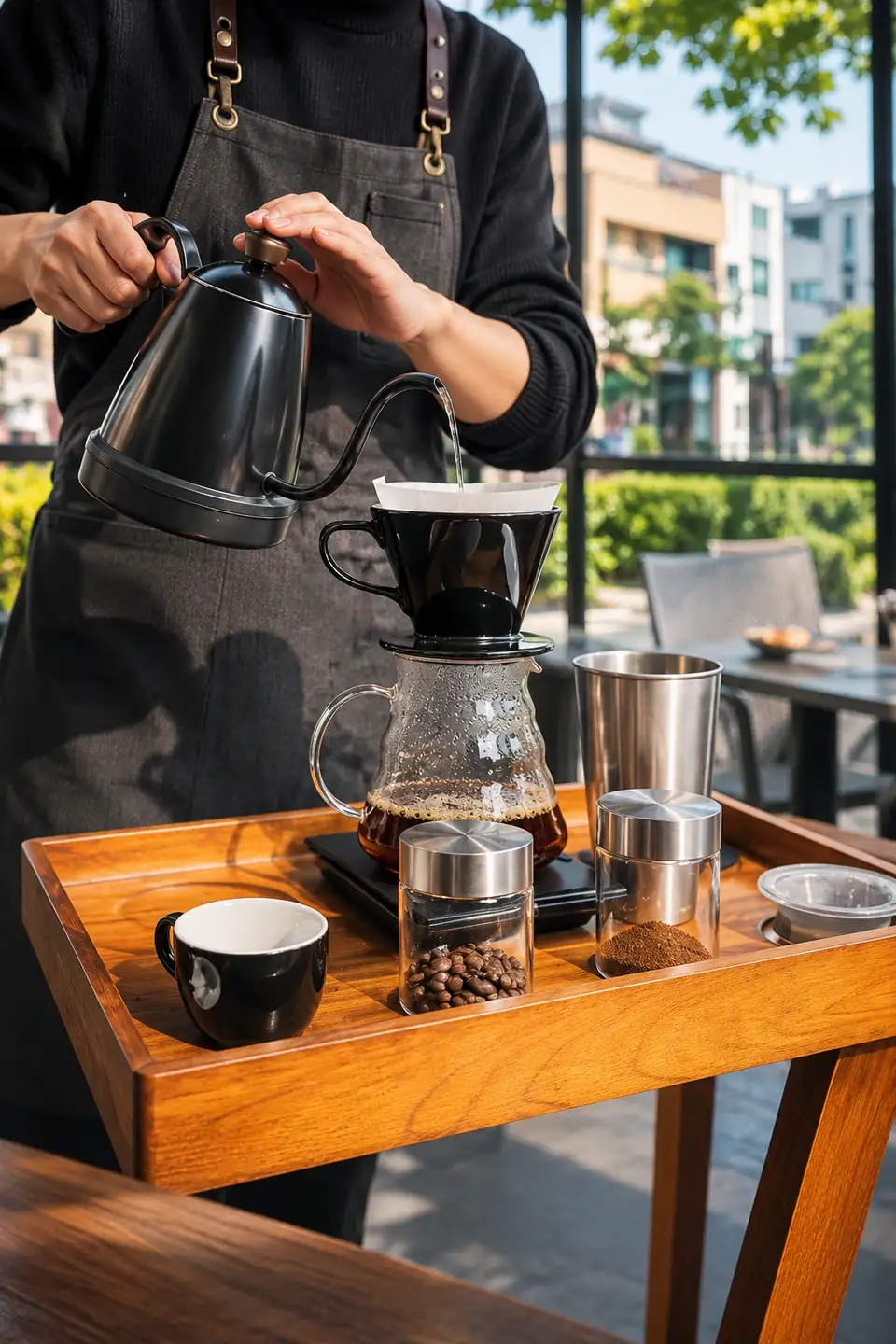
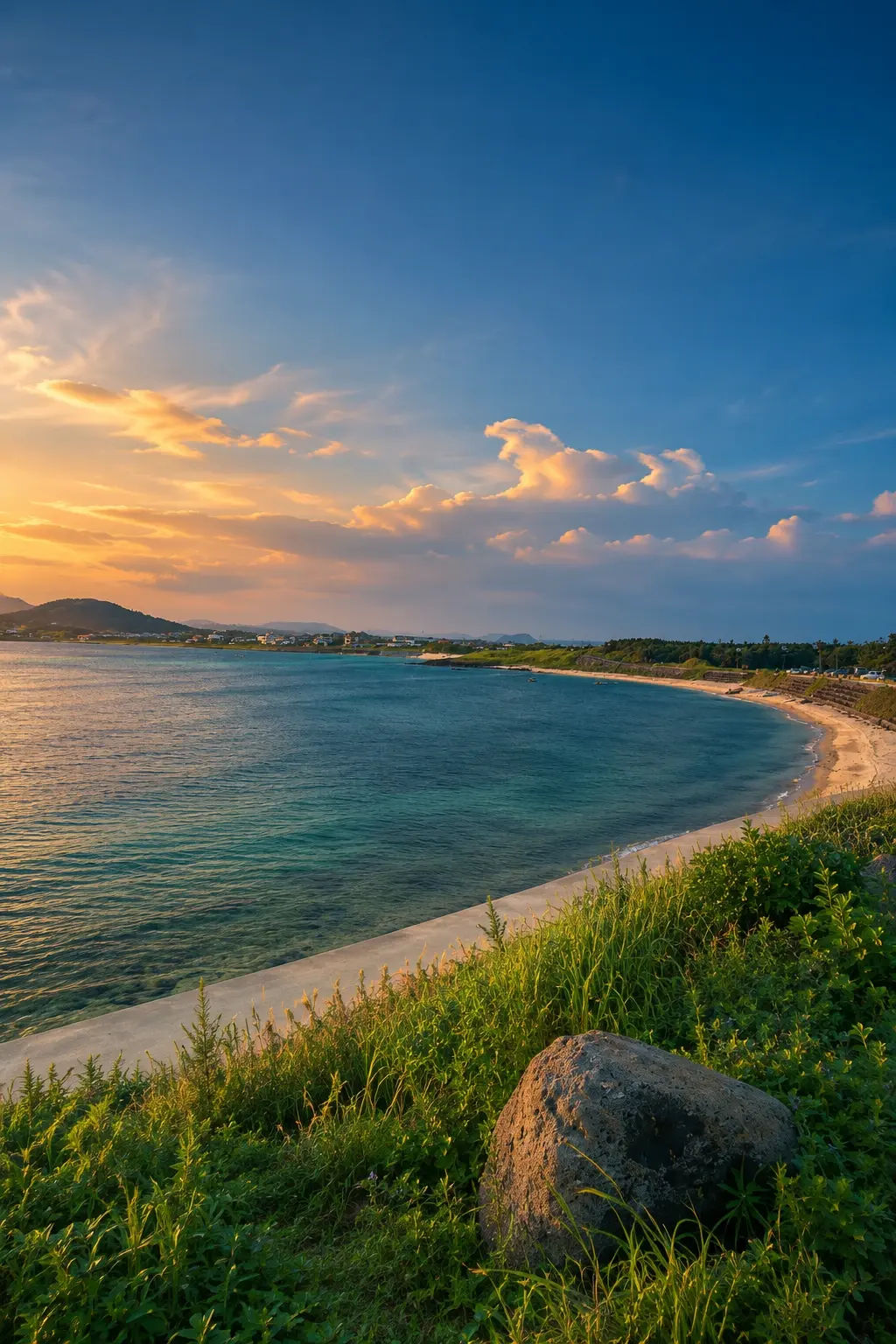
Yae-wol Café Street, located in Yae-wol-eup on Jeju's northwest coast, is a trendy seaside café cluster along a black lava rock coastline, known for its jellyfish sea, sunsets, and stylish cafés—an essential visit on Jeju's west coast. It features a row of Instagrammable Korean-style and vintage cafés with floor-to-ceiling windows facing the blue ocean, black lava beaches, distant Hallasan Mountain, and stunning sunsets. Notable cafés include Monsant Café, designed by GD with a retro ruins theme and a popular photo spot; Bomnal Café, filming location of "Reply 1988," offering 270° sea views through a glass room; and Lazy Pump, featuring seaside piano and panoramic windows with vintage romance.
 AI-rendered illustration
 AI-rendered illustration
 AI-rendered illustration
 AI-rendered illustration

