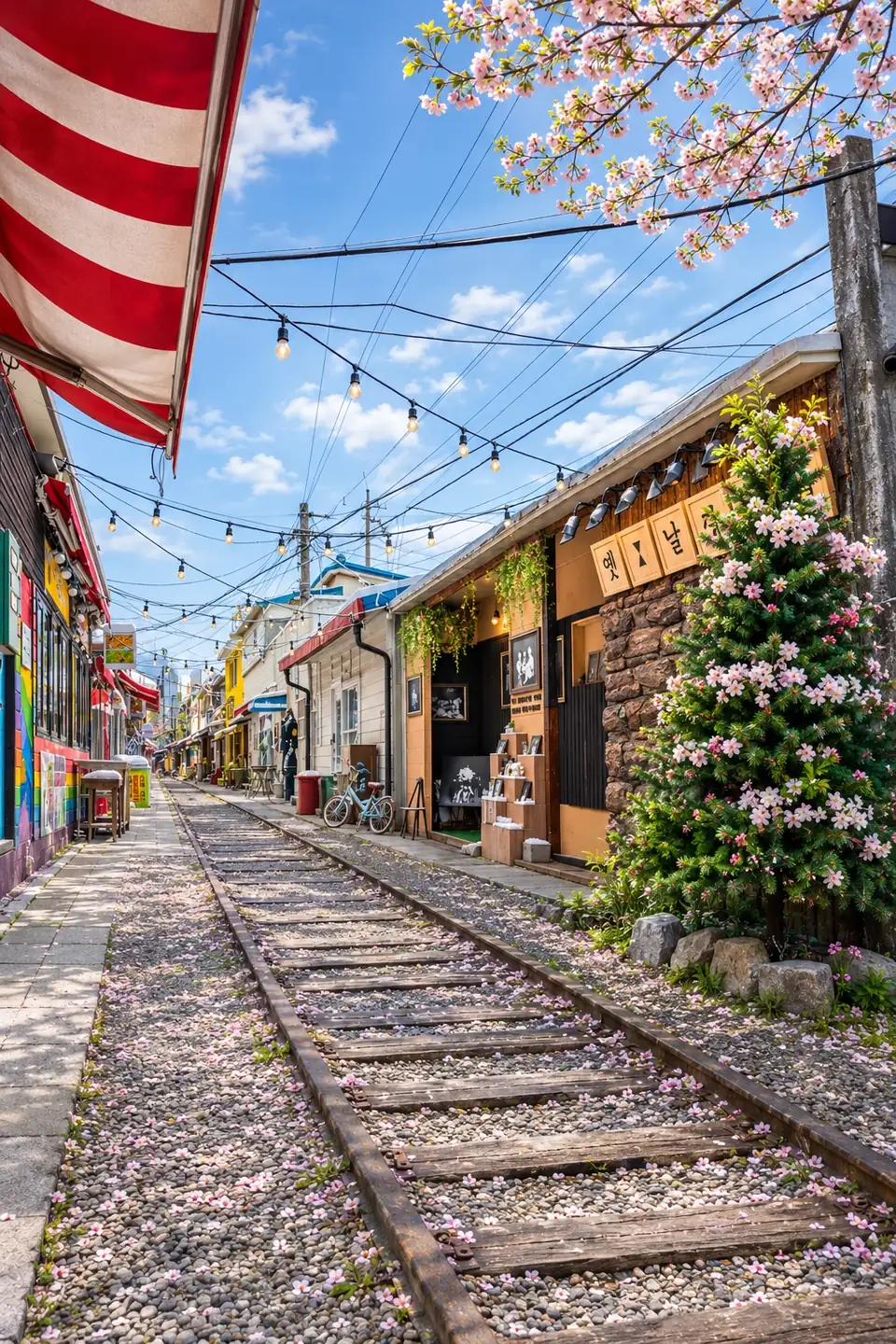
After hotel breakfast, experience the SKYLINE Luge on Ganghwa Island. Then visit Maisan Provincial Park. Maisan Mountain forms the boundary between the Sobaek and Yoryeong Mountain ranges, resembling horse ears with two broad peaks marking the watershed between the Tamjin and Geum Rivers. The eastern peak, Male Maisan, rises 667m, while the western peak, Female Maisan, stands at 673m. Next, visit Suwon Hwaseong, a top cherry blossom viewing spot where dense blooms beautifully complement the fortress walls — a premier location for cherry blossom viewing in Korea. Finally, explore Gyeongam-dong Rail Village, a popular mountain area where colorful murals adorn both sides of the railway tracks, alongside shops selling vintage items and snacks, drawing many visitors.
Breakfast: at your own expense. Lunch: at your own expense. Dinner: at your own expense.
Maisan Provincial Park (Maisan-do Rip Gongwon)
Maisan consists of two main peaks: Inmo Peak (687.4m) and Sangmo Peak (681.1m), along with over ten smaller peaks, forming a rocky mountain named variably by season. Famous for cherry blossoms in spring, cosmos flowers in summer and autumn, and purple silvergrass in fall. The mountain hosts temples including Eunwater Temple, Geumton Temple, and Maisan Pagoda Temple with over 80 stone pagodas.
Hwaseong Fortress, Suwon
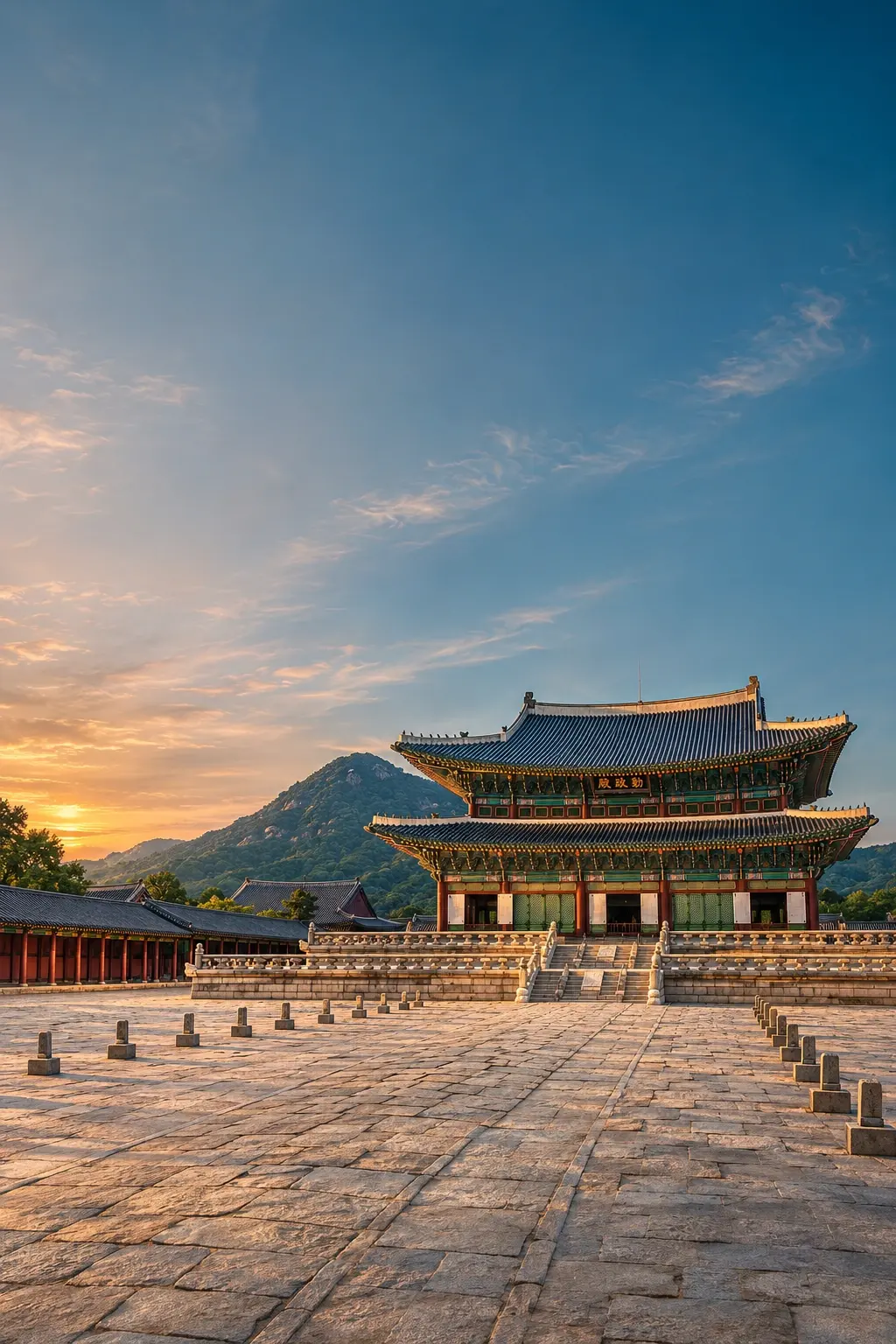
Hwaseong Fortress in Gyeonggi Province’s Suwon is a Joseon-era fortress built by King Jeongjo of Joseon to honor his father by relocating his tomb and defending the new city. The fortress walls extend 5.74 km in length and stand 4 to 6 meters high. The fortress incorporates advanced equipment and materials, showcasing East-West technological exchange. Hwaseong Fortress is a World Cultural Heritage site with stunning traditional scenery. Each spring, various cherry blossoms bloom harmoniously with the ancient architecture, creating an enchanting time-travel atmosphere.
Gyeongam-dong Rail Village (Gyeongamdong Cheolgil Maeul)
Located in Gyeongsangbuk-do Gunsan City's Gyeongam-dong, this rail village is named after the 2.5 km railway completed in 1944 connecting the Paper Korea paper mill and Gunsan Station. The village formed around the railway, adopting its administrative area's name, hence 'Gyeongam-dong Rail Village.'
 AI-rendered illustration
 AI-rendered illustration
 AI-rendered illustration
 AI-rendered illustration

