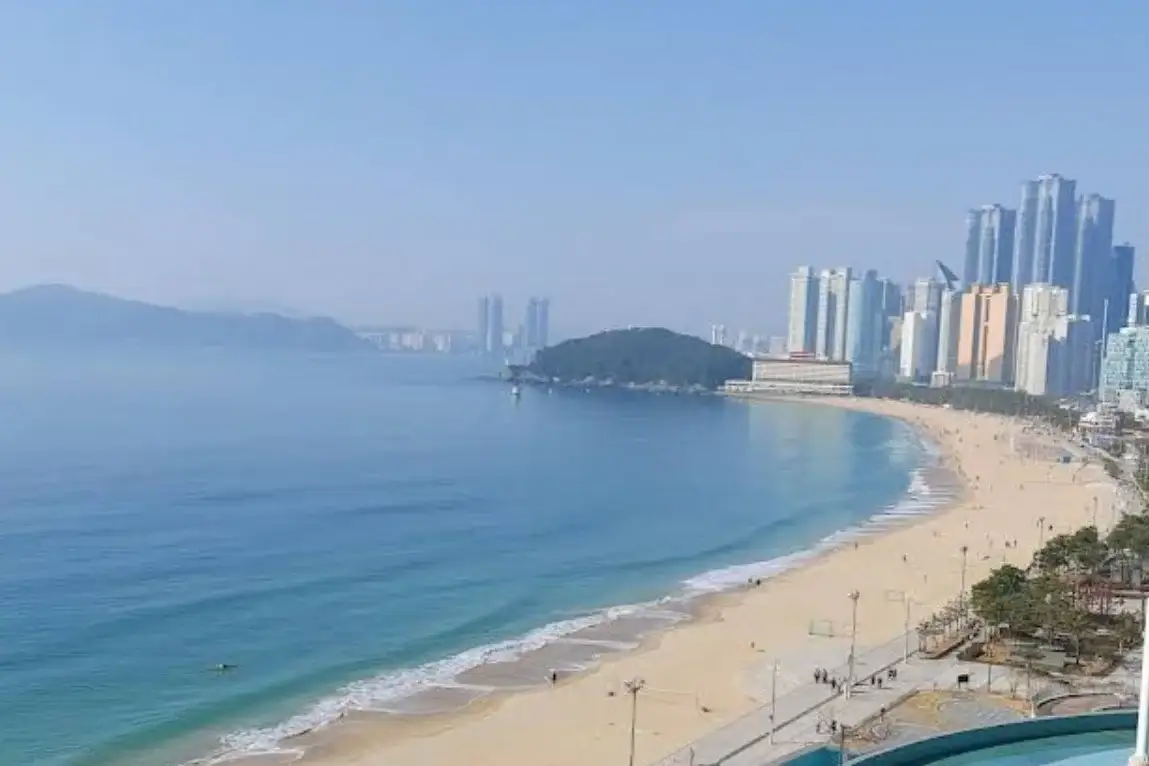
South Korea · 7 DAYS

History & Peace: 7-Day Seoul & Busan Tour

Seoul → Gyeonggi Province → Incheon → Busan

Explore historical sites where past and present cultures meet on the northern and southern borders. Experience the KTX high-speed train from Seoul to Busan, enjoying the east and west coasts of Korea.

7 daysCulture & natureItinerary idea

Request this itinerary

Leave your details, and our travel specialists will get in touch by email or your preferred contact method.

Your specialist will confirm the itinerary, pricing and availability with you.

How we use your information

Your inquiry is sent to info@jasperlimo.com so our team can respond. Please do not include passport or payment details.

JOURNEY HIGHLIGHTS

South Korea, made personal.

History & Peace: 7-Day Seoul and Busan Tour Featuring Paju DMZ, Incheon Freedom Park, War Memorial, and Busan Coastal Relaxation

Day 1 starts in Seoul. International airfare is arranged separately.

  • 01Explore historical sites where past and present cultures meet on the northern and southern borders.
  • 02Experience the KTX high-speed train from Seoul to Busan, enjoying the east and west coasts of Korea.
  • 03Immerse yourself in perfect combinations of natural scenery and urban landscapes.

Your journey, day by day

01

Seoul

Day 1 begins upon arrival in Seoul. Your local activities and hotel check-in will be arranged based on actual arrival time; international flights are not included. Airport transfers can be arranged separately; inclusion depends on final plan confirmation.

AI-rendered illustration

Day 1 begins upon arrival in Seoul. Your local activities and hotel check-in will be arranged based on actual arrival time; international flights are not included. Airport transfers can be arranged separately; inclusion depends on final plan confirmation.

Breakfast: at your own expense. Lunch: at your own expense. Dinner: at your own expense.

02

Seoul → Gyeonggi Province → Seoul

Embark on a DMZ Peace Tour starting from Seoul to Gyeonggi Province. Begin with a visit to Imjingak Park to feel the weight of history, then experience the Peace Cable Car offering aerial views of the border area. Next, explore the Third Tunnel to learn about its tense history. Afterward, visit Dorasan Observatory for views of the border line, feeling the quiet strength of the area. Finally, stroll through Unification Village to experience sentiments of peace and reunification from both sides of the border. This journey offers a spiritual renewal and deep appreciation for peace.

Embark on a DMZ Peace Tour starting from Seoul to Gyeonggi Province. Begin with a visit to Imjingak Park to feel the weight of history, then experience the Peace Cable Car offering aerial views of the border area. Next, explore the Third Tunnel to learn about its tense history. Afterward, visit Dorasan Observatory for views of the border line, feeling the quiet strength of the area. Finally, stroll through Unification Village to experience sentiments of peace and reunification from both sides of the border. This journey offers a spiritual renewal and deep appreciation for peace.

Breakfast: at the hotel. Lunch: at your own expense. Dinner: at your own expense.

Imjingak Pavilion

Imjingak Pavilion, built in 1972 as a security tourism site to pray for Korean Peninsula reunification, is located 7 km south of the Demilitarized Zone. It has 1 basement and 3 floors, housing the North Korea Memorial Hall, Unification Park, and various monuments. Military equipment including tanks and airplanes used during the Korean War are displayed outside.

Third Infiltration Tunnel

Discovered on October 17, 1978, about 52 kilometers from Seoul, the Third Tunnel is believed to have been excavated by North Korea as a secret passage to invade South Korea, based on defector testimonies, blast marks, and direction. It can reportedly accommodate 10,000 soldiers per hour and extends more than 70 meters underground, drilled entirely through hard granite. The tunnel allowed transport of troops and weapons.

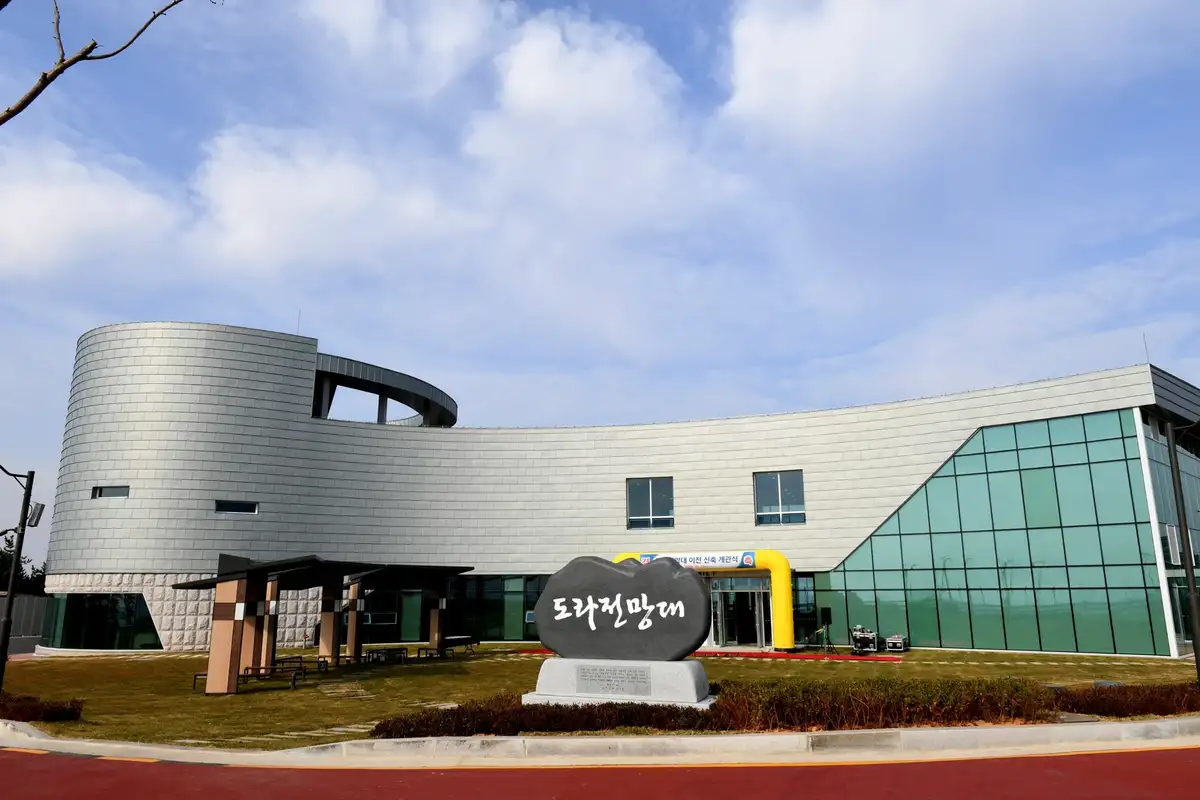
Dorasan Observatory

Dorasan Observatory

This is the closest DMZ observatory to Panmunjom. In addition to views of Panmunjom, you can also see the DMZ village of Daeseong-dong, North Korea's mountains and farmland, and North Korea's Kaesong City, which was the capital of the Goryeo Dynasty (918–1392) on the Korean Peninsula. Individual visits are restricted; you must join the DMZ Peace Tourism program to tour here. Advance reservations are required, departing from Imjingak. You must bring your passport or alien registration card or other ID.

Unification Village

Passing through the checkpoint, you’ll find a peaceful village within the Military Demarcation Line. At the village center stands a telescope for close-up views of North Korean territory. Next to the telescope is an air-raid shelter. Signs of war damage and pain remain here, along with villagers’ air-raid boots and an armory preserved over many years.

03

Seoul → Incheon → Seoul

You will depart Seoul for Incheon and begin a journey rich in culture and natural scenery. First, stroll along Wolmi Island and enjoy the sea breeze and magnificent ocean views. Then explore the colorful Songwol-dong Fairy Tale Village and experience its dreamy artistic ambiance. After lunch, visit the lively Incheon Chinatown to taste authentic cuisine, followed by a visit to Incheon Freedom Park for a moment of tranquility. In the afternoon, learn about the city's history at the Incheon Landing Operation Memorial Hall. Finally, before ending the day, don't miss exploring Sinpo International Market, where you can buy local specialties and gain a deeper insight into Korean daily life.

AI-rendered illustration

You will depart Seoul for Incheon and begin a journey rich in culture and natural scenery. First, stroll along Wolmi Island and enjoy the sea breeze and magnificent ocean views. Then explore the colorful Songwol-dong Fairy Tale Village and experience its dreamy artistic ambiance. After lunch, visit the lively Incheon Chinatown to taste authentic cuisine, followed by a visit to Incheon Freedom Park for a moment of tranquility. In the afternoon, learn about the city's history at the Incheon Landing Operation Memorial Hall. Finally, before ending the day, don't miss exploring Sinpo International Market, where you can buy local specialties and gain a deeper insight into Korean daily life.

Breakfast: at the hotel. Lunch: at your own expense. Dinner: at your own expense.

Wolmido Island

Wolmido Island is a popular tourist spot combining entertainment and dining. Wolmido Culture Street offers seaside amusement park facilities, fresh seafood restaurants along the coast, and scenic cafes. On weekends, the bustling street filled with people has become a signature place on Wolmido Island.

Songwol-dong Fairy Tale Village

Walking through the Fairy Tale Village, you’ll discover many murals themed on famous fairy tale classics and colorful, vivid characters inviting you into their storybook world. The village is small but well-equipped with facilities including a hospital, kindergarten, welfare center, restaurants, and cafes, all decorated with fairy tale murals. While admiring the murals, don’t forget to look for hidden surprises: even trash bins, street lamps, mailboxes, and flower pots look as if they were transported straight from a fairy tale.

Incheon Chinatown

Incheon Chinatown developed as a Chinese community after Incheon Port opened in 1883 and the area was designated a Chinese concession in 1884. Traditionally, many shops sold Chinese products, but today most are Chinese restaurants. Current residents are mainly second or third-generation descendants of early immigrants. Over generations, traditional Chinese culture has become significantly diluted.

Incheon Freedom Park

Freedom Park is located on Eungbongsan Mountain in Incheon, originally named International Park. From the park's summit, you can enjoy expansive views of Incheon’s front sea. The park features a small zoo, an octagonal pavilion, lotus pavilion, benches, and other resting facilities. Each April, cherry blossoms bloom along the path to the park.

Incheon Landing Operation Memorial Hall

The Incheon Landing Operation Memorial Hall covers a large area, resembling the terrain of the embankments that the allied soldiers climbed during the landing. The outdoor central exhibition features heavy weapons, with the Freedom Guard Monument at the highest point. Indoors, the exhibits have a sleek style typical of a medium-developed country like Korea, detailing the outbreak of the Korean War, the planning and execution of the Incheon operation, and the allied victory when Seoul was first recaptured. All panels include Korean, English, Chinese, and Japanese. The highlight is the large Incheon Landing Operation diorama with a screen backdrop vividly recreating the battle scenes.
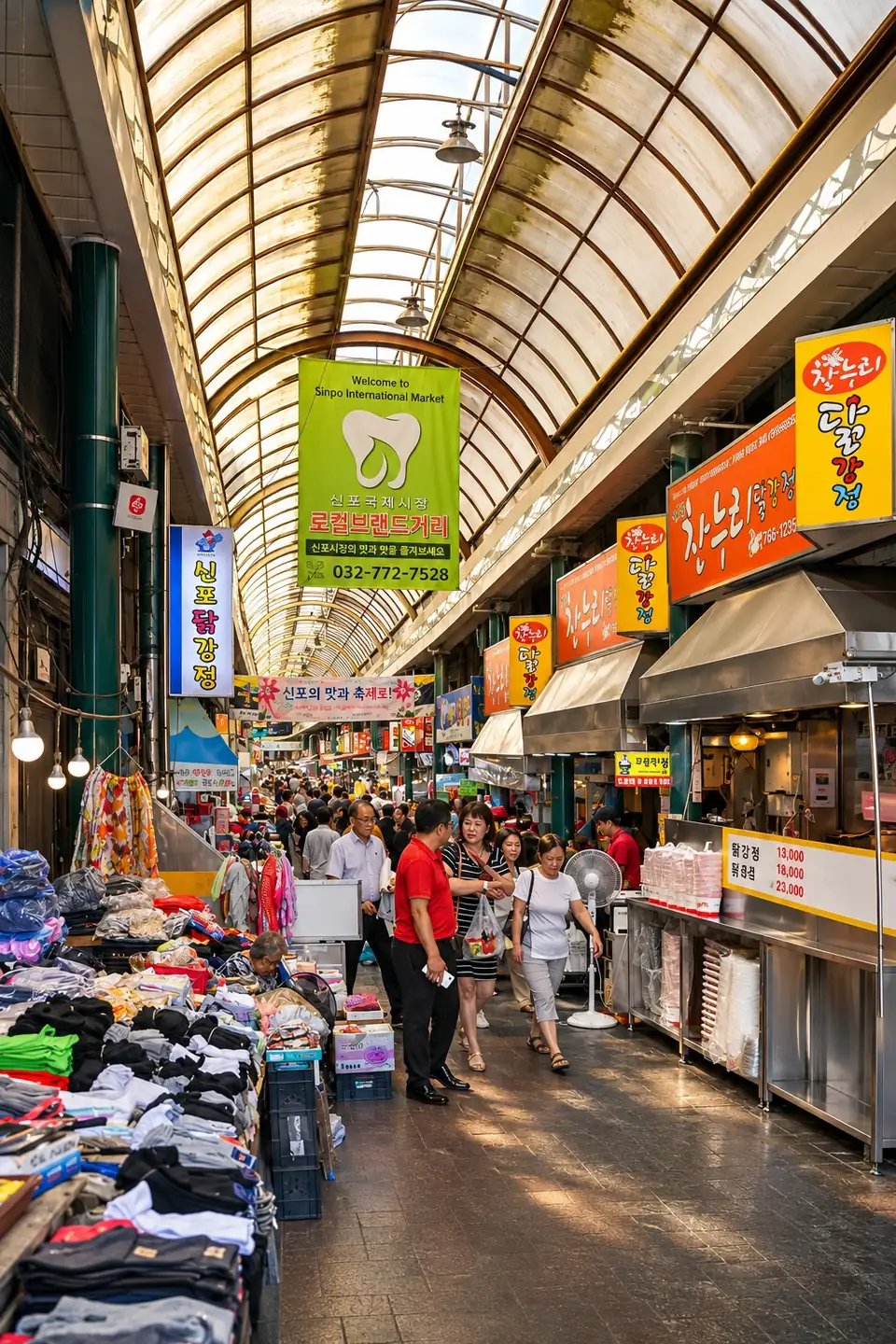
Sinpo International MarketAI-rendered illustration

Sinpo International Market

Located in Sinpo-dong, Jung-gu, Incheon, Sinpo Market covers 3,300 square meters and dates back to the late 19th century. Originally it served Japanese, Chinese, and Western residents by selling high-quality vegetables. With the opening of Korea-China ferries and cruises, the number of tourists and merchants arriving by ship to Incheon grows annually. Due to its proximity to the international passenger terminal and international cultural influence, the market has evolved into a business hub for international traders. Facilities include an information desk, self-service office, and international trader support center offering services on trade, shopping, tourism, and translation to both domestic and foreign visitors.
04

Seoul

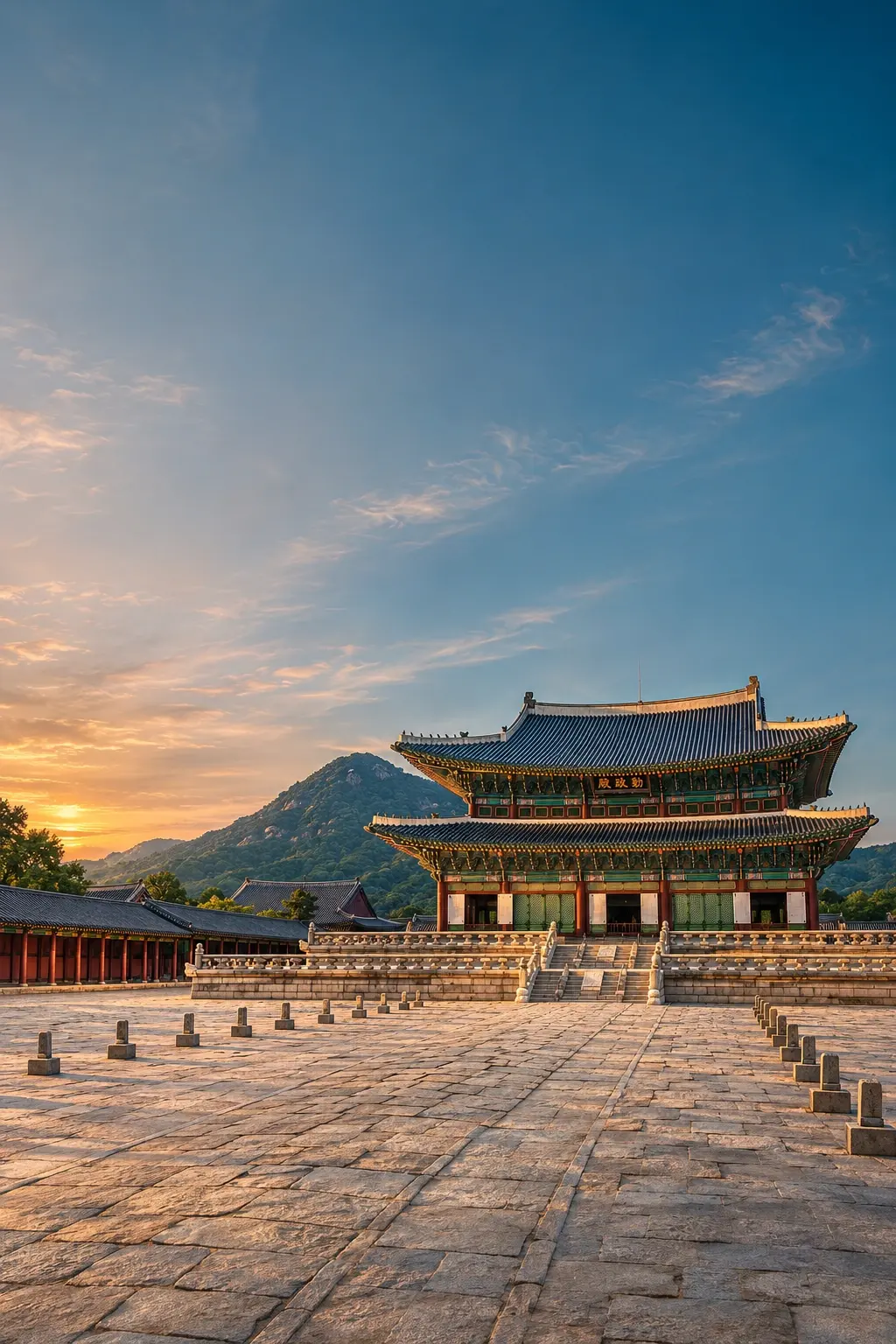
Start with a visit to Seoul’s historical symbol, Gyeongbokgung Palace, to experience the grandeur of the Joseon Dynasty royal court. Then head to the War Memorial of Korea to gain deep insights into Korea's war history and peace aspirations. In the afternoon, take a leisurely walk to scenic Namsan Park and ride the cable car to the summit, enjoying panoramic city views along the way. At the top, you can get close to N Seoul Tower and admire stunning vistas of Seoul below.

AI-rendered illustration

Start with a visit to Seoul’s historical symbol, Gyeongbokgung Palace, to experience the grandeur of the Joseon Dynasty royal court. Then head to the War Memorial of Korea to gain deep insights into Korea's war history and peace aspirations. In the afternoon, take a leisurely walk to scenic Namsan Park and ride the cable car to the summit, enjoying panoramic city views along the way. At the top, you can get close to N Seoul Tower and admire stunning vistas of Seoul below.

Breakfast: at the hotel. Lunch: at your own expense. Dinner: at your own expense.

Gyeongbokgung Palace

Gyeongbokgung Palace was the first palace built in the early Joseon Dynasty, with a history of over 600 years. It is the largest among the Five Grand Palaces, featuring unique architectural styles in buildings such as Geunjeongjeon Hall and Gyeonghoeru Pavilion. Additionally, it houses the National Palace Museum of Korea and the National Folk Museum, providing a rich visiting experience. Every day on the hour from 10 AM to 4 PM at the main gate, Gwanghwamun, there's a guard changing ceremony reenacting the palace gatekeepers' duties during the Joseon era, allowing visitors to witness the orderly traditional royal guard rituals.

War Memorial of Korea

The War Memorial of Korea stands on the site of the former Republic of Korea Army Headquarters. Its construction involved multiple expert consultations and it is one of the largest war-themed museums in the world. The museum includes eight exhibition halls: the Memorial Hall, War History Hall, Korean War Hall, Overseas Dispatch Hall, Armed Forces Development Hall, Large Equipment Hall, and an outdoor exhibition area for visitors.

Namsan ParkAI-rendered illustration

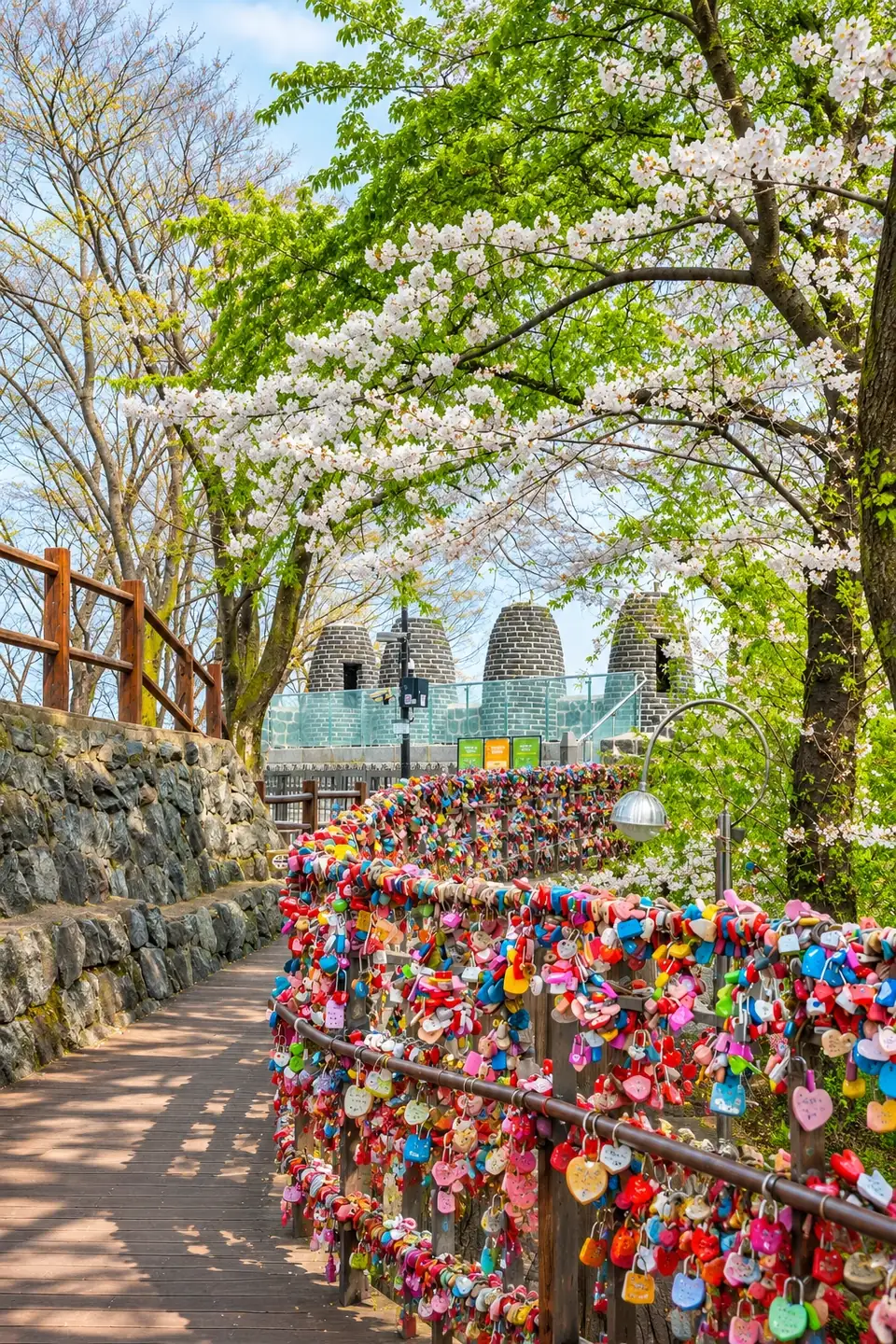
Namsan Park

Namsan stands 265 meters high in central Seoul and is a city symbol. Though not tall, it offers beautiful panoramic views from the summit and is a favored resting place for residents. At the top are an octagonal pavilion, Seoul Tower, an ocean aquarium, and a fountain; halfway up is Namsan Library. A cable car makes access easy, but stairs are also available for walking to the summit. Trails connect Namsan with Namdaemun, Hoehyeon-dong, Toegye-ro 3-ga, Jangchung Park, Itaewon, and Huam-dong neighborhoods, making walking an option. Driving routes to the summit are popular for scenic rides.

Namsan Park Cable Car

Namsan Cable Car in Seoul started operations on May 12, 1962, becoming Korea's first commercial cable car system. It departs from Hoehyeon-dong in Jung-gu and ends at Yegwang-dong in Yongsan-gu. The cable car covers 605 meters in length, each car carrying 48 passengers at an average speed of 3.2 meters per second, ascending approximately 138 meters vertically, completing the trip in about 3 minutes.

N Seoul Tower

N Seoul Tower is located on Namsan Mountain in Yongsan-gu, Seoul, South Korea. Formerly known as Seoul Tower or Hanyang Tower, it stands 236.7 meters tall and was built in 1975. It is a famous sightseeing spot in Korea. Every night from 7 pm to midnight, six spotlights create a floral pattern in the sky known as "Flower of Seoul."

05

Seoul → Busan

You will depart Seoul by the convenient and comfortable KTX high-speed train to Busan. Upon arrival, you’ll be greeted by the beautiful scenery of Busan Blue Line Park, where you can stroll along the trail converted from old railway tracks and enjoy the city’s peaceful natural beauty. Then experience the fun Capsule Train, traveling through the city for a unique journey. In the afternoon, you can relax at Gwangalli Beach or go to Haeundae Beach to take in the magnificent seaside views—both excellent choices.

AI-rendered illustration

You will depart Seoul by the convenient and comfortable KTX high-speed train to Busan. Upon arrival, you’ll be greeted by the beautiful scenery of Busan Blue Line Park, where you can stroll along the trail converted from old railway tracks and enjoy the city’s peaceful natural beauty. Then experience the fun Capsule Train, traveling through the city for a unique journey. In the afternoon, you can relax at Gwangalli Beach or go to Haeundae Beach to take in the magnificent seaside views—both excellent choices.

Breakfast: at the hotel. Lunch: at your own expense. Dinner: at your own expense.

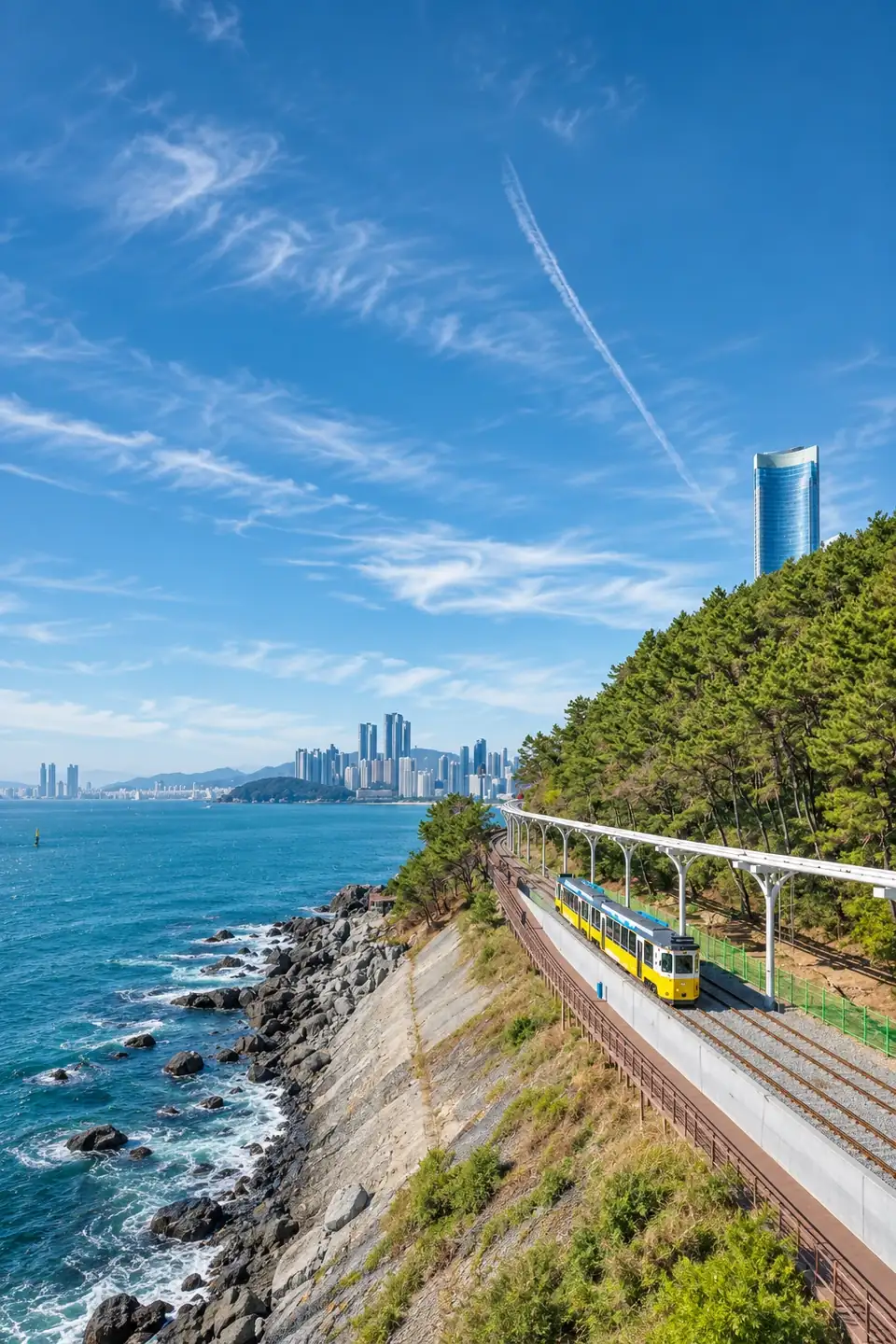
Busan Blueline ParkAI-rendered illustration

Busan Blueline Park

Busan Haeundae Blueline Park is a coastal park in the South District’s Yunbong-dong area. Built on a seaside beach, it is Busan's only urban coastal park, offering views of the coastline and a popular place for locals to relax and enjoy leisure activities.

Gwangalli Beach

Gwangalli Beach’s sand width varies from 25 to 110 meters, forming a crescent shape with quality sand. Nearby are diverse Western restaurants, over 300 seafood hotels, sashimi centers, Hanyang BBQ and soy sprout soup shops, and a coffee street. At night, the illuminated Gwangandaegyo Bridge and buildings create an enchanting nightlife scene attracting many young visitors, radiating youth and energy.

Haeundae Beach

Haeundae Beach is Korea's most famous seaside bathing beach, surrounded by unique natural scenery. Bathing season is from June 1 to September 30 each year. The beach stretches 1.5 km long and 30 to 50 meters wide, covering an area of 58,400 square meters, accommodating over 120,000 people. It offers folk experience activities including diving boards, wrestling, pitch-pot, tug-of-war, and flipping games, along with tourist information centers and a seaside library.

06

Busan

Begin with a sea cable car ride over Songdo, feeling the sea breeze and taking in the enchanting views of Busan from above. Then visit the Songdo Sky Harbor Observation Deck to snap a photo with the Little Prince and capture beautiful memories. Next, explore the art-filled Gamcheon Culture Village, where each step reveals new surprises. In the afternoon, discover Baeksundang Culture Village, known for its beautiful natural scenery and charming specialty shops. As evening falls, head to the bustling Jagalchi Market to taste authentic local cuisine and experience the everyday life of Busan residents. This trip offers a full immersion into Busan’s charms.

AI-rendered illustration

Begin with a sea cable car ride over Songdo, feeling the sea breeze and taking in the enchanting views of Busan from above. Then visit the Songdo Sky Harbor Observation Deck to snap a photo with the Little Prince and capture beautiful memories. Next, explore the art-filled Gamcheon Culture Village, where each step reveals new surprises. In the afternoon, discover Baeksundang Culture Village, known for its beautiful natural scenery and charming specialty shops. As evening falls, head to the bustling Jagalchi Market to taste authentic local cuisine and experience the everyday life of Busan residents. This trip offers a full immersion into Busan’s charms.

Breakfast: at the hotel. Lunch: at your own expense. Dinner: at your own expense.

Songdo Marine Cable Car

The Songdo Marine Cable Car in Busan spans 1.62 kilometers, connecting Songnim Park on the east side of the beach to Amnam Park on the west. Featuring 39 state-of-the-art crystal cabins with transparent floors, the ride offers breathtaking views of Songdo's scenery. The area also houses Korea's first cable car museum “Songdo Doppelmayr World,” Asia’s first aerial swing “Sky Swing,” theme park photo zones, and other attractions for visitors.

"Songdo Sky Harbor Observatory" Little Prince Photo Spot

This spot offers a panoramic view of Songdo. You can see the coastline walking path in Yeonnam Park, the cable cars crossing the sky, and the full view of Songdo Beach. The Dragon Palace Cloud Bridge is a mesh iron bridge where visitors can see the rare rock formations and clear green sea through the gaps beneath their feet. Waves crash on the rocks, creating layers of white foam. Anglers standing on the coastal cliffs add a unique scenic element. Walking on the mesh bridge, the roaring waves and unusual rocks feel almost within reach, providing a refreshing and uplifting experience.

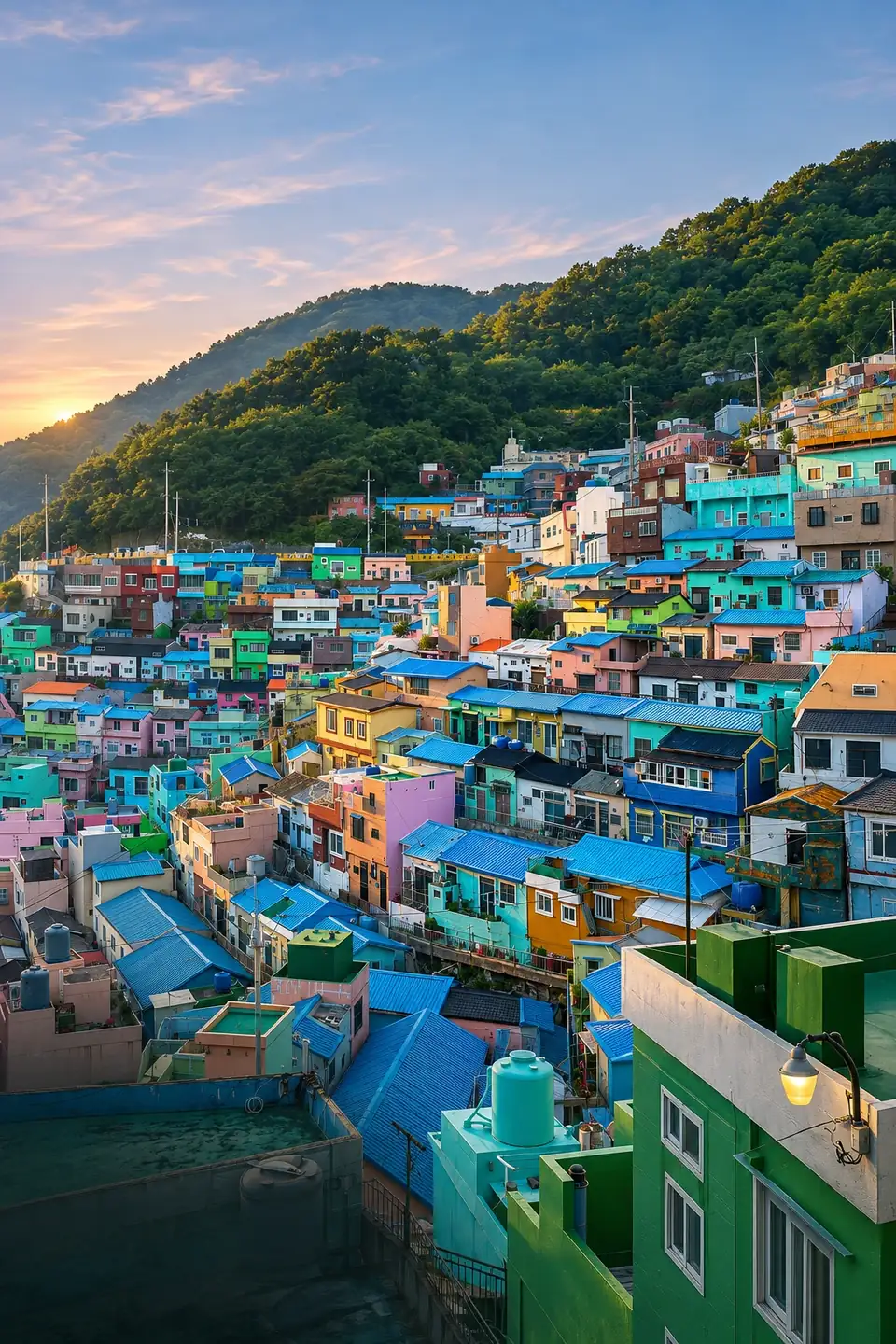
Gamcheon Culture VillageAI-rendered illustration

Gamcheon Culture Village

Known as the "Santorini of Busan," Gamcheon Culture Village was once a rundown slum but transformed through Busan's 'alley art project' into a famous cultural attraction. The village’s tiered layout, reminiscent of exotic hillside settlements, is well preserved with houses unblocked by others. Colorful murals and watercolor paintings created by volunteers worldwide adorn the walls, making it a beloved, artsy spot popular for photos.

Baeksancheon Cultural Village

This village was the humble beginning for refugees and is now a community-built cultural village. The name comes from Baeksancheon-ro, where water flows down from the foot of Bongrae Mountain resembling falling snow. In December 2011, renovations transformed the old houses into a unique cultural arts village reflecting life on Yeongdo Island.

Jagalchi Market

Jagalchi Seafood Market is one of Busan’s largest and most famous seafood markets. Located by the sea, the large market building’s first floor features numerous shops selling fresh-caught seafood. After purchase, customers can have their seafood prepared and cooked on the second floor seating area, usually cooperating with the vendors below for fresh, ready-to-eat meals.

07

Busan

Enjoy free time as your departure schedule allows. The itinerary ends locally in Busan; an airport transfer can be arranged separately to suit your flight schedule. International return flights and the day you arrive home are not counted in this itinerary.

Enjoy free time as your departure schedule allows. The itinerary ends locally in Busan; an airport transfer can be arranged separately to suit your flight schedule. International return flights and the day you arrive home are not counted in this itinerary.

Breakfast: at the hotel. Lunch: at your own expense. Dinner: at your own expense.

YOUR ROUTE

Know the shape of your journey.

Starts in
Seoul
Ends in
Busan
Local itinerary
7 days

A proposal shaped around you

Use this route as a starting point. Tell us your dates, pace and accommodation preferences.

Your quote will specify accommodation, guiding, transport, activities, meals and any optional arrangements before you book. International flights and airport transfers are discussed separately.

TRAVEL IN COMFORT

The right vehicle for your group.

Toyota Alphard

Up to 6 passengers

Toyota HiAce

Up to 9 passengers

Our main touring vehicles. We recommend a vehicle based on your group size and luggage. Maximum seating capacity does not guarantee room for all bags when every seat is occupied. Vehicle availability is confirmed for your destination.

More to discover

DMZ Peace Tour

Launched in 2002 in Paju City, the DMZ Peace Tour embodies hopes for peaceful reunification of the Korean Peninsula. This landmark tour offers visitors a glimpse into the past, transcending the pain of division. Attracting visitors of all ages from around the world, the tour route includes: Imjingak Park → Third Tunnel → Dorasan Observatory → Unification Village → Imjingak Park.

Wolmido Island

Wolmido Island is a popular tourist spot combining entertainment and dining. Wolmido Culture Street offers seaside amusement park facilities, fresh seafood restaurants along the coast, and scenic cafes. On weekends, the bustling street filled with people has become a signature place on Wolmido Island.

Songwol-dong Fairy Tale Village

Stroll through Fairy Tale Village to discover colorful murals themed on world-famous fairy tales and characters, vividly inviting you into a fairy tale land. Though small, the village is well-equipped with hospitals, kindergartens, welfare centers, restaurants, and cafes—all walls are covered with fairy tale paintings. Don’t miss the surprises hidden in corners: trash bins, street lamps, mailboxes, and flower pots all look like they came straight from a storybook.

Incheon Chinatown

Incheon Chinatown developed as a Chinese community after Incheon Port opened in 1883 and the area was designated a Chinese concession in 1884. Traditionally, many shops sold Chinese products, but today most are Chinese restaurants. Current residents are mainly second or third-generation descendants of early immigrants. Over generations, traditional Chinese culture has become significantly diluted.

Incheon Freedom Park

Freedom Park is located on Eungbongsan Mountain in Incheon, originally named International Park. From the park's summit, you can enjoy expansive views of Incheon’s front sea. The park features a small zoo, an octagonal pavilion, lotus pavilion, benches, and other resting facilities. Each April, cherry blossoms bloom along the path to the park.

Gyeongbokgung Palace

Gyeongbokgung Palace was the first palace built in the early Joseon Dynasty, with a history of over 600 years. It is the largest among the Five Grand Palaces, featuring unique architectural styles in buildings such as Geunjeongjeon Hall and Gyeonghoeru Pavilion. Additionally, it houses the National Palace Museum of Korea and the National Folk Museum, providing a rich visiting experience. Every day on the hour from 10 AM to 4 PM at the main gate, Gwanghwamun, there's a guard changing ceremony reenacting the palace gatekeepers' duties during the Joseon era, allowing visitors to witness the orderly traditional royal guard rituals.

Capsule Mini Train

Ride the sky capsule train running on tracks 7 to 10 meters above ground, offering scenic coastal views and a colorful mini train experience. The sunset views at dusk are especially unmissable.

Haeundae Beach

Haeundae Beach is Korea's most famous seaside bathing beach, surrounded by unique natural scenery. Bathing season is from June 1 to September 30 each year. The beach stretches 1.5 km long and 30 to 50 meters wide, covering an area of 58,400 square meters, accommodating over 120,000 people. It offers folk experience activities including diving boards, wrestling, pitch-pot, tug-of-war, and flipping games, along with tourist information centers and a seaside library.

Before you go

This journey starts at the destination. Seasonal experiences, service inclusions and availability are confirmed with your personalized proposal.

Original source & photography · 6renyou ↗

Image credits and illustrations

BEFORE YOU PLAN

Travel planning, clearly explained.

OpenEast brings together Japan and South Korea itinerary ideas for travelers from North America, with China also part of our destination plans. Start with the local route, then consider flights and airport transfers around it.

When does Day 1 begin?

Day 1 begins at the destination. International departure-only and return flight days are not counted as destination days. Plan your flights around the local itinerary dates.

Are flights and airport transfers included?

International flights and airport transfers are confirmed separately. Do not assume they are included in a suggested itinerary.

Are these confirmed departures?

These routes are itinerary ideas. Dates, hotels, admissions, seasonal activities, prices and availability need confirmation in a personalized proposal before booking.

Can I book or send an inquiry here?

Use the inquiry form to contact our team. A submission confirmation appears only when the email service accepts your request. An inquiry does not reserve a service or take payment.

Explore Japan itineraries → · Explore South Korea itineraries →

1 / 5

Let’s plan your journey.

History & Peace: 7-Day Seoul and Busan Tour Featuring Paju DMZ, Incheon Freedom Park, War Memorial, and Busan Coastal Relaxation

Leave your details, and our travel specialists will get in touch by email or your preferred contact method.

Your specialist will confirm the itinerary, pricing and availability with you.

How we use your information

Your inquiry is sent to info@jasperlimo.com so our team can respond. Please do not include passport or payment details.

Start planning