Day 1 begins upon your arrival in Busan. Local activities and hotel check-in will be arranged according to your actual arrival time; international flights are not included in this itinerary. Planned attractions for the day include: Busan Port International Passenger Terminal, Haedong Yonggungsa Temple, East Busan Outlet, Busan X the Sky, Haeundae Beach, and Haeundae Traditional Market; schedule may be adjusted based on arrival time. An airport transfer can be arranged separately and inclusion depends on the finalized plan.
Breakfast: at your own expense. Lunch: at your own expense. Dinner: at your own expense.
Busan Port International Passenger Terminal
This terminal is Busan's main cruise ship port, with four dedicated berths capable of accommodating 220,000-ton vessels. It has strong handling capacity, expected to serve over 300,000 cruise passengers by the end of 2025. As a modern passenger hub, its facilities include immigration and customs areas, cruise ticket offices, duty-free shops, an information center, 7-11 convenience store, coffee shops, restaurants, and free Wi-Fi. The Blue Sky Garden on the 5th floor rooftop offers views of the Busan Harbor Bridge and the blue sea, great for sightseeing and photos. The 3rd floor houses check-in counters, departure inspection, and duty-free stores. Currency exchange and a tourist info center are on the 2nd floor.
 AI-rendered illustration
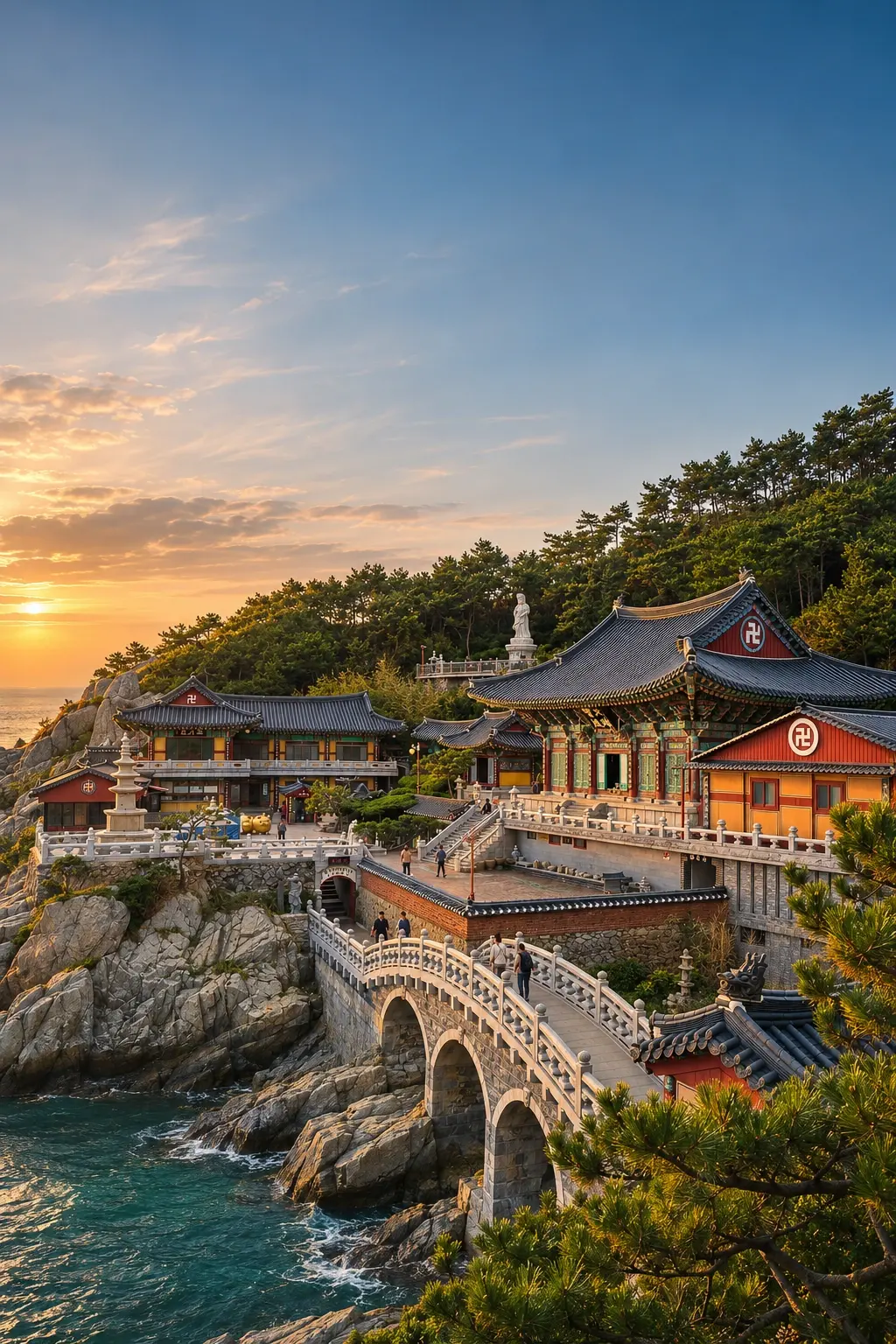
Haedong Yonggungsa Temple
Yonggungsa Temple was founded in 1376 by Master Naewong, who served King Gongmin of Goryeo. It is one of Korea’s three major Avalokitesvara pilgrimage sites and a place revered for prayer and sincere Buddhist worship. The original temple was nearly destroyed during the Imjin War; it was reconstructed in the early 1930s under Monk Wunggang of Tongdo Temple, and later renamed Haedong Yonggungsa after a monk dreamt of Avalokitesvara ascending on a dragon. Existing structures include the Daeungjeon Main Hall, Seokbuldang (also called Maitreya Hall) housing a Maitreya statue believed to bless fertility, a Three-tiered Stone Pagoda guarded by four lions containing seven Buddha relics from Sri Lanka, a 10-meter tall Seawater Avalokitesvara statue (the tallest in Korea), and the Yakshi Buddha known as the East Sea’s Stone Cap Rock Buddha. The temple entrance features a total of 108 stone steps.
East Busan Outlet
Lotte Premium Outlet East Busan is a large complex shopping center combining brand discount stores, a mall, Lotte supermarket, and movie theaters. Architectural style inspired by Greek Santorini, featuring a lighthouse observation deck, Santorini water plaza, Hera rose garden, and rooftop courtyard lights. Over 550 brand stores including international fashion, sportswear, cosmetics, indie designers, play zones, LEGO store, and local specialty shops offer reasonable prices. The mall also has the largest dining area featuring local cuisine, a stamp workshop, pottery, and craft shops, letting visitors enjoy both shopping and leisure.
Busan X the Sky
Busan X the SKY is the country’s second tallest landmark building and Korea’s largest observation deck, offering panoramic views of Busan’s coastal and city skyline. Each floor provides outlooks of famous sights such as Haeundae city nightscape, Gwangan Bridge, Busan Port Bridge, Igidae, Yeongwolsan, and Dongbaek Island. The facility also includes 'X the Lounge' for visitors to rest, 'X the Photo' for photo opportunities with sea views, and 'X the Gift' souvenir shops.
Haeundae Beach
Haeundae Beach is Korea's most famous seaside bathing beach, surrounded by unique natural scenery. Bathing season is from June 1 to September 30 each year. The beach stretches 1.5 km long and 30 to 50 meters wide, covering an area of 58,400 square meters, accommodating over 120,000 people. It offers folk experience activities including diving boards, wrestling, pitch-pot, tug-of-war, and flipping games, along with tourist information centers and a seaside library.
Haeundae Traditional Market
Located near Haeundae Beach, one of Korea’s most iconic beaches, Haeundae Traditional Market is a long-established market area. Since 1910, it organically grew from small vendor clusters, officially recognized as a market by the Busan government in 2005. It’s popular among locals and tourists alike for groceries, dining, and shopping. The market’s maze of alleys is lined with diverse shops, including fruit and vegetable stands, kimchi shops, side dish vendors, meat shops, clothing stores, general goods, small liquor shops, and eateries. It’s also known for Busan’s specialty snacks like pork soup rice, fish ball soup, and sashimi—making it a must-visit spot when traveling to Busan.

