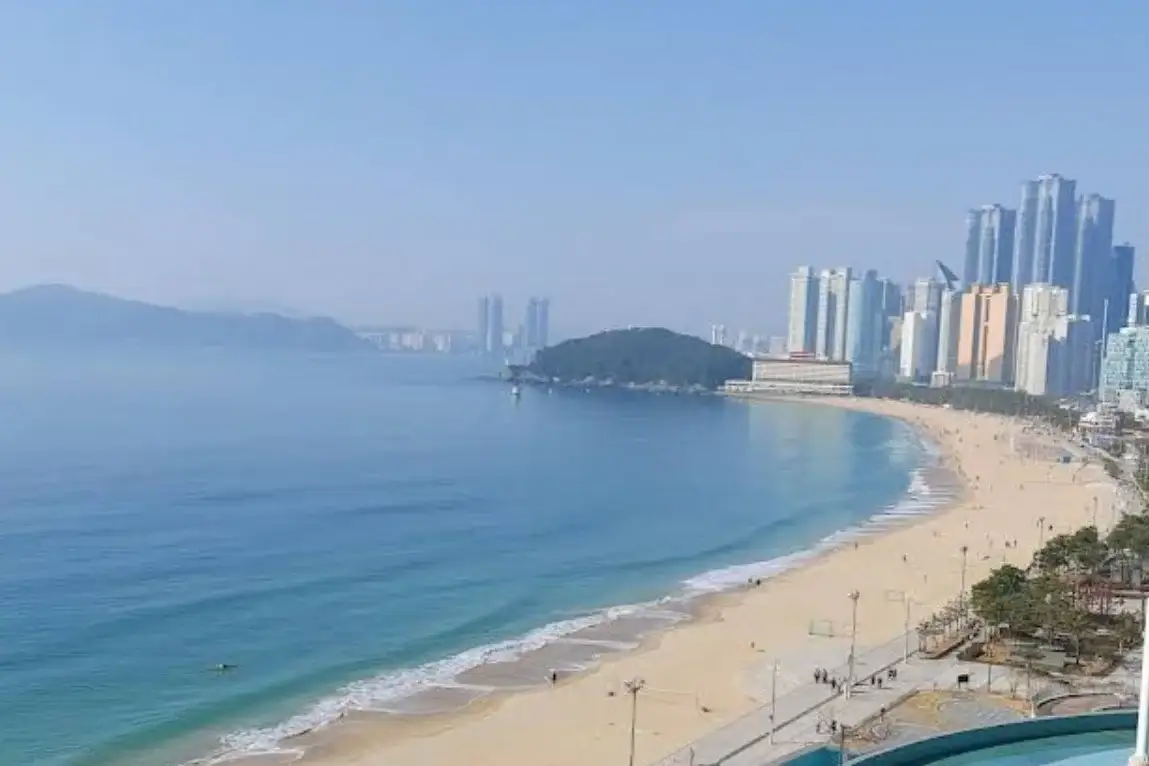
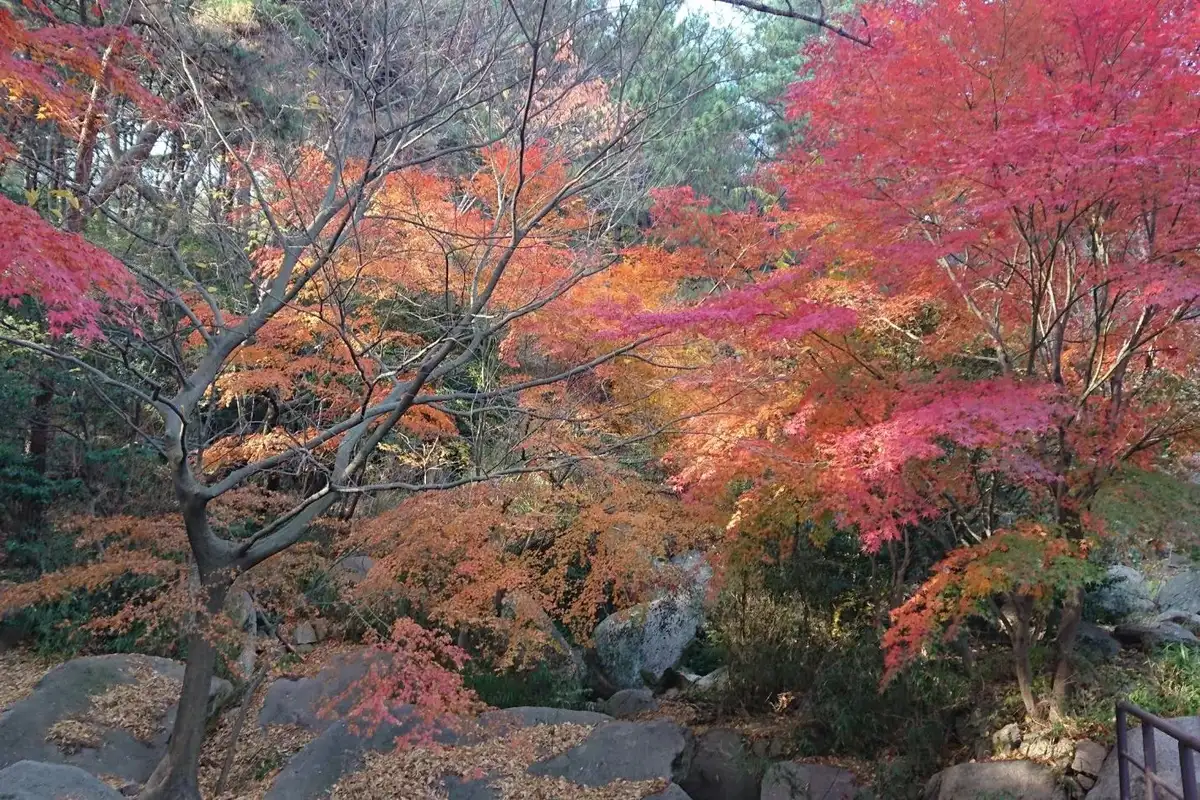
In-Depth Autumn Foliage Tour in Busan | Geumjeongsan Bongeunsa Temple + Coastal Scenery Morning: Visit Bongeunsa Temple at the foot of Geumjeongsan, Busan’s top temple for autumn leaves, featuring red maples, ginkgo trees, stone wall trails, and a strong autumn atmosphere. Lunch: Local Korean meal in Busan Afternoon: Haedong Yonggungsa Temple on the seaside cliff, enjoy the ocean and autumn forest views; visit Gijang Market for fresh seafood. Evening: Taejongdae, coastal cliffs offering stunning autumn coastline views. Accommodation: Central Haeundae Hotel.
Breakfast: at the hotel. Lunch: at your own expense. Dinner: at your own expense.
Beomeosa Temple
Located on the slopes of Geumjeongsan Mountain in Busan, Beomeosa is one of Korea’s major Buddhist temples.
 AI-rendered illustration
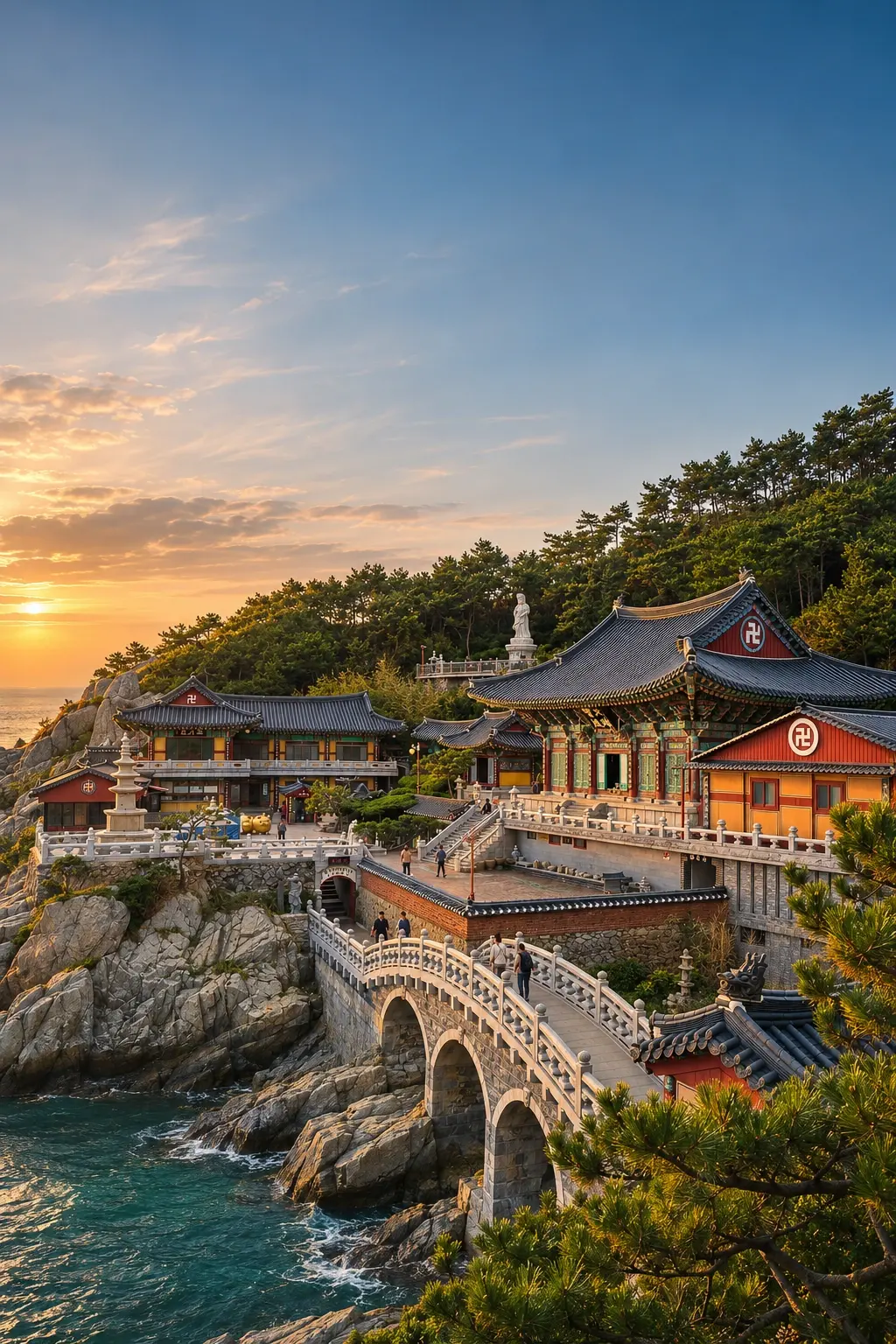
Haedong Yonggungsa Temple
Yonggungsa Temple was founded in 1376 by Master Naewong, who served King Gongmin of Goryeo. It is one of Korea’s three major Avalokitesvara pilgrimage sites and a place revered for prayer and sincere Buddhist worship. The original temple was nearly destroyed during the Imjin War; it was reconstructed in the early 1930s under Monk Wunggang of Tongdo Temple, and later renamed Haedong Yonggungsa after a monk dreamt of Avalokitesvara ascending on a dragon. Existing structures include the Daeungjeon Main Hall, Seokbuldang (also called Maitreya Hall) housing a Maitreya statue believed to bless fertility, a Three-tiered Stone Pagoda guarded by four lions containing seven Buddha relics from Sri Lanka, a 10-meter tall Seawater Avalokitesvara statue (the tallest in Korea), and the Yakshi Buddha known as the East Sea’s Stone Cap Rock Buddha. The temple entrance features a total of 108 stone steps.
Yeongdo Taejongdae
Named after the reduced form of Jeolyeongdo, this area has been famous as a horse pasture since ancient times, producing legendary horses so fast their shadows can’t be seen, hence called Jeolyeongdo. Taejongdae and Oryukdo are iconic rocky coasts representing Busan, located about 9.1 km along Yeongdo’s coastline at its southernmost point from Busan City Hall. Covering 542,390 pyeong (the area stated in the source), centered on its highest peak at 250 m altitude, the area is home to over 200 species of trees including dense sea pines, tropical broadleaf trees such as Japan cinnamon, camphor trees, hemlocks, and holly trees.
 AI-rendered illustration