South Korea · 9 DAYS

South Korea in Depth: A 9-Day Journey

Seoul → Gangwon Province → Chuncheon → Sokcho → North Gyeongsang Province → Gyeongju → Busan

Travel from Seoul to Busan through South Korea, exploring historic temples, coastal villages and varied landscapes along the way. Visit UNESCO World Heritage sites Bulguksa Temple and Seokguram Grotto to explore Silla-era stone art and trace a millennium of Korean history.

9 daysWinterItinerary idea

Request this itinerary

Leave your details, and our travel specialists will get in touch by email or your preferred contact method.

Your specialist will confirm the itinerary, pricing and availability with you.

How we use your information

Your inquiry is sent to info@jasperlimo.com so our team can respond. Please do not include passport or payment details.

JOURNEY HIGHLIGHTS

South Korea, made personal.

South Korea in Depth: A 9-Day Journey including Nami Island, Seoraksan, Hahoe Village, Bulguksa Temple & Seokguram Grotto, Ganseong Culture Village, and Sky Capsule Mini Train

Day 1 starts in Seoul. International airfare is arranged separately.

  • 01Travel from Seoul to Busan through South Korea, exploring historic temples, coastal villages and varied landscapes along the way.
  • 02Visit UNESCO World Heritage sites Bulguksa Temple and Seokguram Grotto to explore Silla-era stone art and trace a millennium of Korean history.
  • 03Travel through Seoraksan Mountain, Nami Island, and Hahoe Folk Village to experience mountain scenery, Korean drama filming locations, and traditional Hanok houses.

Your journey, day by day

01

Seoul

Day 1 begins upon arrival in Seoul. Your local activities and hotel check-in will be arranged based on actual arrival time; international flights are not included. Airport transfers can be arranged separately; inclusion depends on final plan confirmation.

AI-rendered illustration

Day 1 begins upon arrival in Seoul. Your local activities and hotel check-in will be arranged based on actual arrival time; international flights are not included. Airport transfers can be arranged separately; inclusion depends on final plan confirmation.

Breakfast: at your own expense. Lunch: at your own expense. Dinner: at your own expense.

02

Seoul → Gangwon Province

Leave the city and enter the lakes and islands of Gangwon Province for nature and relaxation. 08:30 Depart Seoul by private car to Gapyeong, approximately 1.5 hours. 10:30 Visit Nami Island (ferry services follow a seasonal timetable; check the official schedule for the travel date). Seasonal highlights include spring wildflowers, summer shade, autumn foliage, and winter snow. Options: 6km lakeside walk, one-way small train ride (8-10 min, not a loop), or story-telling island bus. Small train tickets are purchased onsite, expect queues in peak season. 14:30 Lunch in Chuncheon (famous for Chuncheon Dakgalbi). 16:00 Check into Chuncheon hotel and enjoy a lakeside stroll.

AI-rendered illustration

Leave the city and enter the lakes and islands of Gangwon Province for nature and relaxation. 08:30 Depart Seoul by private car to Gapyeong, approximately 1.5 hours. 10:30 Visit Nami Island (ferry services follow a seasonal timetable; check the official schedule for the travel date). Seasonal highlights include spring wildflowers, summer shade, autumn foliage, and winter snow. Options: 6km lakeside walk, one-way small train ride (8-10 min, not a loop), or story-telling island bus. Small train tickets are purchased onsite, expect queues in peak season. 14:30 Lunch in Chuncheon (famous for Chuncheon Dakgalbi). 16:00 Check into Chuncheon hotel and enjoy a lakeside stroll.

Breakfast: at the hotel. Lunch: at your own expense. Dinner: at your own expense.
Nami IslandAI-rendered illustration

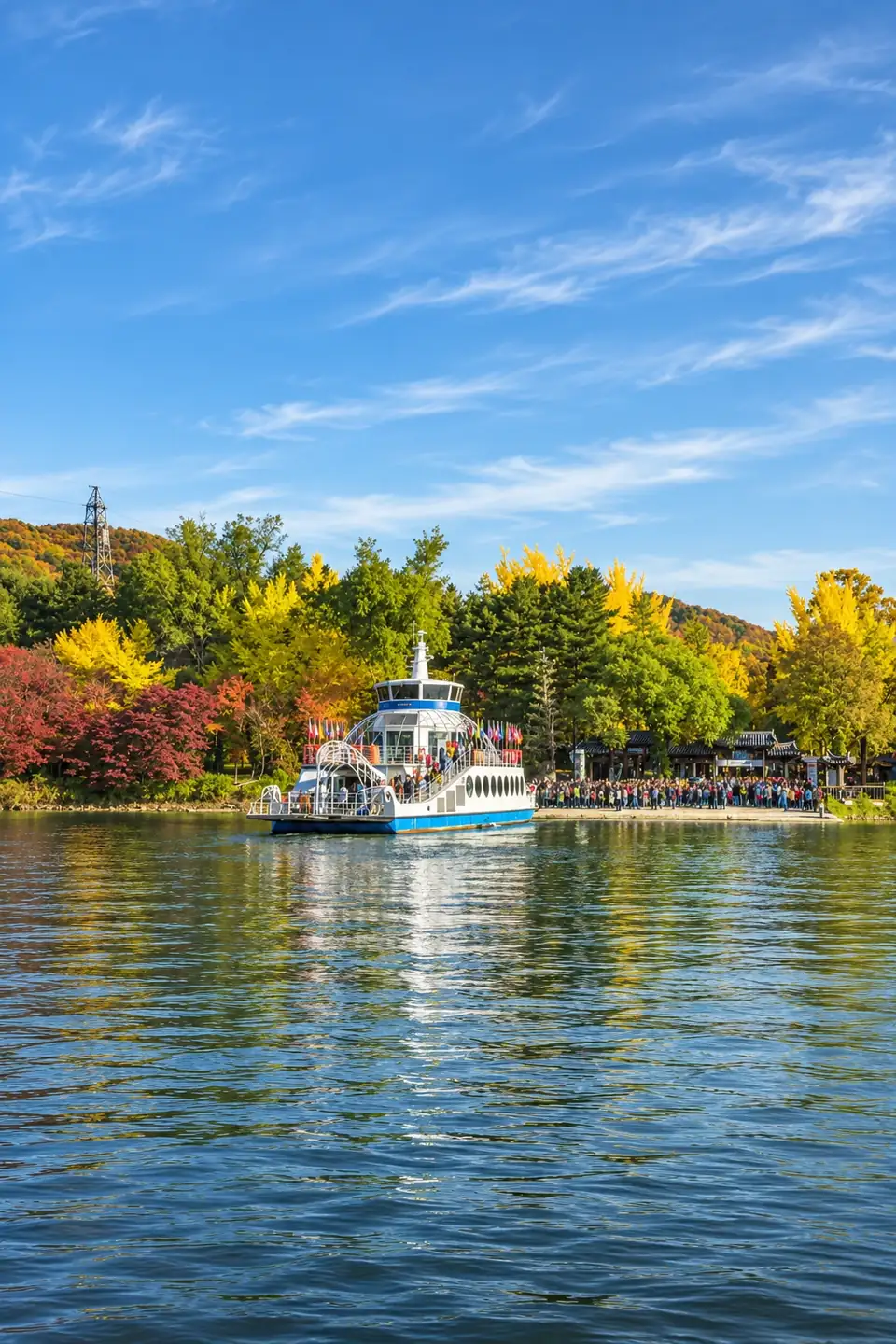
Nami Island

Nami Island is located in the city of Chuncheon, Gangwon Province, South Korea, in Nam-myeon, Bangha-ri. Originally not an island, it was formed when the Chuncheon Dam created a reservoir on Bukhan River. Known as a filming location for dramas like "Winter Sonata," Nami Island boasts stunning natural scenery. The island is about 6 km in circumference and covers over 130,000 pyeong (approximately 429,000 square meters). The center features a grassy area spreading over 80,000 pyeong (about 263,000 square meters). Surrounding the island are lush chestnut and poplar trees resembling a screen, making it an excellent place for a walk.

Metasequoia Lane

On the island, large clusters of three types of trees form distinct lanes: Ginkgo Lane, Maple Lane, and Metasequoia Lane. Leaves display yellow, red, and green colors through the seasons, making it beautiful year-round.

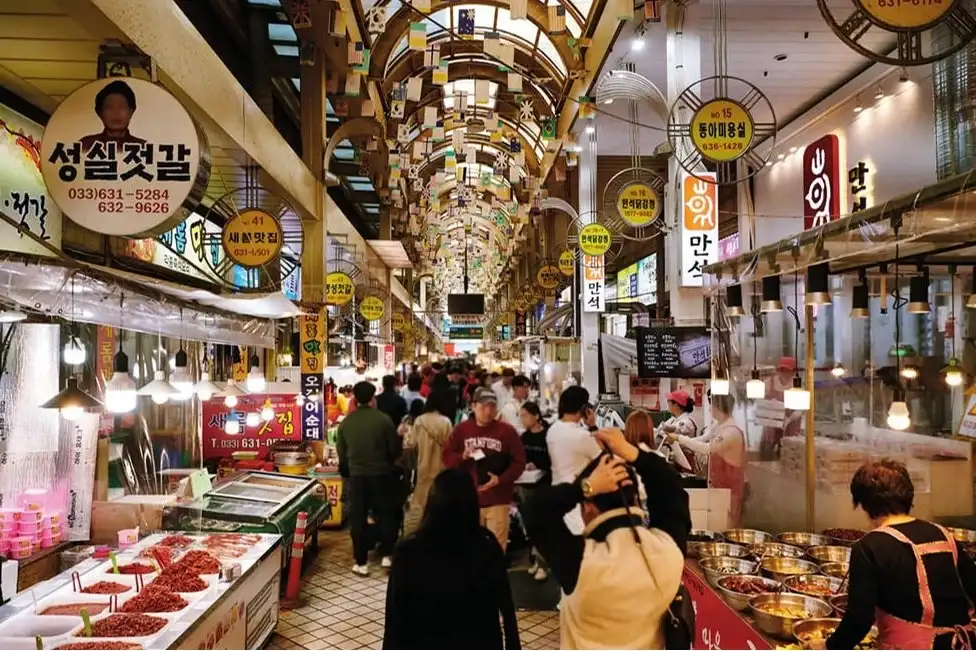
Chuncheon Romantic Market

Established in 1960, Chuncheon's main traditional market connects to the bustling Chuncheon Myeongdong shopping area. Covered arched roofs ensure shopping unaffected by weather or season. Designated a cultural tourist market in 2010, it was renovated and renamed "Chuncheon Romantic Market." Wandering alleys reveals hidden murals and installations. Shops sell hanbok, clothing, daily goods, and ingredients, plus many restaurants serving soups, blood sausage soup, and Vietnamese pho. During US military presence, it was known as "Yankee Market" for American goods; traces of this remain. Though compact, its proximity to Chuncheon Myeongdong and nearby attractions makes it popular, and it has been recommended by Korea Tourism Organization as a traditional market friendly to foreigners.
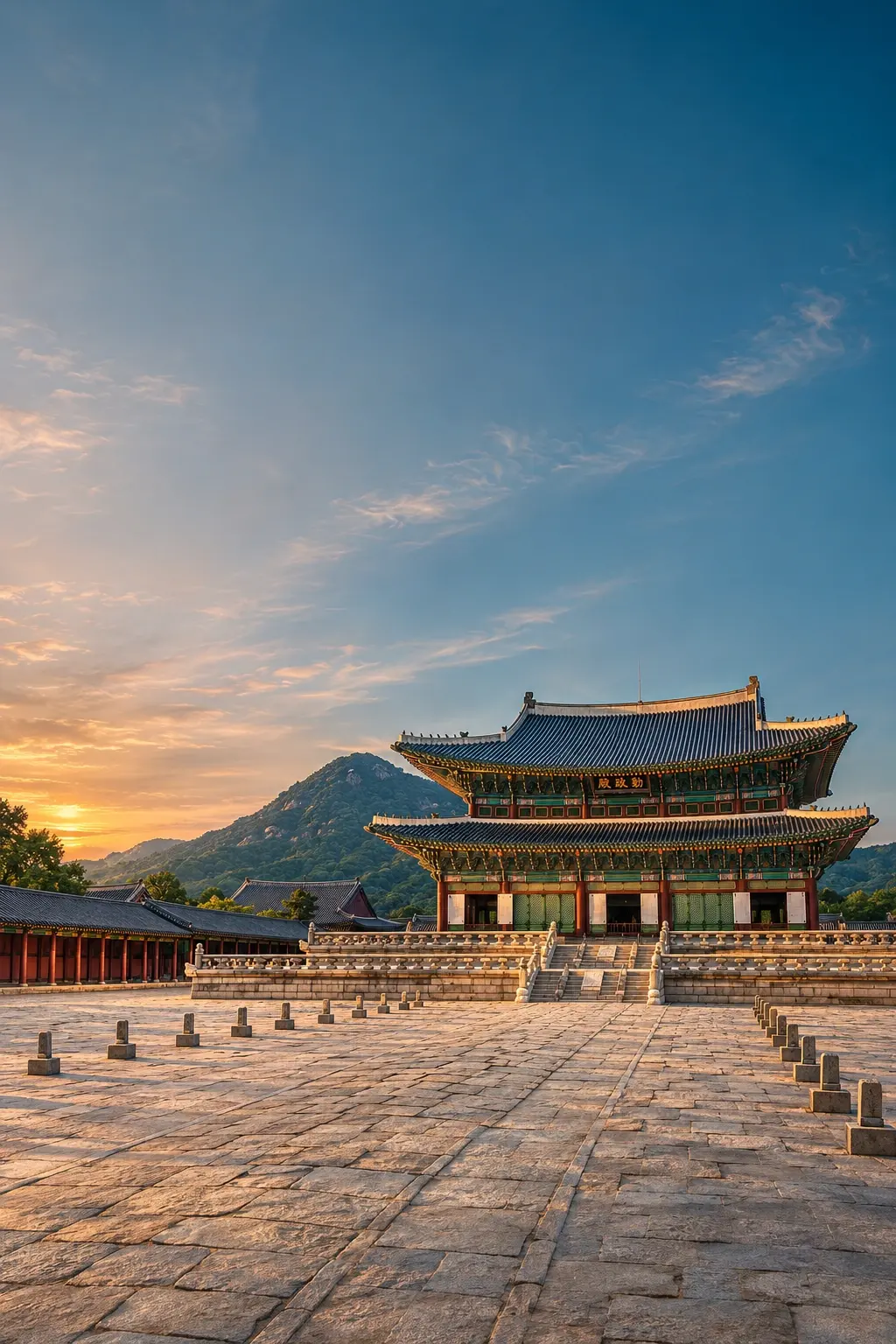
03

Gangwon Province → Chuncheon → Sokcho

Seoraksan National Park, experience majestic high mountain scenery in eastern Korea. 07:30 Depart Chuncheon for Seoraksan, approx. 2h 40min by private car. 10:30 Explore Seoraksan National Park (Outer Seorak), open year-round; take the Seorak cable car for panoramic mountain views; visit Sinheungsa Temple and Gwongeumseong Fortress ruins, cable car round trip included. 15:30 Busan city, light seafood lunch by the East Sea. 17:30 Check into Sokcho hotel; enjoy sunset at the East Sea coast.

Seoraksan National Park, experience majestic high mountain scenery in eastern Korea. 07:30 Depart Chuncheon for Seoraksan, approx. 2h 40min by private car. 10:30 Explore Seoraksan National Park (Outer Seorak), open year-round; take the Seorak cable car for panoramic mountain views; visit Sinheungsa Temple and Gwongeumseong Fortress ruins, cable car round trip included. 15:30 Busan city, light seafood lunch by the East Sea. 17:30 Check into Sokcho hotel; enjoy sunset at the East Sea coast.

Breakfast: at your own expense. Lunch: at your own expense. Dinner: at your own expense.

Seoraksan National Park (Outer Seorak)

Seoraksan National Park is Korea's northernmost national park, with its peak Daecheongbong at 1708 meters. It offers thrilling cliff climbs and hiking. The southern foothills feature steep rocky valleys and the Seoraksan Great Waterfall, comparable to Cheonbuldong Cave.

Gwongeumseong Seorak Cable Car

The cable car station is inside Seoraksan National Park in a small park. A 10-minute ride ascends to Gwongeumseong at 700 meters elevation. Tickets are round-trip only. Through the windows, you can see famous sights like Ulsan Rock and Manim Pavilion. From Gwongeumseong peak, enjoy grand views of the rugged, mysterious Seoraksan mountains and the entire Outer Seorak area.

Sokcho Tourist Fishery Market

Sokcho Tourist Fishery Market

Sokcho Tourist Fishery Market is a must-visit destination with a wide variety of goods. The market combines an underground and two above-ground floors with shops selling clothing, daily necessities, groceries, and the Hanaro Agricultural Cooperative supermarket. The basement houses a sashimi center offering affordable fresh fish and seafood. The street market is divided into themed streets including fruit and vegetable, blood sausage, fish and shrimp sauce market, and chicken pancake streets. The chicken pancake street is most popular, known for crispy sweet and spicy chicken pieces, each vendor using their own secret recipe. Covered walkways offer a comfortable shopping experience rain or shine, with ample parking available.

Sinheungsa Temple

Sinheungsa: Founded in 652 AD by the monk Jajang, it is the oldest temple in Seoraksan. Destroyed during the Joseon era, the current temple was rebuilt in 1847 and retains a royal bell from Joseon times and a scripture block believed to be from King Sejo's era.

04

Sokcho → North Gyeongsang Province

Travel south crossing regions to visit World Heritage ancient temples and Joseon-era villages. 07:00 Depart Sokcho south by highway in private car. 11:30 Arrive in Andong, local lunch. 13:30 Visit Bongjeongsa Temple (World Heritage), a millennium-old wooden temple with seasonal architectural charm. 17:30 Hahoe Folk Village (World Heritage), an old Joseon aristocratic village with a mask museum; hanbok rental available for strolling. Check the venue's seasonal opening days and last-admission time before visiting. 18:30 Check into Andong hotel; evening visit to the moonlit bridge light display.

AI-rendered illustration

Travel south crossing regions to visit World Heritage ancient temples and Joseon-era villages. 07:00 Depart Sokcho south by highway in private car. 11:30 Arrive in Andong, local lunch. 13:30 Visit Bongjeongsa Temple (World Heritage), a millennium-old wooden temple with seasonal architectural charm. 17:30 Hahoe Folk Village (World Heritage), an old Joseon aristocratic village with a mask museum; hanbok rental available for strolling. Check the venue's seasonal opening days and last-admission time before visiting. 18:30 Check into Andong hotel; evening visit to the moonlit bridge light display.

Breakfast: at the hotel. Lunch: at your own expense. Dinner: at your own expense.

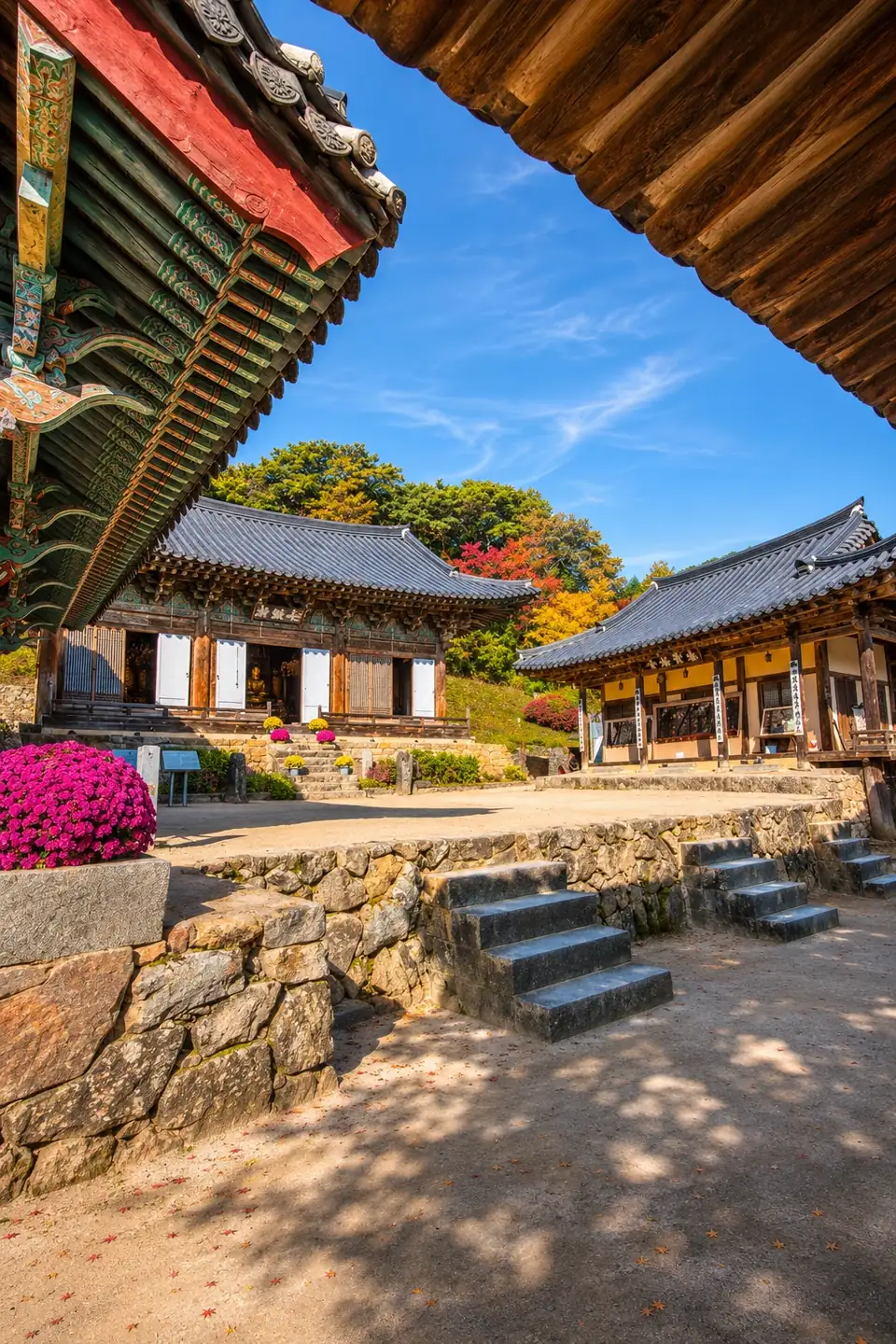
Bongjeongsa Temple [UNESCO World Heritage]

Located on Mt. Cheondeung in Andong, Bongjeongsa is a temple under the 16th district of Korea's Jogye Order. Founded in 672 AD during the Silla period, with some debate over founders, possibly the monk Uisang or his disciple Neungin. Much historical record was lost in the Korean War. In 1972, during restoration, a beam was found noting refurbishment in 1363, making the temple's Geungnakjeon Hall the oldest surviving wooden structure in Korea.

Andong Hahoe Village (UNESCO World Cultural Heritage Site)

Hahoe Village was the residence of the Pungsan Ryu clan and offers a deep experience of traditional Korean culture. It was the birthplace of famous Joseon-era scholars Ryu Un-ryong and Ryu Seong-ryong. On April 21, 1999, Queen Elizabeth II of the United Kingdom visited, enhancing its international fame. The village's name 'Hahoe' refers to the S-shaped loop formed by the flowing Nakdong River that surrounds the village. To the east lies the Baeksan mountain ridge extending to the village, creating low hills. Houses are built facing downhill with various orientations according to terrain, so no two houses face the same direction—a unique feature of Hahoe Village. At the village center stands a well-preserved large stone-tiled house of the Ryu clan surrounded by thatched houses. In front of the village flows the gentle Nakdong River, with elegant Burungdae, wide white sandy beaches, and dense ancient pine forests offering scenic beauty. Boats can be crossed at the waterway in front. Representative foods include Andong soju, ceremonial meals, and Andong-style soup rice. Notable sites include Bongjeongsa Temple from the Silla period, Guraejeong Pavilion, Gosan Seowon Academy, Natural Recreation Forest on Gyeongmyeongsan, Crane Pavilion, and Wolong Mountain. In July 2010, Hahoe Village and Gyeongju Yangdong were designated as Korean historic villages and UNESCO World Heritage sites, attracting many visitors annually. The Andong International Mask Dance Festival is held every autumn.

05

North Gyeongsang Province → Gyeongju

Arrive at the thousand-year-old former Silla capital to explore an ancient observatory and royal tomb park. 08:30 Depart Andong by private car to Gyeongju, approx. 2h 40min. 11:30 Lunch in Gyeongju. 13:00 Visit Cheomseongdae, East Asia's oldest surviving astronomical observatory; Daereungwon Tomb Park (Heavenly Horse Tomb), a city park with Silla tombs showcasing four-season gardens. 16:00 Explore Gyeongju Dongdong Market for local food sampling. 18:00 Check into Gyeongju hotel; leisure walk around Bomun Lake.

Arrive at the thousand-year-old former Silla capital to explore an ancient observatory and royal tomb park. 08:30 Depart Andong by private car to Gyeongju, approx. 2h 40min. 11:30 Lunch in Gyeongju. 13:00 Visit Cheomseongdae, East Asia's oldest surviving astronomical observatory; Daereungwon Tomb Park (Heavenly Horse Tomb), a city park with Silla tombs showcasing four-season gardens. 16:00 Explore Gyeongju Dongdong Market for local food sampling. 18:00 Check into Gyeongju hotel; leisure walk around Bomun Lake.

Breakfast: at the hotel. Lunch: at your own expense. Dinner: at your own expense.

Gyeongju Cheomseongdae Observatory

Cheomseongdae Observatory is believed to have been built during the reign of Queen Seondeok, the 27th ruler of Silla. It is one of Gyeongju’s iconic landmarks. The base features a bottle-shaped cylindrical body topped with a 'well'-shaped structure, standing about 9 meters tall. The cylinder is built with 27 layers of fan-shaped stones. Centered on a southeast-facing window, the lower half is filled with rubble while the upper part up to the top is hollow. The top 'well' shaped stone structure interlocks, with ends of long stones extending outside. Similar structures at levels 19–20 and 25–26 likely supported an internal ladder. According to ancient records, visitors could enter from the middle, presumably climbing an external ladder through the window and ascending inside for astronomical observations. Each stone block carries symbolic meaning: the round upper and square lower shape represents heaven and earth; approximately 365 stones symbolize the days of the year; the 27 layers represent Queen Seondeok, the 27th king; and the 'well'-shaped top brings the total to 29–30 layers, representing lunar month days. The upper and lower 12 layers on either side of the window represent 12 months and 24 solar terms of the year, respectively. Cheomseongdae was used for astronomical calculations, agricultural scheduling, and national divination.

Gyeongju Daereungwon Tomb Complex

Daereungwon area mainly consists of ancient burial mounds from the Silla era located in Gyeongju, North Gyeongsang Province, designated as a historic site on July 28, 2011. The Silla-era tomb clusters in Gyeongju were previously designated separately as Route-Dong-ri, Route-Seo-ri, Hwangnam-ri, Hwangwo-ri, and Inwang-ri tomb groups. On July 28, 2011, the Cultural Heritage Administration consolidated these adjacent tomb clusters located in the central Gyeongju plain into a single historic site for their historical significance.

Heavenly Horse Tomb (Cheonmachong)

Daereungwon, covering 120,000 pyeong (approx. 396,000 sq ft), houses royal and noble tombs from Silla. There are 23 large visible tombs; including underground ones the total exceeds 200. The most famous are the Heavenly Horse and Hwangnam Great Tombs. The Heavenly Horse Tomb was excavated in 1970 and named for a saddle pad painting depicting a winged horse. It is notable as the only known painting artwork from over 1500 years ago in ancient Silla and is the only tomb open to the public inside.

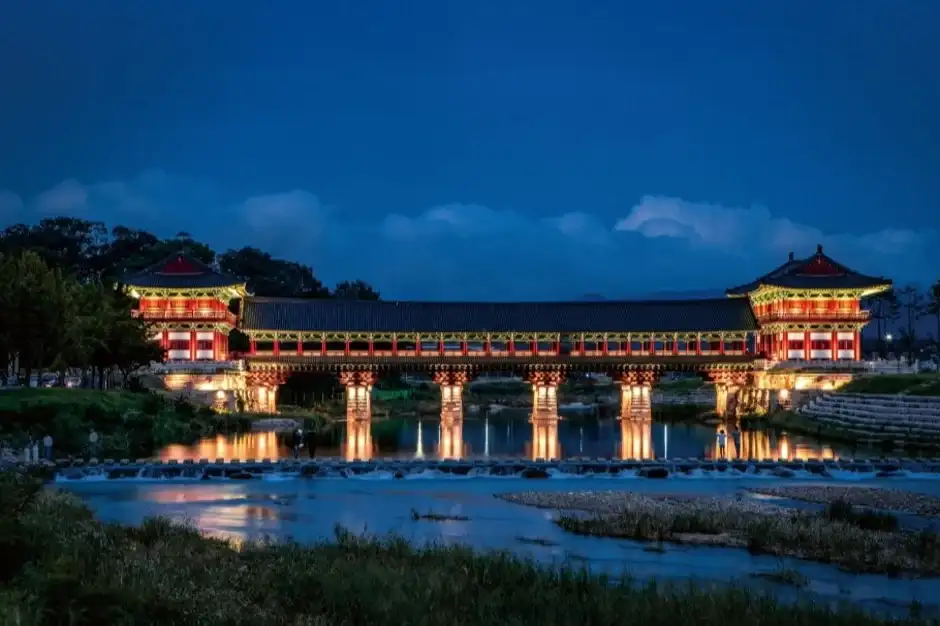
Woljeonggyo Bridge

Woljeonggyo Bridge

In Gyo-dong, Gyeongju, stands the historic wooden Woljeonggyo Bridge, originally built during the Unified Silla period (676-935 AD). It was burned down during the Joseon Dynasty but after detailed historical research, it was reconstructed in April 2018, becoming one of Korea’s largest wooden bridges.

06

Gyeongju

A full day exploring Silla World Heritage highlights and stone architecture aesthetics. 09:00 Visit Bulguksa Temple (World Cultural Heritage), the pinnacle of Silla stone architecture; admission starts at 09:00; last admission is 17:00 from November to January, 17:30 in February and October, and 18:00 from March to September; reconfirm before visiting. 12:30 Gyeongju Korean set lunch. 14:00 Travel by short drive to Seokguram Grotto (World Heritage, part of Bulguksa system); photos inside forbidden and early closing; road access controlled in rain or snow. 16:30 Return to downtown Gyeongju and enjoy free time in Hwangridan-gil arts district.

A full day exploring Silla World Heritage highlights and stone architecture aesthetics. 09:00 Visit Bulguksa Temple (World Cultural Heritage), the pinnacle of Silla stone architecture; admission starts at 09:00; last admission is 17:00 from November to January, 17:30 in February and October, and 18:00 from March to September; reconfirm before visiting. 12:30 Gyeongju Korean set lunch. 14:00 Travel by short drive to Seokguram Grotto (World Heritage, part of Bulguksa system); photos inside forbidden and early closing; road access controlled in rain or snow. 16:30 Return to downtown Gyeongju and enjoy free time in Hwangridan-gil arts district.

Breakfast: at your own expense. Lunch: at your own expense. Dinner: at your own expense.

Bulguksa Temple

Gyeongju is Korea's most representative historical city and the thousand-year capital of Silla. It boasts numerous historic sites and Buddhist culture, earning the nickname “Museum Without Walls.” In 1995, Bulguksa Temple and Seokguram Grotto were designated UNESCO World Cultural Heritage Sites. Recently, five areas including Namsan and Hwangnyongsa were added to the Gyeongju Historic Areas. Every year, over five million visitors come to experience the millennium-old Silla culture.

Seokguram Grotto

Beyond Bulguksa Temple, following the Toham Mountain ridge (elevation 745 meters) for about 8 km, lies Seokguram Grotto near the mountain summit. The grotto is a dome-shaped artificial cave built of smoothed granite with soil on its rounded roof, resembling a natural cave. Inside it enshrines the main Buddha statue from the 8th century Unified Silla era, crafted using advanced Buddhist art techniques. The granite Shakyamuni Buddha statue, with silky smooth surface, portrays a serene expression believed to remove obstacles and temptations, embodying enlightenment in a lifelike and elegant pose filled with vitality. Facing east toward the sunrise over the sea, Koreans call this statue the “Smile of the Silla People.” Built 1,200 years ago, Seokguram is a multidisciplinary masterpiece that combines architecture, science, geometry, and art — a marvel difficult to replicate with modern technology and uniquely beautiful worldwide.

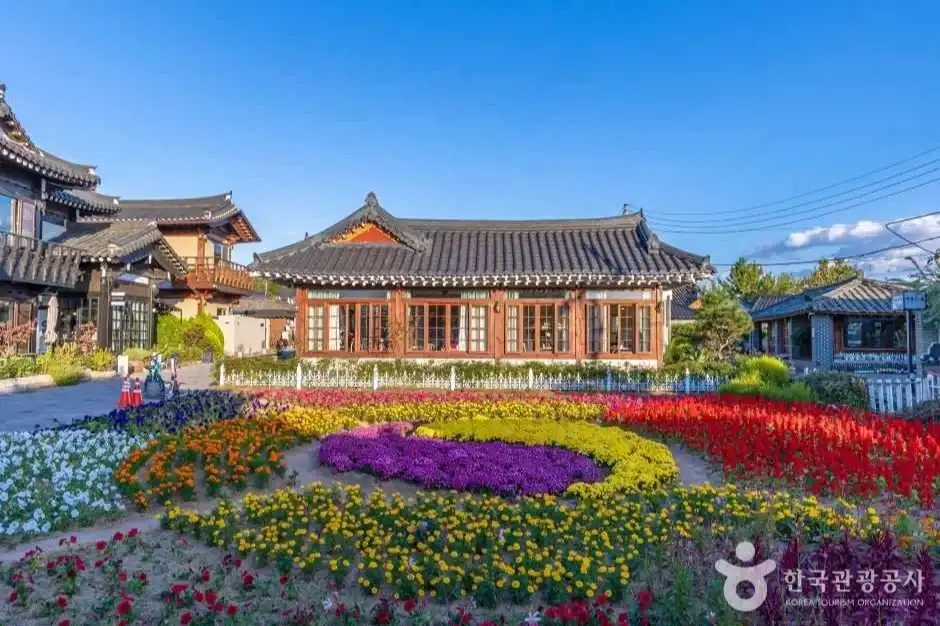
Hwangridan-gil, Gyeongju

Hwangridan-gil, Gyeongju

Hwangridan-gil is Gyeongju's favorite street for young people, its name a blend of Hwangnam-dong and Seoul's Itaewon Gyeongnidan-gil, meaning "Hwangnam-dong Gyeongnidan street." Stretching from Innae Crossroad to Hwangnam Elementary Crossroad, it covers Hwangnam and Sajong neighborhoods. It preserves 1960s-70s architecture, giving a nostalgic vibe. Recently, renovated old houses became cafes, boutique shops, souvenir stores, and distinctive restaurants attracting youth. Originally centered on main roads, it expanded into a shopping district with many specialty shops in alleys. Now a must-visit in Gyeongju tourism, alongside nearby Cheomseongdae and Daereungwon Tombs.

07

Gyeongju → Busan

Depart the ancient capital and travel south to Korea’s southern coastal metro. 08:30 Depart Gyeongju by private car to Busan, road trip approx. 1h 50min. 11:00 Arrive Busan and have lunch at Jagalchi Seafood Market. 13:30 Visit Taejongdae, a coastal cliff geo-park with rocky sea views. 16:30 Explore Gamcheon Culture Village, a colorful hillside art village and Little Prince photo spot; entry ends at 18:00. 19:00 Check into Haeundae hotel; enjoy Busan city coastal night views.

AI-rendered illustration

Depart the ancient capital and travel south to Korea’s southern coastal metro. 08:30 Depart Gyeongju by private car to Busan, road trip approx. 1h 50min. 11:00 Arrive Busan and have lunch at Jagalchi Seafood Market. 13:30 Visit Taejongdae, a coastal cliff geo-park with rocky sea views. 16:30 Explore Gamcheon Culture Village, a colorful hillside art village and Little Prince photo spot; entry ends at 18:00. 19:00 Check into Haeundae hotel; enjoy Busan city coastal night views.

Breakfast: at the hotel. Lunch: at your own expense. Dinner: at your own expense.

Jagalchi Market

Jagalchi Seafood Market is one of Busan’s largest and most famous seafood markets. Located by the sea, the large market building’s first floor features numerous shops selling fresh-caught seafood. After purchase, customers can have their seafood prepared and cooked on the second floor seating area, usually cooperating with the vendors below for fresh, ready-to-eat meals.

Yeongdo Taejongdae

Named after the reduced form of Jeolyeongdo, this area has been famous as a horse pasture since ancient times, producing legendary horses so fast their shadows can’t be seen, hence called Jeolyeongdo. Taejongdae and Oryukdo are iconic rocky coasts representing Busan, located about 9.1 km along Yeongdo’s coastline at its southernmost point from Busan City Hall. Covering 542,390 pyeong (the area stated in the source), centered on its highest peak at 250 m altitude, the area is home to over 200 species of trees including dense sea pines, tropical broadleaf trees such as Japan cinnamon, camphor trees, hemlocks, and holly trees.

Gamcheon Culture Village

Known as the "Santorini of Busan," Gamcheon Culture Village was once a rundown slum but transformed through Busan's 'alley art project' into a famous cultural attraction. The village’s tiered layout, reminiscent of exotic hillside settlements, is well preserved with houses unblocked by others. Colorful murals and watercolor paintings created by volunteers worldwide adorn the walls, making it a beloved, artsy spot popular for photos.

Haeundae Beach

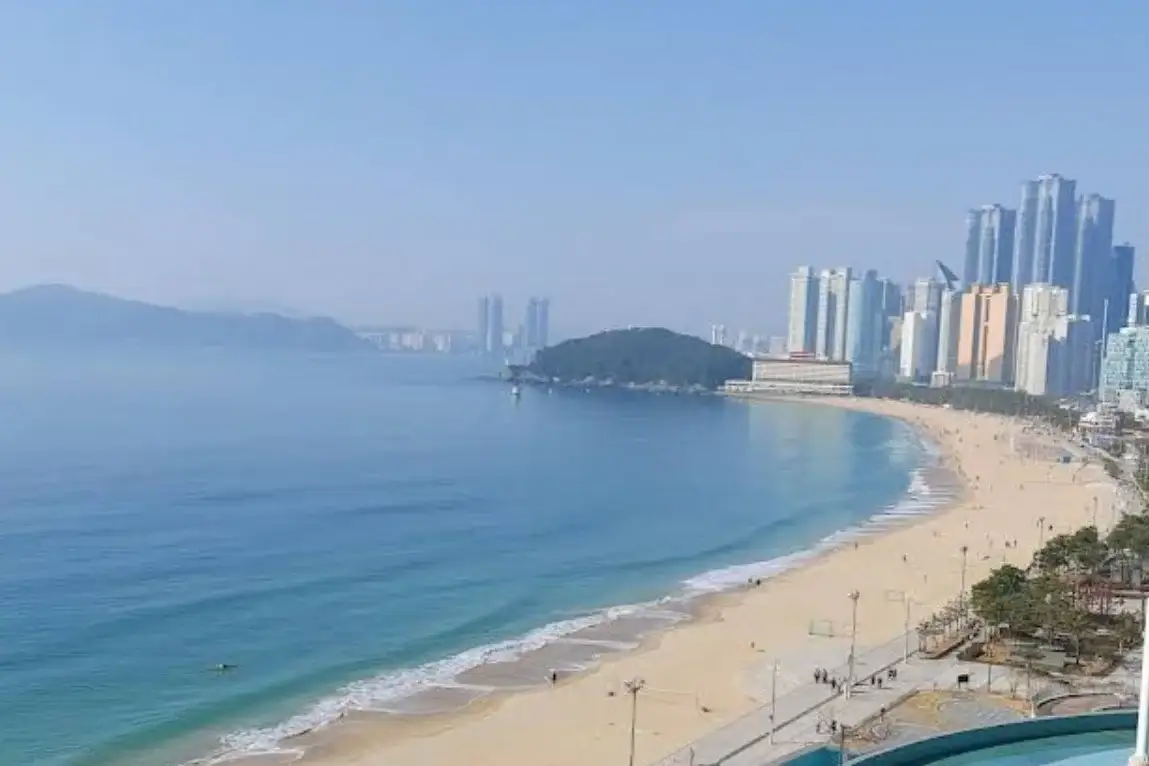
Haeundae Beach is Korea's most famous seaside bathing beach, surrounded by unique natural scenery. Bathing season is from June 1 to September 30 each year. The beach stretches 1.5 km long and 30 to 50 meters wide, covering an area of 58,400 square meters, accommodating over 120,000 people. It offers folk experience activities including diving boards, wrestling, pitch-pot, tug-of-war, and flipping games, along with tourist information centers and a seaside library.

Haeundae Traditional MarketAI-rendered illustration

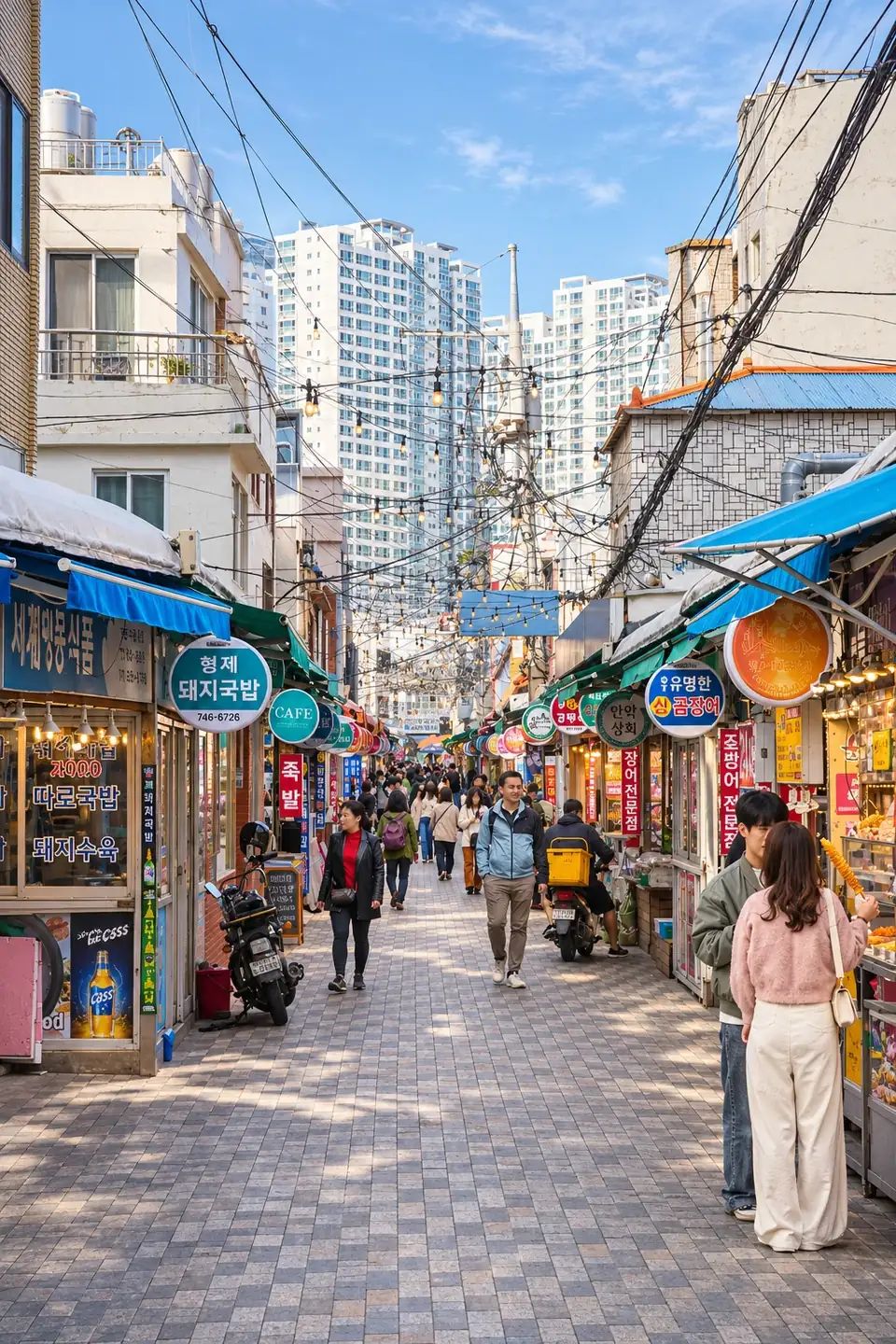
Haeundae Traditional Market

Located near Haeundae Beach, one of Korea’s most iconic beaches, Haeundae Traditional Market is a long-established market area. Since 1910, it organically grew from small vendor clusters, officially recognized as a market by the Busan government in 2005. It’s popular among locals and tourists alike for groceries, dining, and shopping. The market’s maze of alleys is lined with diverse shops, including fruit and vegetable stands, kimchi shops, side dish vendors, meat shops, clothing stores, general goods, small liquor shops, and eateries. It’s also known for Busan’s specialty snacks like pork soup rice, fish ball soup, and sashimi—making it a must-visit spot when traveling to Busan.

08

Busan

Experience Busan's coastal highlights: mountains, sea, rail, and bays all at once. 09:30 Visit Haedong Yonggungsa Temple, a cliffside Korean temple facing the East Sea, beautiful year-round. 12:00 Lunch in Haeundae area. 14:00 Ride the Haeundae Blue Line Park sky capsule monorail. 16:30 Walk along Haeundae Beach and Dongbaek Island. Evening at leisure.

AI-rendered illustration

Experience Busan's coastal highlights: mountains, sea, rail, and bays all at once. 09:30 Visit Haedong Yonggungsa Temple, a cliffside Korean temple facing the East Sea, beautiful year-round. 12:00 Lunch in Haeundae area. 14:00 Ride the Haeundae Blue Line Park sky capsule monorail. 16:30 Walk along Haeundae Beach and Dongbaek Island. Evening at leisure.

Breakfast: at the hotel. Lunch: at your own expense. Dinner: at your own expense.

Songdo Marine Cable Car

The Songdo Marine Cable Car in Busan spans 1.62 kilometers, connecting Songnim Park on the east side of the beach to Amnam Park on the west. Featuring 39 state-of-the-art crystal cabins with transparent floors, the ride offers breathtaking views of Songdo's scenery. The area also houses Korea's first cable car museum “Songdo Doppelmayr World,” Asia’s first aerial swing “Sky Swing,” theme park photo zones, and other attractions for visitors.

Haedong Yonggungsa TempleAI-rendered illustration

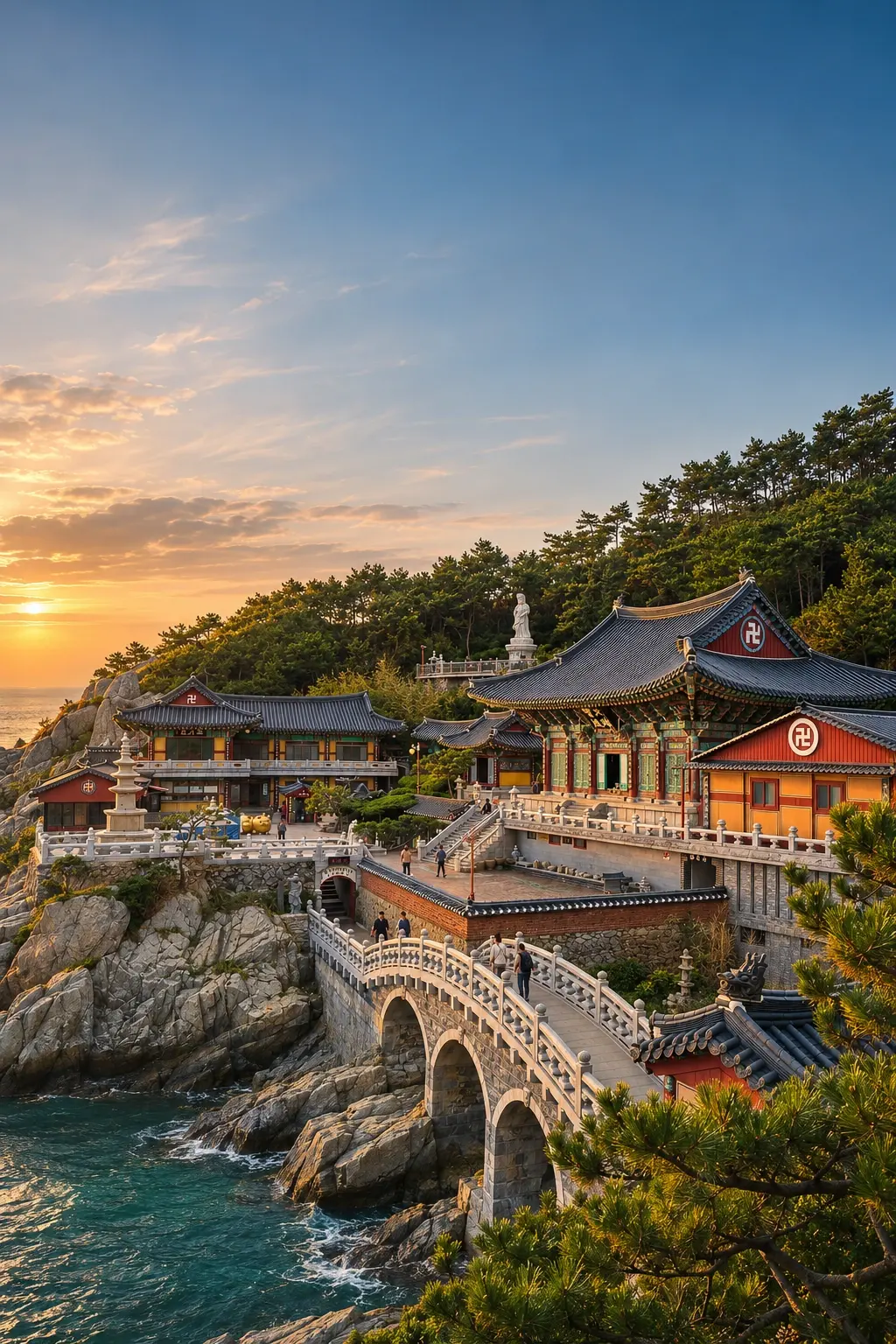
Haedong Yonggungsa Temple

Yonggungsa Temple was founded in 1376 by Master Naewong, who served King Gongmin of Goryeo. It is one of Korea’s three major Avalokitesvara pilgrimage sites and a place revered for prayer and sincere Buddhist worship. The original temple was nearly destroyed during the Imjin War; it was reconstructed in the early 1930s under Monk Wunggang of Tongdo Temple, and later renamed Haedong Yonggungsa after a monk dreamt of Avalokitesvara ascending on a dragon. Existing structures include the Daeungjeon Main Hall, Seokbuldang (also called Maitreya Hall) housing a Maitreya statue believed to bless fertility, a Three-tiered Stone Pagoda guarded by four lions containing seven Buddha relics from Sri Lanka, a 10-meter tall Seawater Avalokitesvara statue (the tallest in Korea), and the Yakshi Buddha known as the East Sea’s Stone Cap Rock Buddha. The temple entrance features a total of 108 stone steps.

Haeundae Dongbaekseom Trail

After overlooking the endless sea at Haeundae Beach, turn your gaze to the right, beyond the beach's end behind The Westin Josun Hotel, where you will find the serene Dongbaekseom Island. Originally a separate island, over the years natural sediment gradually connected it to the mainland, but it retains the name Dongbaekseom to remind visitors of its original shape. During the late Unified Silla period, writer Choe Chi-won and many literati visited this place blending sea and forest, strolling and composing poetry. Their praises of its beauty have been passed down. There is a circular walking trail on Dongbaekseom, popular with visitors. You can find Choe Chi-won's engraved calligraphy, bronze statue, poetry plaques, the mermaid statue from the Princess Hwangok legend, and Nurimaru APEC House—all reflecting historical footsteps. From Dongbaekseom, the views of Busan are remarkable, including the Oryukdo coastline, Igidae cliff trail, Gwangan Bridge merging sky and sea, and the iconic Oryukdo Islands. Each winter and spring transition, the island blooms profusely with camellia flowers, creating endlessly romantic scenes with buds and fallen petals.

09

Busan

Enjoy free time as your departure schedule allows. The itinerary ends locally in Busan; an airport transfer can be arranged separately to suit your flight schedule. International return flights and the day you arrive home are not counted in this itinerary.

Enjoy free time as your departure schedule allows. The itinerary ends locally in Busan; an airport transfer can be arranged separately to suit your flight schedule. International return flights and the day you arrive home are not counted in this itinerary.

Breakfast: at the hotel. Lunch: at your own expense. Dinner: at your own expense.

YOUR ROUTE

Know the shape of your journey.

Starts in
Seoul
Ends in
Busan
Local itinerary
9 days

A proposal shaped around you

Use this route as a starting point. Tell us your dates, pace and accommodation preferences.

Your quote will specify accommodation, guiding, transport, activities, meals and any optional arrangements before you book. International flights and airport transfers are discussed separately.

TRAVEL IN COMFORT

The right vehicle for your group.

Toyota Alphard

Up to 6 passengers

Toyota HiAce

Up to 9 passengers

Our main touring vehicles. We recommend a vehicle based on your group size and luggage. Maximum seating capacity does not guarantee room for all bags when every seat is occupied. Vehicle availability is confirmed for your destination.

Before you go

This journey starts at the destination. Seasonal experiences, service inclusions and availability are confirmed with your personalized proposal.

Original source & photography · 6renyou ↗

Image credits and illustrations

BEFORE YOU PLAN

Travel planning, clearly explained.

OpenEast brings together Japan and South Korea itinerary ideas for travelers from North America, with China also part of our destination plans. Start with the local route, then consider flights and airport transfers around it.

When does Day 1 begin?

Day 1 begins at the destination. International departure-only and return flight days are not counted as destination days. Plan your flights around the local itinerary dates.

Are flights and airport transfers included?

International flights and airport transfers are confirmed separately. Do not assume they are included in a suggested itinerary.

Are these confirmed departures?

These routes are itinerary ideas. Dates, hotels, admissions, seasonal activities, prices and availability need confirmation in a personalized proposal before booking.

Can I book or send an inquiry here?

Use the inquiry form to contact our team. A submission confirmation appears only when the email service accepts your request. An inquiry does not reserve a service or take payment.

Explore Japan itineraries → · Explore South Korea itineraries →

1 / 4

Let’s plan your journey.

South Korea in Depth: A 9-Day Journey including Nami Island, Seoraksan, Hahoe Village, Bulguksa Temple & Seokguram Grotto, Ganseong Culture Village, and Sky Capsule Mini Train

Leave your details, and our travel specialists will get in touch by email or your preferred contact method.

Your specialist will confirm the itinerary, pricing and availability with you.

How we use your information

Your inquiry is sent to info@jasperlimo.com so our team can respond. Please do not include passport or payment details.

Start planning